Grow your own pineapples from scraps of the ones you find sweetest
·
0
Did you know you could grow a new pineapple from the leafy tip of the fruit itself? Making this pineapple cutting is great way to get a perpetual supply of this fabulous vitamin-full fruit!
Pineapple (Ananas comosus) is a fruit that is now famous the world over. Though best results will happen in tropical countries at medium altitudes (lots of sun, not too hot), it can still work from your own home in temperate climates!
Cut the leaf crown off the pineapple as you usually do (and eat the fruit of course).
Break off any flesh, and pull/tear off the smallest leaves off the bottom, until you reach those leaves that are nearly 1½ inches long (4 cm).
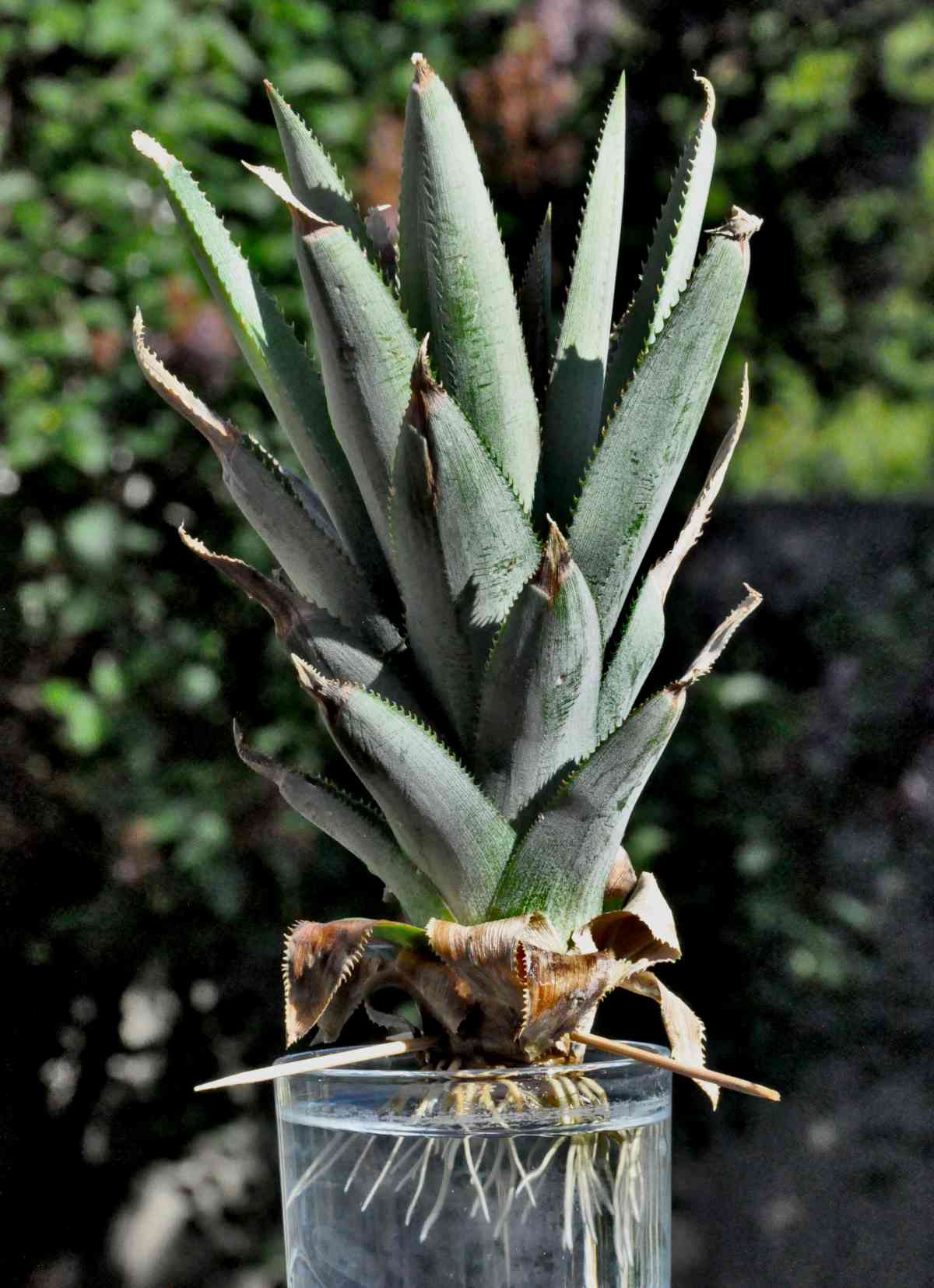
As you would for an avocado seed, balance your pineapple stem upright atop a glass by sticking three toothpicks into the side.
Cleaning fruit seeds for saving or planting involves scraping away the sugary pulp clinging to them, since leftover flesh can ferment or encourage mold during drying and storage.
2/ Start roots off in water
Center it, and raise or lower it in the glass, so that when you add water, about ½ to ¾ of the stem is submerged. Include the base of a couple leaves.
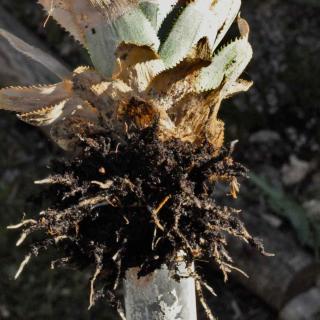
After about 1 month at most, you should see thick roots start to form around the side of the stem.
If a leaf or two is starting to turn brown from staying in the water so long, remove it: you’ll uncover roots forming underneath them!
Never water from above, but lift the cutting out to adjust water level. Change the water every 3-4 days to avoid algae.
3/ Transplant to a nursery pot
When roots are about an inch (2.5cm) long, transplant the pineapple cutting to a large nursery pot.
Keep watering, but from below. As is the case with most bromeliads, getting water in the leaf crown will kill it.
Use a free-draining mix, such as compost lightened with coarse sand or perlite, since pineapple roots rot in dense, waterlogged soil.
Roots formed in a glass of water are delicate and easily damaged, so spread them out by hand and trickle compost gently around them rather than pushing the stem into packed soil.
4/ Transplant to the final pot
Roots circling the pot mean it is repotting time
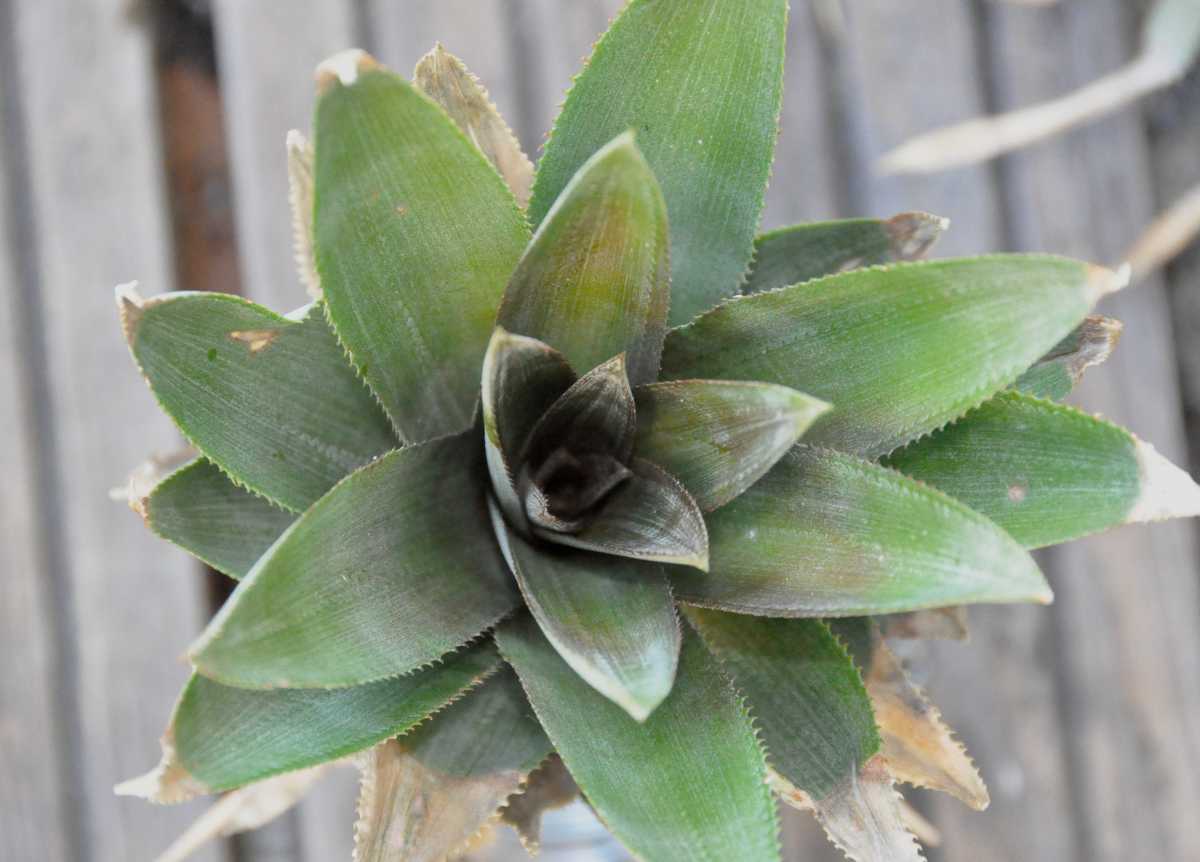
Leaves will form from the center of the plant. Check how many roots appear along the side of the nursery pot. If a root begins winding sideways around the pot, or if roots start to poke out from the holes under the nursery pot, it’s time to transplant your Ananas comosus to its final pot.
A pot about a foot across and between 6 and 10 inches deep will suit the transplant well.
The same leafy top can be started in a glass of water, pushed straight into the soil, or divided first. Here is what each route involves and what it gives you.
Three ways to root a pineapple crown
Method
What you do
Plants per crown
Roots appear
Rooting in water
Balance the crown on three toothpicks over a glass, with half to three-quarters of the stem submerged
One
Thick roots within about a month
Planting straight into soil
Push the head about 2 inches (5 cm) into the soil and mulch around it
One
As new leaves form from the centre
Splitting the crown
Cut lengthwise into halves or quarters, hollow out the inner leaves, plant slanted an inch deep
Two or four
A few weeks
Whichever route you take, keep the soil moist but never soggy.
More ways to prepare pineapple cuttings
Professional farmers don’t go through the water step to propagate their pineapples. They plant the heads in the soil directly, about 2 inches deep (5 cm). Pineapple can’t take cold temperatures, it will die if it freezes and it’s outside.
Spread mulch around the head to lock moisture in.
In time, outer leaves will dry out and die, but new leaves will form from the center and slowly increase in size as roots develop.
Splitting the crown into halves and quarters
Instead of growing a single new plant from your crown, it’s possible to get two or even 4 new ones. You can split each crown into half with a sharp knife, cutting right from the center.
Cut lengthwise from the bottom of the stem up into the leaf crown.
Cut each half again to get fourths.
Hollow out the centre leaves before splitting the crown
Pinch off the small inside leaves that were previously in the center of the leaf crown. Remove them until you’ve carved a hollow about 1/4th inch (0.5-0.7 cm) deep at the tip.
This is important because you don’t want the new plants to start growing from the center portion, it won’t work if you split the crown. Now, they can only grow new leaves from under the leaf nodes, exactly the same place where roots will come out, too.
Plant each portion in the ground about an inch deep (3 cm). Position the cutting slanted, even horizontally, with the wedge tip facing downwards and the leaves jutting out of the soil.
As with other cuttings, keep the soil moist but not soggy, and after a few weeks, roots will appear. After about two months, depending on sun and temperature, new shoots will appear, too.
Credits for images shared toNature&Garden(all edits by Gaspard Lorthiois):
Starting pineapple in water by Rosalyn & Gaspard Lorthiois, own work
Rooting pineapple crowns by Rosalyn & Gaspard Lorthiois, own work
Splitting pineapple plants to get more by Rosalyn & Gaspard Lorthiois, own work
Written by Gaspard Lorthiois | Loves helping out, especially when it comes to growing things. Worked in herbal medicine, runs a farm, and dabbles in tech. Master's degree and engineer.