Growing Tropaeolum speciosum: expert tips and planting advice
·
0
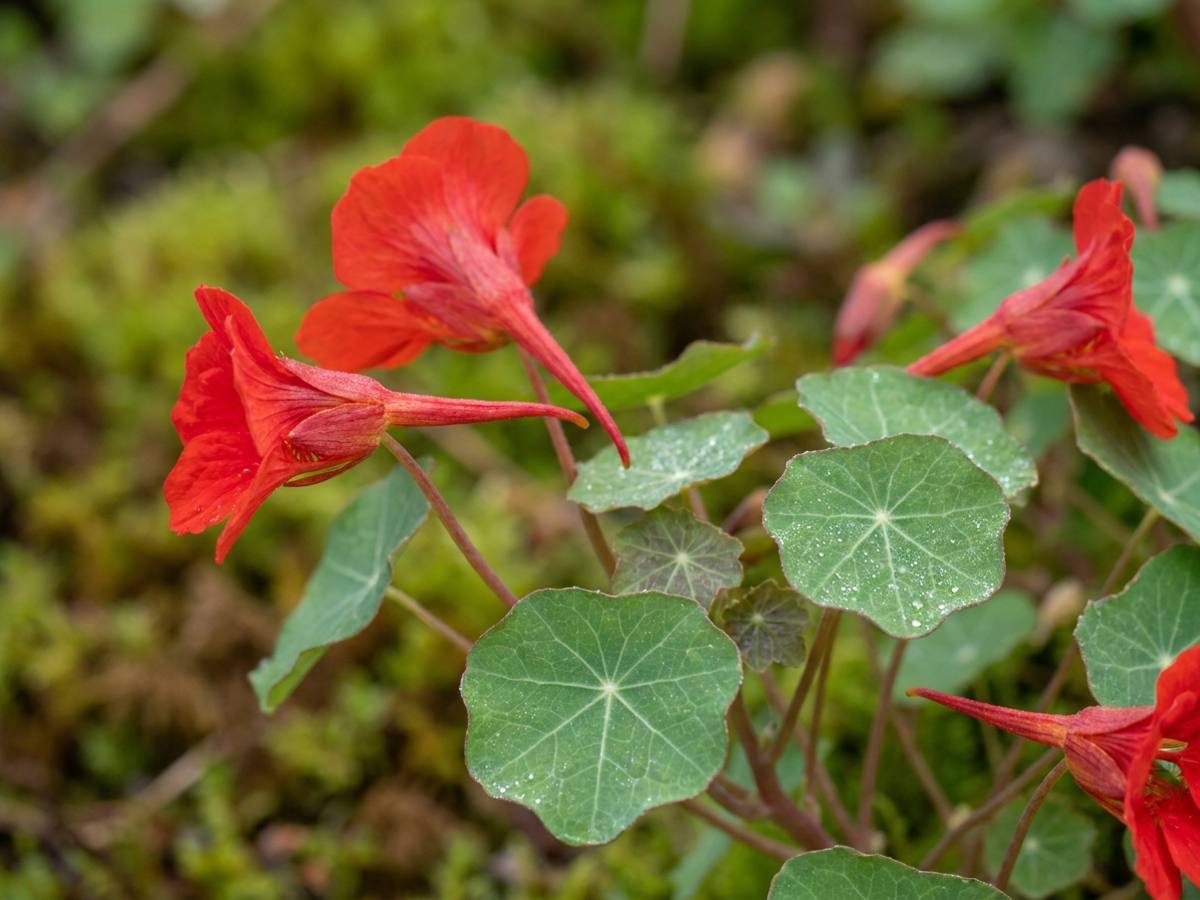
Few climbers cause quite as much envy as Tropaeolum speciosum, whose scarlet, long-spurred flowers scramble through dark yew hedges and conifers like sparks flying upwards. Native to the cool, damp temperate forests of Chile, it is a herbaceous perennial climber that dies back completely each winter and reappears from fleshy underground rhizomes. Its distinctive trait is a fierce loyalty to cool, moist, acidic conditions — which is why it thrives gloriously in Scotland and Ireland and sulks in the warm, dry south.
Growing conditions
The golden rule is cool roots and sunlit shoots. Plant on the shaded, north or east side of a hedge, wall or shrub so that the rhizomes stay cool and damp, while the twining stems climb into dappled light. Scorching midday sun on the root zone is the most common cause of failure.
Soil should be deep, leafy and moisture-retentive yet free-draining — think woodland floor rather than border loam. It strongly prefers acid to neutral conditions, ideally pH 5.0–6.5, and rarely succeeds on thin chalk or heavy, waterlogged clay. Generous quantities of leaf mould, composted bark or ericaceous compost will transform an unpromising site.
Climate matters more than technique with this species. It excels in regions with cool summers and high rainfall — western Scotland, Cumbria, Wales, Ireland, the Pacific Northwest and New Zealand’s South Island — and struggles where summers are hot and dry.
How to plant Tropaeolum
Plant pot-grown plants in spring, once the shoots emerge and the soil has begun to warm, so the rhizomes establish before summer. Dormant rhizomes can also be planted in early autumn in mild, damp districts.
Space plants 45–60 cm apart along a hedge base; they knit together over time as the rhizomes creep sideways.
Set the fleshy rhizomes 5–8 cm below the surface, horizontally, with the crown just under the soil.
Fork a bucketful of leaf mould or ericaceous compost into the planting hole and remove any competing hedge roots you can safely cut.
Water in thoroughly and keep the root zone consistently moist for the first two growing seasons — this is when most plants are lost.
Propagate by lifting and separating rhizome sections in early spring, or sow fresh seed in autumn and overwinter in a cold frame.
Tropaeolum speciosum growing in a naturalistic garden border
Care through the seasons
Spring: Slender, pale shoots appear from April onwards and can be alarmingly late — do not dig where you think it has died. Guide the fragile stems towards their support with twiggy sticks or netting, and mulch with 5 cm of leaf mould. A light feed of a balanced organic fertiliser is enough; rich nitrogen produces foliage at the expense of flowers.
Summer: Water deeply during dry spells, aiming a can or two at the root zone weekly rather than sprinkling the leaves. Flowering peaks from July, followed by curious bright blue berries held in red calyces. Established colonies may travel a metre or so a year underground; simply pull up unwanted shoots, as the plant is enthusiastic rather than truly invasive in most gardens.
Autumn: Leave the fading stems until they have yellowed, then cut them away and pull the dry tangle out of the host hedge to keep it tidy. Collect ripe berries if you want more plants and sow them fresh. Top-dress the root area with leaf mould or well-rotted bracken to insulate the rhizomes.
Winter: The plant vanishes entirely, surviving as brittle white rhizomes deep in the cool soil. In cold gardens a thick winter mulch is all the protection required; in containers, move pots to an unheated shed to avoid freezing solid.
Best varieties to grow
There are no named cultivars of the species in general cultivation, so gardeners usually grow the straight species alongside its equally desirable relatives.
Tropaeolum speciosum (the species) — the benchmark: vivid vermilion flowers over neat six-lobed leaves, holder of the RHS Award of Garden Merit.
Tropaeolum tuberosum var. lineamaculatum ‘Ken Aslet’ — an AGM tuberous climber with orange-and-yellow flowers from midsummer, better suited to warmer, drier gardens.
Tropaeolum polyphyllum — a trailing, glaucous-leaved perennial with yellow flowers, ideal for hot gravel and dry walls where T. speciosum fails.
Tropaeolum tricolor — a delicate spring-flowering Chilean species with red, black and yellow flowers, best grown in a cool conservatory.
Pests, diseases and common problems
Slugs and snails: They shear off the tender emerging spring shoots at soil level, often destroying young plants outright. Ring new plantings with sharp grit or wool pellets and check by torchlight on damp evenings.
Failure to reappear or thrive: Usually a sign of dry, alkaline or sun-baked soil rather than pests. Improve the site with acidic leaf mould, deepen the mulch and consider moving the plant to a shadier, damper aspect.
Blackfly (aphids): Colonies cluster on soft shoot tips and flower stalks, causing distortion and sooty mould. Dislodge them with a jet of water or a diluted soft-soap spray, and encourage ladybirds and hoverflies nearby.
🌿 Nature & Garden Newsletter
Gardening tips, recipes & seasonal advice, twice a week.