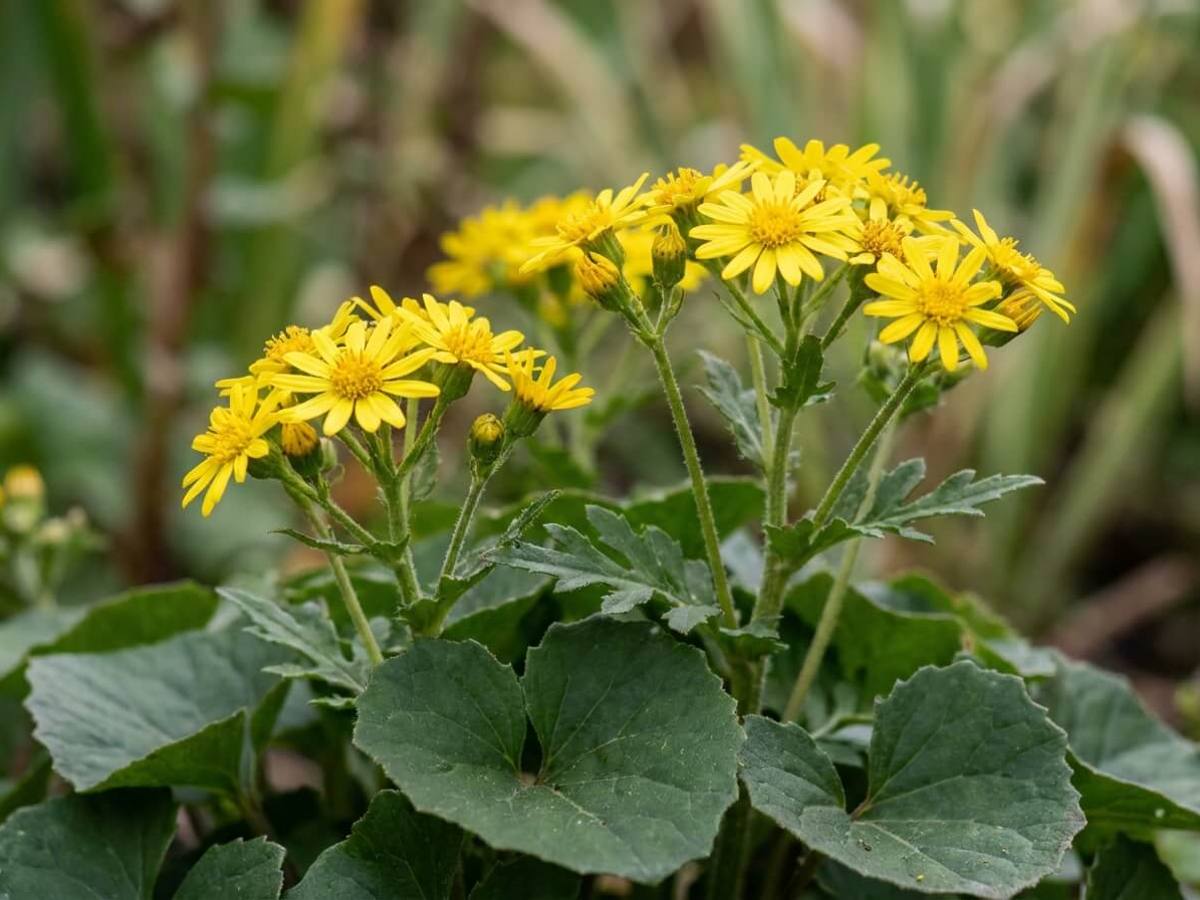
Golden ragwort is one of those quietly indispensable native perennials: a low mat of rounded, heart-shaped basal leaves topped in late spring by airy stems of butter-yellow daisies. It thrives in the damp, part-shaded ground where most perennials sulk, making it a first-choice groundcover for rain gardens, stream banks and woodland edges. Best of all, the rosettes stay green through winter, so the soil is never left bare.
Growing conditions
Partial shade is the sweet spot — dappled light under deciduous trees, or a site with morning sun and afternoon shelter. Full sun is perfectly workable provided the ground never dries out, such as a pond margin or a rain garden basin. In deep shade it still forms a handsome leaf carpet, though it flowers more sparsely.
Soil should be moisture-retentive and rich in organic matter. Golden ragwort is unusually forgiving of heavy clay and periodic waterlogging, which is precisely why it outperforms most groundcovers in soggy corners. It accepts a broad pH range, from mildly acidic to neutral, around pH 5.5–7.0.
Hardiness is excellent across USDA zones 3–9, and in cool maritime climates it behaves as an evergreen. In hotter, drier regions site it where it receives afternoon shade, otherwise the foliage scorches and the clump thins out by midsummer.
How to plant Packera
Plant in early autumn or in early spring, while the soil is naturally damp and temperatures are mild. Autumn planting gives the stolons a full season’s head start before the first flowering flush.
Spacing: set plants 30–45 cm apart for groundcover — they knit together within two seasons, so closer planting simply wastes stock.
Depth: position the crown exactly level with the soil surface; burying the rosette invites rot in wet ground.
Soil preparation: fork in a bucketful of leaf mould or well-rotted compost per square metre to boost moisture retention — no fertiliser is needed.
Watering in: soak thoroughly after planting and keep the ground damp for the first six to eight weeks until the rosettes anchor.
Propagation: lift and pull apart rooted stolon offsets in early autumn or just after flowering; each piece with a rosette and a few roots will establish readily.
Packera aurea growing in a naturalistic garden border
Care through the seasons
Spring: Tidy away any winter-damaged leaves as the fresh rosettes expand, then enjoy the flowering stems from April onwards. A thin top-dressing of compost is all the feeding required; rich feeding only encourages floppy stems. Deadhead once the blooms fade if you want to limit self-seeding.
Summer: Cut the spent flower stalks to the base in June or early July to restore a neat leafy carpet. Water deeply during dry spells — this is a moisture-lover and the foliage browns quickly under drought stress. Lift and remove wandering stolons from the edges of the colony if it is encroaching on smaller neighbours.
Autumn: Leave the basal rosettes intact; they are the plant’s winter clothing and should never be sheared off. Divide congested colonies in September, and mulch lightly with leaf mould around, but not over, the crowns.
Winter: The rosettes persist, often flushing purple-bronze in cold weather, and need no protection whatsoever. In exposed, frozen sites a loose covering of leaves keeps the foliage looking better.
Best varieties to grow
Named cultivars are virtually non-existent, so the straight species and its close relatives are what you will find offered.
Packera aurea (species) — the workhorse: fastest-spreading, most tolerant of wet clay and the showiest in flower.
Packera obovata (roundleaf ragwort) — very similar in bloom but with spoon-shaped leaves and markedly better drought and limestone tolerance.
Packera anonyma (Small’s ragwort) — narrower, lance-shaped foliage and a tidier clump for drier, sunnier banks.
Packera tomentosa (woolly ragwort) — silvery-felted leaves give year-round contrast in sandy, well-drained soils.
Pests, diseases and common problems
Slugs and snails: ragged holes in the young spring rosettes, worst in damp shade. Patrol after rain at dusk, or use wildlife-safe ferric phosphate pellets sparingly around newly planted stock.
Aphids: colonies cluster on flower stems in late spring, causing distorted buds and sticky honeydew. A sharp jet of water dislodges them, and hoverfly larvae usually clear the rest within a fortnight.
Powdery mildew and leaf scorch: grey bloom or crisped brown leaf margins signal soil that is far too dry. Mulch with leaf mould, water deeply, and move the planting into more shade if the problem recurs each summer.
🌿 Nature & Garden Newsletter
Gardening tips, recipes & seasonal advice, twice a week.