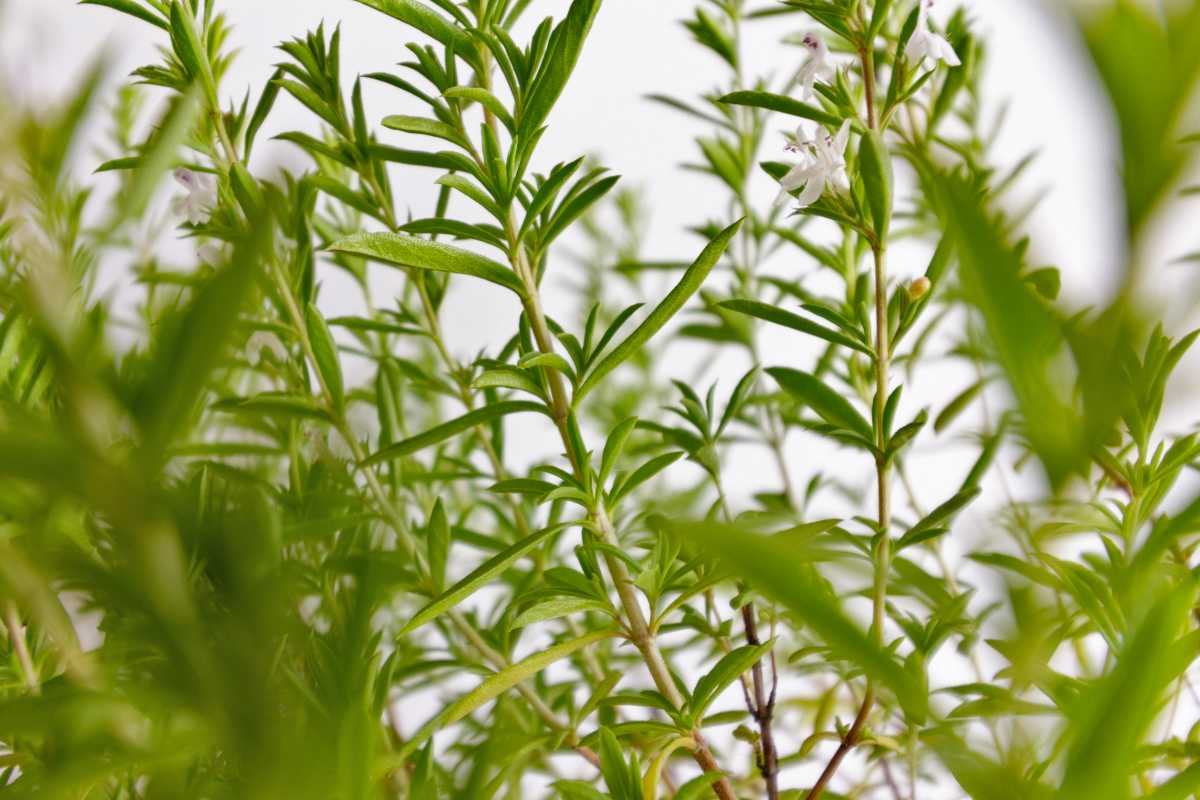
One of the most fragrant and flavourful of all kitchen herbs, tarragon (Artemisia dracunculus) seasons mixed salads and omelettes, pairs famously with poultry in tarragon chicken, and is the essential ingredient of Béarnaise sauce. Give it plenty of sun and a light, well-drained soil, and you can snip stems as you need them from late spring to mid-autumn.
| Name | Artemisia dracunculus |
|---|---|
| Family | Asteraceae |
| Type | semi-evergreen perennial |
| Height | 16 inches to 5 feet (40 to 150 cm) |
| Exposure | full sun |
| Soil | rich and light |
| Harvest | late spring to mid-autumn |
Caring for it from planting to harvest is easy and it will quickly come flavor most of your meals, sauces and mixed salads.
Tarragon likes it when the sun shines on it a lot, and fares best in light and well drained soil.
If you purchase your tarragon in pots, plan to re-pot it quickly in a larger pot or transplant it directly in the ground after buying.
You can either sow in a sheltered place at the end of winter or beginning of spring, or you can sow directly in the ground throughout late spring.
Russian tarragon is perhaps the only variety that can actually be sown in place all spring and summer long.
As soon as the plants have formed 4 or 5 leaves, thin to about 8 inches (20 cm) to give the seedlings space to grow.
It is very easy to multiply tarragon by collecting basal shoot, preparing cuttings or layering.
Leaves can be cut as needs arise until the first frost spells.
It is best to snip the stems off one at a time whenever you need some, instead of tearing out a whole bunch.
On soft-stemmed herbs with paired leaves, such as basil or mint, cut each stem just above a leaf pair, since the buds at that node can then grow into new shoots.
In fall, in order to keep your tarragon for the longest possible span of time, cut it short and freeze it in a jar, keeping the stems with leaves whole.
To keep tarragon for an even longer period, it’s also possible to dry the leaves in a dry place where the air circulates well.
Alternatively, instead of powderizing them, you can simply dry the stems whole, snip them up somewhat, and store in an airtight jar.
Tarragon can be used straight from the plant or put by for the cold months. The table sums up what each method involves and how long the flavour lasts.
| Method | What to do | When | How long it keeps |
|---|---|---|---|
| Fresh, as needed | Snip stems one at a time, taking the oldest first | Until the first frost spells | Used straight away |
| Frozen whole | Cut the plant short and freeze it in a jar, stems and leaves whole | In fall | The longest possible span of time |
| Dried and crushed | Dry in a well-ventilated dry place, crush to powder, store in an airtight jar | After harvest, using stems that did not flower | Even longer than frozen |
| Dried whole stems | Dry the stems whole, snip them up somewhat, store in an airtight jar | After harvest | Even longer than frozen |
Freezing keeps the leaves whole, while drying is the way to stretch the harvest furthest.
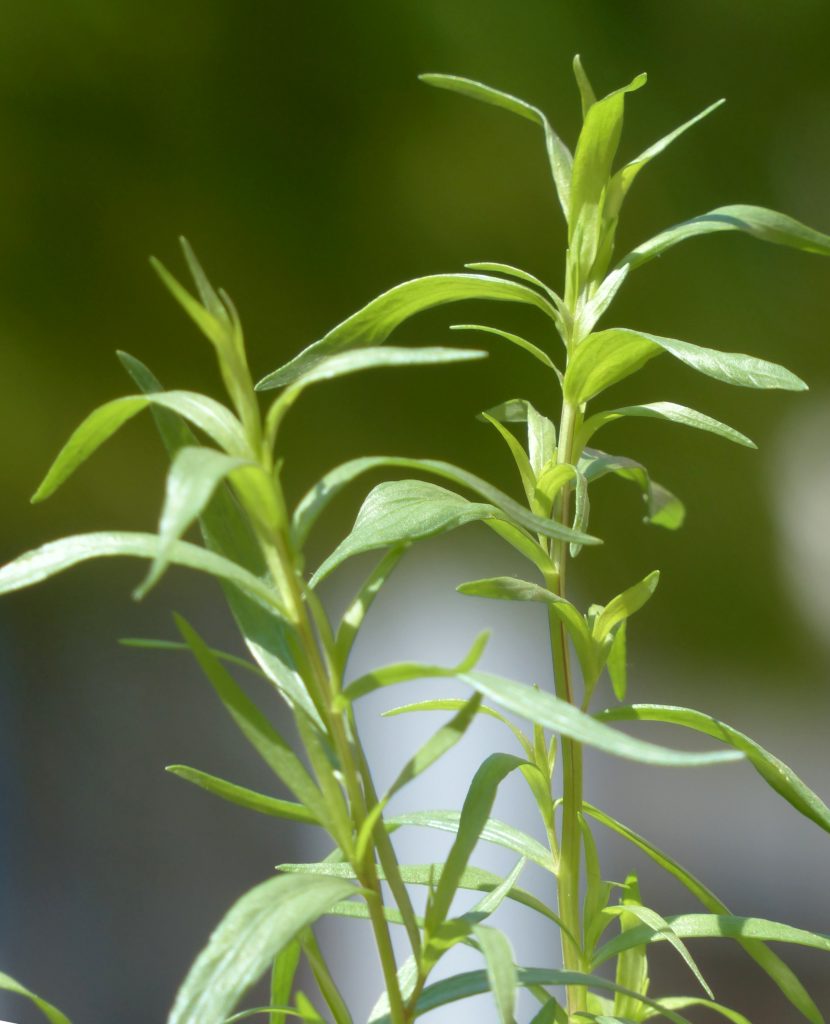
Tarragon is one of the most fragrant and flavorful herbs and condiments.
People love using it to flavor seasoning for mixed salads and omelettes, but it is simply amazing when paired with poultry, for example the famed recipe for tarragon chicken.
It is an essential ingredient in the renowned Béarnaise sauce.
Note also that tarragon is associated to many, many health benefits and medicinal properties. For instance, it is an antioxidant that helps counter ageing.
To regenerate your tarragon, perform crown division in spring every three years, if you can.
Credits for images shared to Nature & Garden (all edits by Gaspard Lorthiois):
Sprigs of tarragon by Nathan Elliot ★ under Pixabay license
Tarragon tips by Hans Braxmeier under Pixabay license