Jeffersonia diphylla: your complete shade plant guide
0
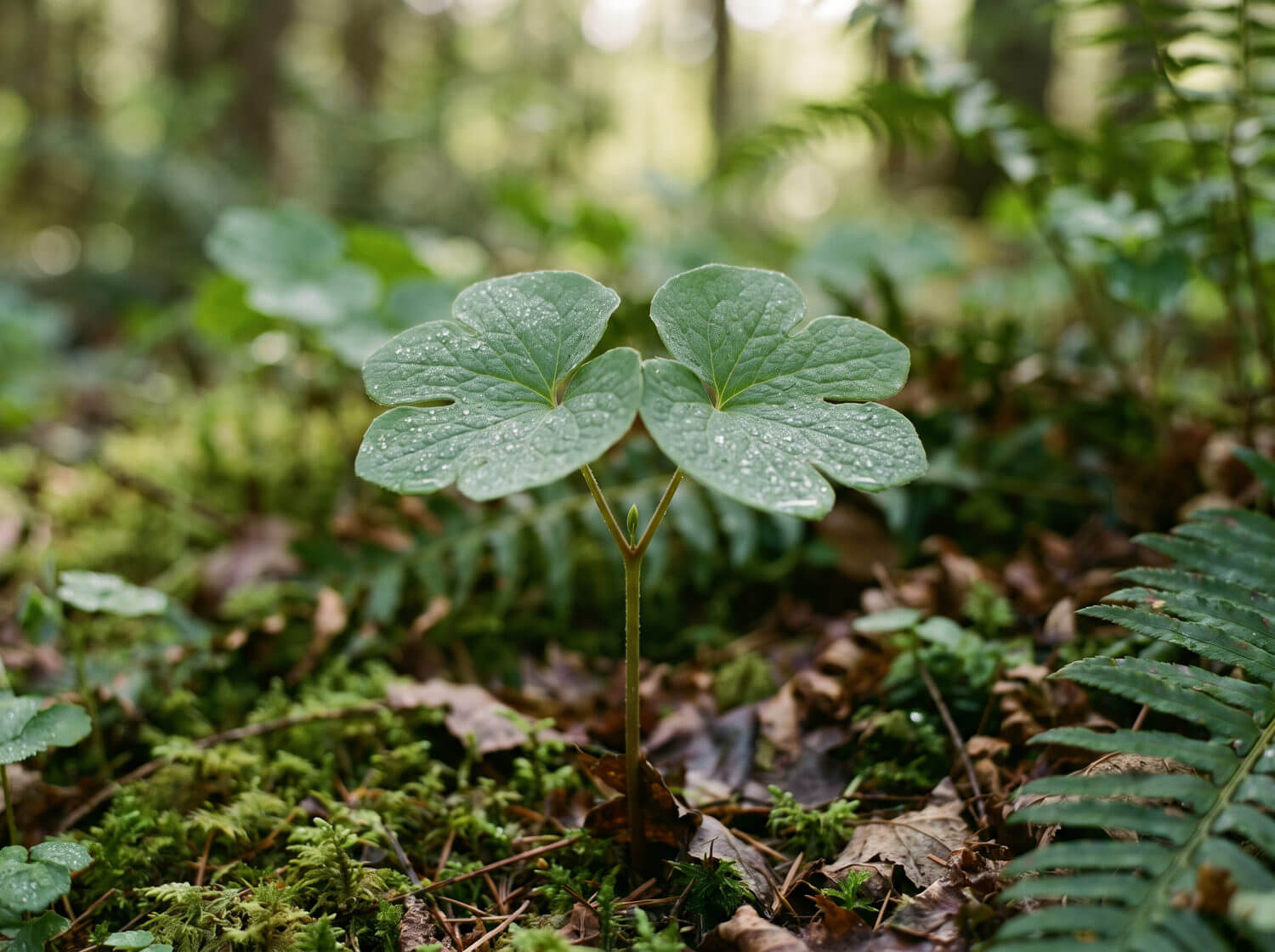
Twinleaf is one of the quiet aristocrats of the spring woodland garden, producing fleeting white flowers of eight pure petals just as the first warm days arrive. Each leaf is split almost to the base into two kidney-shaped halves, like a butterfly’s wings pinned on a slender stalk — a trait that gives the plant both its common and botanical names. It is slow, long-lived and utterly unaggressive, making it a connoisseur’s choice for shaded borders beneath deciduous trees.
Growing conditions
Twinleaf is a creature of the deciduous woodland floor, so it wants bright light in early spring and shade once the canopy closes. Dappled shade beneath beech, lime, maple or hazel suits it perfectly. Avoid hot afternoon sun from May onwards, which scorches the leaf margins.
Give it a deep, crumbly, leafy soil that stays cool and evenly moist but never waterlogged in winter. Unusually for a woodlander, it leans towards neutral and alkaline conditions — in the wild it is strongly associated with limestone. On acid soils, work in a handful of limestone chippings, grit or mushroom compost around the planting hole.
It is exceptionally cold-tolerant and copes well with hard frost, but resents prolonged summer drought. In mild, dry regions, plant on the north or east side of a hedge or wall where the soil stays damp for longer.
How to plant Jeffersonia
Early autumn is the ideal planting season, giving roots several weeks in warm soil before dormancy. Container-grown plants can also go in during early spring, as soon as the shoots appear, provided they are watered through their first summer.
Space plants 30–40 cm apart — close enough to read as a drift, but allowing each clump to build its distinctive mound of paired leaves.
Set the crown just at soil level, with the uppermost buds no more than 2 cm below the surface; planting too deep delays flowering.
Fork a generous bucket of leaf mould into the planting area, plus grit on heavy clay and limestone chippings on acid ground.
Water in thoroughly and keep the soil damp for the first full growing season — twinleaf establishes slowly and will not compete for moisture.
Divide only mature clumps, in early autumn or immediately after flowering, making sure each piece carries at least one fat bud and a good root section.
Jeffersonia diphylla growing in a naturalistic garden border
Care through the seasons
Spring: Pull back any heavy winter mulch in early March so the purplish new shoots can push through unimpeded. The flowers open over a week or two and drop their petals within a day or two of opening, often after a single gust of wind, so enjoy them while they last. A light top-dressing of leaf mould or well-rotted compost is all the feeding required.
Summer: The foliage persists well into summer and is the real ornamental asset, so keep the root run cool and damp. Water deeply during dry spells rather than sprinkling, and never let an establishing plant dry out completely. If you do not want self-sown seedlings, remove the seed capsules before the lids lift in June.
Autumn: Leaves yellow and die back naturally; tidy them away once they collapse. This is the best moment to lift and divide congested clumps, or to plant new ones. Finish with a 3–5 cm mulch of leaf mould, keeping it clear of the crowns.
Winter: Plants are fully dormant and need no protection whatsoever. Mark the position with a label, as there is nothing visible above ground until spring.
Best varieties to grow
There are no named cultivars of Jeffersonia diphylla in general cultivation, so the straight species is what you buy — but these close relatives and companions are worth seeking out.
Jeffersonia diphylla (the species) — the only form offered commercially; choose nursery-propagated stock rather than wild-collected plants.
Plagiorhegma dubium (syn. Jeffersonia dubia) — the Asian twinleaf, with lilac-blue flowers and rounded, undivided bronze-flushed leaves; flowers a fortnight earlier.
Plagiorhegma dubium ‘Alba’ — a scarce white-flowered selection of the Asian species, lovely planted alongside the American one.
Sanguinaria canadensis — bloodroot, a classic partner that flowers at the same moment and enjoys identical woodland conditions.
Pests, diseases and common problems
Slugs and snails: they shred the soft emerging shoots and flower buds in early spring. Patrol after mild damp evenings, or scatter wool pellets and apply nematode treatments once soil temperatures pass 5 °C.
Leaf scorch: brown, crisped leaf edges by midsummer signal too much sun or dry soil. Mulch generously with leaf mould and, if the problem repeats, move the plant to deeper shade in autumn.
Crown rot in wet soils: shoots fail to appear or collapse at the base after a soggy winter. Improve drainage with grit before planting and avoid siting twinleaf in hollows where water sits.
🌿 Nature & Garden Newsletter
Gardening tips, recipes & seasonal advice, twice a week.