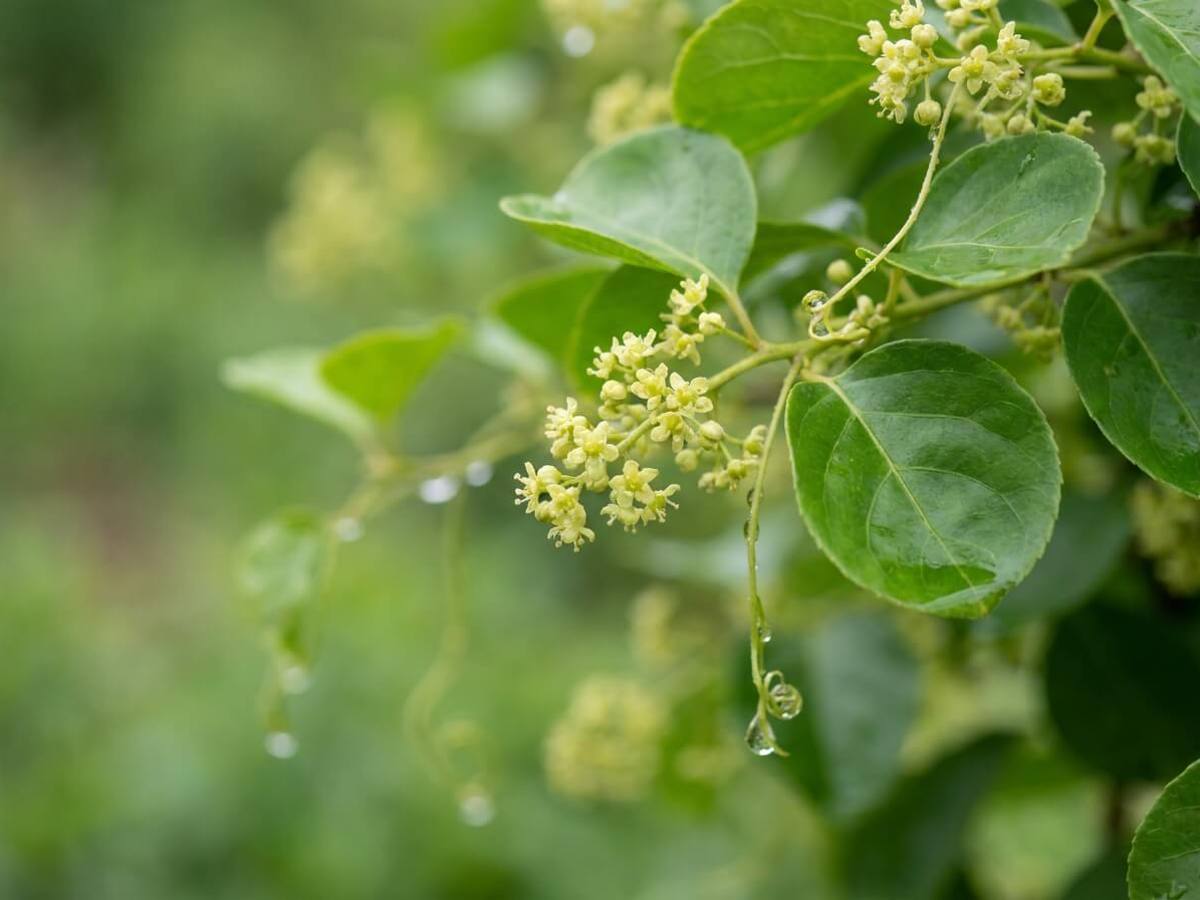
Few shrubs earn their keep in late winter quite like Stachyurus praecox, whose bare, mahogany-red stems drip with stiff, pendulous catkin-like racemes of pale primrose bells long before the leaves appear. Native to the woodland edges of Japan, it forms an elegant, arching shrub that looks superb against a dark evergreen backdrop or an old brick wall. Its most distinctive trait is that the flower spikes are formed the previous autumn and hang, closed and bead-like, all through the winter — a promise of spring in waiting.
Early spiketail flowers most freely in full sun, but it is a woodland-edge plant at heart and is perfectly happy in dappled or partial shade. What matters more than light levels is shelter: the fragile flowers open in February, so a position screened from cold easterly winds and out of early morning sun after frost will keep them looking good for weeks.
Give it a fertile, moisture-retentive but free-draining soil enriched with leaf mould or garden compost. It performs best on neutral to acid ground and resents thin, dry, chalky soils, where the foliage often turns chlorotic and growth stalls. A deep loam over sandstone or a well-mulched sandy loam suits it perfectly; heavy clay is tolerated if drainage has been improved.
It is reliably hardy across most of Britain, Ireland and temperate Europe, and in USDA zones 6–9. In colder inland gardens the plant itself survives easily, but the flowering season may be shortened by hard frosts, so wall-side or courtyard planting pays dividends.
Autumn is the ideal planting season, giving roots a full winter and spring to establish before summer heat arrives. Container-grown plants can also go in during early spring, provided you commit to watering through the first two summers.
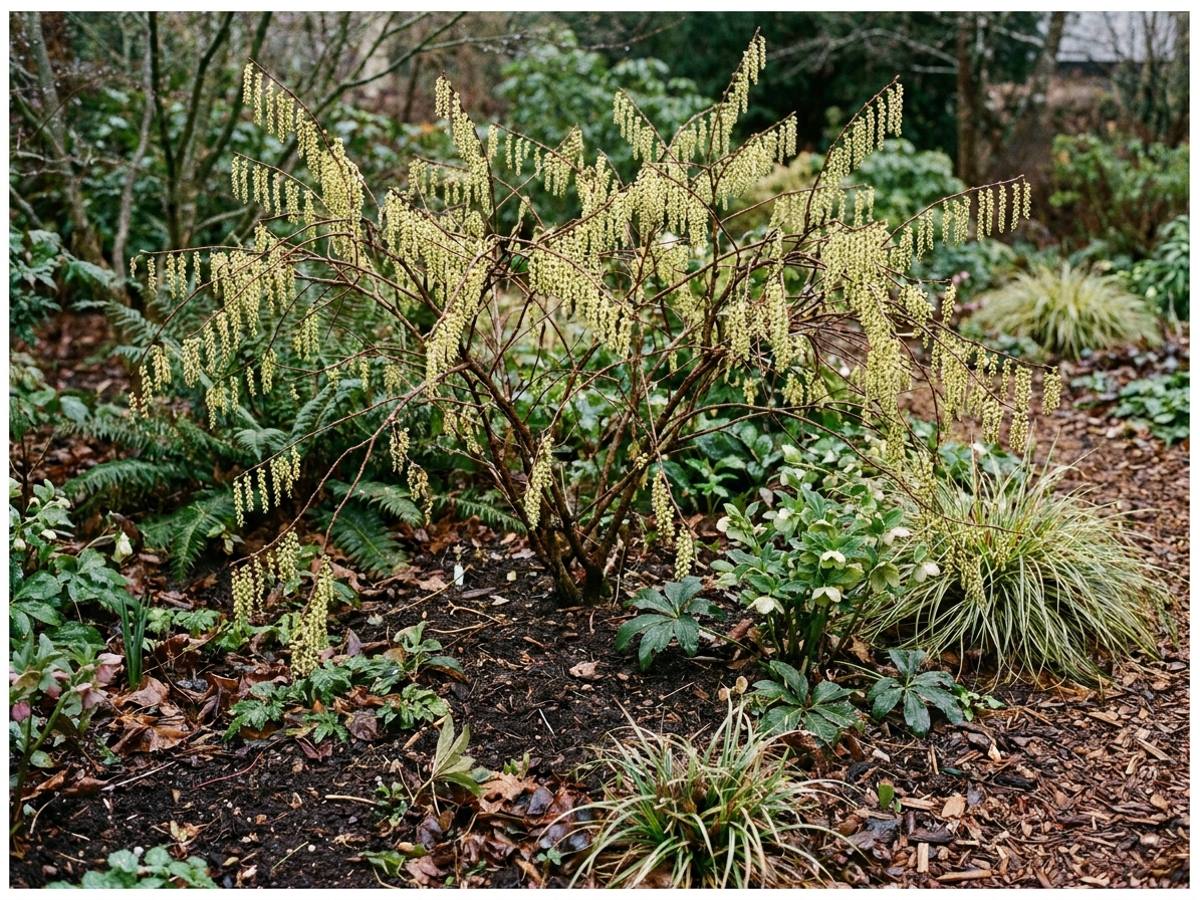
The plain species is the one most often sold, but two selections and a related Chinese species give slightly different effects. Use the table to decide which suits your site before you plant.
| Variety | Flowers | Foliage and habit | Best for |
|---|---|---|---|
| Stachyurus praecox (species) | Racemes 5–8 cm of pale yellow bells | Red-brown stems, arching | The classic choice; holds an AGM |
| S. praecox ‘Rubriflorus’ | Buds and bracts flushed rosy-pink | Dark stems, two-tone effect | A warmer colouring on bare wood |
| S. praecox var. matsuzakii | As the species | Bolder and more upright, thicker green shoots, larger leaves | A sheltered coastal garden |
| S. chinensis ‘Magpie’ | Longer flower spikes | Grey-green leaves margined cream and flushed pink | Summer foliage as much as flowers |
Whichever you pick, give it room: the arching branches display their spikes best when uncrowded.
The plain species is the one most often sold, but two selections and a related Chinese species give slightly different effects. Use the table to decide which suits your site before you plant.
Whichever you pick, give it room: the arching branches display their spikes best when uncrowded.
Spring: Once the last flower spikes have faded in late March, carry out any pruning — shorten flowered shoots and remove one or two of the oldest stems at the base to encourage fresh growth. Feed with a balanced organic fertiliser or a mulch of compost, and top up the mulch layer to conserve moisture. Avoid pruning later, as next winter’s flower buds form from midsummer onwards.
Summer: Water young plants deeply once a week in dry spells; established shrubs cope well but may drop leaves early if parched. Keep the root run cool and shaded with a mulch or low underplanting. This is the season to take semi-ripe cuttings and to check for scale insects on the undersides of leaves.
Autumn: The foliage colours to soft butter-yellow before falling, revealing the ready-formed flower spikes. Clear fallen leaves from around the base if mildew has been an issue, then mulch generously with leaf mould. Autumn is also the best time to plant, move or separate rooted layers.
Winter: The shrub is fully dormant and needs no protection in most gardens, though a fleece thrown over young plants during a severe cold snap will safeguard the swelling buds. Resist any winter tidying — you would simply cut off the coming display.
The species itself holds an RHS Award of Garden Merit, but a few selections and close relatives are well worth seeking out.