Prayer Plant: expert care guide for healthy, vibrant foliage
0
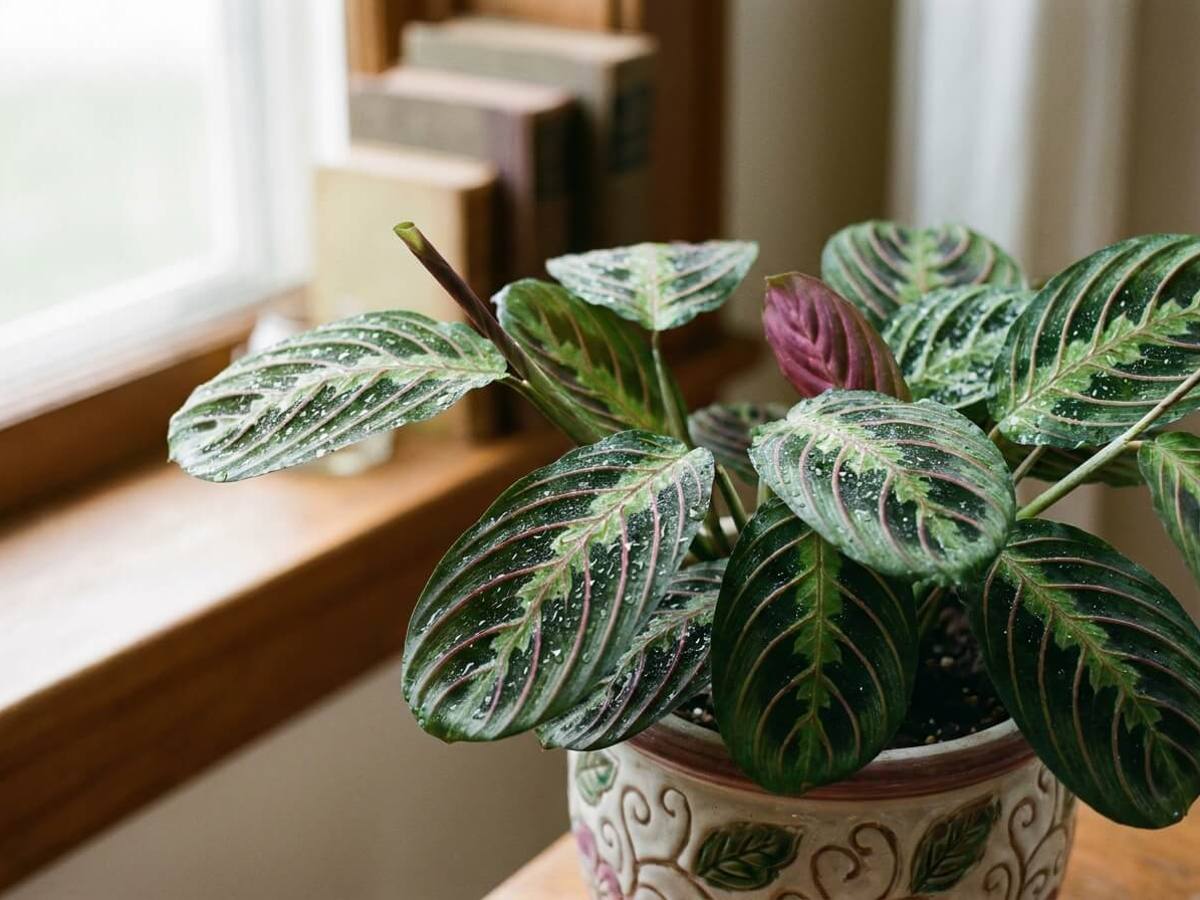
Few houseplants put on such a theatrical performance as Maranta leuconeura, whose boldly veined, velvety leaves rise and fold together at dusk like a pair of praying hands. Patterned in herringbone red, deep olive or silvered green, it makes an outstanding foliage plant for shelves, low tables and shaded conservatory corners. Give it warmth, humidity and soft water, and it will spread into a lush, low mound that trails handsomely over the rim of a pot.
Growing conditions
In its native Brazilian rainforest understorey, Maranta leuconeura grows in dappled shade beneath taller canopy plants. Indoors, it thrives a metre or so back from an east- or north-facing window, where light is bright but filtered. Direct sun bleaches the markings and scorches the leaf edges within days.
Use an open, peat-free mix based on coir or composted bark with added perlite and a handful of fine leaf mould. The roots are shallow and fibrous, so they need air as much as moisture; heavy, dense compost quickly turns sour. Aim for a slightly acidic pH of around 5.5–6.5.
This is a strictly frost-tender plant that sulks below 15 °C and suffers cold damage under 10 °C. In temperate climates it is a year-round indoor plant, though it enjoys a spell outdoors in deep shade during the warmest summer weeks.
How to plant Maranta
Pot or repot in spring, as light levels rise and new growth begins — roots re-establish fastest then. Maranta resents disturbance in autumn and winter, when growth slows almost to a standstill.
Space plants 25–30 cm apart in a shallow bowl or trough so the trailing stems can interlace without trapping stagnant air.
Set the crown level with the compost surface; burying the stem bases invites rot.
Choose a wide, shallow pot and add 2 cm of grit or bark chips at the base — the root ball is broad rather than deep.
Water in thoroughly with tepid rainwater, then let the surface dry slightly before watering again.
Propagate by division in spring, or take 10 cm stem cuttings cut just below a node; they root readily in water or damp compost within three to four weeks.
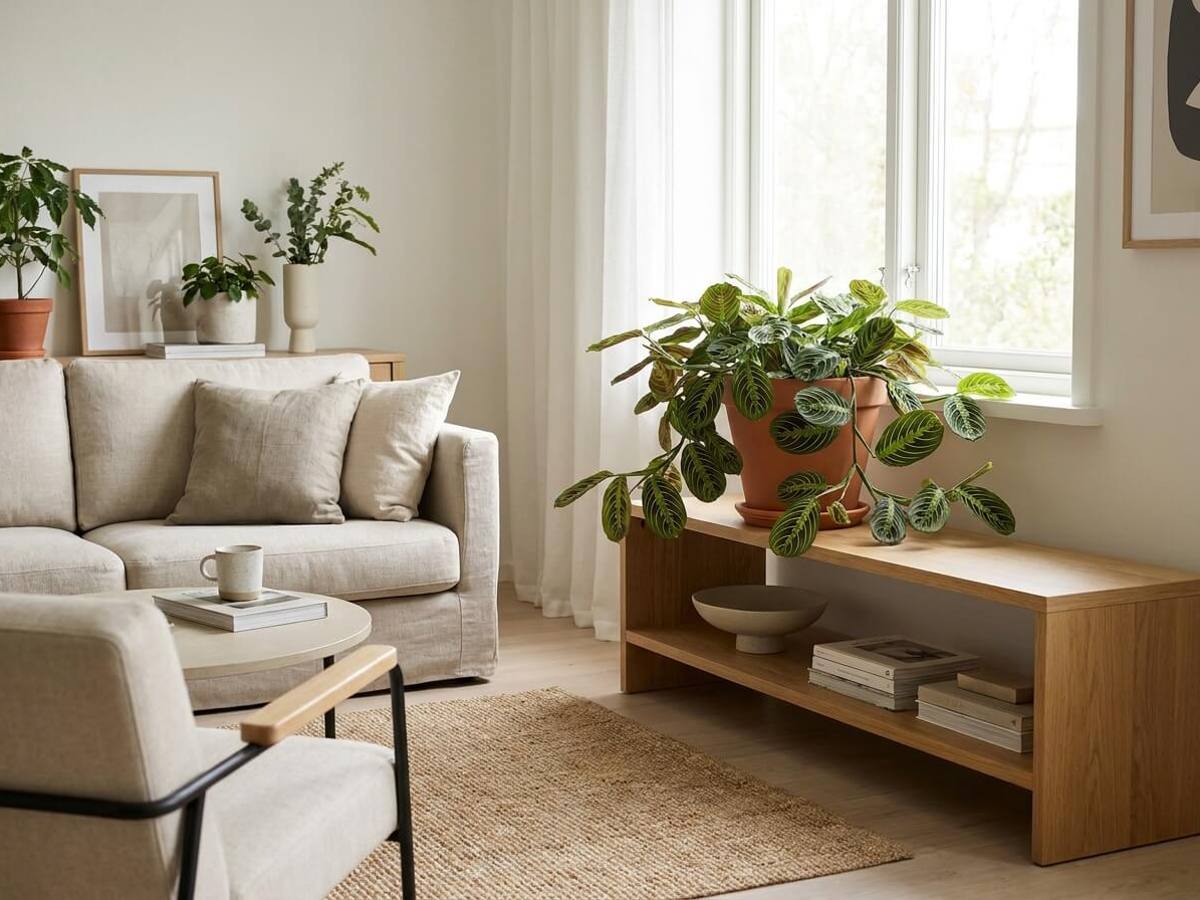
Maranta leuconeura displayed as a houseplant in a home interior
Care through the seasons
Spring: Begin feeding every three to four weeks with a balanced liquid feed at half strength as new leaves unfurl. This is the moment to divide congested clumps or move plants into a pot one size larger. Pinch back leggy stems to encourage branching from the base.
Summer: Keep the compost evenly moist but never waterlogged, using rainwater or filtered water at room temperature. Mist in the morning or stand the pot on a tray of damp pebbles — humidity above 60 per cent keeps leaf tips from browning. Shade from any direct sun that creeps in through south-facing glass.
Autumn: Taper off feeding from September and reduce watering as growth slows. Remove any tired or spotted leaves at the base to keep the clump tidy and airy. Move plants slightly closer to a window to compensate for falling light levels.
Winter: Growth pauses; water only when the top 2–3 cm of compost feels dry, and keep the plant well away from radiators and draughty doorways. Never allow temperatures to dip below 12 °C.
Best varieties to grow
All are grown purely for their foliage, and each has a distinct personality.
Maranta leuconeura var. erythroneura — the classic herringbone plant, with vivid crimson veins radiating across dark velvety green; holder of the RHS Award of Garden Merit.
Maranta leuconeura var. kerchoveana — “rabbit’s tracks”, pale apple-green with twin rows of chocolate blotches that fade to olive with age.
Maranta leuconeura ‘Massangeana’ — the black maranta, with a silvery central vein and fine silver lateral veining on near-black foliage.
Maranta leuconeura ‘Lemon Lime’ — a brighter, more compact selection with acid-yellow veins; excellent in low-light rooms where darker forms look dull.
Pests, diseases and common problems
Red spider mite: Fine webbing in leaf axils and a dull, stippled bronzing of the foliage, almost always caused by dry air. Raise humidity, rinse the undersides of leaves weekly and introduce Phytoseiulus persimilis predators in warm conditions.
Brown, crisp leaf tips: Usually a reaction to hard tap water, fluoride or chlorine, or to low humidity. Switch to rainwater or water left to stand for 24 hours, and group plants together to create a humid microclimate.
Root rot and yellowing lower leaves: Caused by cold, saturated compost in winter. Tip the plant out, cut away blackened roots, repot into fresh open mix and water sparingly until new growth appears.
🌿 Nature & Garden Newsletter
Gardening tips, recipes & seasonal advice, twice a week.