Growing meadow rue: care, varieties and garden uses
·
0
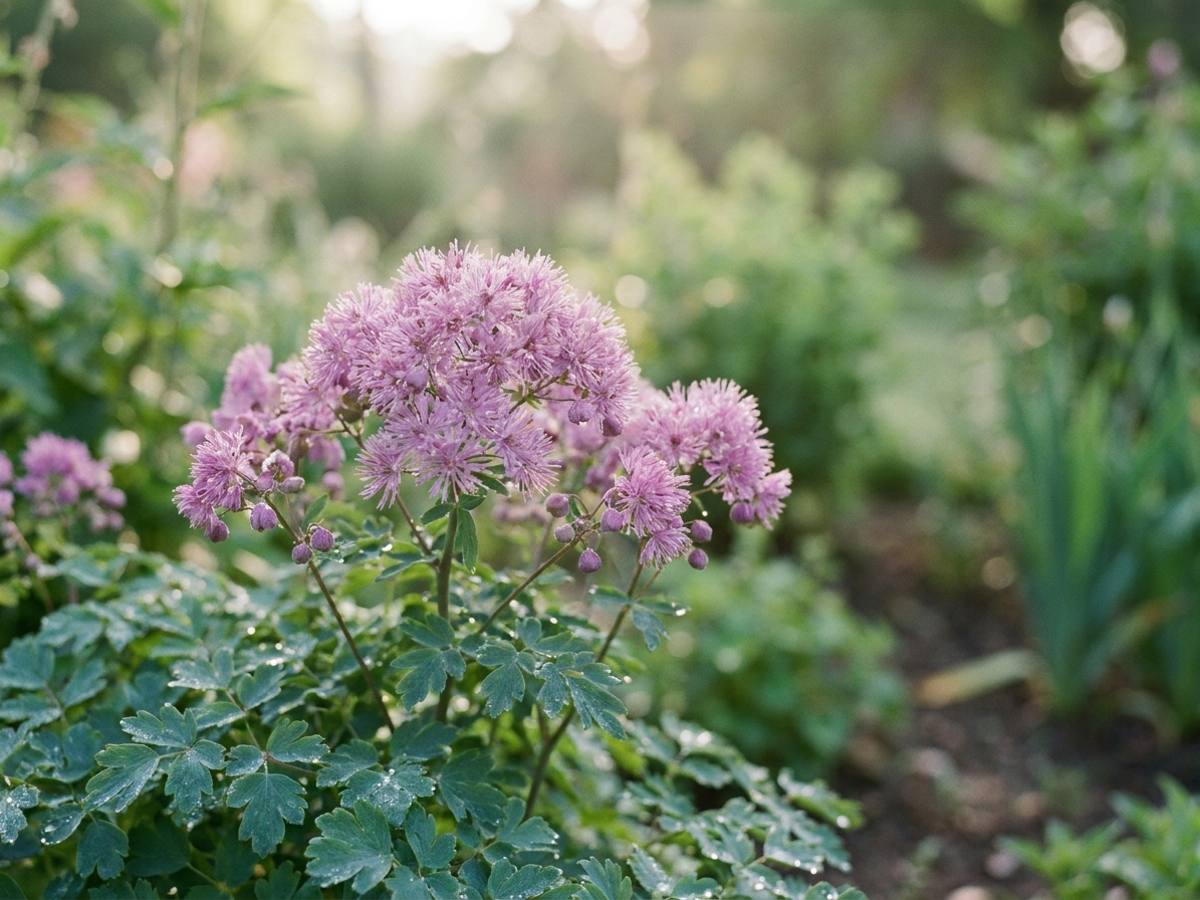
Thalictrum aquilegiifolium is one of the most graceful early perennials for the middle of a border, sending up airy clouds of fluffy lilac, mauve or white flowers on slender, dark-tinted stems. The blue-green foliage is delicately divided and almost identical to that of an aquilegia, giving the plant a soft, ferny texture long before it blooms. Unusually, the flowers have no petals at all — the powder-puff effect comes entirely from a mass of coloured stamens.
Growing conditions
Dappled or partial shade suits this woodland-edge plant best, ideally with a few hours of gentle morning sun. It will grow happily in full sun in cooler, northern or coastal gardens, provided the roots never dry out. In hot summer regions, afternoon shade is essential to stop the foliage scorching and the flowers fading early.
Give it a deep, moisture-retentive soil enriched with leaf mould or well-rotted compost. Heavy clay is tolerated as long as it does not sit waterlogged in winter, whilst thin sandy or chalky soils need generous organic matter first. A neutral to slightly alkaline pH is ideal, though it copes well with mildly acidic ground.
It is thoroughly hardy across the British Isles and most of northern Europe, shrugging off hard frosts once dormant. Shelter from strong wind is the main consideration, as the tall, slim flowering stems can be snapped by summer gusts.
How to plant Thalictrum
Autumn and early spring are the best planting seasons, when the soil is warm and reliably moist so roots establish before flowering. Avoid planting in the heat of midsummer, as the fleshy roots resent drying out.
Space plants 45–60 cm apart — they form slowly expanding clumps and need air movement to discourage mildew.
Set the crown level with the surrounding soil; burying it deeply invites rot in wet winters.
Fork a bucketful of leaf mould or garden compost into each planting hole to hold moisture through summer.
Water in thoroughly and keep new plants damp for their first full growing season.
Propagate by dividing established clumps in early spring, or sow ripe seed in autumn in a cold frame — fresh seed germinates far more reliably.
Thalictrum aquilegiifolium growing in a naturalistic garden border
Care through the seasons
Spring: Growth emerges late, often not until mid-April, so mark the position to avoid hoeing through the crown. Apply a mulch of compost around the base as shoots appear, and insert discreet twiggy supports early so stems grow up through them. A light feed of general-purpose organic fertiliser is enough for the whole year.
Summer: Water deeply during dry spells — drought stress causes crisped leaf margins and premature dormancy. Deadhead spent flower stems if you want to prevent prolific self-seeding, or leave a few heads to develop their attractive winged seed clusters. In humid weather, thin congested stems slightly to improve airflow.
Autumn: Cut back yellowing foliage to ground level once it has fully died down, usually in October or November. Lift and divide congested clumps every four or five years, replanting the vigorous outer portions. A mulch of leaf mould over the crown feeds the soil and conserves moisture for spring.
Winter: The plant disappears completely below ground and needs no protection in temperate gardens. Simply ensure the soil is not waterlogged, as winter wet is the only real threat to established crowns.
Best varieties to grow
A handful of named forms offer stronger colour and better substance than the wild species.
‘Thundercloud’ — the darkest and best known, with dense, deep purple-lilac puffs on near-black stems; holds an RHS Award of Garden Merit.
‘Album’ — pure white fluffy flowers that shine in shade and pair beautifully with blue geraniums and hostas.
‘Purpureum’ — reliably rich mauve-purple, slightly earlier to flower and excellent for cutting.
var. sibiricum — a stockier, more compact form to around 70 cm, useful where wind is a problem.
Pests, diseases and common problems
Slugs and snails: They shred the tender emerging shoots in April, sometimes destroying a whole crown. Protect new growth with wool pellets, sharp grit or evening hand-picking until stems reach 20 cm.
Powdery mildew: A white bloom on leaves in hot, dry spells, usually where plants are crowded or too dry at the root. Mulch generously, water at the base, and remove affected foliage promptly.
Stem collapse and wind damage: Tall stems flop or snap after summer storms. Stake early with pea sticks or a discreet ring support rather than tying stems tightly, which spoils the plant’s natural airiness.
🌿 Nature & Garden Newsletter
Gardening tips, recipes & seasonal advice, twice a week.