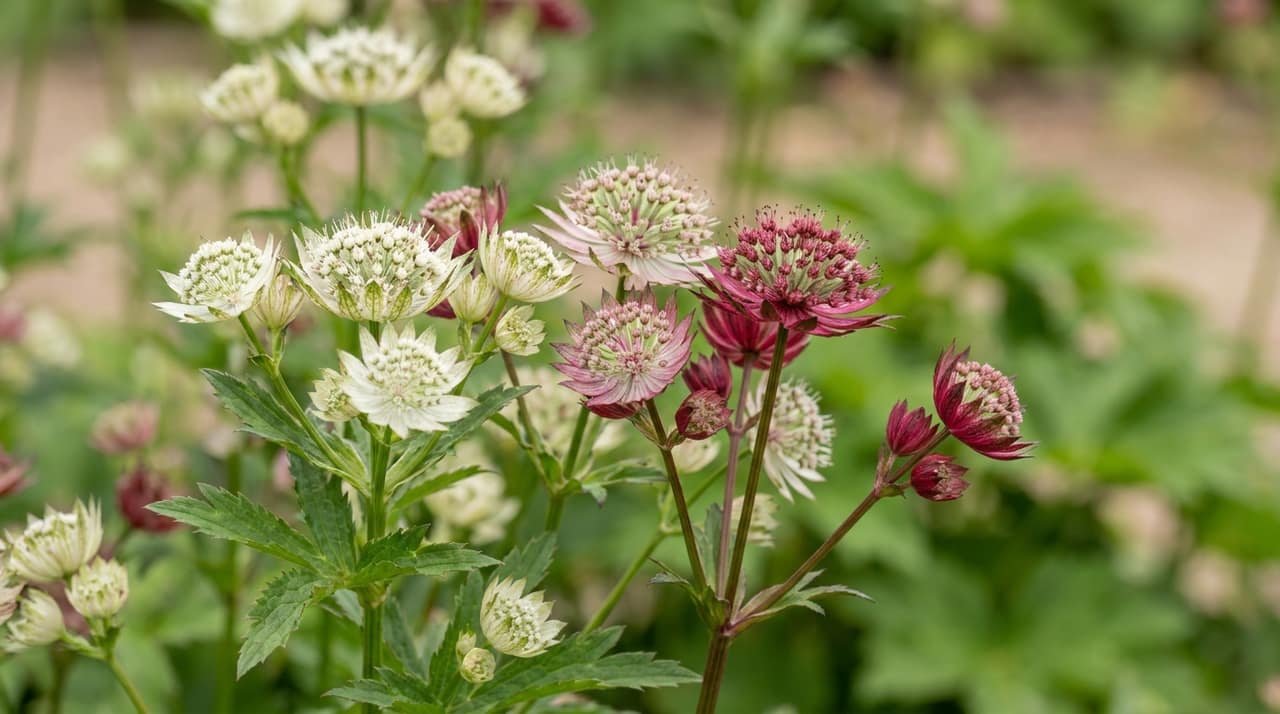
Astrantia major, commonly known as masterwort or great masterwort, is a cottage-garden favourite prized for its delicate, star-shaped flower heads that seem almost architectural in their precision. The blooms appear in soft white, pink, or deep burgundy shades throughout summer and autumn, making it a reliable choice for both fresh and dried arrangements. Its airy foliage and long flowering season ensure it earns its place in herbaceous borders and shade gardens alike.
Astrantia major thrives in partial shade, where it flowers prolifically without scorching in summer heat. In cooler northern regions, it tolerates full sun provided the soil remains consistently moist. A lightly dappled position beneath deciduous trees is ideal, offering protection from midday sun whilst allowing plenty of light.
This plant prefers moist, well-drained soil rich in organic matter; it dislikes both drought and waterlogging. Neutral to slightly alkaline soil suits it best, though it adapts to most garden soils except heavy clay without amendment. Add compost or leaf mould during planting to improve moisture retention and fertility.
Astrantia major is fully hardy throughout the UK and northern Europe. It thrives in maritime climates where humidity and consistent moisture prevent stress, and performs equally well in continental gardens where spring and autumn moisture is reliable.
Plant in spring (March to May) or autumn (September to October) when the soil is workable and rainfall is expected. Container-grown plants can be planted year-round outside the hardest frost periods.
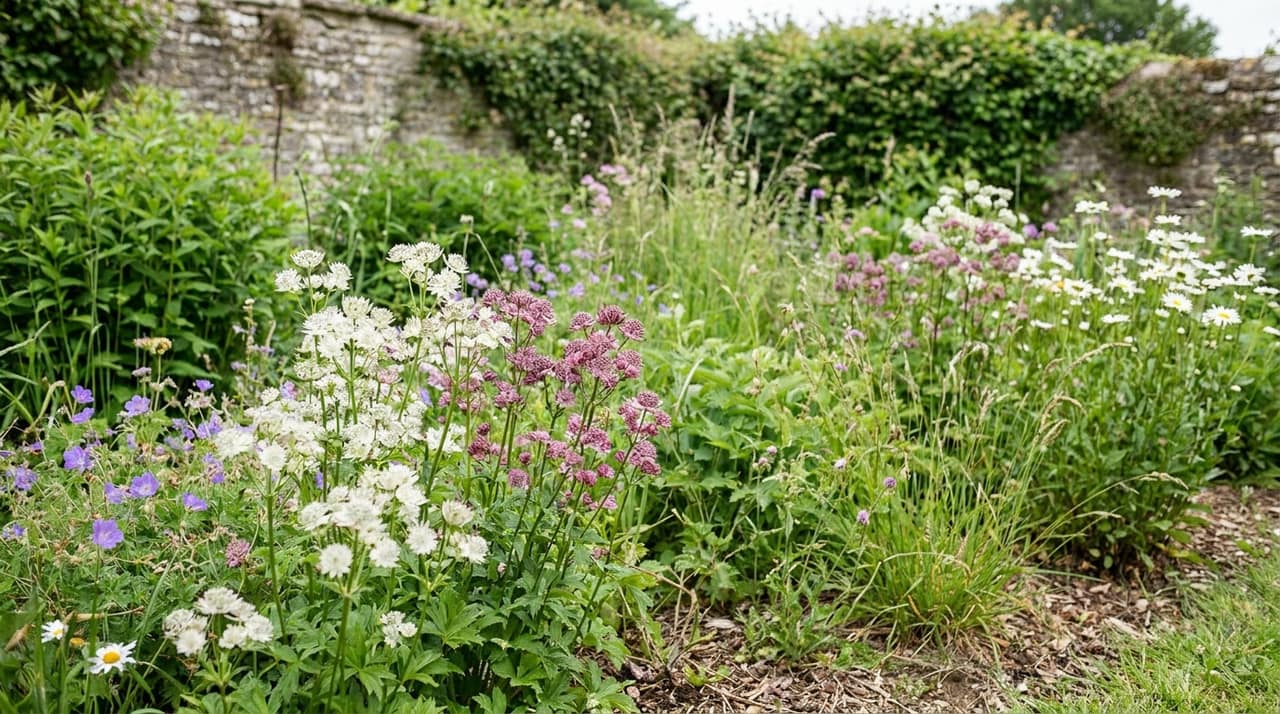
Astrantia asks for very little, but what it asks for changes with the season. This calendar sets out the one or two jobs that matter at each point of the year.
| Season | Main job | What to leave or remove |
|---|---|---|
| Early spring | Apply a balanced granular feed or mulch with compost as new growth emerges | Remove dead winter foliage; stake early with twiggy pea sticks on windy sites |
| Summer | Water regularly in dry spells, aiming for soil as moist as a wrung-out sponge | Deadhead spent flowers to prolong blooming, or leave a few to set seed |
| Early autumn | Leave the flower heads standing on the plant | Keep them for dried arrangements and to feed overwintering insects |
| Late autumn | Cut back hard once growth has died back | Leave 5 cm of stem above ground; divide congested clumps if needed |
| Winter | No watering: the plant dies back completely | Add 5 cm of leaf mould or compost over the crown in exposed gardens only |
Keep to this rhythm and the clump will flower from early summer well into autumn.
Spring: As new growth emerges, apply a balanced granular feed or mulch with compost to support the flowering season ahead. Remove any dead foliage from winter and check that the crown is not sitting in water. Early staking with twiggy pea sticks prevents sprawling in windy sites.
Summer: Water regularly during dry spells—aim for soil moisture equivalent to a wrung-out sponge. Deadhead spent flowers to prolong blooming, though allow some to set seed if you wish for self-sown seedlings. In very hot summers, dappled shade and mulch help retain soil moisture.
Autumn: Leave flower heads on the plant through early autumn for dried arrangement potential and to feed overwintering insects. Cut back hard in late autumn (October to November) once growth has died back, leaving 5 cm of stem above ground. Divide congested clumps at this time if needed.
Winter: The plant dies back completely and requires no watering. A 5 cm layer of leaf mould or compost protects the crown in exposed gardens; in most UK gardens, no protection is necessary.
Several outstanding cultivars offer subtle variations in colour and form.
Seedlings from named cultivars rarely come true, so deadhead named plants and propagate them by division if you want the colour to stay consistent.
Dark astrantia cultivars such as ‘Hadspen Blood’, ‘Claret’ and ‘Moulin Rouge’ hold their deep red colouring best with a few hours of sun; in deep shade the burgundy tends to read muddy.
For longer, green-tipped bracts, look for Astrantia major subsp. involucrata Shaggy, another Award of Garden Merit holder.