Mountain Cornflower: expert tips for growing Centaurea montana
0
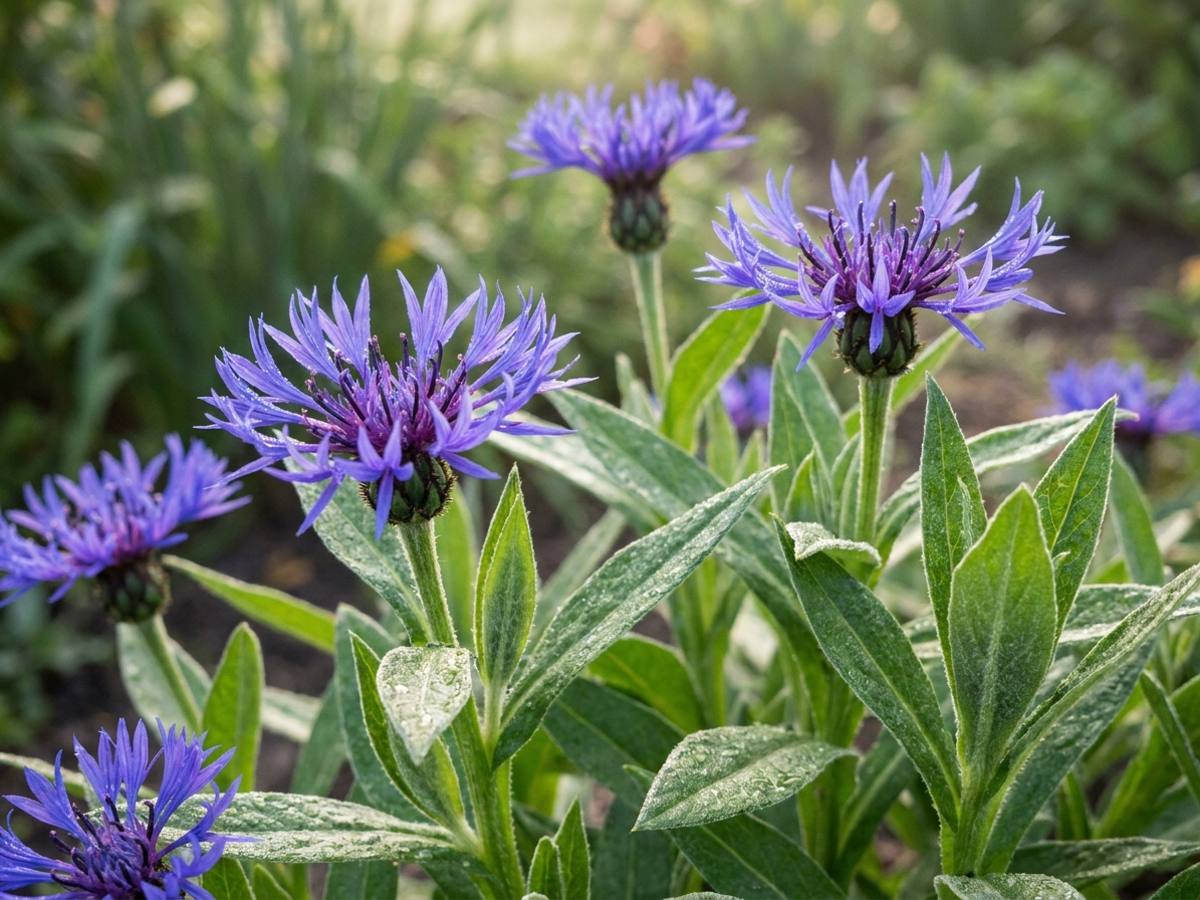
Perennial cornflower is one of the most generous plants in the early-summer border, throwing out shaggy, cobalt-blue blooms with a purple-flushed centre from late spring onwards. It forms a low, spreading clump of soft grey-green leaves that knits happily into cottage-garden planting or a wildlife-friendly gravel bed. Its most distinctive trait is the intricate, thistle-like fringe on each petal — and the fact that it flowers weeks before the true annual cornflower.
Growing conditions
Perennial cornflower flowers best in full sun, where the stems stay stockier and the blue colour is at its most intense. It will cope with two or three hours of shade a day, but in deeper shade the clump flops and blooms thin out. A position sheltered from strong wind saves you staking.
Soil should be free-draining above all else — this is a mountain meadow plant that resents winter wet around the crown. It is unfussy about texture, growing happily on chalk, sand, loam and even improved clay, and prefers a neutral to alkaline pH of around 6.5–7.5. Avoid rich, heavily manured ground, which produces lush leaves and lax, short-lived flowers.
Reliably hardy across the whole of the UK and northern Europe, it also thrives in cooler parts of North America. In hot, dry summer regions such as the Mediterranean or the American South, give it afternoon shade and a mulch to keep the roots cool.
How to plant Centaurea
Autumn and early spring are the ideal planting windows, when the soil is moist and warm enough for roots to establish before the first flush of flowers. Container-grown plants can go in at any time between March and October if you keep them watered.
Space plants 40–45 cm apart — close enough to form a continuous drift within two seasons, but with air movement to discourage mildew.
Set the crown level with the soil surface; burying it deeper invites rot in wet winters.
Fork over the planting area and work in grit or coarse sand on heavy soils; skip the manure, as poor soil gives sturdier stems.
Water in thoroughly with a full can per plant, then keep just moist for the first six weeks — after that it is largely self-sufficient.
Divide established clumps in autumn or early spring, or lift rooted runners from the edge of the clump with a hand fork and replant immediately.
Centaurea montana growing in a naturalistic garden border
Care through the seasons
Spring: New shoots appear early, often by March, so clear away any winter debris to let light reach them. A light scattering of general-purpose fertiliser or a thin compost mulch is plenty. Insert a few twiggy supports around the clump now if it flopped last year.
Summer: Deadhead regularly to keep the display going, then cut the whole plant back hard — to about 10 cm — once the main flush fades in July. This “Chelsea chop in reverse” prompts fresh grey foliage and frequently a second wave of flowers in September. Water only in prolonged drought; established clumps are notably drought-tolerant.
Autumn: Tidy spent growth to the ground after the first frosts, or leave a little for insects to overwinter in. This is the best moment to divide congested clumps, which lose vigour and flower less after three or four years. Dig out any runners straying into neighbouring plants while the soil is soft.
Winter: The plant dies back completely and needs no protection, even in hard frost. Simply make sure it is not sitting in standing water, which is the one thing likely to kill it.
Best varieties to grow
Beyond the classic blue species, breeders have produced several excellent colour and foliage forms.
‘Amethyst in Snow’ — striking white ray florets around a deep violet centre, compact and less prone to flopping.
‘Gold Bullion’ — vivid chartreuse-yellow foliage that lights up shade, topped with the usual blue flowers.
‘Alba’ — a pure white form, lovely with silver-leaved neighbours such as artemisia.
‘Grandiflora’ — larger, richly coloured violet-blue flowerheads on a slightly taller, vigorous plant.
Pests, diseases and common problems
Powdery mildew: Grey-white bloom on leaves in mid-summer, usually after drought or in stagnant air. Cut the plant back hard immediately, water at the base and thin surrounding planting to improve airflow.
Aphids: Blackfly cluster on flower stems and buds in late spring, distorting growth. Squash them by hand or dislodge with a jet of water; ladybirds and hoverflies usually clear the rest within a fortnight.
Flopping and bare centres: Overfed or overcrowded clumps sprawl and go hollow in the middle. Divide every three years, keep the soil lean and avoid nitrogen-rich feeds.
🌿 Nature & Garden Newsletter
Gardening tips, recipes & seasonal advice, twice a week.