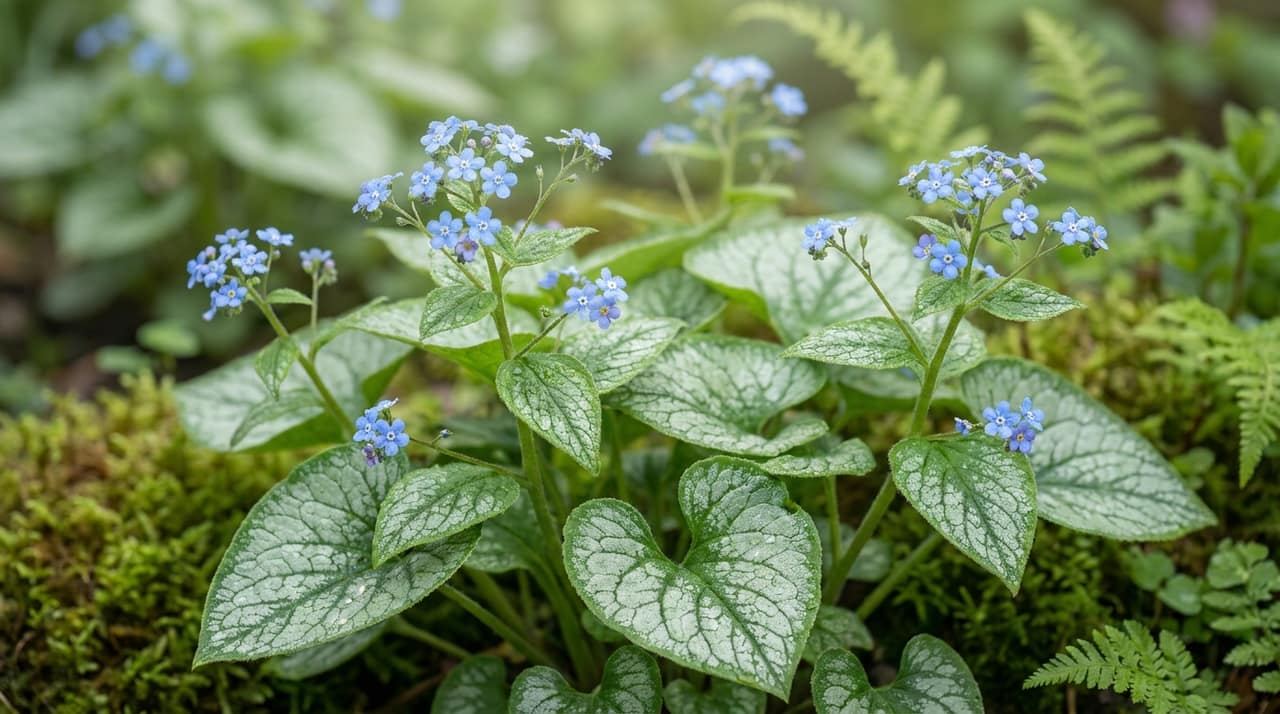
Brunnera macrophylla, commonly known as Siberian bugloss, is a charming shade-loving perennial renowned for its delicate forget-me-not-like flowers held well above handsome heart-shaped foliage. The dainty blue flowers emerge in spring and early summer, making it an excellent choice for woodland gardens, shaded borders, and alongside hostas and hellebores. What sets it apart is its exceptional tolerance of dry shade—a notoriously difficult gardening condition.
Growing conditions
Brunnera thrives in partial to full shade, making it ideal for north-facing borders and woodland settings. Whilst it tolerates dry shade better than most perennials, growth is more vigorous in dappled light with some afternoon sun.
This plant prefers moist, well-drained soil rich in organic matter, though it adapts to poor, sandy, or clay soils once established. A neutral to slightly alkaline pH is optimal, but it’s not fussy and will grow in most garden soils with the addition of compost at planting time.
Brunnera is fully hardy across the UK and northern Europe, tolerating temperatures to −15 °C without protection. It performs reliably from southern England to Scotland, though in very dry summers additional watering benefits growth and flowering.
How to plant Brunnera
Plant in early spring or autumn when the soil is moist and the plant can establish roots before winter or summer drought. Autumn planting often produces stronger plants the following year.
Space plants 60 cm apart to allow room for mature spread without overcrowding
Plant with the crown at soil level—never bury it or leave it exposed
Dig a planting hole enriched with garden compost or well-rotted manure to improve water retention
Water thoroughly after planting and keep the soil consistently moist for the first 4–6 weeks
Divide established clumps in spring or autumn to create new plants or rejuvenate tired specimens
Care through the seasons
Spring: Emerging foliage appears in late March, pushing through winter mulch. Apply a balanced slow-release fertiliser in early April as flower buds swell, and remove any winter-damaged leaves. Deadheading spent flower stems in late May will extend flowering and keep plants tidy.
Summer: Once flowering finishes in June, foliage becomes the main attraction; keep plants moist during dry spells, as this encourages a second flush of growth. Many gardeners cut back hard (to 15 cm) after flowering to freshen the foliage and reduce self-seeding. This prevents unwanted seedlings and often produces neater, more attractive foliage over autumn.
Autumn: Foliage may become mottled or tired-looking by late September; cut back to ground level in October or November, clearing away all dead material. Apply a 5 cm mulch of composted bark or leaf mould around the plant base to protect the crown and suppress weeds through winter.
Winter: The plant is fully dormant and requires no care. In areas with very heavy frost or waterlogged soils, ensure drainage is good to prevent root rot.
Best varieties to grow
The species is excellent, but several cultivars offer striking foliage or longer flowering periods.
Brunnera macrophylla — The species with plain green heart-shaped leaves and airy sprays of pale blue forget-me-not flowers; award winner (RHS AGM).
‘Silver Heart’ — Stunning silvery-white variegated foliage that brightens shady corners; flowers are the same pale blue, making this a dual-season interest plant.
‘Hadspen Cream’ — Cream and green variegated leaves with a similar habit and flower display; excellent for brightening dense shade.
‘Jack Frost’ — Green leaves with distinctive silvery-white veining that resembles frost damage; particularly striking in winter and a real focal point in darker borders.
Pests, diseases and common problems
Powdery mildew: White coating on leaves in dry conditions; improve air circulation by cutting back hard after flowering and reduce overhead watering. Spray with fungicide if severe, but prevention through good hygiene is most effective.
Slugs and snails: Holes in young spring foliage; encourage ground beetles and hedgehogs by providing undisturbed mulch, or use organic slug pellets sparingly around vulnerable plants. Beer traps are also effective.
Self-seeding: Abundant seedlings may appear after flowering if spent flower stems are not deadheaded promptly. Remove flowering stems as soon as flowers fade to prevent this, or allow a few seedlings and remove unwanted ones whilst small.
Poor flowering in shade: Too much dense shade reduces flower production; thin overhead tree canopy slightly to admit dappled light, or divide and replant in slightly brighter positions.
🌿 Nature & Garden Newsletter
Gardening tips, recipes & seasonal advice, twice a week.