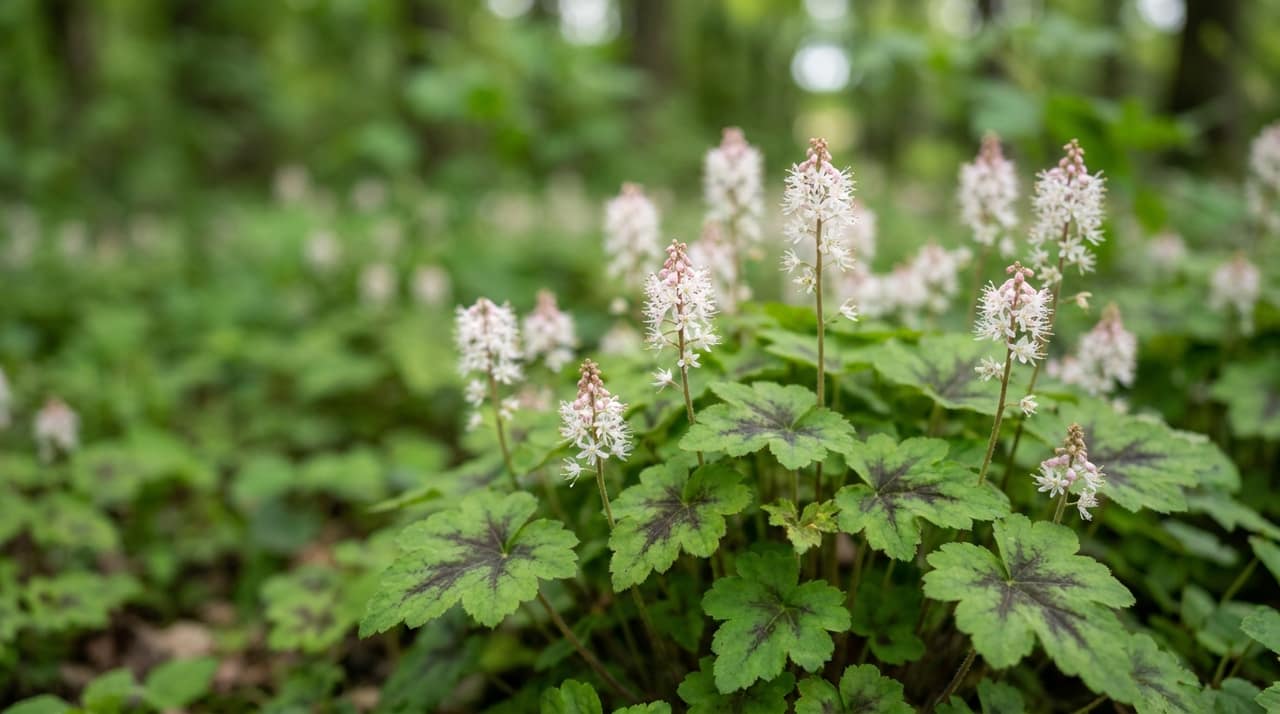
Tiarella cordifolia, commonly known as Foamflower, is a delightful woodland perennial prized for its heart-shaped foliage and delicate spires of frothy white flowers. It excels as groundcover in shaded borders, under trees, and alongside ferns and hostas, bringing lightness and movement to darker corners. This semi-evergreen beauty doubles as an elegant foliage plant, with many varieties displaying striking burgundy or bronze veining that intensifies in cooler months.
Tiarella cordifolia thrives in partial to full shade, making it ideal for woodland gardens and north-facing borders. Whilst it tolerates dappled sunlight, foliage colour deepens and flowering becomes more prolific in demi-shade where it receives a few hours of morning or filtered light.
This species prefers consistently moist, well-draining soil enriched with organic matter. It dislikes waterlogged conditions and heavy clay, so amending planting beds with leaf mould or compost improves both drainage and fertility. A slightly acidic to neutral pH (6.0–7.0) is ideal, though it tolerates a broader range provided moisture and humus levels are maintained.
Tiarella is fully hardy across the British Isles and thrives in cooler maritime climates. In warmer southern regions, afternoon shade and reliable moisture prevent stress during extended dry spells.
Plant Tiarella cordifolia in spring or early autumn when soil moisture and cool air temperatures support establishment. Spring planting allows full-season root development before summer; autumn planting suits mild regions with reliable winter rainfall.
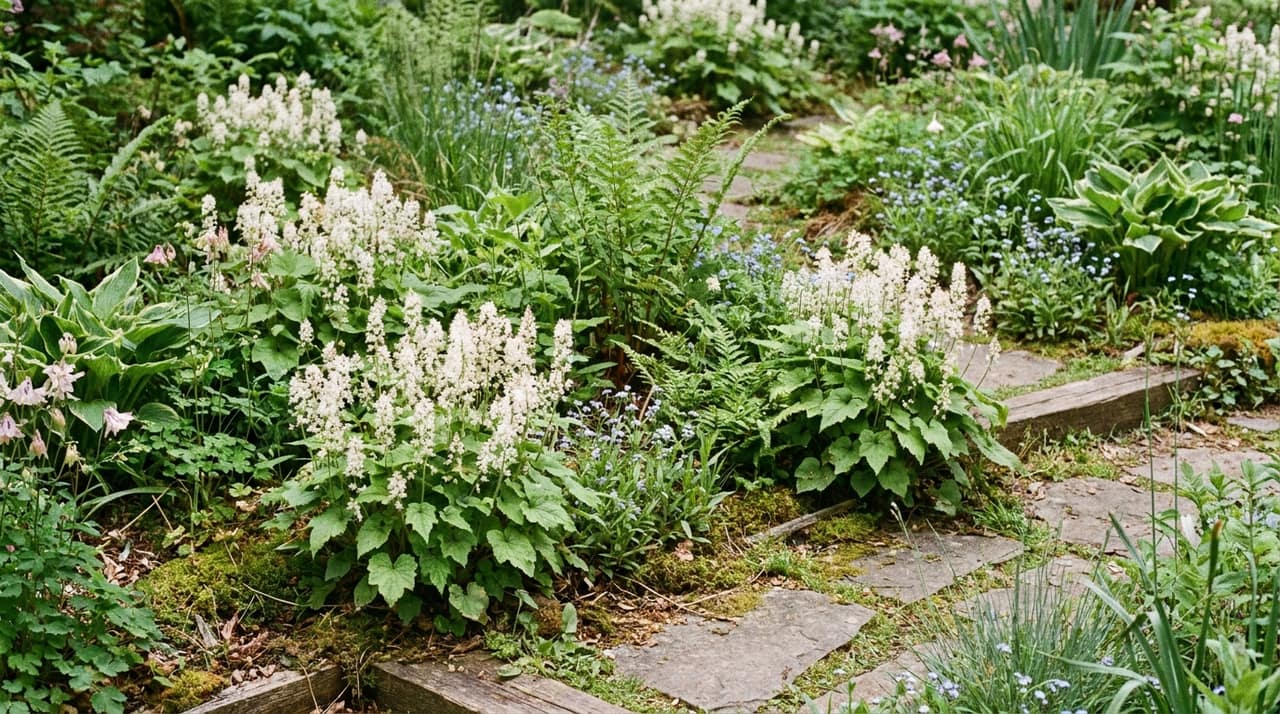
Foamflower asks for very little, but what it asks for changes with the season. This table sets out the whole year before the detail that follows.
| Season | Main tasks | Mulch and feeding | Why it matters |
|---|---|---|---|
| Early to mid-spring | Remove winter-damaged foliage; deadhead faded flower spikes | 2–3 cm mulch of leaf mould; balanced slow-release feed | Gentle feeding avoids lush, weak growth and keeps flowering going |
| Summer | Monitor soil moisture; cut back sprawling runners | Extra mulch, or afternoon shade cloth, in hot dry regions | Prevents leaf scorch and stress, and keeps neighbours from being overtaken |
| Early to late autumn | Divide overcrowded clumps; cut back dead or diseased stems | Fresh 2–3 cm mulch of composted bark or leaf mould in late autumn | Divisions root before winter; healthy leaves protect the crown |
| Winter | Leave the semi-evergreen foliage in place | Light mulch only on cold, exposed sites | Insurance against frost heave and excessive root exposure |
The sections below take each season in turn.
Spring: Remove any winter-damaged foliage and apply a 2–3 cm mulch of leaf mould around the crown. Feed with a balanced, slow-release fertiliser in late March; Tiarella responds well to gentle feeding without lush, weak growth. Deadhead faded flower spikes to tidy appearance and encourage continued flowering.
Summer: Monitor soil moisture, particularly during dry spells, as Tiarella prefers consistently moist conditions. Cut back any sprawling runners if the plant threatens to overtake neighbours or desired pathways. In hot, dry regions, afternoon shade cloth or extra mulch helps prevent leaf scorch and stress.
Autumn: Divide overcrowded clumps in early autumn, allowing new divisions time to root before winter. Cut back dead or diseased stems in late September, but leave healthy foliage to protect the crown and provide winter interest. Apply a fresh 2–3 cm mulch of composted bark or leaf mould in November.
Winter: Tiarella remains semi-evergreen and requires no special protection in most British gardens. In harsh winters or cold exposed sites, a light mulch offers insurance against frost heave and excessive root exposure.
Several cultivars offer enhanced foliage colour and varied flowering habit for the discerning gardener.