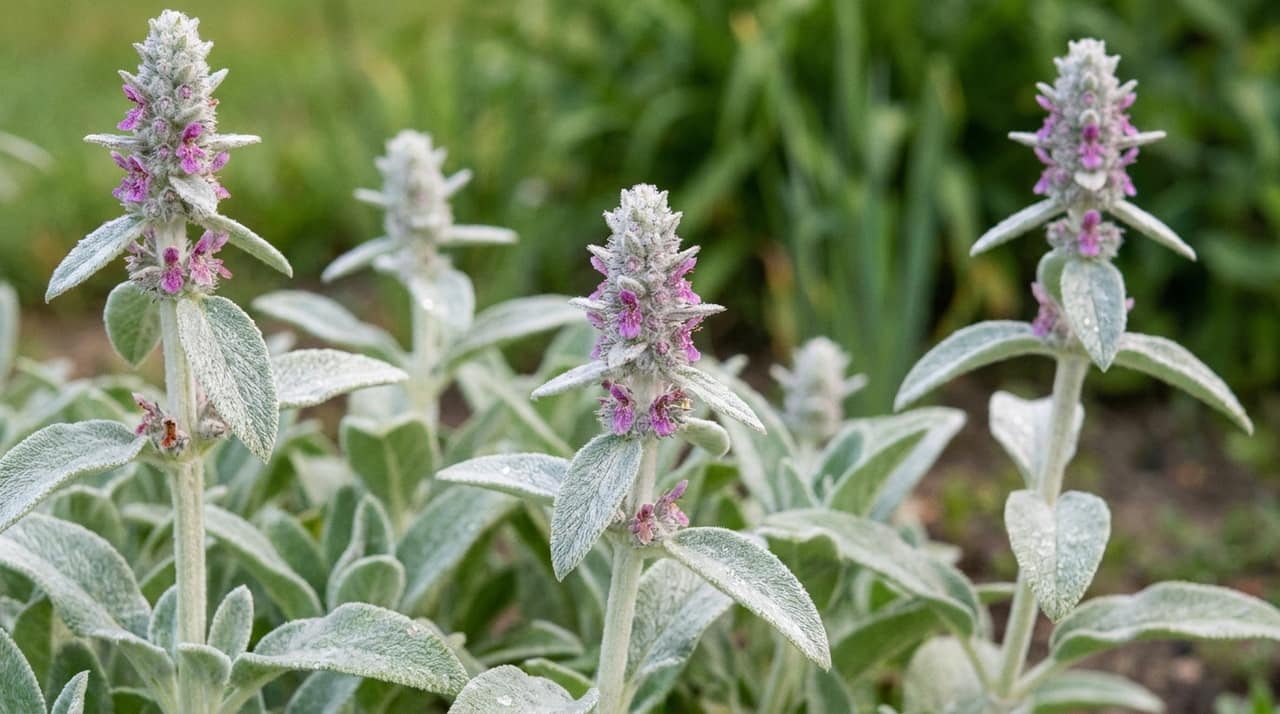
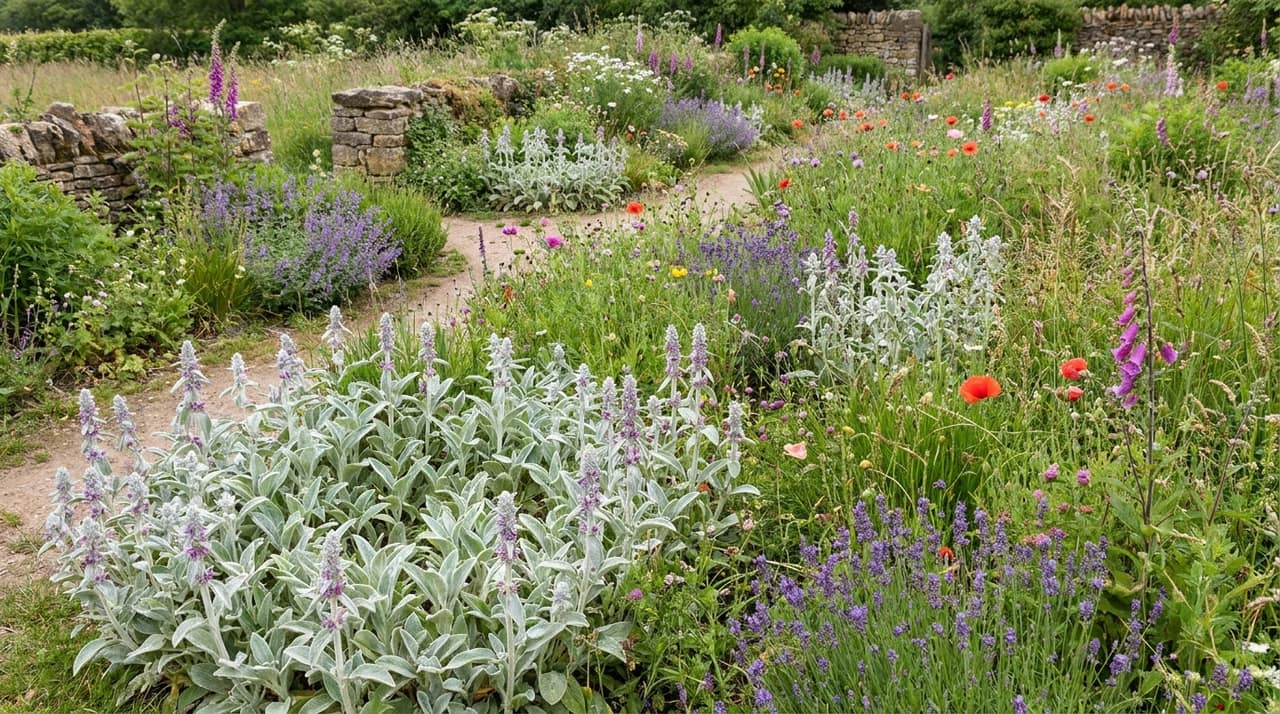
Stachys byzantina, commonly known as lamb’s ear, is prized for its soft, silvery-grey foliage that feels velvety to the touch. This low-growing perennial makes an excellent edging plant and ground cover in borders, whilst its distinctive fuzzy leaves create striking textural contrast. It is loved by gardeners seeking a hardy, drought-tolerant addition that requires minimal fussing.
Stachys byzantina thrives in full sun, where the foliage develops its best silvery tone and plants remain compact. Partial shade is tolerated, though growth becomes looser and the leaves less intensely coloured in reduced light. For maximum visual impact, aim for at least six hours of direct sunlight daily.
This plant is exceptionally tolerant of poor, sandy, or gravelly soil and actually performs better in lean conditions than in rich earth. Well-drained soil is essential—wet or waterlogged ground causes root rot and fungal problems. Neutral to slightly alkaline pH is preferred, though lamb’s ear adapts to most soil types provided drainage is excellent.
Fully hardy across the British Isles and northern Europe, Stachys byzantina survives severe winters without protection. In warmer regions with wet winters, it may struggle; improve drainage with grit or sand worked into planting holes to prevent root disease.
Lamb’s ear rewards lean, sunny, sharply drained positions and sulks where the ground stays wet. Compare the main situations before you decide where to plant.
| Situation | What happens to the plant | What to do |
|---|---|---|
| Full sun | Best silvery tone, compact growth | Allow at least six hours of direct sunlight daily |
| Partial shade | Tolerated, but growth looser and leaves less intensely coloured | Accept a softer effect, or move plants into brighter light |
| Poor, sandy or gravelly soil | Performs better here than in rich earth | Skip feeding; lean conditions suit it |
| Wet or waterlogged ground | Root rot and fungal problems | Work grit or sand into planting holes to improve drainage |
| Severe winter cold | Survives without protection across the British Isles and northern Europe | Leave dormant plants alone; no winter covering needed |
In short, drainage decides the outcome far more than cold does.
Plant in spring or autumn when soil moisture is reliable and temperatures are mild. Spring planting allows young plants time to establish before summer, whilst autumn planting enables them to settle during dormancy.
Spring: Tidy up any dead or damaged growth from winter. New foliage emerges fresh and silver; no feeding is needed unless soil is particularly poor. Divide established plants in early spring if overcrowding occurs.
Summer: Water sparingly except during prolonged drought—this plant thrives on minimal water once established. Deadhead spent flower spikes if you wish to maintain neat foliage focus, or leave flowers for bees and wildlife. If plants become floppy or overgrow neighbours, trim them back gently with shears.
Autumn: Cut back tired or diseased foliage after flowering if necessary, leaving a 5 cm stub to protect the crown. Divide congested plants in mid-autumn and replant divisions at the same depth. Avoid heavy mulching; if your soil is poor and sandy, apply only a light dressing of grit rather than organic matter.
Winter: Lamb’s ear is dormant and requires no care. In exceptionally cold, wet winters on heavy clay, ensure crown-level soil dries between rainfall to prevent rot.
Cultivars of Stachys byzantina differ mainly in leaf size, leaf colour and whether they flower freely or hardly at all. Use the table below to match a variety to the effect you want, whether that is a tidy silver edging or a bold-leaved textural clump.
| Variety | Foliage | Flowering | Habit | Best use |
|---|---|---|---|---|
| Stachys byzantina (species) | Soft grey-green leaves | Mauve-pink flowers | Vigorous clump | Widely available; edging and ground cover in borders |
| ‘Silver Carpet’ | Dense, silver foliage mats | Non-flowering form | Low, mat-forming, compact | Edging where flower spikes would be unwanted |
| ‘Primrose Heron’ | Golden-yellow new growth maturing to soft green with silvery hairs, ageing grey-green | Mauve-pink spikes | Upright when in flower, reaches 45 cm tall | Colour contrast with dark foliage |
| ‘Big Ears’ | Very large grey-green leaves, larger than the species | Sparse, sometimes none | More robust clump than the species, medium | Bold textural effects in mixed borders |
| ‘Cotton Boll’ | Grey, woolly | Cottony ball-like clusters on stems | Upright flowering stems, medium | Cutting and drying |
| ‘Helene von Stein’ | Large, thick grey leaves | Shy-flowering | Vigorous clump, medium | Heat and humidity tolerance |
| ‘Sheila Macqueen’ | Broad felted silver-grey | Very sparing | Low spreading, compact | Foliage edging, flower arranging |