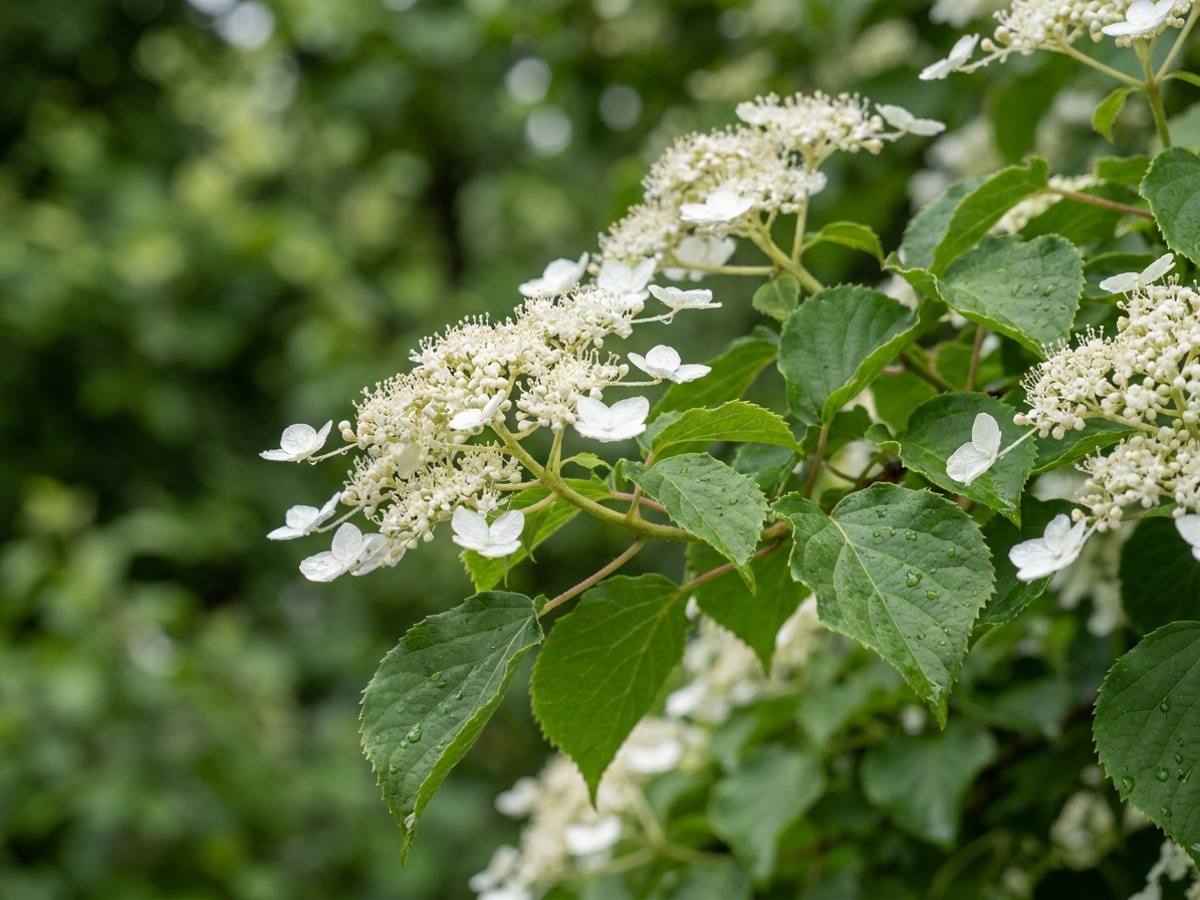
Hydrangea petiolaris, the climbing hydrangea, is a deciduous woody vine prized for its delicate white lacecap flowers and rich autumn foliage. This vigorous climber clings to walls, fences and trees via aerial rootlets, making it ideal for north-facing or shaded elevations where many flowering climbers struggle. Its romantic, cottage-garden appeal combined with remarkable hardiness and low-maintenance nature has made it a beloved choice for British gardens.
Climbing hydrangea thrives in partial shade or dappled sunlight, and remarkably tolerates full shade better than most flowering climbers. North-facing walls are an ideal home for this species, as morning sun and afternoon shadow prevent scorching whilst still triggering reliable flowering. Avoid south-facing positions in hot, dry regions, where the foliage may scorch and growth may slow considerably.
This plant prefers moist, humus-rich, well-drained soil with a slightly acidic to neutral pH. Incorporate plenty of leaf mould or garden compost at planting time to mimic the woodland conditions it favours in its native Japanese habitat. Heavy clay soils are tolerable if drainage is improved; waterlogged sites will cause root rot and should be avoided.
Climbing hydrangea is fully hardy throughout the UK and northern Europe, withstanding temperatures well below −15 °C once established. Young plants may benefit from shelter in their first winter, but mature specimens require no frost protection and perform exceptionally well in upland gardens and exposed coastal sites.
Aspect and drainage decide whether this climber flourishes or struggles. Check your wall or border against the table before you dig.
| Position | Suitability | What happens there |
|---|---|---|
| Partial shade or dappled sunlight | Ideal | Thrives, with the woodland-style light it prefers |
| North-facing wall | Ideal | Morning sun and afternoon shadow prevent scorching while flowering stays reliable |
| Full shade | Tolerated | Copes better than most flowering climbers |
| South-facing wall in a hot, dry region | Avoid | Foliage may scorch and growth slows considerably |
| Heavy clay or waterlogged ground | Only with improved drainage | Clay is tolerable once drained; waterlogging causes root rot |
| Upland and exposed coastal gardens | Suitable | Mature plants need no frost protection and perform exceptionally well |
Whatever the aspect, work leaf mould or garden compost into the soil at planting time to mimic its native woodland conditions.
Plant between October and March whilst the plant is dormant; autumn planting allows the roots to establish before the growing season begins. Container-grown plants can be planted in spring if kept well watered through their first summer.

Spring: Prune out any dead or damaged wood in early April before new growth emerges. Feed with a balanced slow-release fertiliser in late April to support the coming flush of foliage and flowering wood. Tie in vigorous new shoots to the support structure to encourage even coverage.
Summer: Water deeply during dry spells, aiming for 5 cm of moisture per week; climbing hydrangea on walls loses moisture rapidly to reflected heat. Monitor the spread and gently train wayward stems back towards the support or trim them if they encroach on neighbours’ boundaries. Deadheading is optional but improves neatness; remove spent flower heads after blooming ceases.
Autumn: Allow faded flower heads to remain if you prefer their sculptural, russet-brown appearance through winter; many gardeners leave them for winter interest. Rake away fallen leaves from around the base to reduce slug and snail habitat. Do not cut back the plant in autumn; wait until spring to assess winter damage.
Winter: The plant enters complete dormancy and requires no watering or feeding. Mature wood is very frost-hardy and usually suffers no damage; however, protect young plants in their first winter with hessian if temperatures drop below −10 °C for prolonged periods.
The species itself is widely available, but several cultivars offer subtle variations in habit and flower.
The species and its three variegated cultivars differ mainly in eventual size, leaf colouring and how much exposure they will take. Use the table to match a plant to the space and aspect you have.
| Plant | Size and vigour | Foliage | Best suited to |
|---|---|---|---|
| Hydrangea petiolaris (species) | Reliably vigorous | Pure white lacecap flowers, glossy mid-green leaves | Large walls |
| ‘Miranda’ | Compact, 4–6 m | Creamy-variegated, increasingly colourful in autumn | Smaller spaces and containers |
| ‘Silver Lining’ | As the species, slightly smaller flowers | White-margined leaves, burgundy-tinged in winter | Winter leaf interest |
| ‘Firefly’ | Slow-growing | Yellow leaf margins | Well-sheltered positions in southern Britain |
Variegated forms are the more delicate of the group, so keep them out of hot, dry positions where the leaves may scorch.