Rains drain away quickly through it, there are no heavy clods to break up, and in summer it can reach record low moisture: that is sandy soil, ideal for carrots, acid-loving camellias and rhododendrons, and for succulents. Water as soon as it dries and feed at every watering, and even poor seaside sand can be made fertile.
But growing from soil that is almost exclusively sand can be a real hindrance for plant development.
Here are the precautions that can be taken to turn dry, poor sandy soil into a rich and fertile growing plot.
Sandy soil – key advantages and facts
It is light and easy to work. No heavy, back-breaking clods of soil to break up.
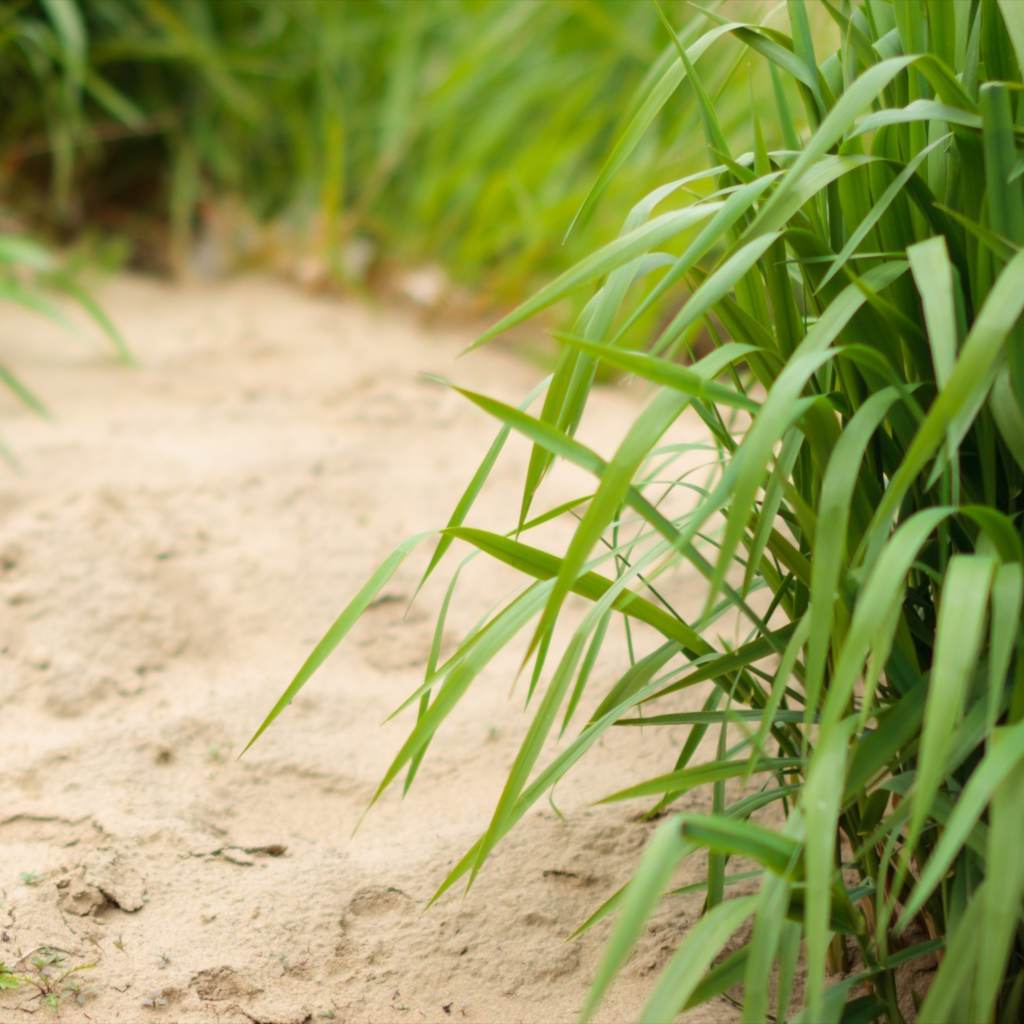
Most of the time sandy soil stays very dry: in winter, rains drain away quickly through the sand. In summer, sand may dry out and reach record low moisture (arid) if not watered.
This makes it excellent for plants that can’t tolerate wet roots.
Sandy soils warm earlier in spring than heavy clay, which can favour early sowings, but because sand also dries out quickly, faster germination only follows if adequate moisture is maintained.
To confirm you really have sand, squeeze a moist handful: it crumbles apart instead of holding a ball the way loam or clay does.
In free-draining sandy soils and containers, water passes through quickly and carries soluble nutrients below the root zone, so small, frequent feeds usually work better than a single heavy application.
In loose, stone-free sandy loam, carrots and other root crops tend to grow straighter and lift more cleanly, because the stones and compaction that commonly cause forked or stunted roots are absent.
Because sandy ground drains quickly, you can usually dig or walk on it soon after heavy rain without smearing it, though wet sand still compacts readily under foot or vehicle traffic.
What plants can grow in sandy soil?
There are a few categories of plants that really do love growing in nearly 100% sandy soil, though extra organic matter usually helps.
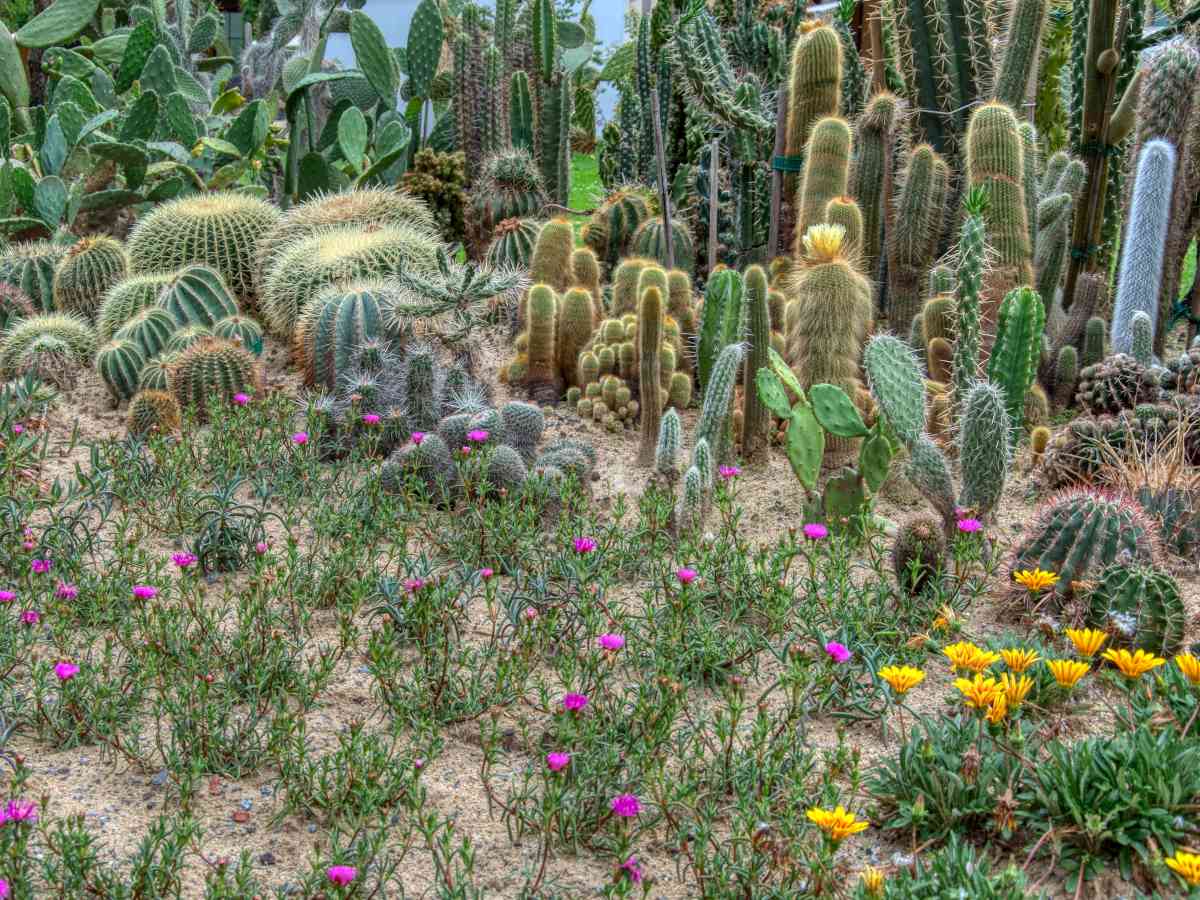
Succulents store rainwater for the dry spells ahead
In places where it rains more frequently, plants that have tubers and starchy stems will do good in sandy soil. They’ll soak water up during rains and store it for when the soil gets dryer.
Whatever you’re trying to grow, remember to add liquid fertilizer to your water when watering. This will guarantee beautiful harvests even in poor sand.
Nitrogen leaches straight through sand, so feed little and often rather than in one large dose.
Skip fresh manure on the carrot bed, as it makes the roots fork and turn hairy; dig in well-rotted compost instead.
Work compost through the whole trench before setting asparagus crowns, since a permanent bed can afterwards only be fed by top-dressing and mulch, with deep incorporation risking damage to the established roots.
Radishes grown with inconsistent watering tend to turn pithy and sharply pungent, and fast-draining sandy beds dry out especially quickly, so water regularly to keep the soil evenly moist.
Which plants suit sandy soil, and why
Sandy soil does not suit everything, but three groups of plants positively enjoy it, and several vegetables tolerate it well. Use the table to match what you want to grow with what the sand can offer.
Which plants suit sandy soil, and why
Group
Examples given
Why sand suits it
What to add
Acid-loving shrubs
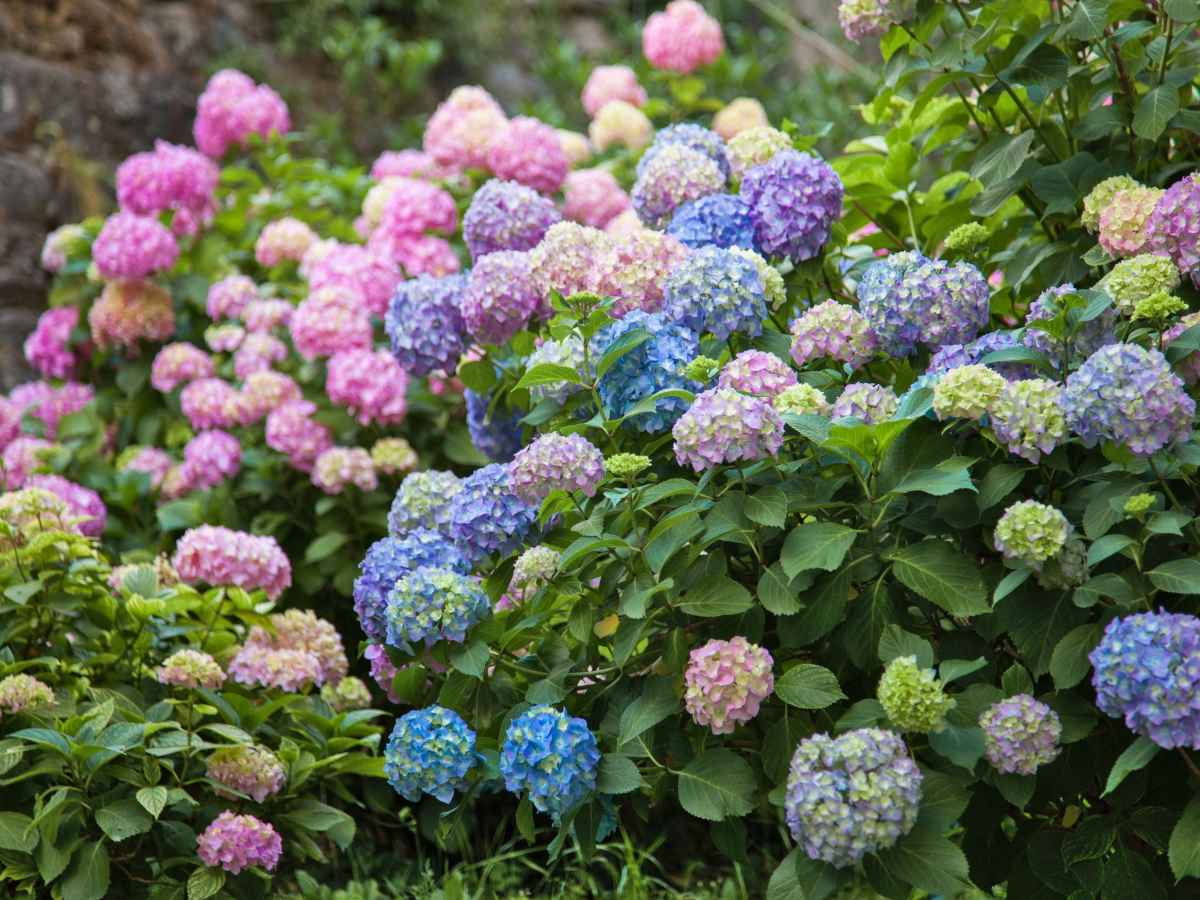
Camellia, rhododendron, azalea, hydrangea, gorse
Sandy soil tends to be acidic
Mix compost into the sand at planting
Plants needing sharp drainage
Impatiens, Sunpatiens, Madagascar periwinkle
Water drains away fast, so roots never sit wet
Water regularly as soon as the soil is dry
Plants that store their own water
Succulents, cactus, Dracaena, Zamioculcas
Tubers and starchy stems soak up rain for dry spells
Little more than weekly watering for Dracaena
Vegetables
Carrot, strawberry, asparagus, beans, radish
Carrots grow well even in nothing but sand
Organic material, plus liquid fertilizer in the watering can
Whatever the group, a seasonal dose of organic matter and a thick plant mulch will make the sand far more welcoming.
How to amend sandy soil
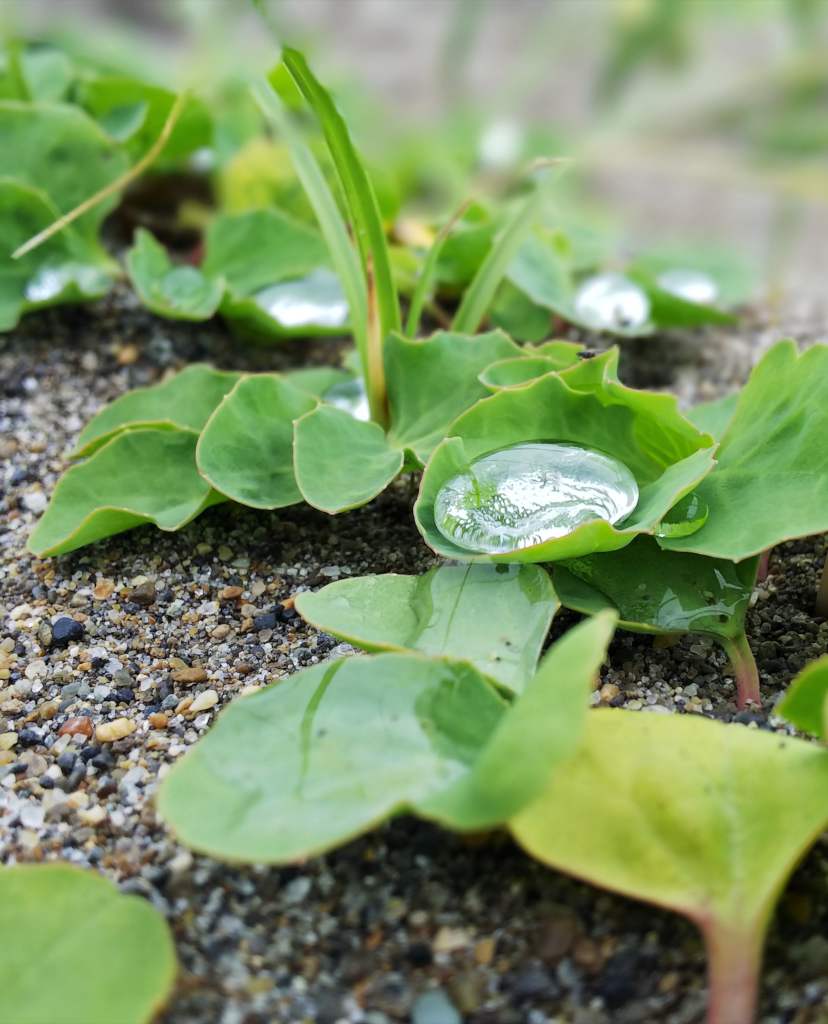
Even poor seaside sand can be made fertile
Usually, soil where most of the matter is sand is very poor. It’s too poor for most plants to grow in at all.
There are several ways to make it richer:
Regularly add organic matter. Do this on a seasonal basis (4 times a year).
Favor natural sources such as compost, manure, seaweed or soil mix.
Ramial wood chips are reputed to be the best possible natural amendment.
Add garden soil to make your soil denser, and more welcoming to other plants.
Water regularly as soon as the soil is dry.
It is important to water in the evening in reduced amounts to avoid evaporation.
In addition to mixing these soil amendments into the sand, lather the top with thick layers of plant mulch. In time, this breaks down and turns into soil deeper down.
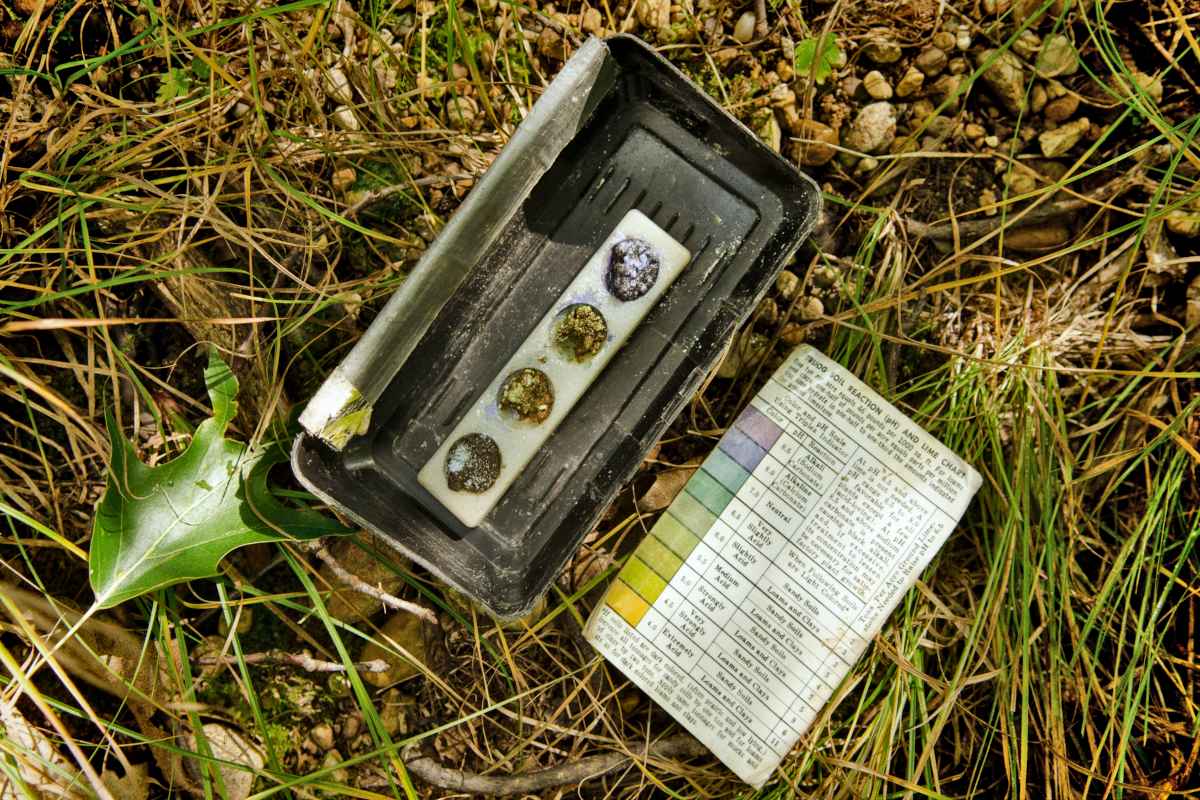
Test the pH before planting camellias or rhododendrons, since coastal sand full of crushed shell can be alkaline rather than acidic.
Nutrients leach straight through sand, so give small, repeated feeds instead of one heavy dose that the next rain will carry past the roots.
Sowing a green manure over bare sandy ground adds root fibre, and while phacelia scavenges residual nitrogen that would otherwise leach away, lupin instead fixes atmospheric nitrogen as a legume.
Written by Gaspard Lorthiois | Loves helping out, especially when it comes to growing things. Worked in herbal medicine, runs a farm, and dabbles in tech. Master's degree and engineer.