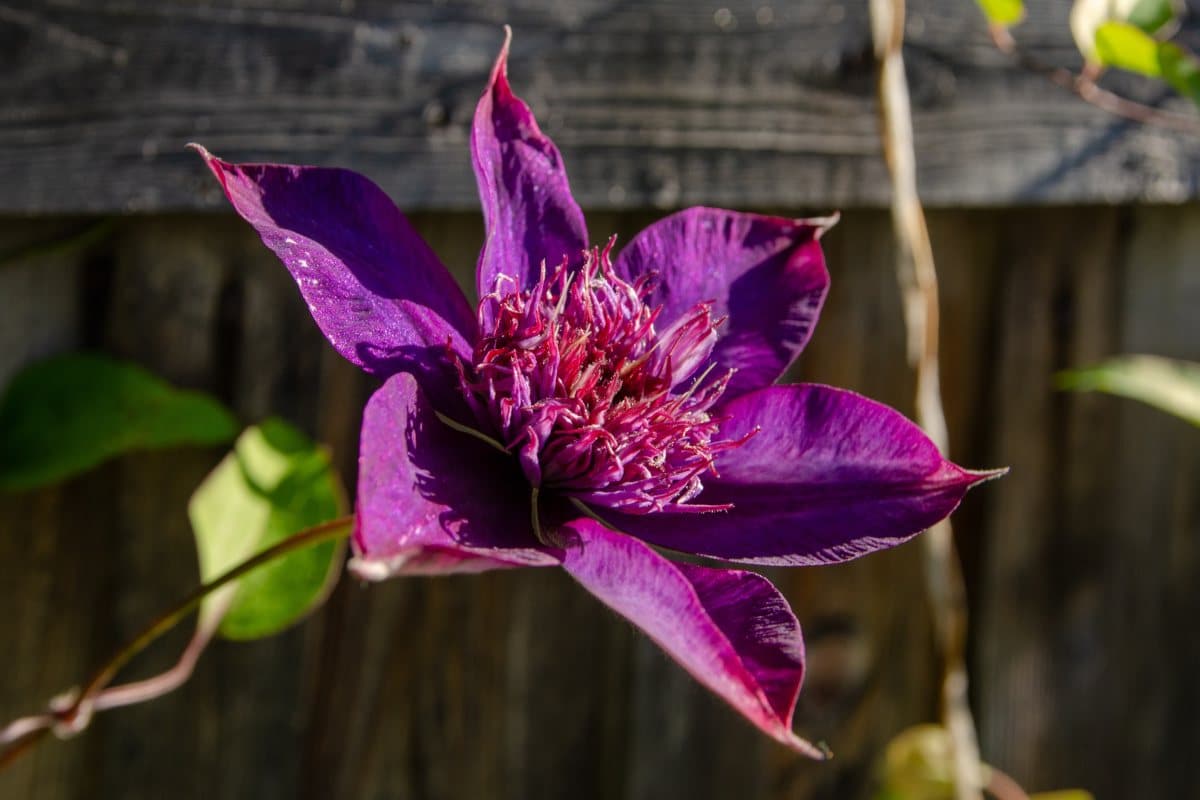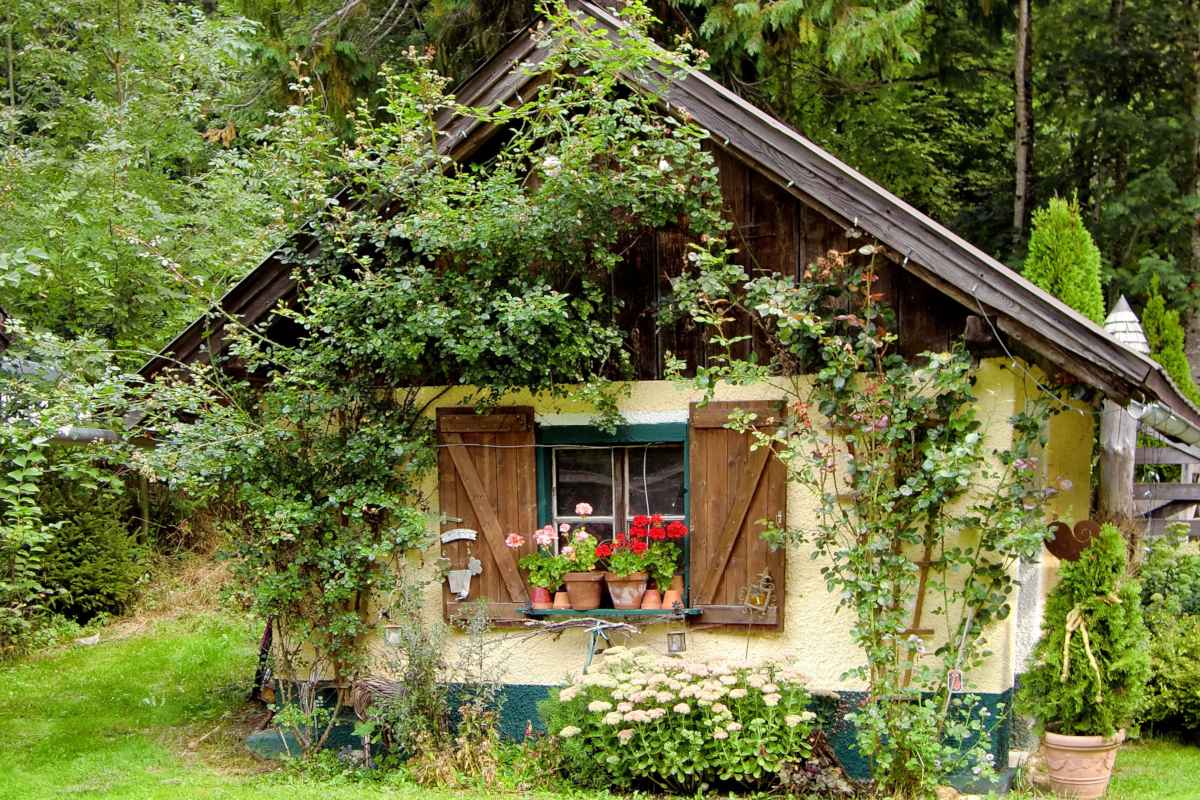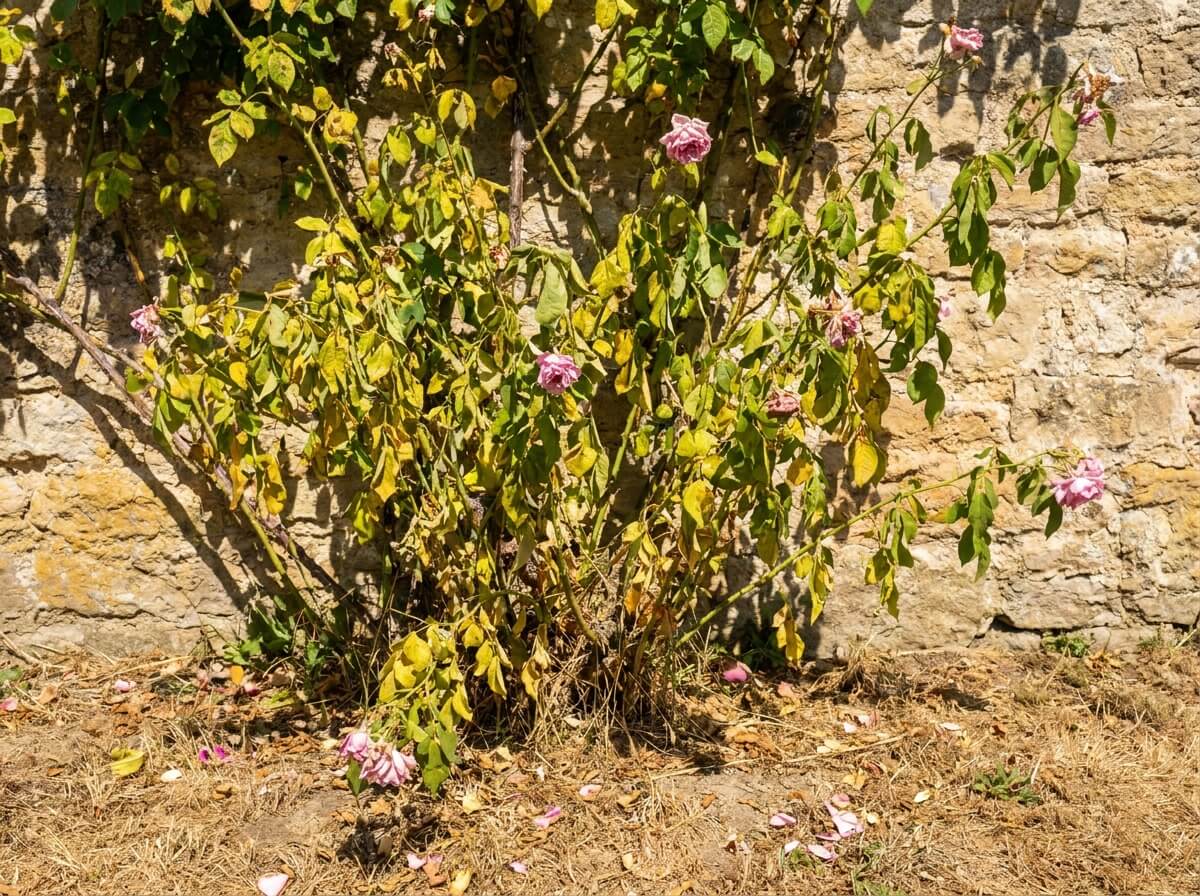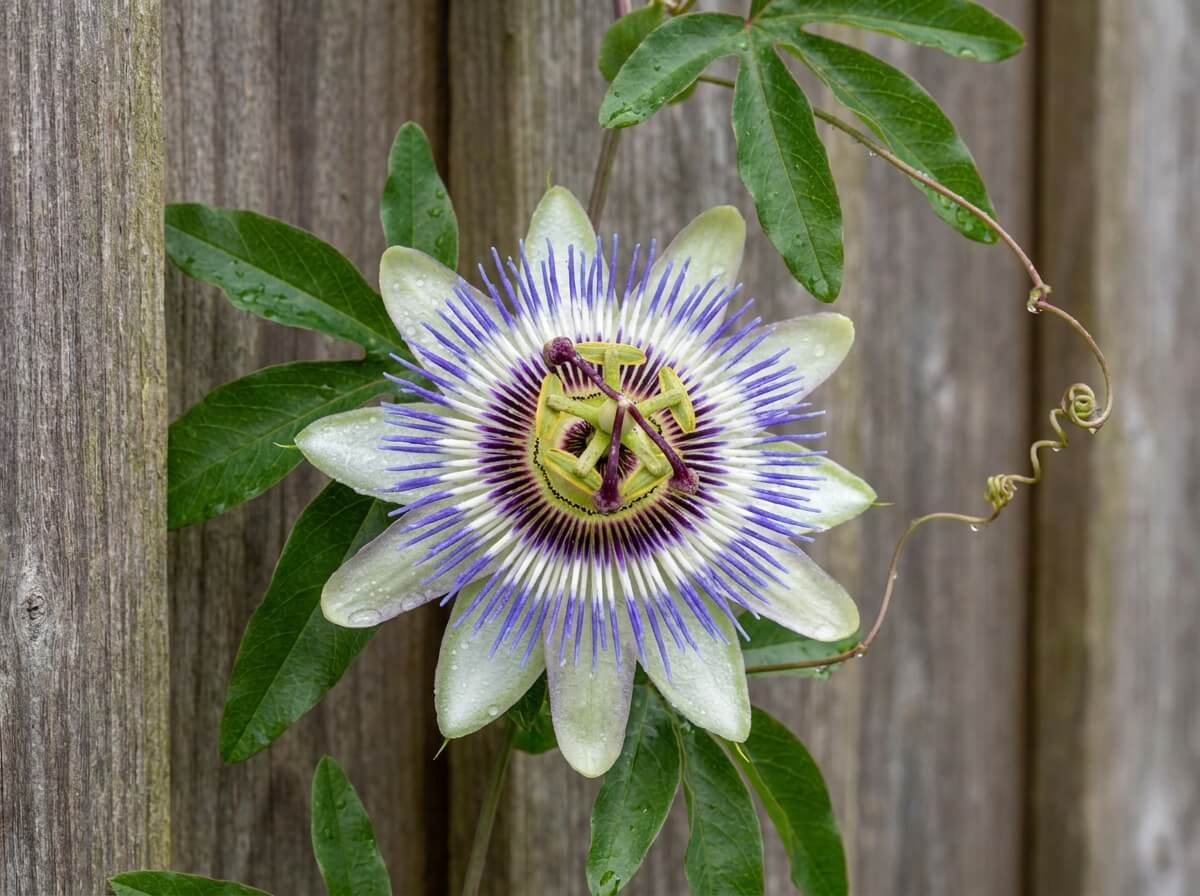
Passion flower (Passiflora caerulea) is already one of the most visually arresting climbers you can shoot up. But pair it with the right clematis on the same fence or trellis, and something genuinely special happens — two different flowering rhythms, two completely different flower shapes, one wall that draws every eye from June to September. This combination costs almost nothing extra to plant and delivers an exotic spectacle most gardens never achieve.
The secret is contrast. Passion flowers are structured, otherworldly, and complex — those concentric rings of purple-tipped filaments around a raised central boss look engineered rather than grown. Clematis flowers are wide, open, and silky. Set them flowering on the same support and the visual tension between the two is extraordinary.
There is a practical reason. The pairing succeeds, too. Passion flower is a rampant plant that can shoot up to 8–10 metres in proper conditions. It easily covers a large sunny fence. Clematis — particularly the late-flowering Viticella group — fills gaps and flowers in relay, often peaking in July and August when passion flower is also at its most productive. So, neither competes aggressively with the other underground; their root systems occupy different depths.
For pollinators, the combination is exceptional. The bee and butterfly activity on a wall like this on a warm morning is genuinely worth watching — hovering, crawling, disappearing into the centres of flowers that look like they belong in a botanical illustration.
Not all clematis suit this pairing equally well. The Viticella types are ideal. They are cut back hard each February, never tangling permanently with the passion flower. Good choices include
For the passion flower, Passiflora caerulea is the non-negotiable choice for UK and Northern European gardens. It is hardy to around -10°C. This plant survives most winters, regrowing from the base even when top growth is lost. In USDA zones 6–10 (much of the US), it is broadly reliable outdoors. Australian and South African gardeners can experiment with Passiflora edulis (the true edible passion fruit) in warmer positions. But, caerulea remains the better flowering performer for ornamental use.
Southern Hemisphere gardeners: this combination is perfect to plan and plant in August–September (late winter/early spring) for flowering from November onwards.
Both plants need a sunny, sheltered wall or sturdy trellis. The setup is simple, but the detail matters.
In the first summer, the passion flower may outpace the clematis considerably. Do not panic.
By year two, both plants know where they are going and the intertwining begins in earnest. Yes, it takes patience in that first season.
The reward from year two onward is worth every week of waiting.
Passion flower needs almost nothing in summer beyond proper watering during prolonged dry spells. Soak the base thoroughly once a week rather than giving light daily sprinkles. Deep watering does wonders for encouraging roots to go down rather than sit at the surface where they dry out fastest. Adopt this principle from the vegetable patch; it is essential.
Resist the urge to cut passion flower stems back during summer flowering. A light tidy — pulling off dead or crossing stems — is fine. But hard pruning is a bit much. Avoid it. It removes the current season’s flowering wood entirely.
Save any significant pruning for late February or early March.
Clematis Viticella types need no deadheading and no mid-season pruning. Let them run. The RHS confirms that Viticella clematis are among the most reliable and lowest-maintenance summer climbers available to UK gardeners. You can consider them proper hardy. The RHS clematis guidance is worth bookmarking if you are choosing varieties.
The thing is, passion flowers open in the morning — around 9am on a sunny day — and close by evening. Each individual bloom lasts just 24 hours.
Stand in front of the wall at 9am on a July morning and watch three or four flowers unwinding simultaneously. It is one of those garden moments that genuinely stops time.
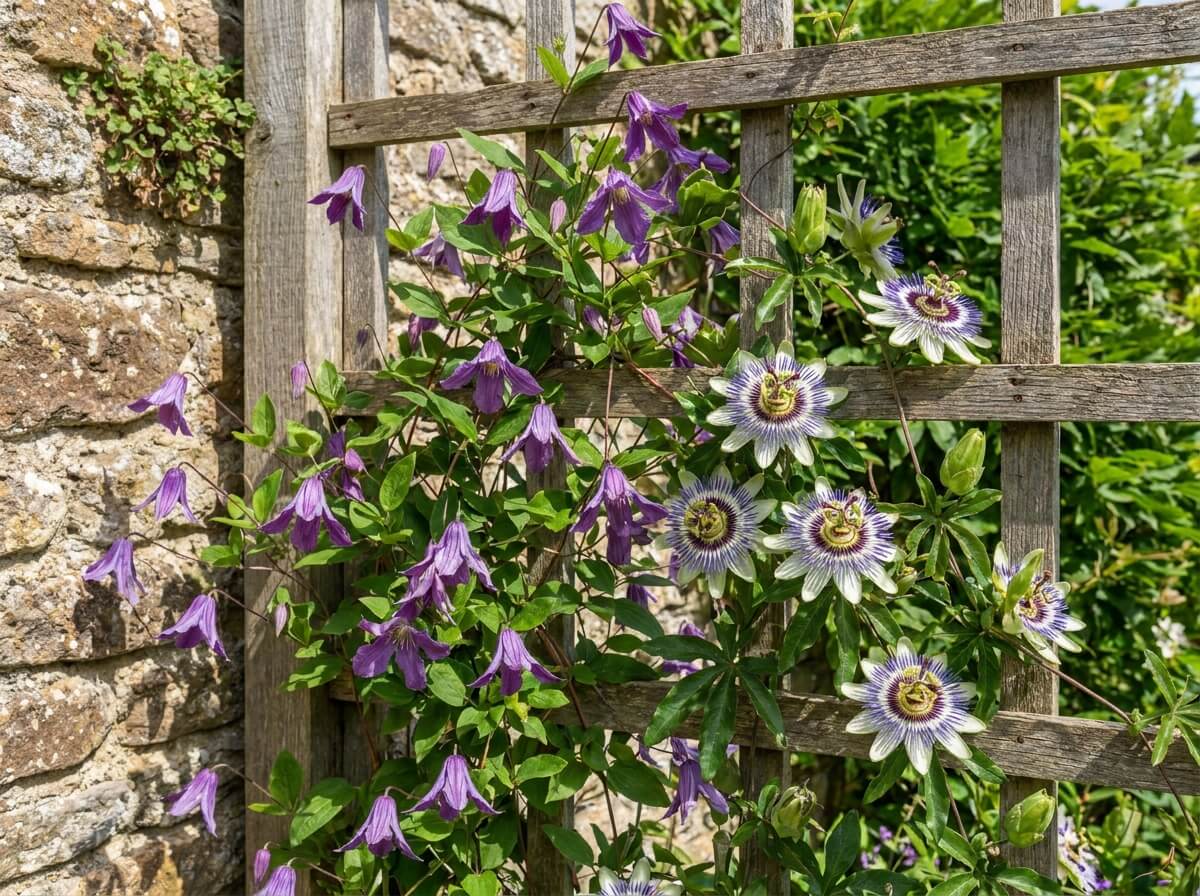
Smart tip: Plant clematis 30–40cm to the side of passion flower so its roots stay cooler. It is a non-negotiable step that doubles flowering performance.
In properly vigorous years, passion flower can outgrow clematis temporarily. Simply detach and redirect a few stems by hand — no cutting needed — to keep both plants visible and flowering well.
A large pot of at least 50 litres per plant works. But, growth will be more limited. Choose a compact clematis like ‘Arabella’ and water containers at least three times a week in peak summer heat.
The orange oval fruits are technically edible but nearly tasteless. Passiflora edulis is the species behind the passion fruit you buy in shops. This is a different plant entirely, better suited to frost-free climates.
Late spring (May in the Northern Hemisphere) gives both plants a full season to establish before winter. Container-grown plants from a garden centre can go in any time the ground is not frozen, including mid-summer, as long as you water consistently for the first six weeks.