Rosemary earns its keep. No complaints. Then midsummer hits, the flowers vanish, and the plant simply coasts on reputation alone. But that apparent standstill is not the end. A single well-timed trim is all that separates a one-flush shrub from one that blooms again in September. Understand why flowering ceases. Grasp what can be done now. It completely alters your rosemary strategy for the rest of its life.
Rosemary’s initial flowering flush, running from late winter through early summer, depends on your climate and variety. This burst of bloom is driven by lengthening days and rising temperatures. Flowers open. Pollinators visit. Then something properly deliberate unfolds: the plant shifts its energy away from reproduction and into seed development. Enough flowers fertilised. Tiny seeds forming inside spent calyxes. The hormonal signal to produce new buds essentially switches off. Sorted.
Heat accelerates this process. And temperatures above 28°C (82°F) trigger a mild dormancy in many Mediterranean shrubs, including rosemary. The plant then prioritises root maintenance and water retention over new growth. Quite simple.
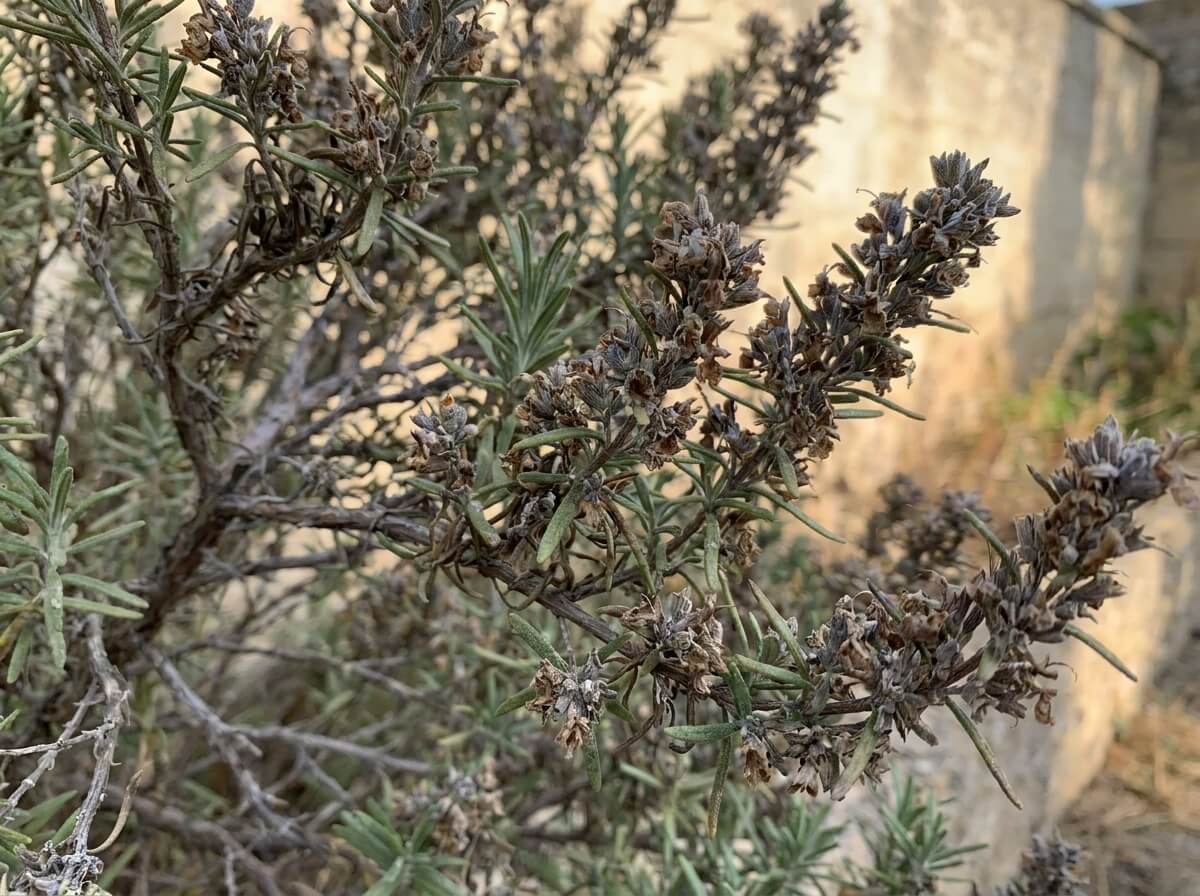
The result looks like abandonment. Dry, papery spent flowers on stiff stems.
No new buds forming. The plant looks fine. It is fine, truthfully. But it has simply stopped trying.
This is not damage. Not stress.
Not disease. It is rosemary behaving exactly as its genetics dictate under high heat and long days.
The good news is those genetics also include a second flowering window. So you can trigger it deliberately.
In its native range — rocky coastal hillsides across southern Europe and North Africa — rosemary reflowers in late summer or early autumn. That is when temperatures drop slightly, and the days begin to shorten. The trigger is hormonal: reduced photoperiod and a dip below 25°C at night signals the plant has another opportunity to reproduce before winter.
In UK gardens, this second flush typically arrives in September and October. In warmer climates — coastal California, South Africa’s Western Cape, southern Australia — it can come as early as late August.
In USDA zones 7 to 10, rosemary shoots up as a permanent outdoor shrub. A second flowering is almost guaranteed there, provided you properly manage the plant in July.
The window for intervention is roughly 3 weeks after the primary flowering fades. Miss it. The plant then sets hard on its woody framework. New growth slows to almost nothing. The second flush will be sparse at best. A dodgy situation.
Southern Hemisphere gardeners: if you are reading this in June–July, your rosemary is in its winter rest. This guidance applies to your late November–December, just after your spring flowering ends.
The technique is straightforward. But precision matters. Imprecise pruning either does nothing, or — if you cut into old wood — pulls off branches the plant will never replace. Proper focus needed.
What you need:
Work through the plant systematically. Find the lowest point on each flowered stem where you can still see a healthy pair of green leaves. Cut 5 to 8mm above that leaf pair, at a slight angle. Pull off roughly one-third of the stem’s length — absolutely no more. You are simply removing spent growth. This gives actively growing side shoots the light and energy they need to push up into flower. You are not shaping the entire plant.
Never cut into bare brown wood. That zone below the lowest leaves is largely lignified — woody and reluctant to regenerate.
Rosemary is forgiving in many respects. But not that one. Cut into old wood and you will witness die-back. Not new shoots.
Yes, it is fiddly on a large, established shrub. Still, do it. The difference in autumn flower count is proper bang on.
Rosemary after pruning needs a specific kind of support. The temptation is to water more and feed with whatever general-purpose fertiliser is to hand. Resist this urge.
Resist both.
Water deeply, but infrequently: once every 10 to 14 days in dry summers. Allow the soil to dry almost completely between sessions. Rosemary roots properly hate sitting in moisture. A pruned plant is more vulnerable to root stress than an untrimmed one. Not good.
The goal is to prompt the plant into slightly stressed, productive growth — the same gentle drought pressure it experiences on a Mediterranean hillside.
Feeding: a single application of a low-nitrogen, high-potassium fertiliser. A tomato feed, such as Tomorite, is spot on here. Dilute it to half strength and apply 7 to 10 days after pruning. Nitrogen pushes leafy growth. No more.
Potassium pushes flowering. High-nitrogen feeds at this stage produce lush green growth and almost no buds.
One feed, then leave it alone.
You can also read more about handling rosemary stress in summer heat to recognise when the plant needs more intervention than a standard reflowering trim.
Not all rosemary is identical in its reflowering behaviour. Upright varieties tend to produce a more visible second flush than prostrate or trailing types, simply because new growth is more energetically vertical and easier for the plant to push.
The trim was done but autumn arrives with nothing to show for it. Several specific failures account for almost all disappointments.
Cutting too late is the single most common issue. Pruning in mid-August means new growth rarely has enough warm weeks to mature into flower buds before temperatures drop. You have simply missed the boat.
The sweet spot? The 3 weeks immediately following the end of the primary bloom. In most Northern Hemisphere gardens, late June to mid-July.
Cutting too hard is the second common failure. Pulling off more than one-third sends the plant into recovery mode, not flowering mode.
New growth appears, but slowly, and most of it goes into leaf rather than bud.
Waterlogging after pruning. A freshly trimmed rosemary with light, open foliage is more susceptible to root rot than a dense, untrimmed one.
Heavy rain after pruning in poorly drained soil can set back new growth by 3 to 4 weeks. This erases the timing advantage entirely. Your soil holds moisture? Add a layer of coarse horticultural grit around the base immediately after cutting.
And finally: overly rich soil. Rosemary planted in highly fertile beds — especially those improved with compost every year — produces abundant foliage but flowers sparingly. The RHS advises growing rosemary in well-drained, moderately poor soil. No surprise. If your plant is lush and dark green with minimal flowers, the soil may simply be too good.
Managing rosemary for two flowering periods is not complicated. But it demands treating it less like a set-and-forget herb. Think more a flowering shrub with a seasonal rhythm. The same approach that works for other summer Mediterranean shrubs — cistus, for instance, also benefits from post-bloom management in summer — applies here too.
A properly managed rosemary shrub in a sunny, free-draining position can flower from February through early December in mild years. It will have a deliberate quiet period in high summer while the second flush is building. That is exceptional value from a plant that also feeds your kitchen, scents your garden on warm evenings with that unmistakable resinous, slightly camphor-edged perfume, and attracts pollinators at both ends of the season.
Autumn-blooming rosemary, specifically, is valuable for bees. By September, many summer flowers have finished and nectar sources are thinning out.
A rosemary in full second-flush bloom becomes one of the more non-negotiable plants in the garden for late-season foragers. An outcome properly worth a 45-minute trim in July by any measure.
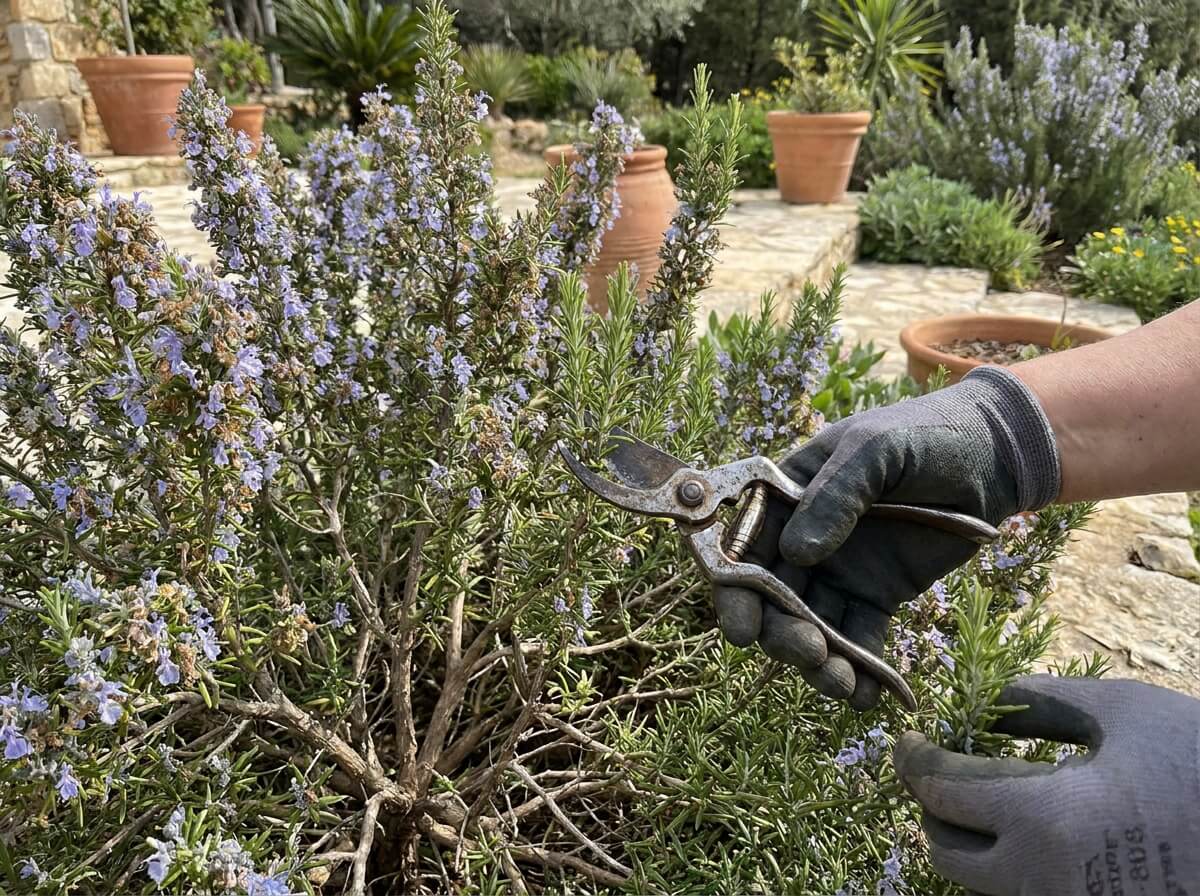
Smart tip: Cut only into green, leafy stems — never into bare wood — and time your trim within 3 weeks of the first flush ending.
When more than two-thirds of the flower spikes show dry, papery, brownish calyxes with no fresh blue or white buds opening, the flush is over and you can begin trimming.
Yes, and potted rosemary often responds even faster because the root zone heats up more quickly, accelerating new shoot development — just ensure the pot has excellent drainage before and after pruning.
A complete absence of flowers usually signals the wrong pruning time the previous year, a shaded position, or overly rich soil — sort the underlying cause first, as a summer trim will not compensate for those issues.
Trimming in early August can still produce a partial second flush, but avoid cutting after mid-August in climates with cool autumns — there will not be enough warmth left for buds to develop fully before cold arrives.
Deadheading individual spent flowers is too slow to make a practical difference on rosemary; a light overall trim of the flowered tips achieves the same result in a fraction of the time and is the method that actually triggers reflowering.