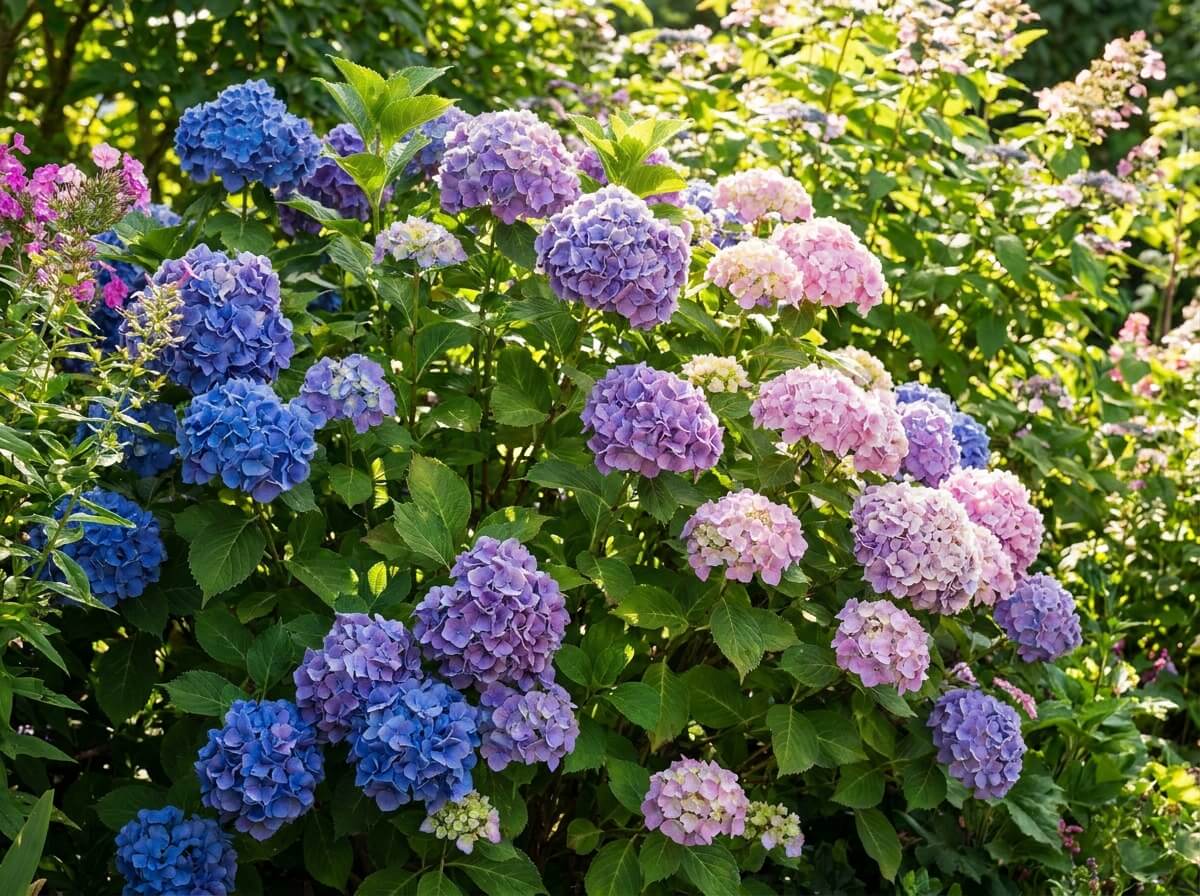
Your hydrangea was blue last summer. Now it is blooming pink.
Or the reverse. You have not changed the plant, have not moved it, have not done anything differently — and yet the flowers are a completely different colour.
The answer is sitting in your soil right now. And once you understand it, controlling the colour deliberately becomes simple. This is one of the most dramatic things you can do in your garden. No new plants needed.
The colour of a bigleaf hydrangea (Hydrangea macrophylla) — your classic mophead or lacecap type — is directly controlled by soil acidity. Quite simple, really. Acidic soil, below pH 6.0, makes aluminium available to the plant’s roots; the plant then absorbs it, binds it to the flower’s natural pigment (an anthocyanin called delphinidin), and the result? Pure blue. But alkaline soil, above pH 7.0, locks that aluminium away. Then, the same pigment produces a vibrant pink instead.
Purple is the in-between state — a soil dallying around pH 6.5. Here, the plant gets some aluminium, but certainly not much. And white hydrangeas? They stay white, regardless of what you do to the soil; that is simply how they are wired. The colour-shifting trick only works in H. macrophylla varieties.
Soil pH drifts naturally. Rainwater is slightly acidic.
Lime leaches from concrete paths and walls. Compost changes the balance.
Your garden’s chemistry is never truly static, and your hydrangea is showing you the shifts in real time, bloom by bloom.
Nothing dangerous. The plant itself does not care what colour it is — it will flower reliably whether pink, blue, or somewhere between.
But colour drift is often a symptom of a soil imbalance that can have wider issues.
Heavily alkaline soil locks out not just aluminium but also iron and manganese; these deficiencies can cause yellowing leaves (chlorosis) over time. Then there is the other extreme: Properly acidic soil, pushed too far in pursuit of blue flowers, can eventually stress your plants’ roots. And this, inevitably, reduces overall flowering.
The sweet spot for a healthy, reliably flowering hydrangea is pH 5.5–6.0 for blue, or 6.5–7.0 for pink — not the extremes.
If you are cultivating plants in a container, soil pH shifts faster than in open ground, sometimes within a single season. Check pot-grown hydrangeas every spring. Container gardening in general demands non-negotiable attention to soil chemistry than border planting.
Test before you touch anything. A digital soil pH meter costs under £10 (around $12 USD) and gives you a bang on reading in 60 seconds. Push the probe 10–15cm into damp soil near the root zone. Do it in three different spots around the shrub — readings can vary by half a point within 30cm.
Once you know your pH, act accordingly:
Never pour neat vinegar on soil to acidify it. Vinegar kills beneficial soil microbes within 48 hours and provides zero lasting pH change — it simply evaporates. This method is a non-starter. Skip it. Aluminium sulfate is the RHS-recommended approach for reliable, sustained results.
Yes, it requires patience. The colour shift takes 6–10 weeks, and will not be fully visible until next season’s blooms. It is a long game. Do it anyway; the difference is night and day.
Colour change is the most visible signal, but watch for these too:
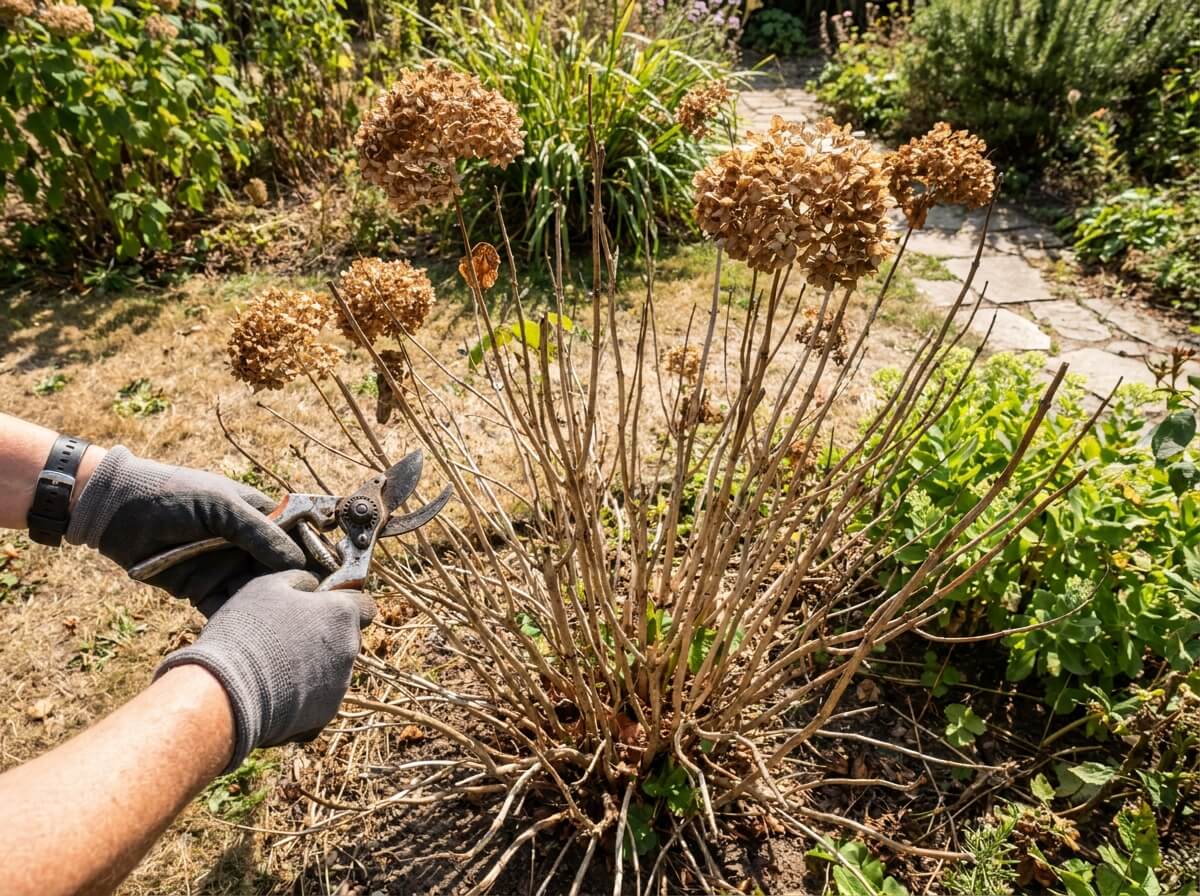
The University of Maryland Extension notes that hard pruning of mophead hydrangeas in autumn is the single most common reason healthy plants fail to flower the following summer. Prune immediately after flowering, or not at all.
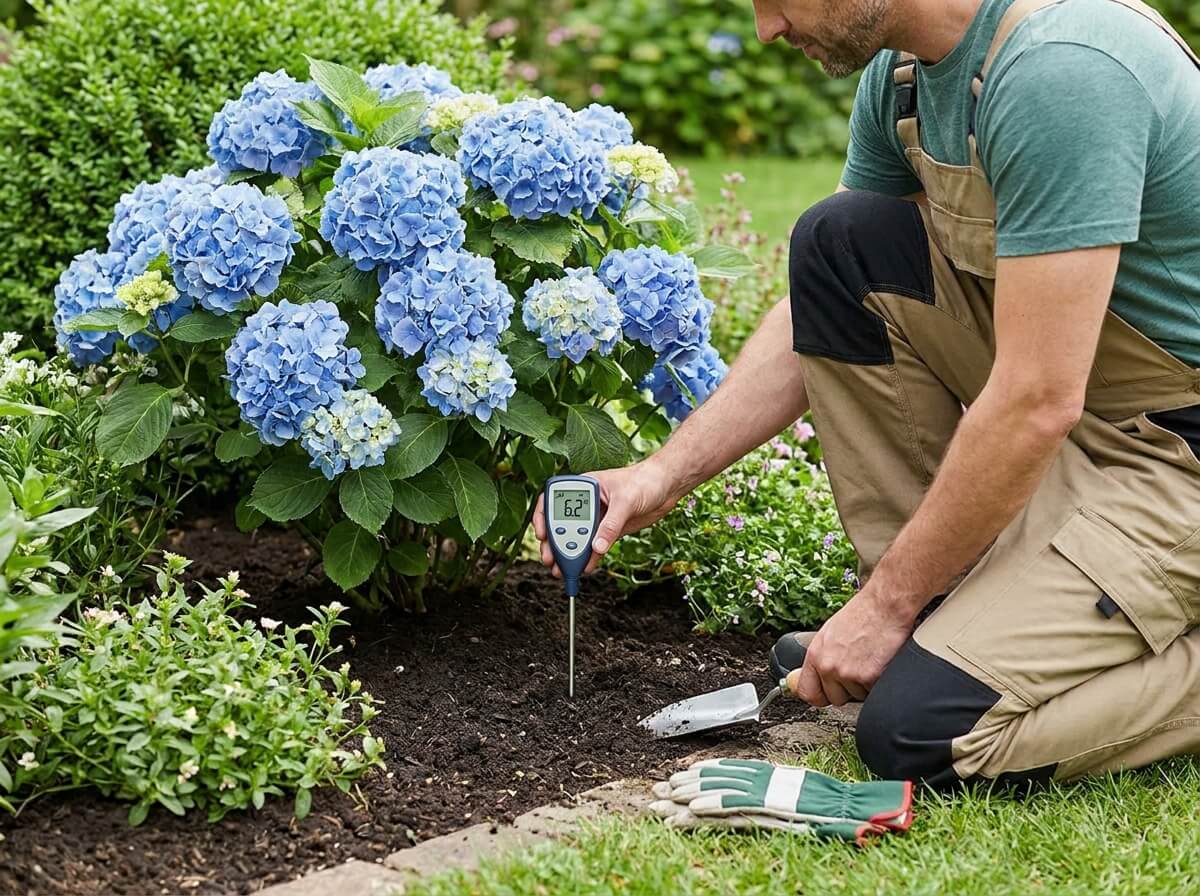
Smart tip: Always test soil pH before adding any amendment — guessing costs you a full growing season.
You can start the process now, but the full colour shift will show in next summer’s blooms. Established flowers on the current plant will not change once open.
Yes. Hard tap water is alkaline and gradually raises soil pH over time, nudging blue hydrangeas towards pink — especially in containers.
Use collected rainwater where possible.
The soil pH is varying across the root zone, so something is not quite right. Perhaps one side runs under a concrete path or wall. Test in multiple spots and amend the alkaline areas specifically.
Only on bigleaf hydrangeas (Hydrangea macrophylla) — mopheads and lacecaps. Panicle hydrangeas, oakleaf hydrangeas, and white varieties are unaffected by soil pH and stay their natural colour regardless.