Magnolias are among the most dramatic flowering trees you can shoot up — and among the most misunderstood. Get the planting position right. Respect the pruning window, and a magnolia almost looks after itself.
Get either wrong, and you’ll spend years wondering why it never flowers properly. This guide covers everything. It discusses choosing the right species, planting, watering through heat and drought, pruning without losing next year’s blooms, and diagnosing the issues that actually matter. Sorted.
The magnolia family is vast. Over 200 species, dozens of garden hybrids exist. And the differences between them matter enormously depending on where you garden. The two categories most home gardeners work with are deciduous magnolias and evergreen magnolias; and they behave properly differently.
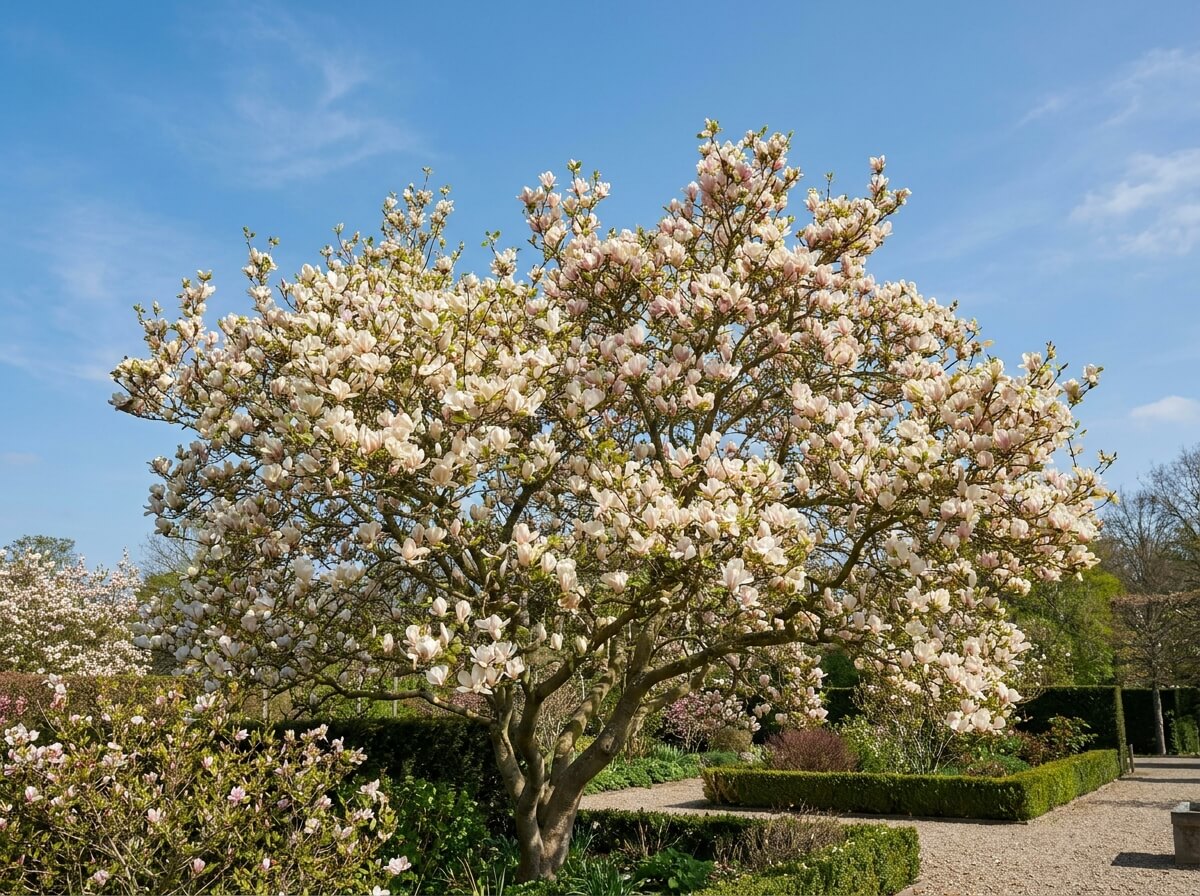
Deciduous types flower before leaves appear, usually in early spring. Magnolia stellata (star magnolia) stays compact. Under 3 metres, it makes the right choice for smaller gardens and courtyard spaces. But Magnolia × soulangeana, the classic tulip tree, shoots up 6–8 metres, producing those iconic goblet-shaped flowers in white, pink, and deep claret. Both are fully hardy across USDA zones 4–9 and RHS-approved for UK gardens. It’s a proper specimen for the right space.
Evergreen types — principally Magnolia grandiflora — are a different proposition entirely. They flower in summer rather than spring; they hold large, glossy leaves year-round, and they can shoot up 15 metres or more if left unchecked. So, in cold climates, they do best wall-trained against a south- or west-facing aspect. Reflected heat compensates for British winters there. In Sydney, Auckland, or coastal South Africa, they grow as freestanding trees without any such compromise. The thing is, planting here needs specific care.
One rule applies to all of them: never buy a magnolia without knowing its eventual height. A tree labelled “slow-growing” still shoots up 5 metres in 20 years. Plan for the mature size. Don’t simply look at the size in the pot.
Magnolias aren’t particularly fussy about soil type, but they can’t tolerate waterlogging. Their roots are thick, fleshy, and surprisingly brittle. They rot quickly in poorly drained ground.
If your soil sits wet in winter, plant on a slight mound. Or raise the bed by 20–30cm before planting.
Soil pH matters more than most references admit. Magnolias prefer slightly acid to neutral conditions—pH 5.5 to 7.0. No arguments here.
On chalky or alkaline soils, leaf chlorosis, yellowing between the veins, is almost inevitable. Correct with sulphur chips applied in autumn. Or use ericaceous compost as a generous planting mix.
Position is the other non-negotiable factor. Full sun produces the most flowers on deciduous types.
But early spring sun on frosted buds is genuinely damaging. A late frost after an unseasonably warm spell can blacken every bud in 48 hours. An east-facing spot where buds are warmed slowly by morning sun is actually riskier than a west-facing one where warming is more gradual.
North of USDA zone 6 or in northern UK gardens, a sheltered west-facing wall is consistently better than open ground.
Dig a hole twice the width of the rootball but no deeper than its height. Magnolias are surface-rooters. They resent deep planting.
Set the tree so the root flare sits exactly at soil level. Backfill without compacting, and water in with 15 litres immediately. Then mulch 8–10cm deep with composted bark, keeping a clear 10cm collar around the trunk.
Young magnolias — anything under five years old — are genuinely vulnerable in summer. During the first two summers especially, water deeply twice a week: 20–25 litres per session. Deliver it slowly at the base, rather than overhead.
The goal is moisture reaching 30–40cm down, not just wetting the surface. That is the thing.
Established magnolias are far more drought-tolerant than their reputation suggests. A tree planted 10 years ago rarely needs supplemental watering, except during extended dry spells of more than a fortnight.
When you water a large established tree, give it a long slow soak. Try 40 litres over an hour. Don’t use a quick daily splash; that encourages shallow surface rooting.
A thick mulch layer does wonders for summer moisture retention. Renew it every spring to 10cm depth.
Composted wood chip, leaf mould, or well-rotted bark all work well. Just keep it away from direct trunk contact, preventing fungal collar rot.
One thing to watch in extreme heat: Magnolia grandiflora sometimes drops older inner leaves during hot spells. That’s normal thermoregulation, not a disease. So, if you’re seeing scattered yellowing inner leaves on an evergreen magnolia this summer, check the full explainer on trees dropping leaves in summer before reaching for a spray.
This is where most magnolia owners go wrong. Badly. Avoid this blunder.
The flowers form from buds set months in advance. Prune at the wrong time. And you physically remove next year’s display before it ever opens.
The single safest pruning window is immediately after flowering finishes. For spring-blooming deciduous types, that means within 2–3 weeks of the last petal falling. Typically late spring to early summer, depending on your climate.
For Magnolia grandiflora, which flowers in summer, the window is late summer to early autumn. But undertake only light shaping; never hard reduction.
What to pull off at every session:
Sterilise your secateurs between cuts using methylated spirits or a dilute bleach solution (1 part bleach to 9 parts water). Magnolias are susceptible to silver leaf fungus (Chondrostereum purpureum), which enters through pruning wounds. Never prune in wet weather. Spores travel in water droplets.
Autumn pruning. Don’t. It’s dodgy.
The buds are set, the tree’s going dormant. And every cut pulls off potential flowers or opens a wound that won’t callus before winter. There’s no situation where autumn pruning of a magnolia is the right call.
Magnolias are light feeders by the standards of garden trees. An annual application of a balanced, slow-release granular fertiliser — Growmore or an equivalent 7-7-7 formulation — applied in spring as growth begins, is enough for most established trees.
Scatter it from the trunk to the drip line of the canopy, not just at the base. Makes a difference.
Young trees in their first three years benefit from a higher-nitrogen feed applied twice. Once in early spring and again in early summer. But stop well before midsummer; late nitrogen feeds push soft growth that’s vulnerable to autumn frost damage.
Avoid high-phosphate feeds. They don’t do wonders for magnolias flowering more prolifically — that myth persists. But flowering is driven by light, maturity, and pruning timing, not phosphate loading.
On alkaline soils, supplement with an annual foliar feed of chelated iron in spring. A product like Sequestrene applied at the recommended rate visibly improves leaf colour within 10–14 days on chlorotic trees. It works.
Buds forming in autumn but dropping before spring is almost always caused by late frost, a properly dry autumn, or waterlogging through winter. Address the drainage and protect young trees with horticultural fleece during forecast frost events below -4°C. Established trees of M. × soulangeana handle frost well once mature.
Brown edges and tips on leaves during summer are classic scorch symptoms. They’re a combination of heat, wind, and inadequate moisture at the roots. Water deeply; check the mulch layer is intact. Consider a temporary shade cloth on young trees during extreme heat events. The invisible root stress that affects Mediterranean trees like olive and lavender works by exactly the same mechanism in magnolias during drought.
Dark bootlace-like rhizomorphs under the bark at soil level, white mycelium beneath, and a sudden general decline — this is Armillaria. And magnolias are susceptible. There’s no chemical control available to home gardeners. Pull off affected roots as completely as possible and replace with a resistant species. The RHS guidance on honey fungus lists magnolia as moderately susceptible.
Small orange-pink pustules on dead wood. Cut back to clean wood immediately. Sterilise tools, and dispose of infected material — don’t compost it.
Scale insects occasionally colonise the stems of Magnolia grandiflora, particularly in sheltered positions. A winter wash of plant-based oil spray (neem or plant oil-based) applied to bare stems in late winter controls them effectively. But the RHS advice on magnolia scale recommends targeting the crawler stage in midsummer if infestations are heavy.
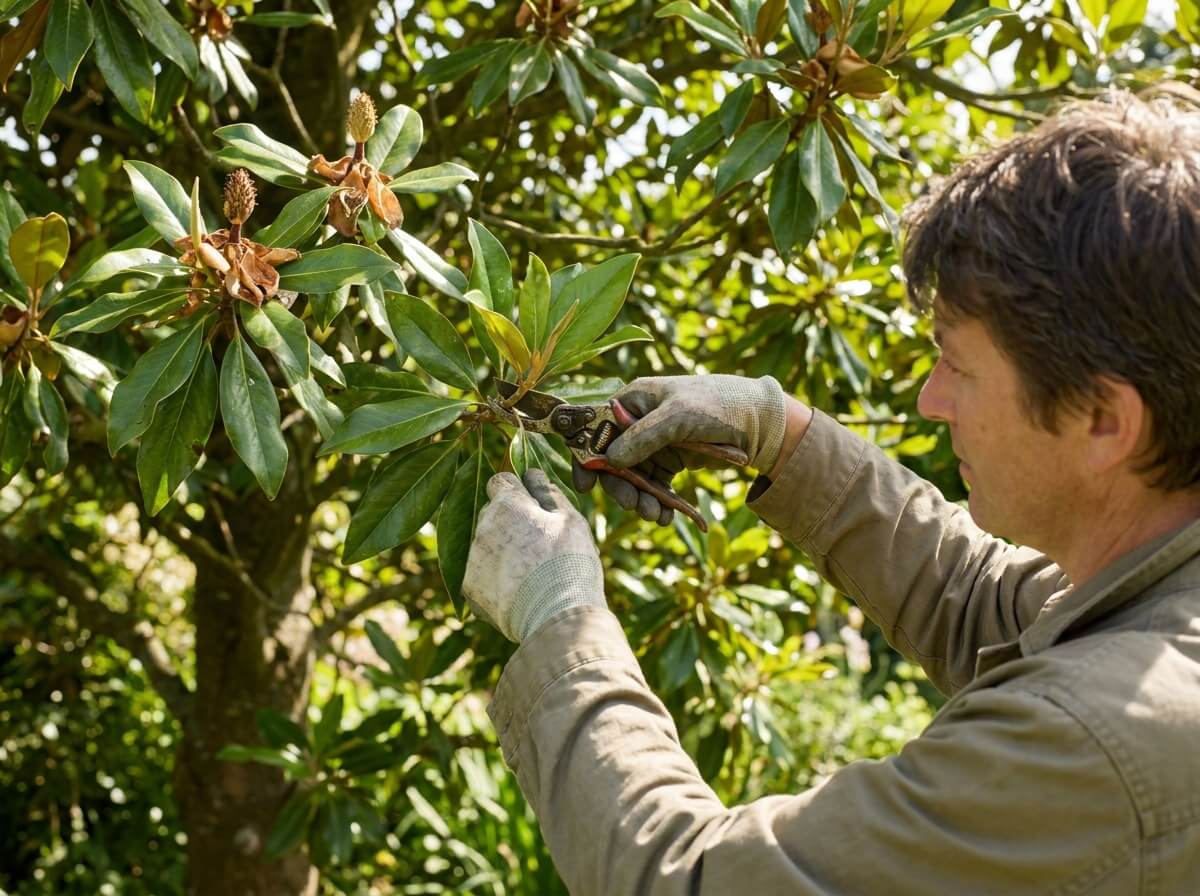
Smart tip: Always prune magnolias within three weeks of flowering — never in autumn.
The most common causes are pruning at the wrong time (removing formed buds), a position with insufficient sun, or a tree under five years old that simply hasn’t reached flowering maturity yet.
Yes — Magnolia stellata and compact cultivars like ‘Susan’ or ‘Betty’ do well in large containers (minimum 60 litres) with ericaceous compost, but they require watering every 2–3 days in summer heat and repotting every 3 years. They’re a bit much to maintain without consistent care.
Autumn planting (October–November in the Northern Hemisphere) gives the roots time to establish before spring growth demands. Container-grown trees can be planted almost any time, provided they’re watered consistently for the first full season.
Southern Hemisphere gardeners: this applies to your April–May.
Most deciduous magnolias put on 20–30cm of height per year in ideal conditions. Magnolia grandiflora is slower — 15–20cm annually — but accelerates significantly once established after year five.
Magnolias aren’t considered toxic to dogs, cats, or horses according to the ASPCA database — but the seed pods can cause mild gastrointestinal upset if eaten in quantity, so don’t allow pets to graze on fallen pods.