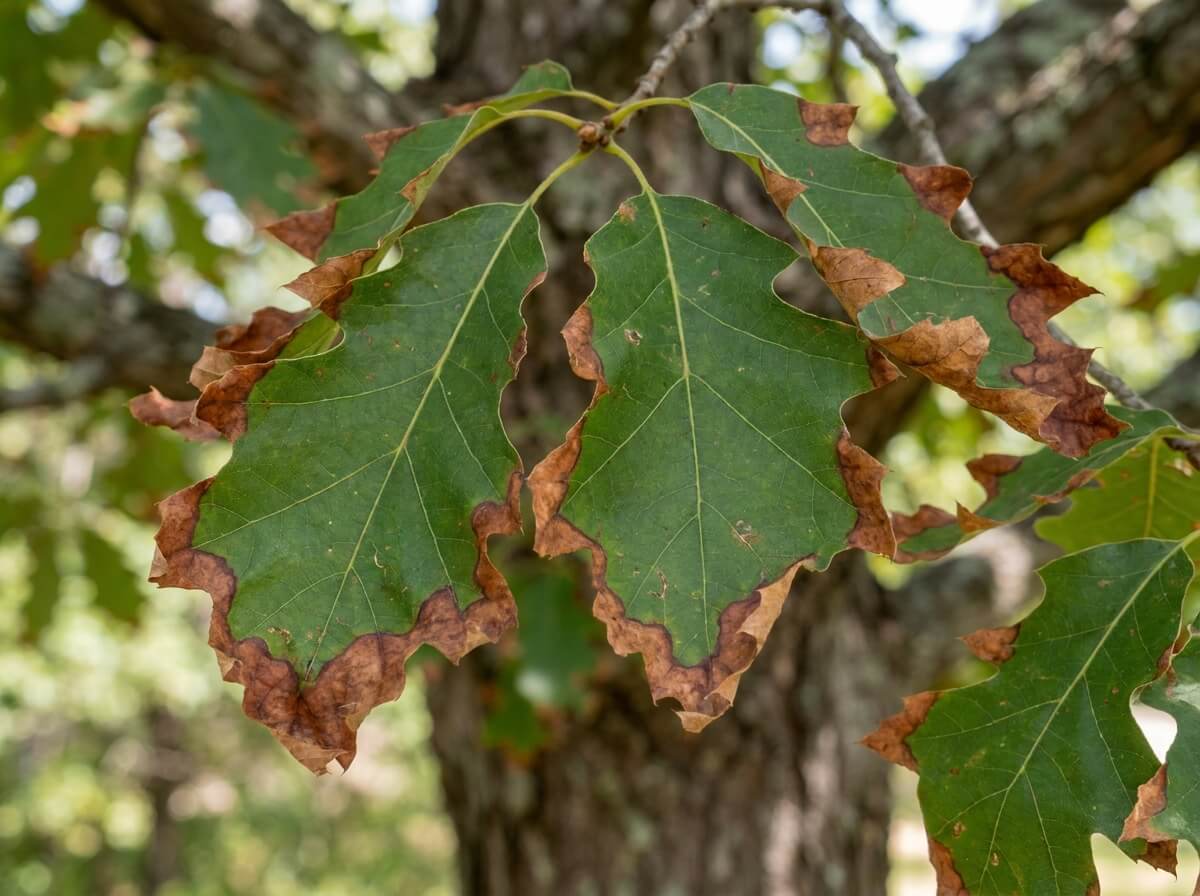
The leaf edges on your oak, maple, or elm are turning brown and papery, working inward in a slow, dry wave. If there’s a faint yellow or reddish band separating the dead tissue from the green, this is bacterial leaf scorch. It’s not drought, it’s not sunscald. The distinction’s non-negotiable. Here’s how to discern which you’re grappling with, and what to actually do about it right now.
Bacterial leaf scorch is begotten by Xylella fastidiosa, a bacterium that colonises the tree’s xylem — the internal plumbing that moves water from roots to leaves. Once established, it physically blocks those vessels. The leaves scorch because they’re being starved of water from the inside, regardless of how much moisture is in the soil around them.
The bacteria manifest via leafhoppers and spittlebugs. These tiny sap-feeding insects feed on one tree, pick up the pathogen, move on, and inject it into the next.
Hot, dry summers ramp up symptoms with startling speed. So many gardeners are seeing this right now, in the middle of a sweltering season. Expect it.
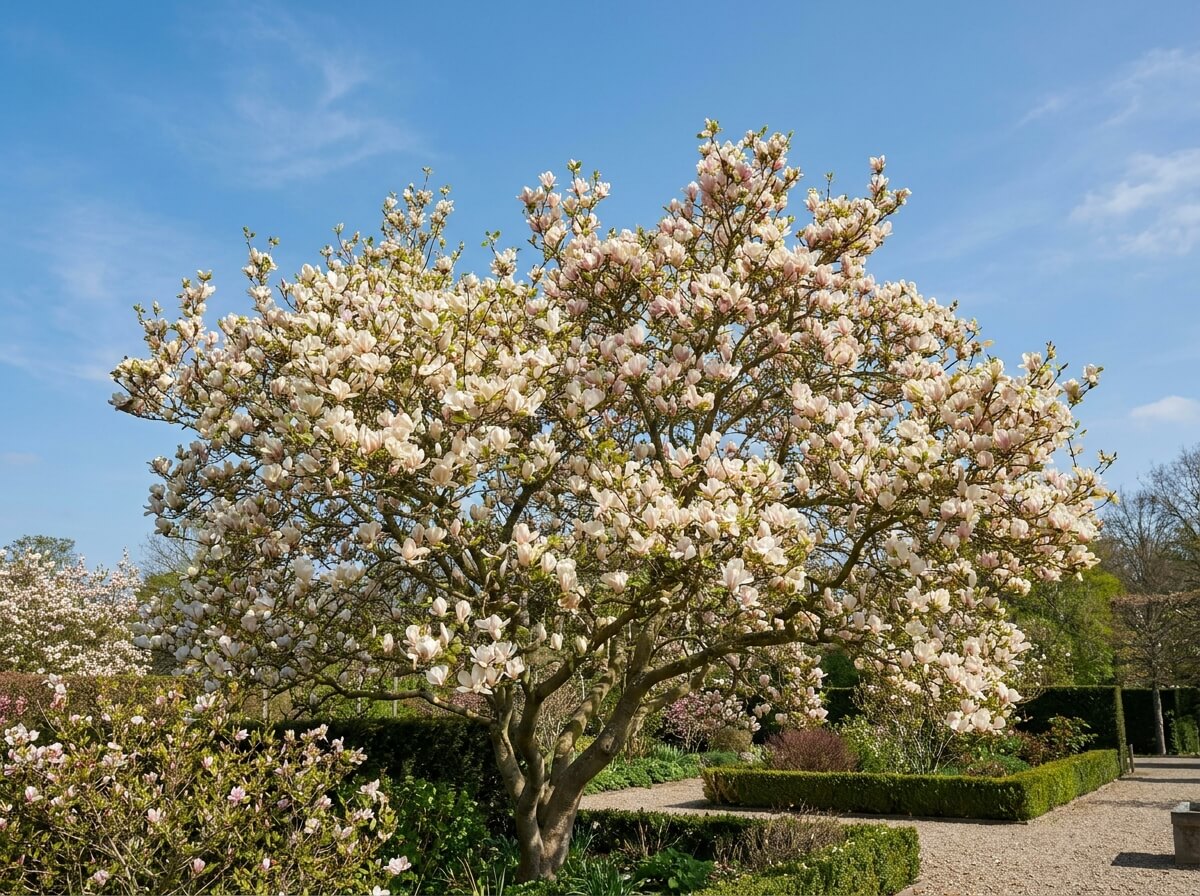
The trees most frequently afflicted include:
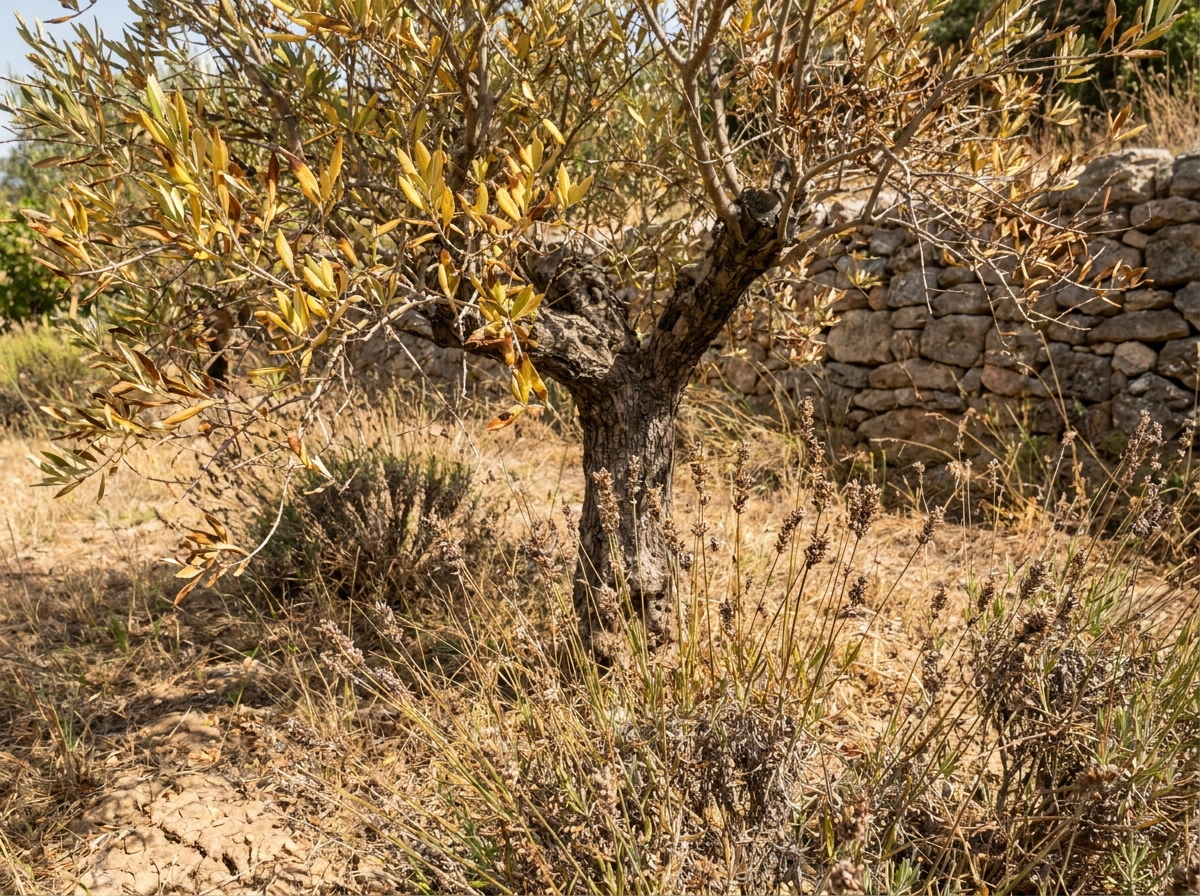
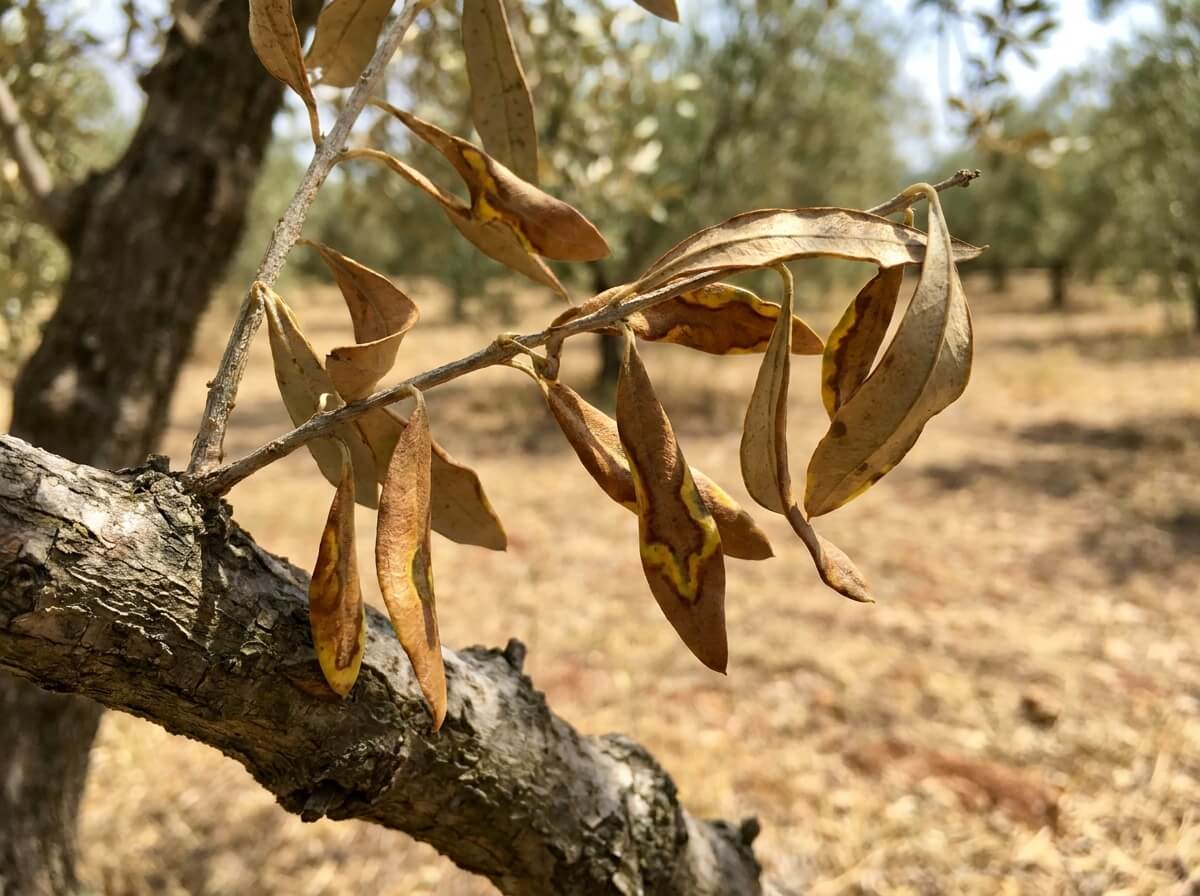
The same pathogen, incidentally, is what threatens olive trees and lavender across Europe.
Bit by bit. That’s the honest answer.
Bacterial leaf scorch rarely kills a tree outright in a single season. It chips away over years, limb by limb. A tree infected for 3–5 years without intervention will show progressive dieback each summer, losing structural branches and becoming increasingly hollow at the crown. It’s a proper slow decline.
But do nothing, and the cumulative stress opens the door to secondary infections — wood-boring beetles, Armillaria root rot, and fungal cankers that finish what the bacteria started. A 40-year-old oak that looks merely a bit dodgy in summer can be unsalvageable by autumn three years later. Game over.
But here’s the decision point. Trees diagnosed in the first year or two of infection, with only partial canopy involvement, can be stabilised. You can keep them alive for a decade or more with consistent management. This isn’t just wishful thinking.
Trees showing whole-crown dieback, with dead limbs throughout and bark discolouration at the trunk, are beyond meaningful recovery. Full stop. They need removing.
Start with a precise diagnosis. Hold a scorched leaf up to the light in the early morning, when colours are sharpest. A yellowing or reddish-brown halo between dead and living tissue is the defining sign of bacterial leaf scorch. Drought damage has no such band. If you’re feeling a bit dodgy about your assessment, send a sample to your local cooperative extension service (US) or the RHS advisory service (UK) for confirmation. Don’t do anything drastic without it.
If bacterial scorch is confirmed, act in this order. No excuses.
Yes, it’s fiddly work. It’s absolutely non-negotiable. But do it anyway. The difference between a tree that survives five more years and one that’s gone by next summer is almost entirely in how carefully you handle those cuts.
Avoid high-nitrogen fertiliser. It forces soft, leafy growth that the compromised vascular system simply can’t support. A common rookie mistake.
Skip it entirely this season. No exceptions.
Bacterial leaf scorch rarely manifests alone in a stressed tree. Watch for these additional warning signs over the coming weeks:
And that last point’s bang on. Bacterial scorch tends to advance through the xylem in predictable pathways. So, repeated one-sided dieback — the south or southwest-facing crown, typically — is a strong diagnostic signal. Penn State Extension’s bacterial leaf scorch resource remains one of the most thorough guides to confirming infection in oaks and maples specifically.
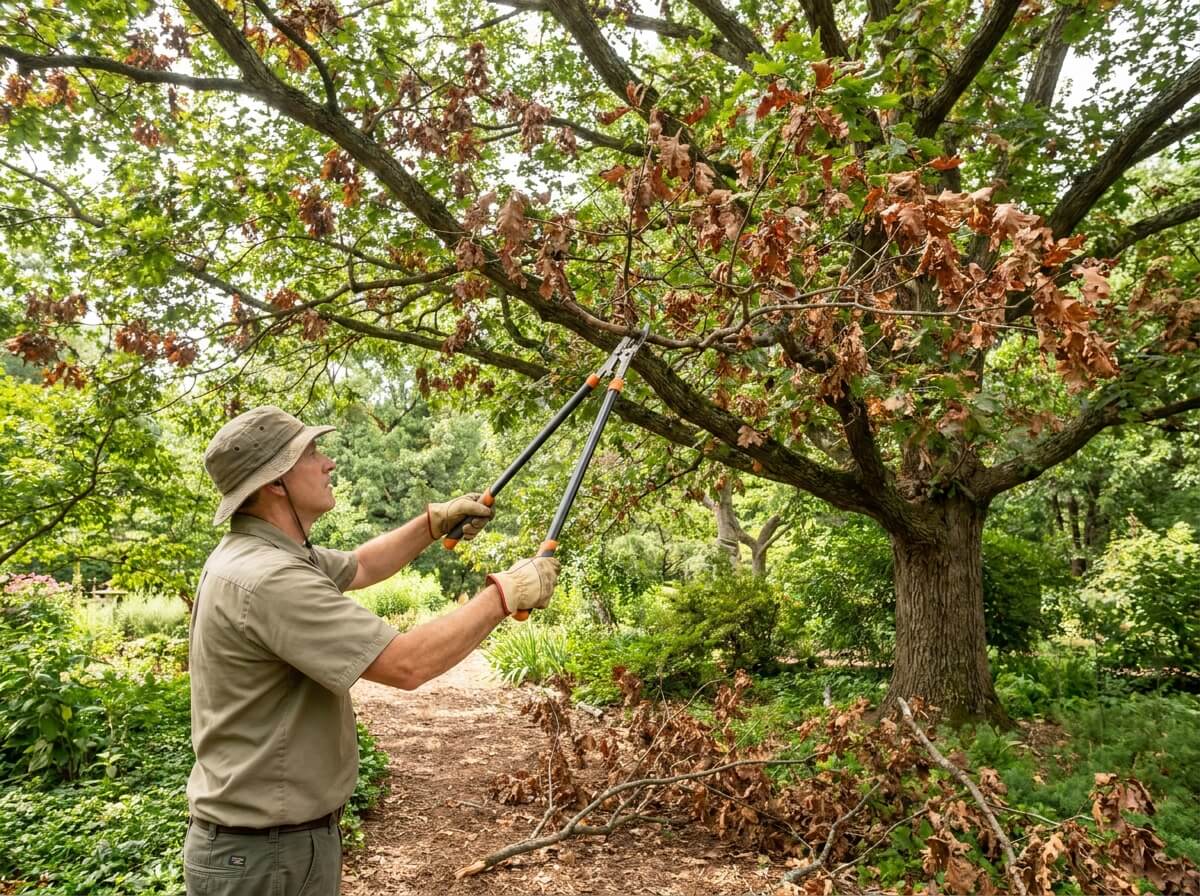
Smart tip: Sterilise cutting tools between every single branch — the bacteria spread on unclean blades as efficiently as any other route.
Yes, but it’s not through soil or rain. Leafhoppers and other sap-feeding insects carry the bacterium from tree to tree. So, managing insect pressure around afflicted trees reduces the risk, though it doesn’t eliminate it entirely.
No chemical cure exists. Trunk injections of oxytetracycline (available through licensed arborists in the US) can suppress symptoms and slow progression, but they don’t eradicate the bacteria. The RHS advises that tending, rather than cure, is the realistic goal for afflicted trees.
Drought-scorched leaves brown uniformly across the whole leaf surface, starting from the tip. Bacterial scorch browns specifically at the margins. It almost always exhibits that distinctive yellow or reddish transition band. Drought damage never produces that band.
Only if the dieback covers more than 50% of the canopy or if structural limbs are failing. Removal before that is a bit much, quite honestly. Partial infections, caught early, can be managed for years with proper pruning and stress reduction. So removal is the last resort, never the first response.