Xylella fastidiosa, it’s one of Earth’s most destructive plant killers, full stop — and right now, summer 2026, it’s tearing through olives and lavender across southern Europe way faster than most gardeners realise. The terrifying part?
Your plant, it can be infected for about four months before it shows a single obvious sign. By the time you see the scorching, the wilting, that slow collapse from the tips inward — actually, no — by then it’s usually already too late to save it. You’ve missed your window.
Xylella fastidiosa, it’s a bacterium that lives inside a plant’s xylem — you know, its internal plumbing for water, roots to leaves. It doesn’t rot the plant. Nope. It blocks it. The plant essentially dies of thirst, standing right there in perfectly watered soil. And that’s what makes it so insidious, so incredibly hard to diagnose without a lab test.
It’s transmitted by sap-sucking insects, mostly the meadow spittlebug (Philaenus spumarius) — that’s the one that leaves those foamy white blobs on your lavender stems in early summer. You’ve probably wiped those off a hundred times without ever thinking twice, right? I did too, for years. The insect picks up the bacteria from an infected plant and just carries it to the next one. No physical contact between plants? None needed.
The European Food Safety Authority (EFSA), they’ve tracked its spread across Italy, France, Spain and Portugal, where entire olive-growing regions have been absolutely knackered — we’re talking millions of trees lost in Puglia alone since 2013. It’s truly devastating.
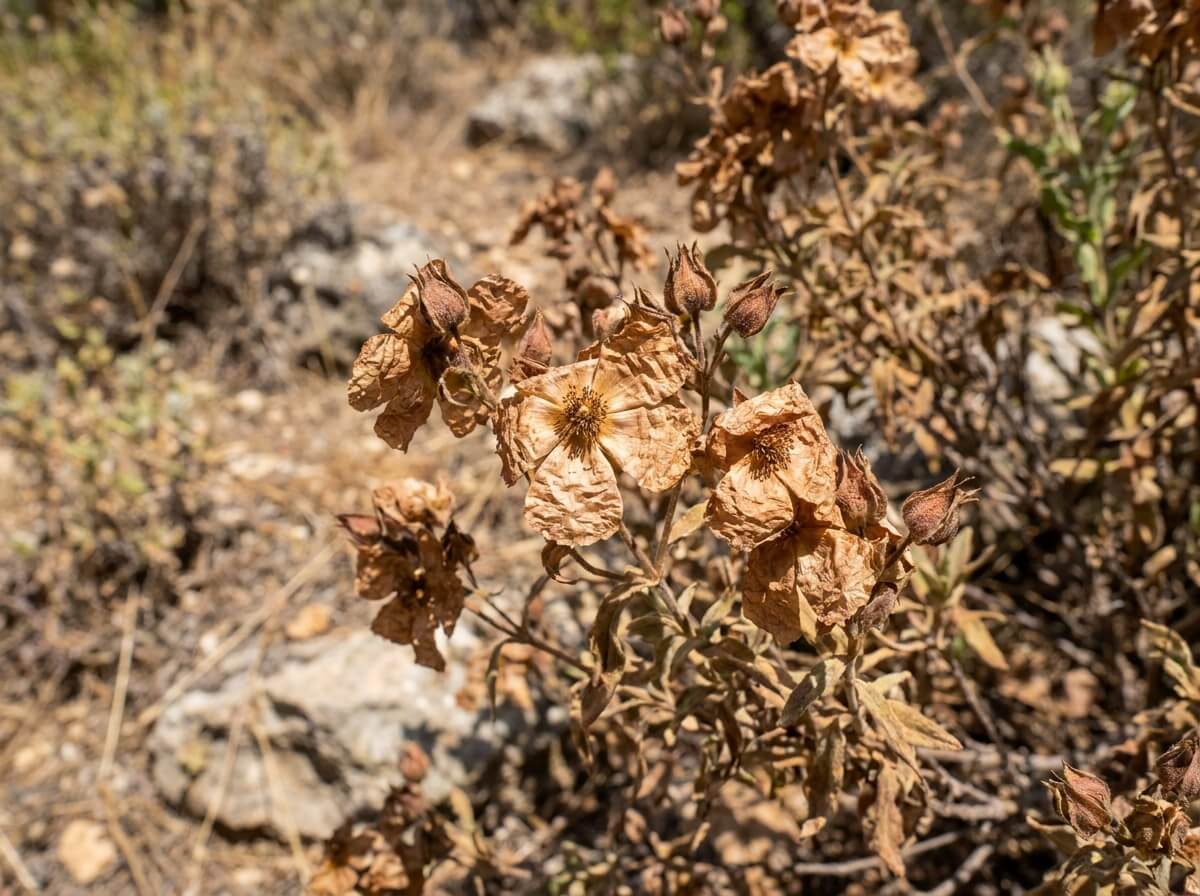
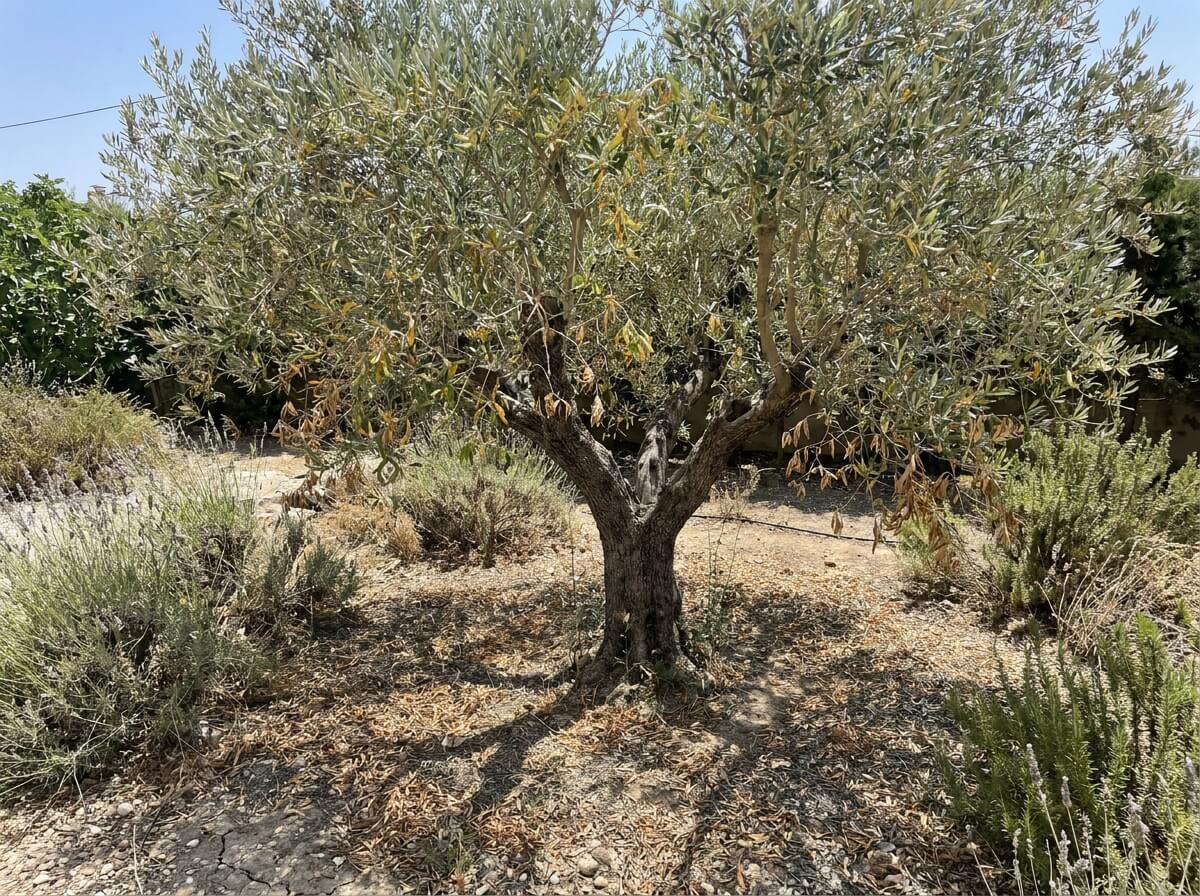
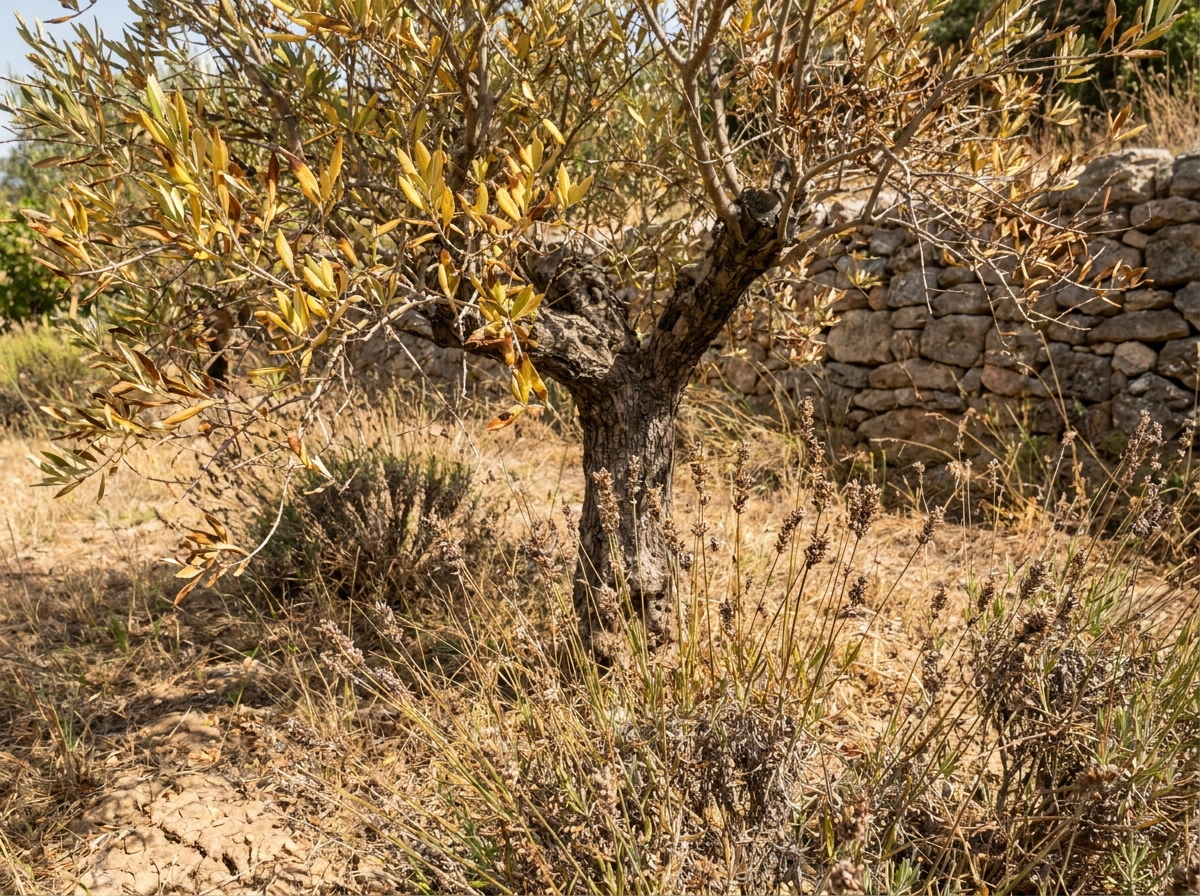
The symptoms? They mimic drought stress so perfectly that most gardeners just assume they’ve underwatered. That’s honestly the cruelest part of this disease.
Here’s what you should actually be looking for:
The crucial clue, though: watering doesn’t help. If your lavender or olive looks drought-stressed but you know it’s getting enough water, then you’ve absolutely got to stop blaming yourself and start suspecting something more serious. It’s not your fault.
June, it’s peak spittlebug activity in the Northern Hemisphere — and that means peak transmission risk. This window? It’s what really counts. Don’t faff about.
If you’re in the UK, France, Italy, Spain, Portugal, or anywhere Xylella’s known to be present or spreading, then seriously, do this today:
There’s no cure. I truly wish I could tell you otherwise. Full stop.
There’s no spray, no treatment, no drench. The only management strategy we’ve got is containment — getting infected plants out fast, controlling the insect vector, and creating buffer zones.
So look, I know that’s brutal to hear, especially about a 40-year-old olive in a pot you’ve carried across three house moves. But leaving it? It risks everything around it, and that doesn’t work. Period. That’s it.
Xylella’s got a host range of over 500 plant species. Oleander, rosemary, almond, cherry — they’re all confirmed hosts. Quite a list, isn’t it?
If your rosemary’s collapsing this summer in a way that looks exactly like the lavender description above, don’t just dismiss it.
Also, keep an eye out for spittlebug populations on any of these plants. An unusual spike — more foam than normal, earlier than usual — that could signal the insect’s under pressure from an infected local population, moving fast to find new hosts. So, don’t ignore it.
And if you’ve recently bought lavender or olive plants from a garden centre, check that origin label. Plants sourced from affected Italian or Spanish regions, they’ve occasionally entered supply chains with incomplete health certification. It’s dodgy, that’s what it is.
It happens, unfortunately. Just ask your supplier directly if you’re unsure. You’ve nothing to lose.
Southern Hemisphere gardeners: Xylella isn’t currently established in Australia, New Zealand or South Africa, but biosecurity agencies in all three countries, they’re monitoring it closely. This really matters for your late-spring/summer season around 11 days before Christmas through about three weeks in January — you’ve got to check import restrictions before bringing in any Mediterranean plants.
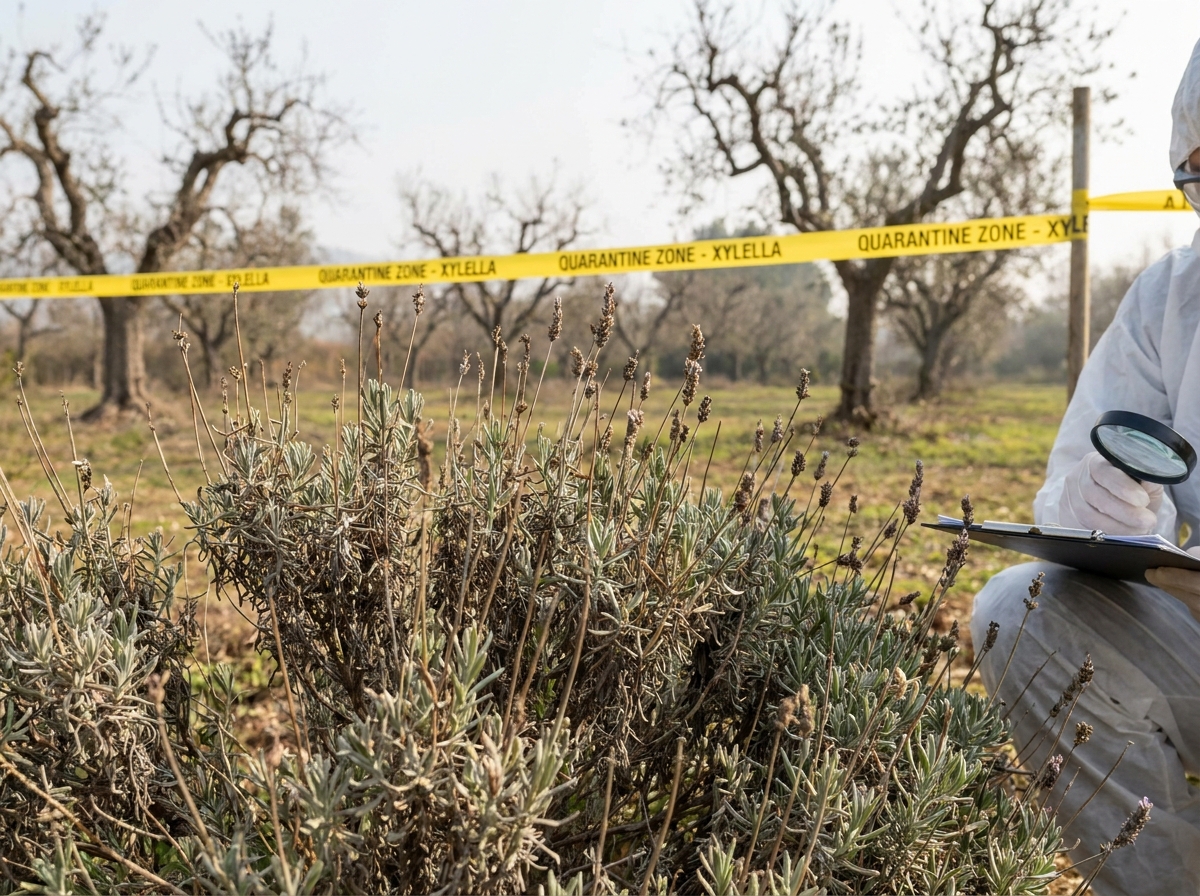
Smart tip: If your lavender or olive looks drought-stressed but watering doesn’t help, test for Xylella before just assuming it’s a cultural problem. Seriously, don’t wait.
Yes — it’s spread via spittlebugs and other sap-sucking insects moving between hosts. So, remove suspected plants promptly and control insect vectors on surrounding plants to reduce the spread risk.
No approved cure exists. Infected plants must be removed and destroyed — don’t even think about composting them.
Some research trials are ongoing, but nothing’s available to home gardeners yet. It’s a waiting game.
Drought stress improves with watering; Xylella doesn’t. Root rot usually shows blackened, mushy roots and starts at the base — Xylella scorch starts at leaf tips and moves inward unevenly across branches. They’re different, trust me.
Yes, immediately. You’ve got to. In the UK, report through the RHS or the Animal and Plant Health Agency (APHA).
In the EU, contact your regional plant health authority — early reporting? It’s the only effective containment tool we’ve got. Don’t underestimate it.