Cistus — rock rose — it’s one of the toughest shrubs you can shoot up in a dry, sunny garden. And yet every summer, gardeners watch it go from a cloud of papery blooms to a tangle of bare, sticky stems and assume something has gone wrong. Usually, nothing has. The thing is, Cistus has a fixed biological relationship with peak-season heat, and understanding it changes everything about how you manage the plant from midsummer onward.
Start here. Most confusion about cistus in summer begins with a misunderstanding of how its flowers actually work. Each bloom lasts precisely one day.
It opens at dawn — often before 7am. The petals drop by early afternoon, sometimes earlier if temperatures spike above 32°C (90°F). That dusty scattering of crumpled petals on the soil beneath the shrub every morning isn’t a sign of stress.
It’s the plant working exactly as it should.
A healthy cistus in late spring produces so many simultaneous buds that the daily loss of finished flowers goes unnoticed. The shrub looks perpetually covered.
But as peak summer heat arrives and bud formation slows, the same one-day lifespan suddenly makes the plant look spent and empty. The blooms were always fleeting; you’re just noticing the gap between them now.
Cistus ladanifer, the common gum cistus, offers a prime example. A mature specimen might open 40 or 50 flowers on a cool May morning. Fewer than five might appear on a hot day in late summer.
The difference isn’t health. It’s temperature-regulated bud suppression — a survival mechanism built into every species in the genus.
Above roughly 35°C (95°F), cistus redirects its energy away from flowering entirely. The biochemistry is straightforward: pollen viability drops sharply in extreme heat, so producing flowers at that temperature is energetically wasteful.
The plant effectively goes dormant in its reproductive cycle while keeping its vegetative systems ticking over quietly.
Simultaneously, the sticky, aromatic resin that coats cistus leaves — that sharp, balsamic smell on a hot afternoon, like warm resin and dried herbs — increases dramatically, forming an active heat protection layer.
The resin reduces water loss through the leaf surface and reflects some solar radiation. The plant manages the crisis efficiently. Absolutely bang on.
It doesn’t need your help.
The key error most gardeners make at this point? Intervention. You will see a bare, sticky shrub in July and conclude it must be thirsty or underfed. Don’t.
They water generously. They scatter a slow-release fertiliser around the base.
Both actions cause real damage. Cistus grown in Mediterranean conditions survives its native summer drought by going semi-dormant; introducing sudden moisture and nutrients during that rest period forces a flush of soft, sappy growth that the plant cannot harden before the next wave of heat.
That growth burns, browns, and becomes a vector for botrytis.
The full guide to shooting up cistus in sun-drenched gardens covers its soil and siting requirements in depth — but the summer management of an established plant is a distinct challenge that deserves its own focus.
So, the single most effective action you can take to extend cistus flowering into late summer and early autumn is a light trim taken at precisely the right moment. You will execute it immediately after the first main flush ends, typically when the density of daily flowers drops by around 70 percent compared to peak bloom. In the Northern Hemisphere, that point usually falls sometime between late June and mid-July, depending on your climate.
Southern Hemisphere gardeners should look for the same signal in December or January.
The technique isn’t complicated. But, the limits matter enormously.
Yes, it’s a bit much for some. Do it anyway. The difference in late-summer flowering between a trimmed and an untrimmed cistus is night and day.
The light removal of spent material redirects energy toward the dormant buds sitting just behind the cut points, and those buds will open when temperatures ease in late August and September.
Established cistus in the ground — planted for at least two full growing seasons — needs virtually no supplemental water during summer. Full stop.
In a genuine prolonged drought lasting more than six weeks with zero rainfall, one deep watering directly at the base is acceptable.
Never overhead watering. Wet foliage in summer heat, combined with the resinous leaf surface, creates ideal conditions for fungal spotting.
Cistus in pots is a different situation. Container plants dry out faster and don’t have access to deeper soil moisture, so watering once every fortnight in peak summer is appropriate — but only when the top 5cm (2 inches) of compost is completely dry.
Use a terracotta pot if possible; the porous walls allow some evaporative cooling and prevent the waterlogging that plastic containers can cause after any unexpected summer rain.
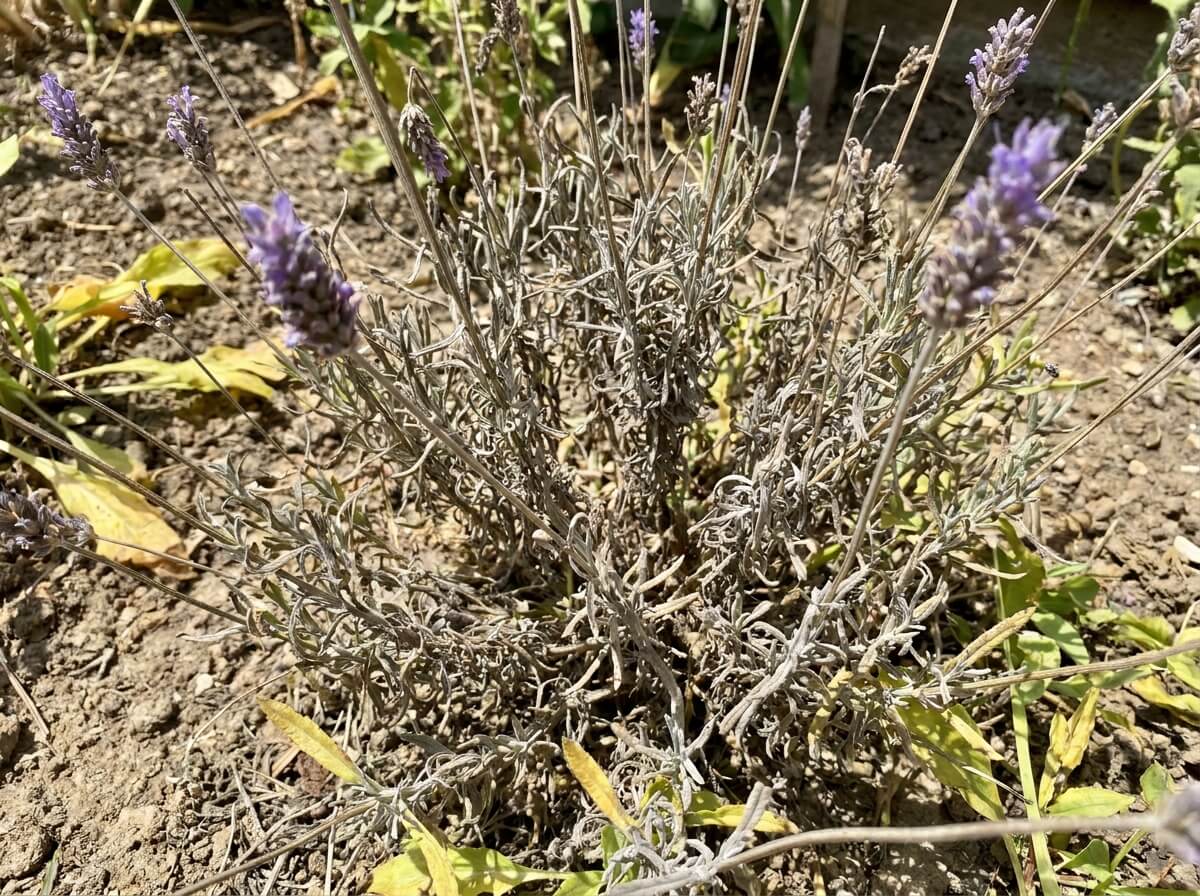
If your cistus is sharing a border with other Mediterranean shrubs — rosemary, lavender, and their relatives — the principles for watering Mediterranean plants in summer apply directly here too.
Not every leafless or struggling cistus in summer is simply heat-dormant.
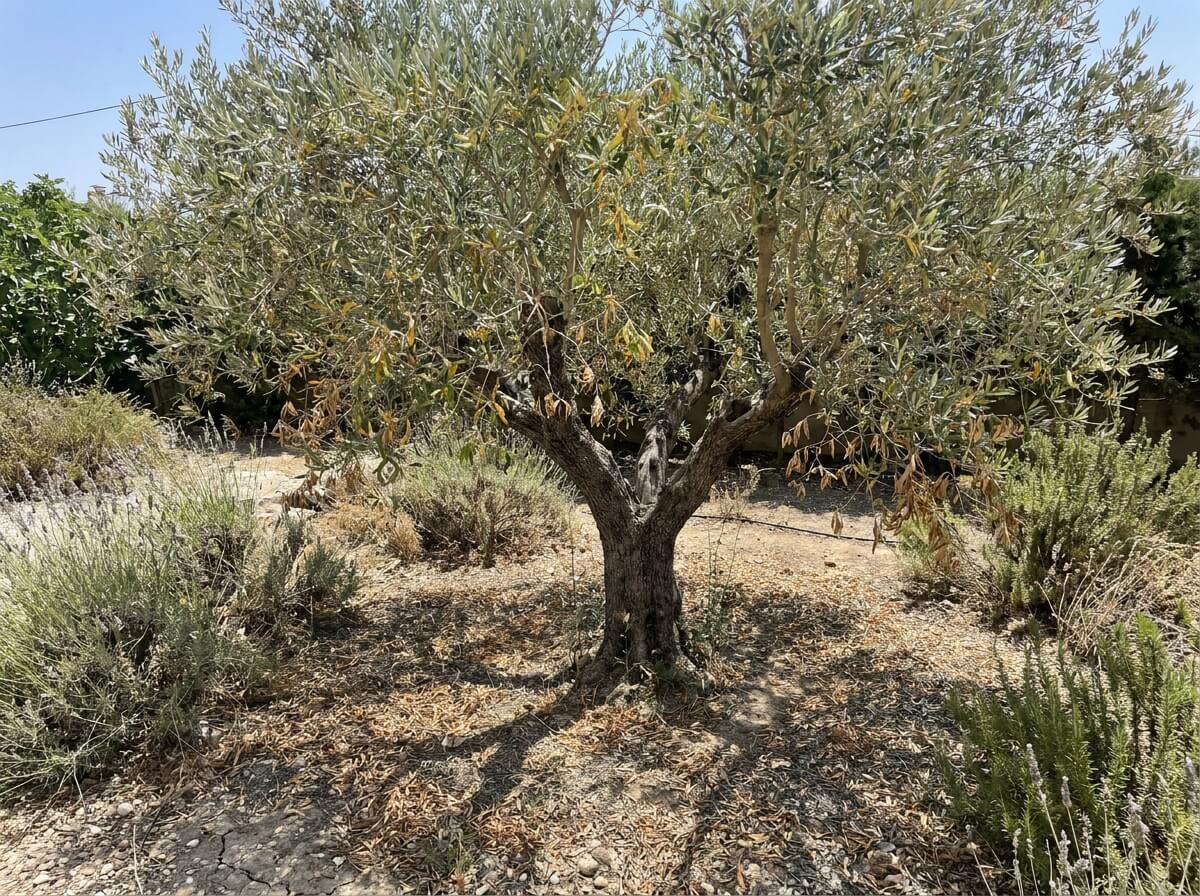
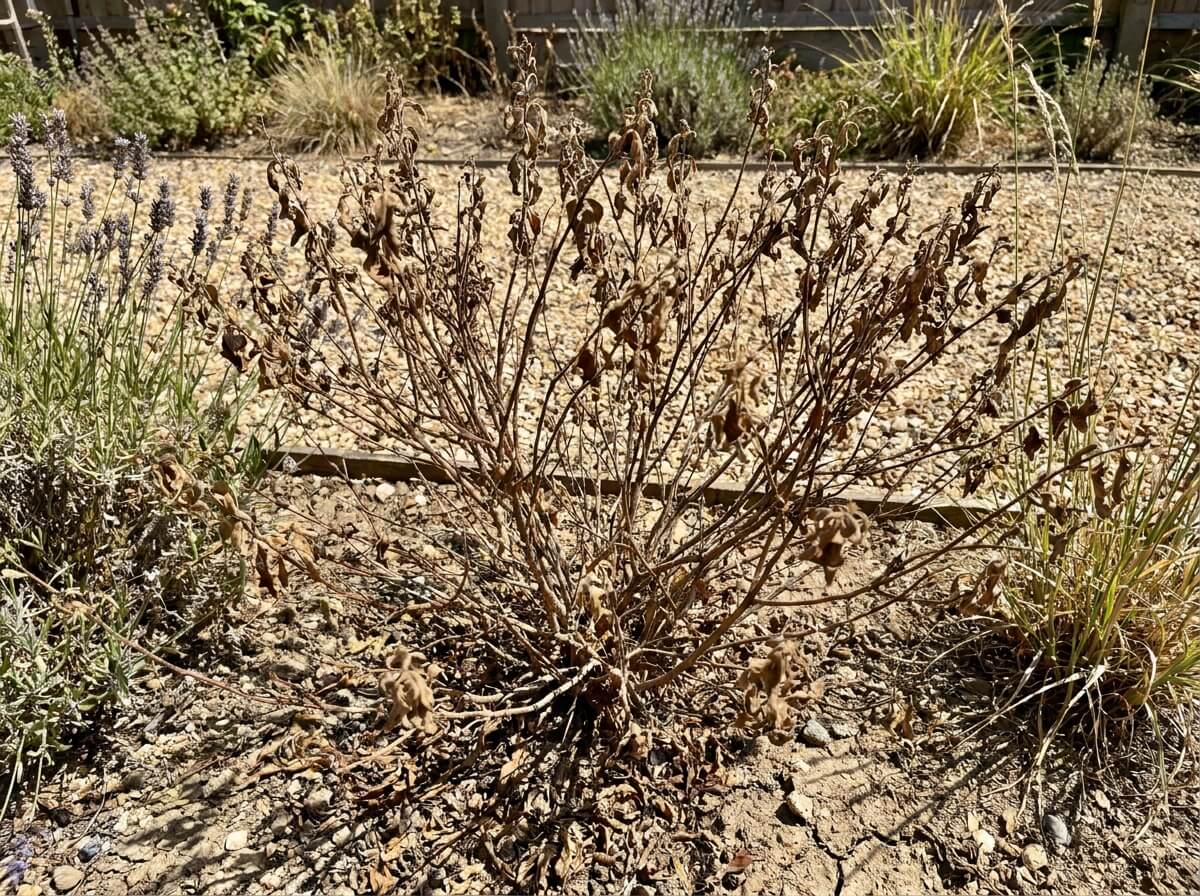
Cistus sitting in poorly drained soil through a wet winter often looks fine in spring and then collapses in midsummer heat when the damaged root system can no longer support the plant. The giveaway is sudden, total wilt that doesn’t reverse overnight.
Healthy heat-dormant cistus wilts slightly in afternoon sun but firms up again by the following morning. A plant with rotted roots stays collapsed.
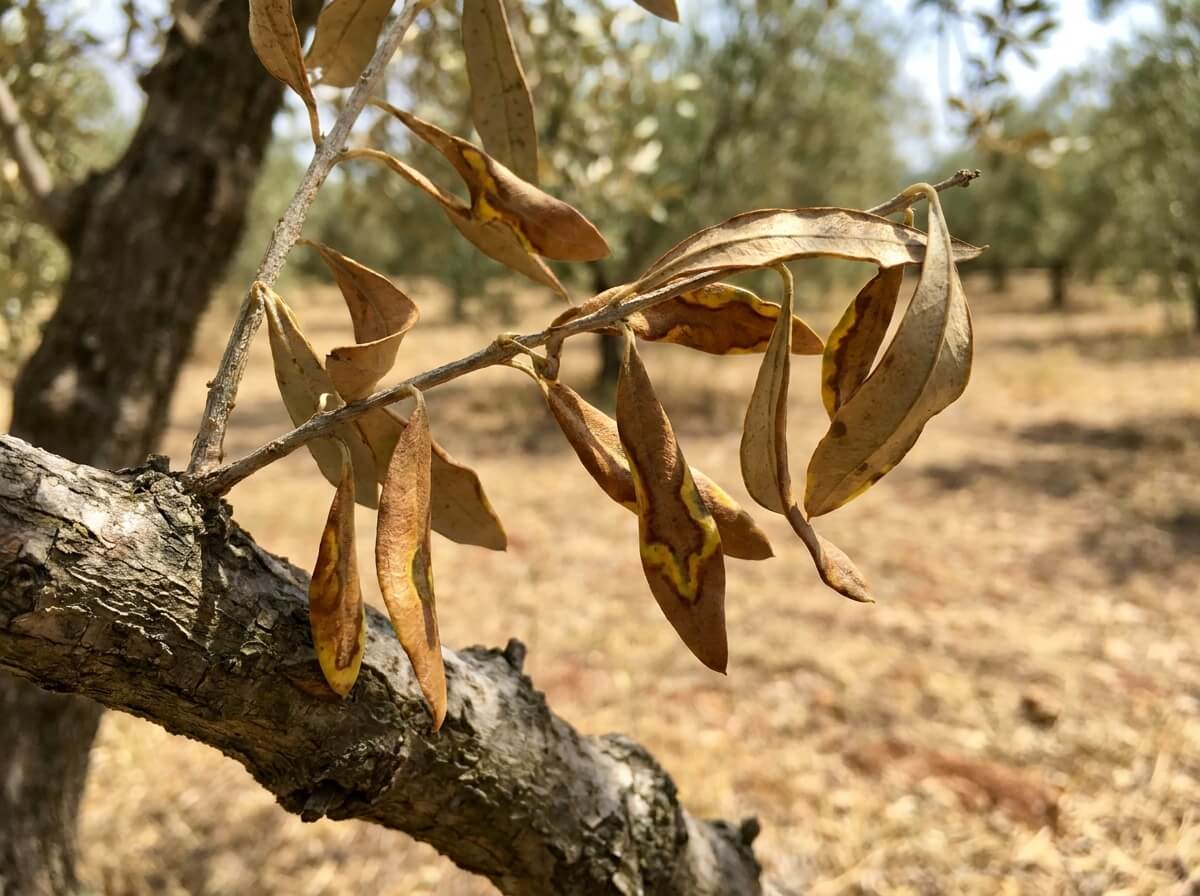
A soilborne fungal infection. Stems die back section by section, often starting with one branch while the rest of the plant looks normal.
Cut a suspect stem. If you see brown or discoloured tissue in a ring just inside the bark, verticillium is the likely cause. There’s no chemical cure. Pull off and destroy affected stems. Avoid replanting cistus in the same spot for at least three years.
Increasingly common in garden-centre plants sold in peat-free compost that stays wet. The RHS lists cistus as susceptible.
Symptoms include yellowing at the shoot tips, a general dull appearance, and progressive dieback starting from the base. Improving drainage around the plant is the primary response. There’s no effective amateur-level chemical treatment.
Get the summer trim right and conditions begin working in your favour again around late August, when night temperatures drop and day length shortens. Cistus responds to that temperature shift with a secondary bud-setting period that, depending on the species and your climate, can produce a genuine second display lasting four to six weeks.
Cistus × purpureus — the purple-flowered hybrid — reliably produces this autumn flush in USDA zones 8 and above, and in most of the UK south of the Midlands. Cistus albidus, the white-leaved cistus, is slightly less reliable but still flowers again with some consistency. Cistus ladanifer tends to produce scattered individual blooms rather than a true second flush, but even that is worth having.
Don’t fertilise going into this period. The stress of summer is exactly what primes the plant to flower.
A light top-dressing of horticultural grit around the base, worked gently into the surface, improves drainage ahead of autumn rains and is genuinely all the intervention this plant wants. Cistus is one of very few garden shrubs where neglect, applied correctly, is the highest form of care.
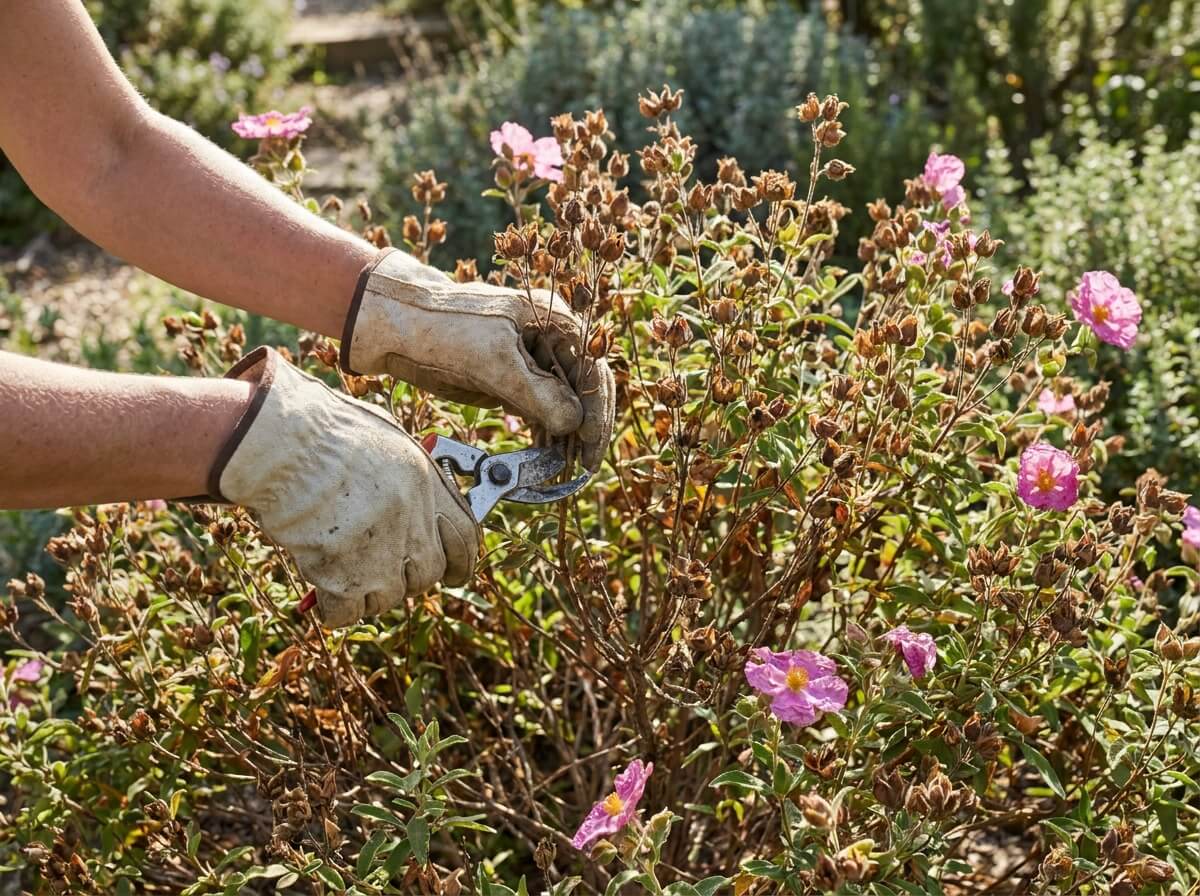
Smart tip: Never cut cistus into old brown wood — trim only the current season’s green growth or the plant won’t regenerate.
Almost certainly not. A healthy cistus naturally reduces and then pauses flowering in peak heat.
Check whether the foliage is firm and green — if it’s, the plant is fine.
Pull off no more than one-third of the current season’s growth. Cut only green stems — any cut into the grey-brown old wood won’t produce new growth and may kill that branch entirely.
Light summer yellowing on older leaves is normal and usually a sign of natural leaf turnover in heat. Yellowing spreading to young shoot tips, combined with dieback, points to a root issue — check drainage first.
Yes, but it needs a large terracotta container, properly free-draining compost mixed with at least 30 percent perlite or grit, and watering only when the top 5cm is bone dry — roughly every 10 to 14 days at peak summer temperatures.
Many species and hybrids produce a genuine second flush in late summer or early autumn once temperatures drop — especially Cistus × purpureus. A post-flush trim taken in early-to-mid summer significantly improves the chances of this happening.