Cistus isn’t a plant that asks for much. Blazing sun, thin stony soil, weeks without rain — this is where it thrives.
Give it shade, rich compost and regular irrigation and it quietly falls apart. Native to the Mediterranean basin and the Canary Islands, cistus has become indispensable in dry gardens, a proper global traveller from California to Cape Town, from Western Australia all the way to Cornwall.
Understanding what it actually needs — and what it absolutely doesn’t — is the whole art of growing it well. Get this bang on.
Cistus, known as rock rose or sun rose, is an evergreen shrub in the family Cistaceae. And there are around 20 recognised species; also a sprawling catalogue of cultivars, everything from low ground-covering mats 30cm tall to upright shrubs reaching 1.5 metres.
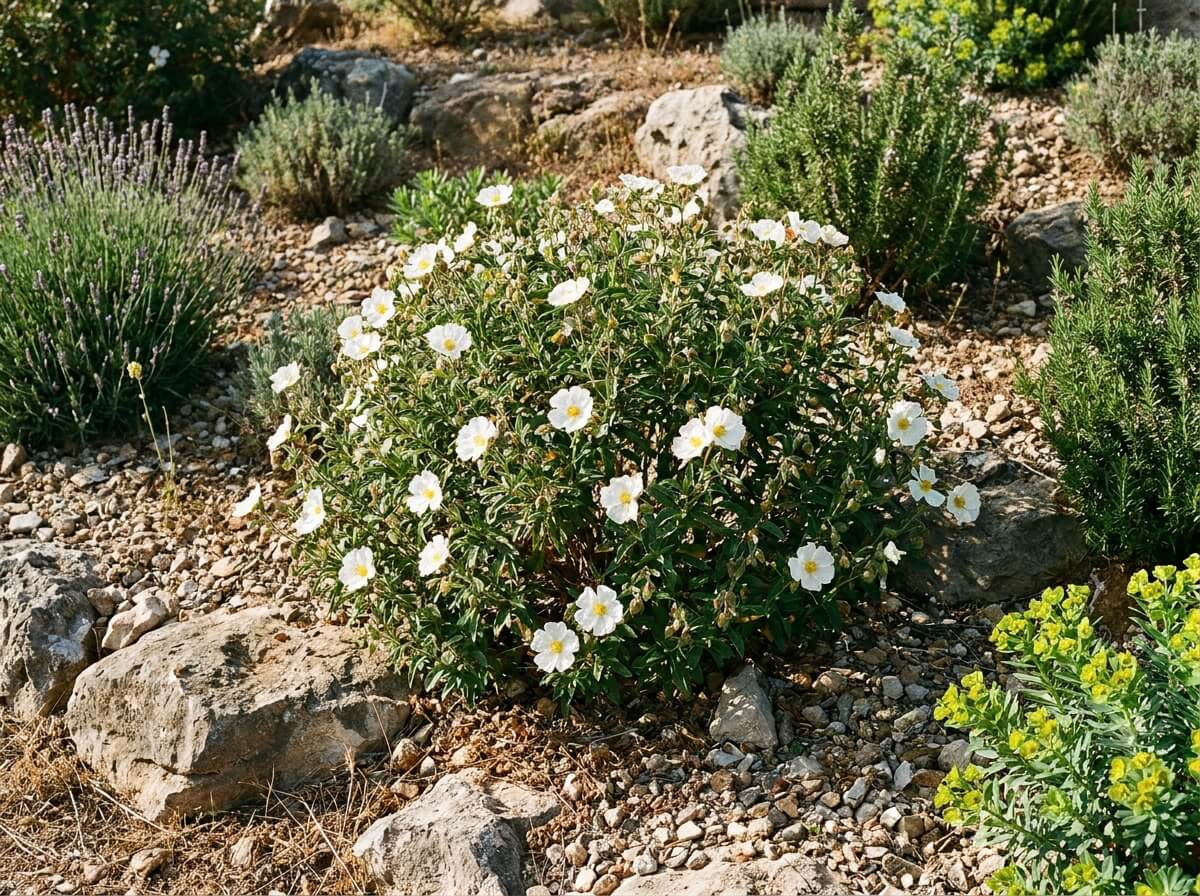
The flowers are simply extravagant. Wide, papery, with crinkled petals that look as though someone screwed them up and then smoothed them back out — imagine that — in whites, pinks, and deep magenta, almost always with a proper boss of golden stamens at the centre.
Each flower lasts exactly one day. But each plant produces hundreds of buds in succession; so the display runs for six to eight weeks from late spring into early summer in the Northern Hemisphere (Southern Hemisphere gardeners: your equivalent season is November through January).
The leaves are small, grey-green, slightly sticky. On warm afternoons you can catch the faint, resinous scent of labdanum rising from the foliage; it’s one of the oldest perfume ingredients in the world, harvested from cistus in Crete and Cyprus for millennia.
Cistus isn’t flexible about light. Full sun is non-negotiable — at least six hours of direct sunlight daily.
In partial shade it survives, slowly, but never flowers properly and becomes drawn and sparse. This is a dodgy move. Plant it on the hottest, most exposed spot in the garden and it will thank you.
Drainage is the single most critical factor. Cistus roots rot fast in waterlogged conditions. So, clay soils kill it within a season unless heavily amended with grit. The ideal growing medium:
Raised beds, gravel gardens, slopes and rocky banks are ideal. Flat, heavy, water-retentive borders aren’t.
In containers, use a free-draining cactus or Mediterranean mix — never standard multi-purpose compost alone. It is just not quite right.
Established cistus — anything in the ground for more than 12 months — survives on natural rainfall in most temperate and Mediterranean climates. In a UK summer, no supplementary watering is typically needed at all; it’s sorted then.
In hotter, drier climates (Southern California, South Africa, Western Australia), water once every fortnight to three weeks in the driest months, deeply, then leave it alone.
New transplants need watering twice a week for the first eight weeks while roots establish. After that, pull back sharply.
Don’t feed cistus with a high-nitrogen fertiliser. Nitrogen pushes lush soft growth that looks impressive, right until the first cold snap, then it collapses.
If the soil is genuinely impoverished, a single application of low-nitrogen tomato feed in spring is sufficient — and even that is optional. The RHS guidance on Mediterranean shrubs consistently points to lean soil as the non-negotiable key to long-lived, healthy plants.
This is where most gardens go wrong.
Cistus doesn’t regenerate from old wood. But cut back hard into the brown, woody stems — the way you might cut back a lavender or a buddleia — and the plant simply won’t reshoot.
It simply dies back from the cut. This is irreversible.
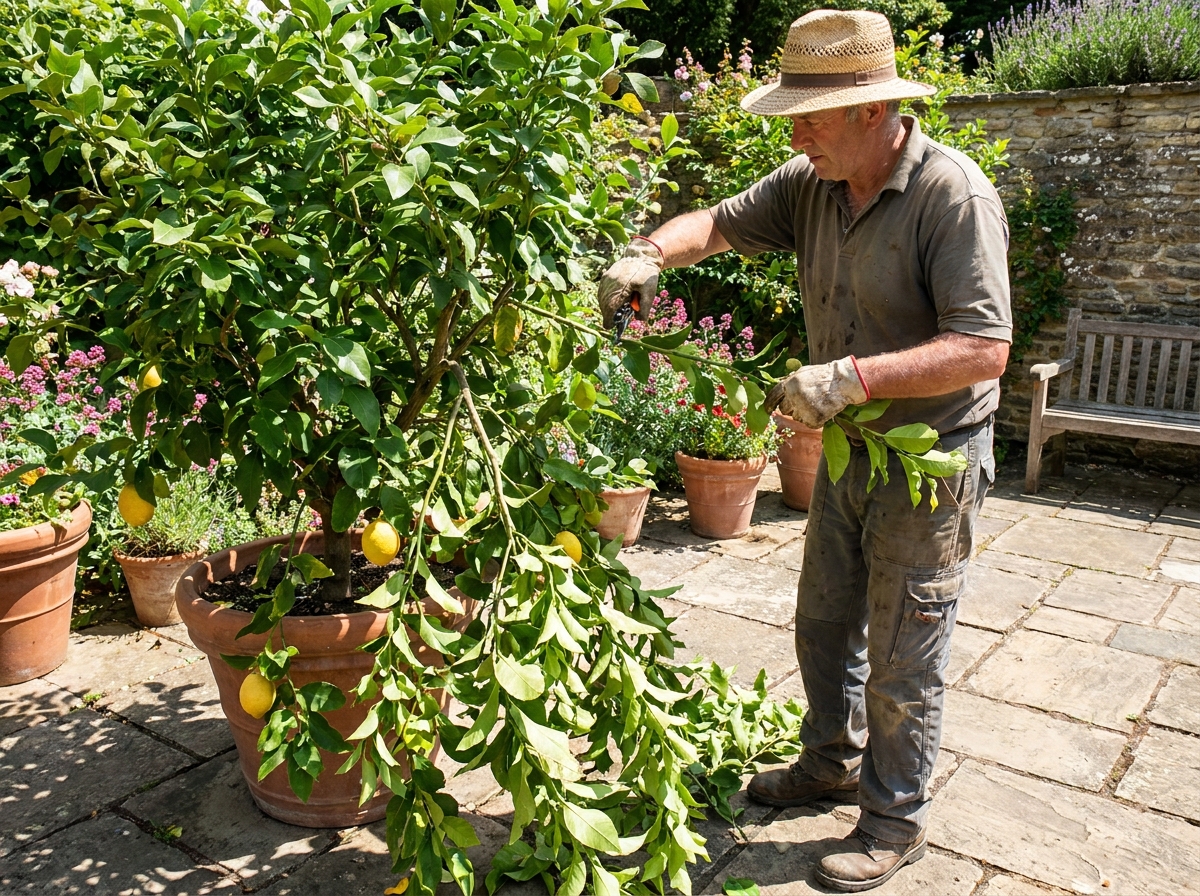
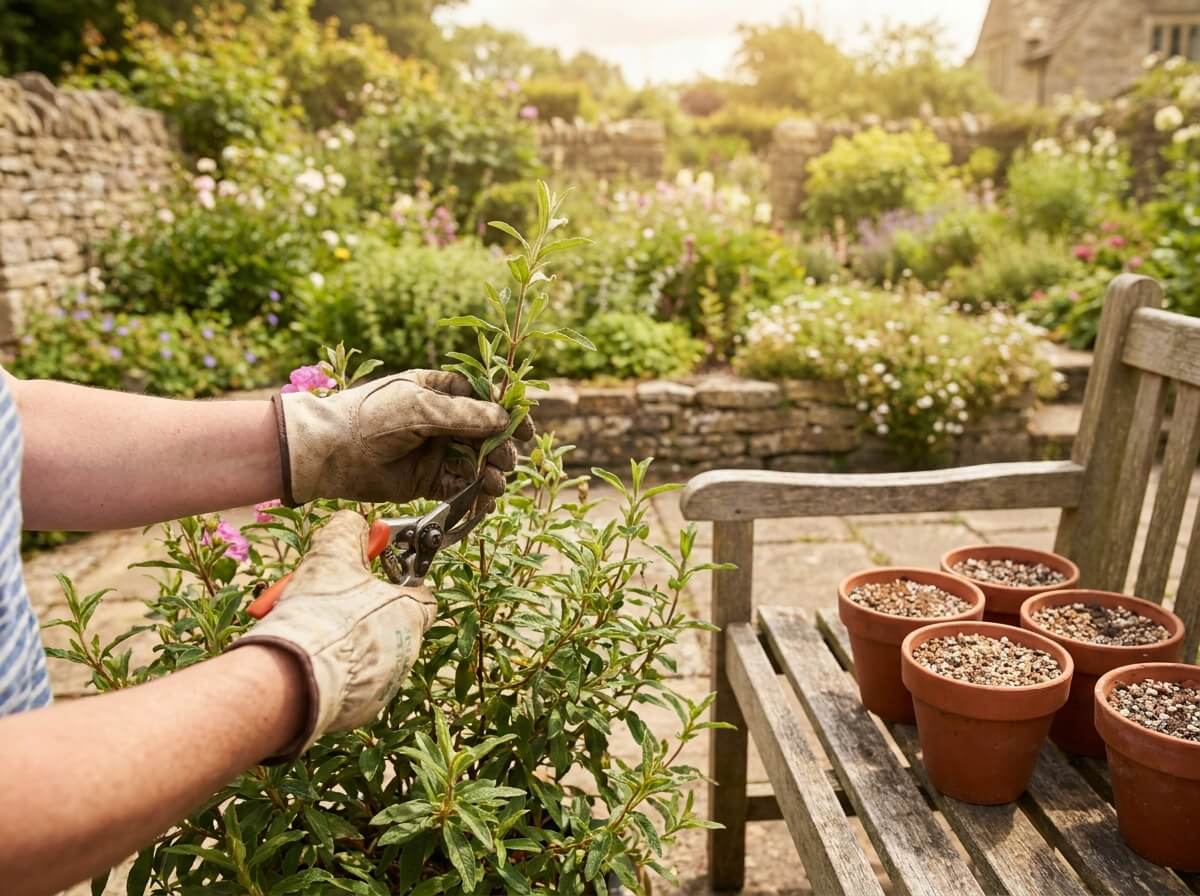
The correct method is a light trim immediately after flowering — typically July in the UK and Northern US, earlier in hotter climates. So, using clean, sharp secateurs, pull off the spent flower stems and cut back the soft green growth by roughly one third.
The goal is shaping the plant and encouraging bushy new growth, never reducing its size dramatically.
Yes, this means cistus has a finite garden life — typically 8 to 12 years before it becomes too woody and open to look good. That’s fine. It really is not a bit much.
Propagate replacements two years before they are needed.
Cistus is straightforward to propagate from semi-ripe cuttings. And now — mid to late summer — is precisely the right time. Take cuttings 8 to 10cm long from the current season’s growth, choosing stems that are firm at the base but still green at the tip.
The texture to look for is somewhere between soft and snappy: pliable but not floppy.
Strip the lower leaves, leaving two or three pairs at the top. Dip the cut end in hormone rooting powder (Doff or Rootmore both work well) and insert into small pots of 50:50 perlite and compost.
Place in a cold frame or sheltered spot — never a heated propagator, as that often encourages rot. Heated propagators? Dodgy. Keep just moist, not wet.
Roots form in 4 to 6 weeks.
Overwinter the rooted cuttings under glass in cold climates, and plant out the following spring once the risk of hard frost has passed. But in frost-free zones, pot on and plant out in autumn.
With dozens of species and cultivars available, a few consistently stand out for garden performance:
Cold hardiness varies significantly. The thing is, C. × hybridus tolerates down to around -10°C and is the safest choice for UK gardens north of the Midlands. Most others are borderline hardy in USDA Zone 8 and suit mild coastal climates. In colder zones they make magnificent large container plants moved under glass for winter, a cunning plan for Mediterranean garden lovers in Chicago or Toronto.
The RHS Plant Finder lists cold-hardiness ratings for individual cultivars; it’s certainly worth checking before buying in marginal climates.
One of the genuine pleasures of cistus is its pest and disease resistance. In well-chosen, freely draining conditions, it suffers almost nothing.
The two issues worth knowing about:
Aphids occasionally colonise soft spring growth but rarely in damaging numbers; a strong jet of water knocks them off without any intervention needed. Red spider mite can appear in properly hot, dry summers on container-grown plants.
Increasing humidity around the pot (but not the soil) does wonders for it.
Smart tip: Never cut into old brown wood — cistus can’t regenerate from it, and the plant will die back from the cut.
Cistus can’t regenerate from old woody stems. Hard pruning into brown wood is fatal — the plant has no dormant buds there to reshoot from.
Only ever trim green, current-season growth.
Yes, it can. In a large pot (at least 35cm diameter) using gritty, free-draining compost. Move container-grown plants under glass or into a sheltered position in climates that experience frost below -8°C.
Most cistus shrubs are at their best for 8 to 12 years before becoming too woody and open to look attractive. Plan for replacement by taking cuttings every few years; propagation is easy and free.
Yes, it is. The sticky, resinous foliage is strongly aromatic; deer avoid it reliably, making cistus a practical choice for rural gardens in deer-prone areas of the US, UK and South Africa.
Flowering runs from late spring to early summer — roughly May to July in the Northern Hemisphere. Planting several species with slightly different flowering times (C. ladanifer tends to flower earlier than C.
× purpureus) extends the display by three to four weeks without any additional effort.