Lavender gone woody, bare at the base, flowering less every year? The fix exists — but there is a precise window to do it, and that window is right now, in the weeks just after the first flush of summer blooms fades. Miss it and you are waiting another full year. Get it right and you will have a compact, fragrant plant shooting up fresh growth before summer ends.
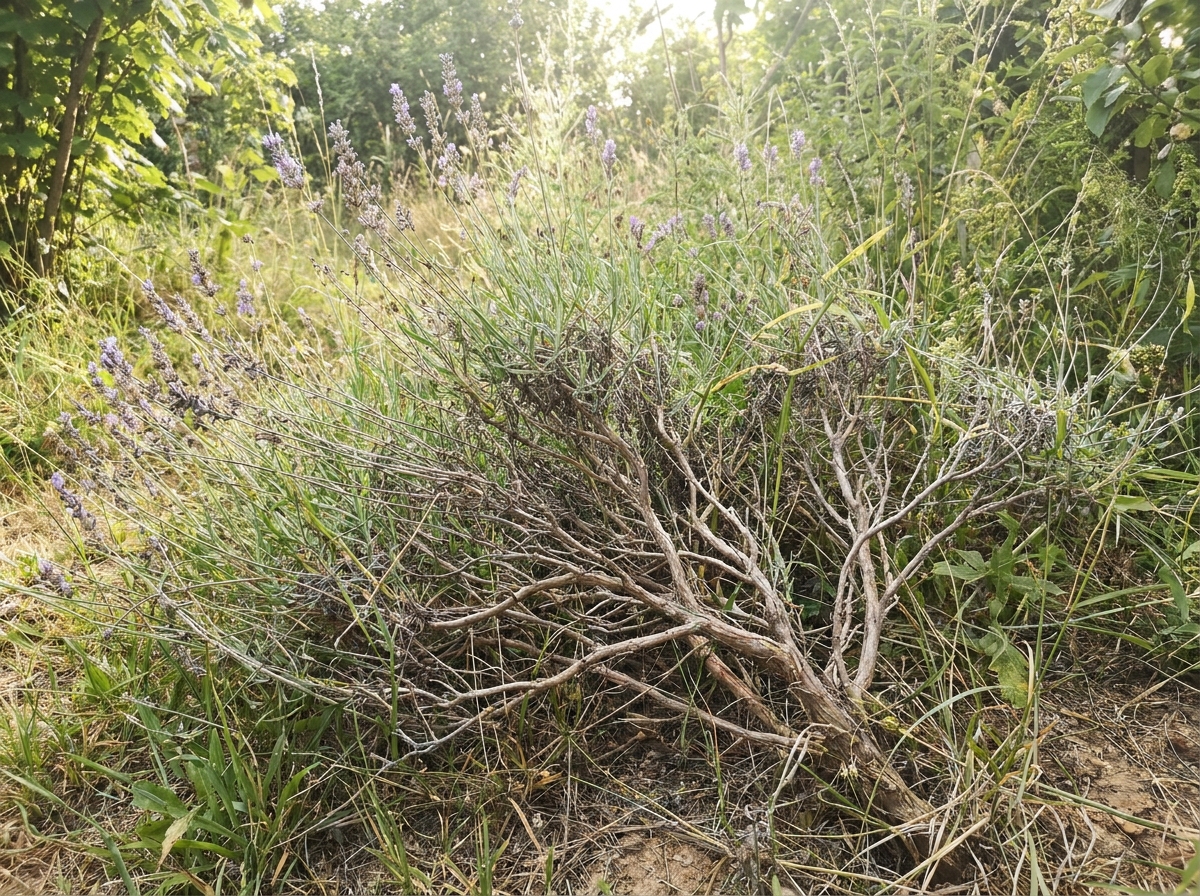
Skip the annual trim once, and lavender starts building up woody, bud-free stems at its base. Skip it twice and that bare zone expands.
By year three or four, you are looking at a plant that is half deadwood, flowering only at the very tips of a few long, arching stems.
The biology is unforgiving. Old grey-brown wood on lavender carries virtually no dormant buds. Unlike roses or buddleia, it cannot regenerate from that zone. Once the bare base dominates, no amount of feeding or watering reverses it — only timely, repeated trimming from the beginning keeps the green wood active and low.
Wetter climates compound this issue. UK gardens, for example. Here, lavender often sits in damp soil over winter, stressing the plant into producing less green basal growth the following season. It can get a bit dodgy. The RHS recommends annual trimming. Lavender simply does not self-regulate the way many other shrubs do.
Left untrimmed, the collapse is slow but guaranteed. The centre of the plant opens up and dies out completely within two to three seasons.
You end up with a ring of struggling outer stems around a hollow dead core — what gardeners call an “open centre” plant. This is terminal.
Feeding does not do wonders for lavender. Lavender is a lean-soil plant. Over-fertilising actually accelerates the issue by shooting up soft, leggy growth instead of the compact, woody-at-the-right-speed framework the plant needs.
And replanting a whole new lavender is perfectly fine, but if you have a large established specimen, losing it to a skipped trim is genuinely unnecessary.
The rule is simple but non-negotiable: cut into green, never into grey. Run your fingers down a stem until you feel the texture change from flexible green to stiff, pale wood.
That boundary is your hard limit.
Yes, it feels brutal to cut a flowering plant mid-summer. Do it anyway — the difference between a trimmed and untrimmed lavender by the following season is night and day.
You will smell the resinous, camphor-sharp scent the moment the shears go in, which is a good sign: that is the essential oil in healthy green tissue.
For severely woody plants, a two-year rescue plan works better than one drastic cut. Year one: trim the outer green growth hard.
Year two: if new growth has filled in lower down, cut a touch deeper. Push too hard in one go and you will lose it.
Woodiness is not the only signal. Watch for these alongside it:
Lavender also makes a surprisingly effective container plant if your soil is heavy clay — sun-loving Mediterranean plants thrive in containers where drainage can be fully controlled. In a pot of proper gritty compost, the woody base issue is far easier to manage because the plant stays smaller and more regularly shaped.
The UC Davis extension program notes that lavender in USDA zones 5–8 benefits from slightly harder annual trimming than in warmer zones. So, the cold-climate version of the plant shoots up harder regrowth after a firm cut. This makes rescuing a woody specimen far more likely for northern gardeners, then.
Southern Hemisphere gardeners: this applies to your December–January, just after your summer solstice flush. Do not attempt it now in winter — wait for your first post-bloom window.
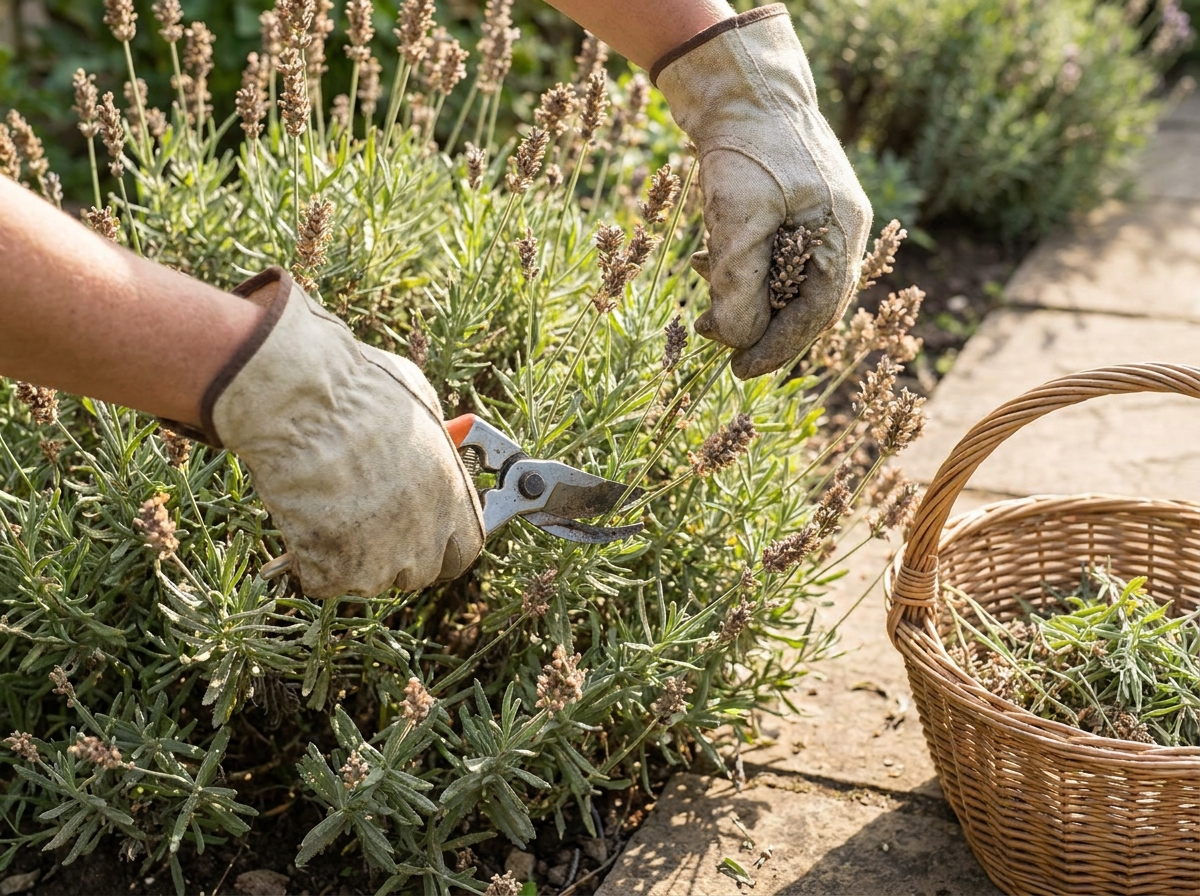
Smart tip: Always cut lavender immediately after flowering — delay by even four weeks and you lose the season’s regrowth window.
If there is no green wood anywhere on the plant, it cannot regenerate — replace it. If there is even 5–8cm of green showing on some stems, a careful two-year trim plan can bring it back.
Trimming removes the flowered tops and shapes the mound — never more than one-third off. Hard pruning cuts deep into old wood, which kills lavender.
Skip the hard prune entirely.
The thing is, no. Lavender evolved in poor, rocky Mediterranean soil and excess nutrients shoot up weak, floppy growth.
Skip the feed — good drainage matters far more than fertiliser.
Lavandula angustifolia ‘Hidcote’ and ‘Munstead’ stay naturally more compact than French or Spanish types and respond better to annual trimming in colder climates.