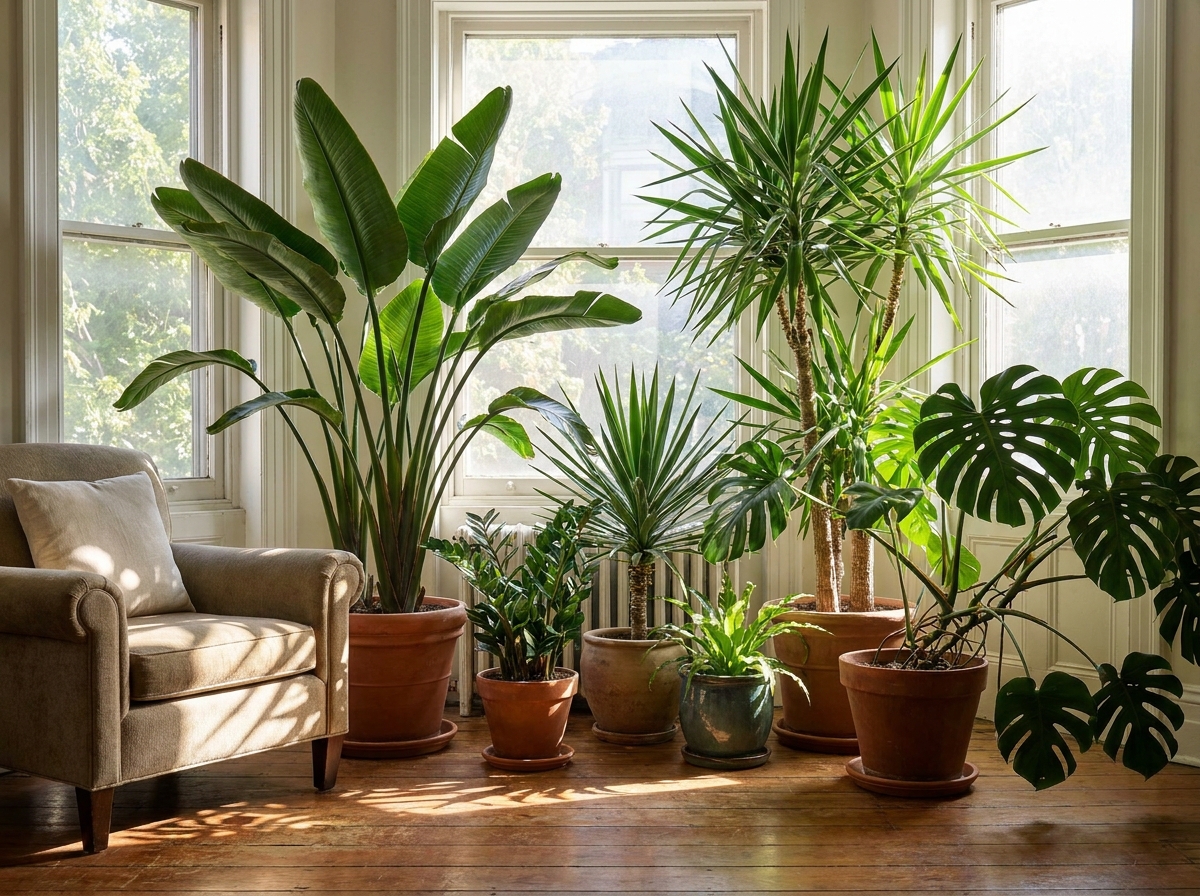
Your windowsill might be hosting a plant that, in its natural habitat, shoots up taller than your house. Yucca, bird of paradise, aloe, dracaena, monstera — these are not gentle domestic things.
They are survivors from deserts, jungle floors, and sun-cracked African plains. Brought indoors, given even half the right conditions, they turn an ordinary room into something that stops people dead in the doorway.
Most houseplants get treated as decoration. These ones deserve to be treated as what they are: wild organisms adapted to extreme conditions. That origin story is the single most useful thing you can know about caring for them.
Monstera deliciosa comes from the humid understorey of Central American rainforests. Light arrives in dappled bursts there. Roots sprawl across the ground, simultaneously climbing tree trunks. Yucca is a Sonoran Desert plant, baked in summer, frozen at night in winter, almost never watered. It is a harsh existence. A sunny window is its salvation.
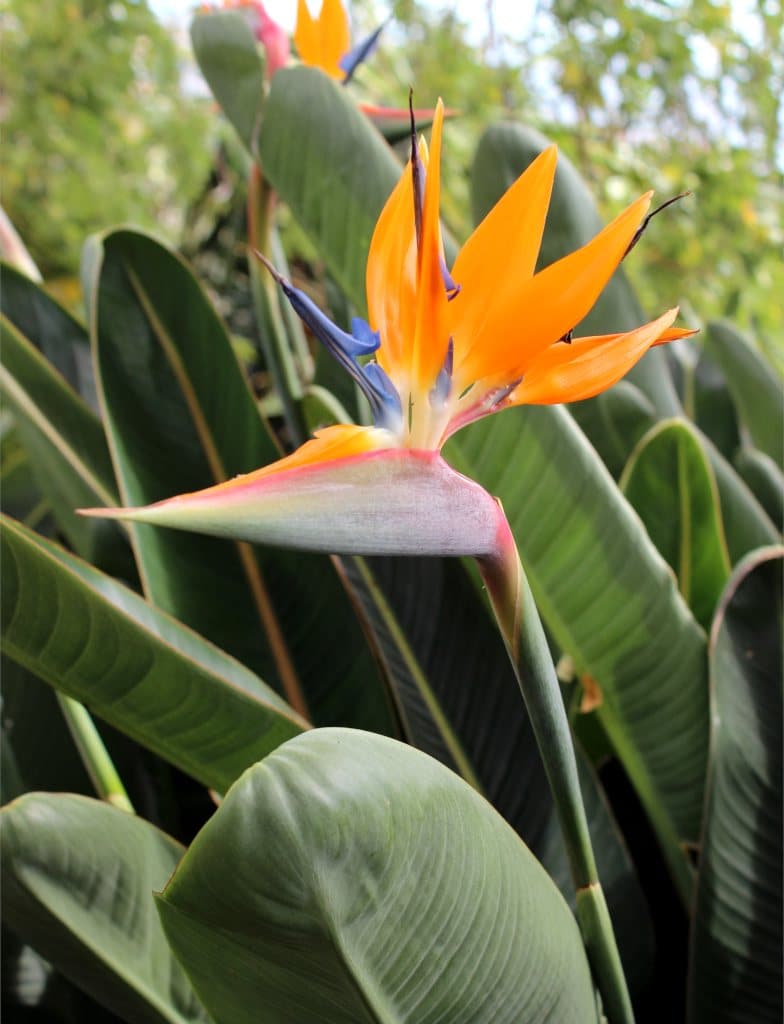
Bird of paradise (Strelitzia reginae) is South African. It shoots up in coastal thickets where the soil drains in seconds. Dracaena originates in the dry tropical forests of Africa and the Canary Islands. It survives drought on almost nothing.
This understanding is a revelation. You will stop apologising for a bright, slightly harsh windowsill and start recognising it as exactly what half of these plants are begging for. But there is more. You will also stop watering on a schedule — and start watering based on what the soil actually does. Water when it feels bone dry, not because your calendar tells you to.
If you are curious how some of these plants arrived in homes around the world, these plants travelled thousands of miles to reach your living room — and the journey shaped how we shoot up them today.
Right now, in the Northern Hemisphere, these plants are getting the longest, most intense light of the year. This is their shooting up season.
Not spring. Not autumn. Now.
Bird of paradise pushes new leaves from a central sheath. A tight, waxy scroll. It unfurls over about 11 days when conditions are right. You can almost hear it creak open.
Monstera produces new fenestrated leaves fastest between late spring and late summer. A plant in a genuinely bright spot will put out a new leaf every three to four weeks. Yucca, slow the rest of the year, visibly accelerates now.
This is the moment to repot anything that has been sitting in the same container for two or more years. Go up one pot size — not two, despite the temptation. The thing is, oversized pots hold too much moisture around the roots. For desert plants especially, that is a death sentence. It arrives slowly and without much warning. The RHS guidance on houseplant care consistently flags overwatering as the leading cause of houseplant death — and these plants are the most vulnerable. So, be warned. Oversizing is not the answer.
Move them closer to the glass in summer. Most people keep tropical and desert houseplants too far back from windows, worried about heat. But a yucca in its native Arizona experiences 40°C against its leaves daily. A sunny window is a relief, not a threat. Your plants will not wilt. Trust them.
The most common issue is treating all five of these plants the same. They are not the same. They come from entirely different ecosystems.
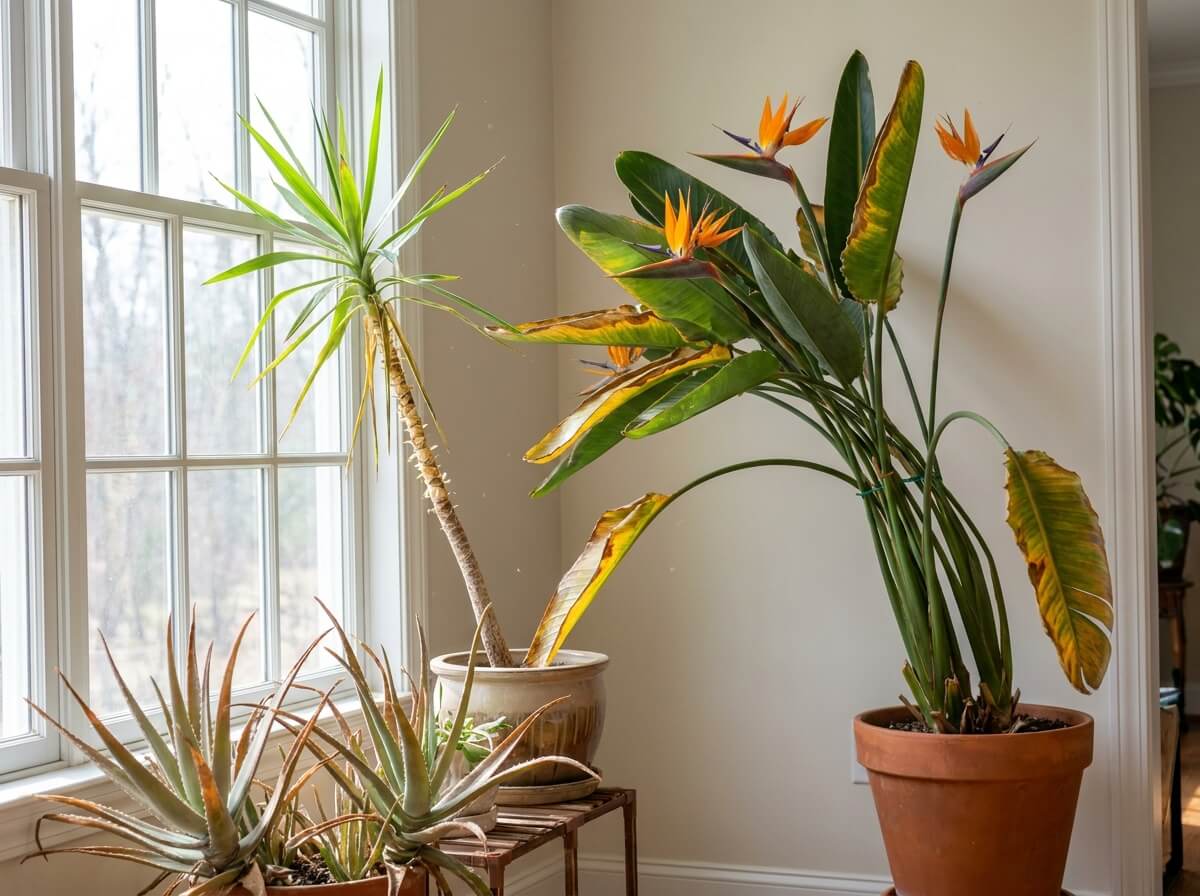
Brown leaf tips on dracaena almost always mean fluoride sensitivity or dry air. Not underwatering. Switch to filtered or rainwater. Misting the leaves once every three days with a fine spray does wonders for visible difference within two weeks. Do this.
Yellow lower leaves on monstera mean one of two things: overwatering, or the plant simply shedding old foliage naturally. Check the soil.
And if it has been wet for more than five days, cut back on water immediately. Consider repotting into a mix with added perlite. About 30% perlite to 70% potting compost is the bang on ratio. Sorted.
Aloe turning soft and translucent at the base is root rot. Yes, it is almost certainly too late for that plant. The fix is non-negotiable prevention: terracotta pots, gritty cactus compost, and a strict no-saucer rule. The UC Davis Master Gardener Program recommends a 50/50 mix of cactus soil and coarse sand for aloe specifically.
If your tropical plants are showing any stress this summer, your tropical houseplant is struggling right now — and summer is why explains exactly what is happening and what to fix first.
Scale matters more than variety. One enormous bird of paradise in a 40cm terracotta pot, positioned in a corner with white walls behind it, does more for a room than six small plants scattered across a shelf.
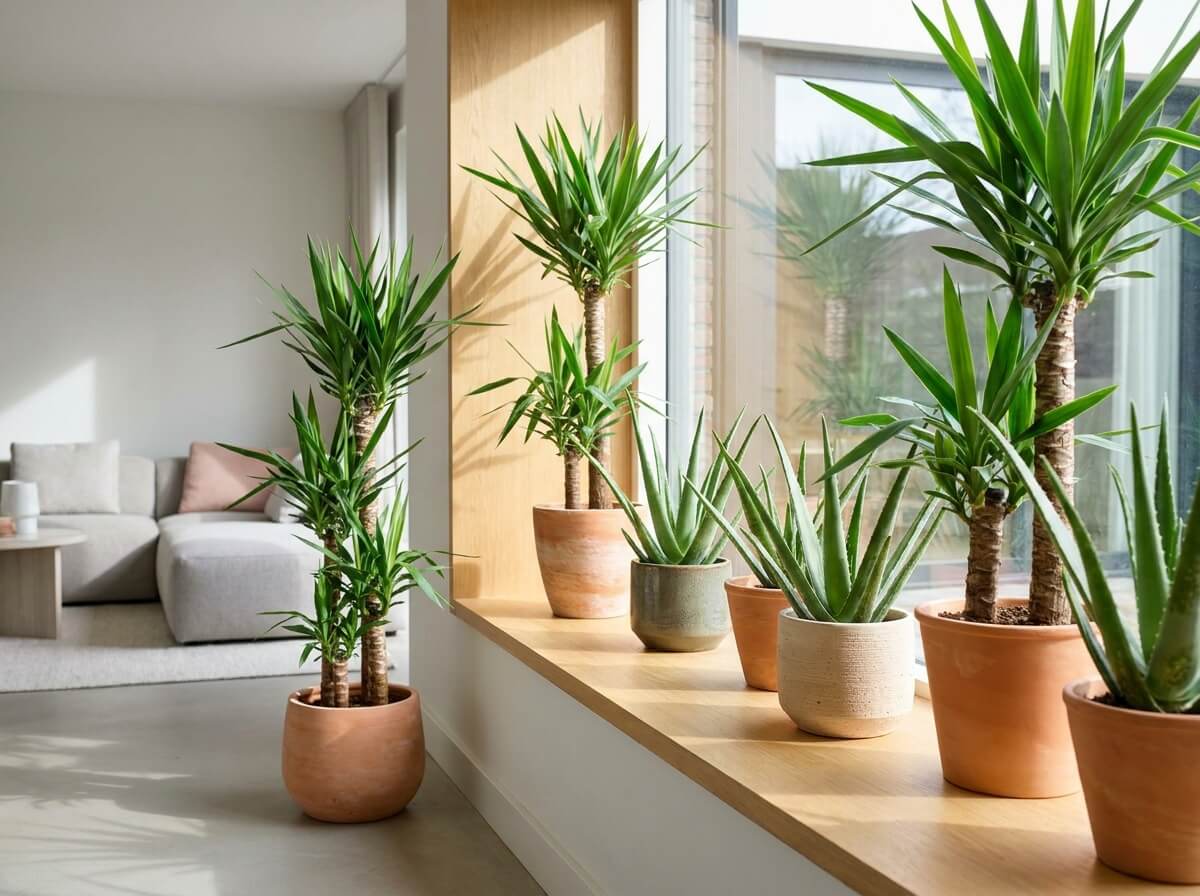
Group desert plants together. And group jungle plants separately. They have different humidity needs. Clustering similar species creates a micro-environment each type prefers. Yucca and aloe together on a south-facing sill. Monstera and dracaena near an east-facing window where morning light is bright but not scorching. This is proper placement.
Raise them up.
A yucca on a low wooden stool. A monstera on a plant stand at chest height. Suddenly you are looking at them the way they are meant to be seen. These plants evolved to be tall. Let them behave like it.
For even more ways to build a dramatic indoor plant display, your living room could look like a botanical garden — here is the plants that make it happen.
Southern Hemisphere gardeners: this applies to your December and January — your peak shooting up window for these plants.
Smart tip: When in doubt, underwater — every plant on this list tolerates drought far better than soggy roots.
Yes, but it takes patience — typically 5 to 7 years from a young plant. Only with at least 6 hours of direct sun daily. A plant kept in low light will never flower, no matter how long you wait.
Young leaves on juvenile plants are often uncut. Fenestration develops with age and good light. Move the plant closer to a bright window. The next few leaves should show splits within a couple of months.
Once every three to four weeks with a balanced liquid fertiliser at half the recommended strength. Over-fertilising causes salt build-up in the soil. It burns roots. Less is genuinely more here. Never assume more fertiliser means faster results.
Yes. Yucca contains steroidal saponins that are toxic to dogs and cats if ingested, causing vomiting and weakness.
Position it well out of reach. Or choose a pet-safer alternative like a spider plant or Boston fern. Be diligent.