Three diseases. Three different looks.
Three different fixes. If your roses have dark blotches, white powder, or orange dust on the leaves, you are not dealing with one issue — one might be dealing with all of them at once.
Identify correctly first, act second. Treating black spot with a mildew spray does nothing.
Here is exactly how to tell them apart and what to do today, before the damage compounds.
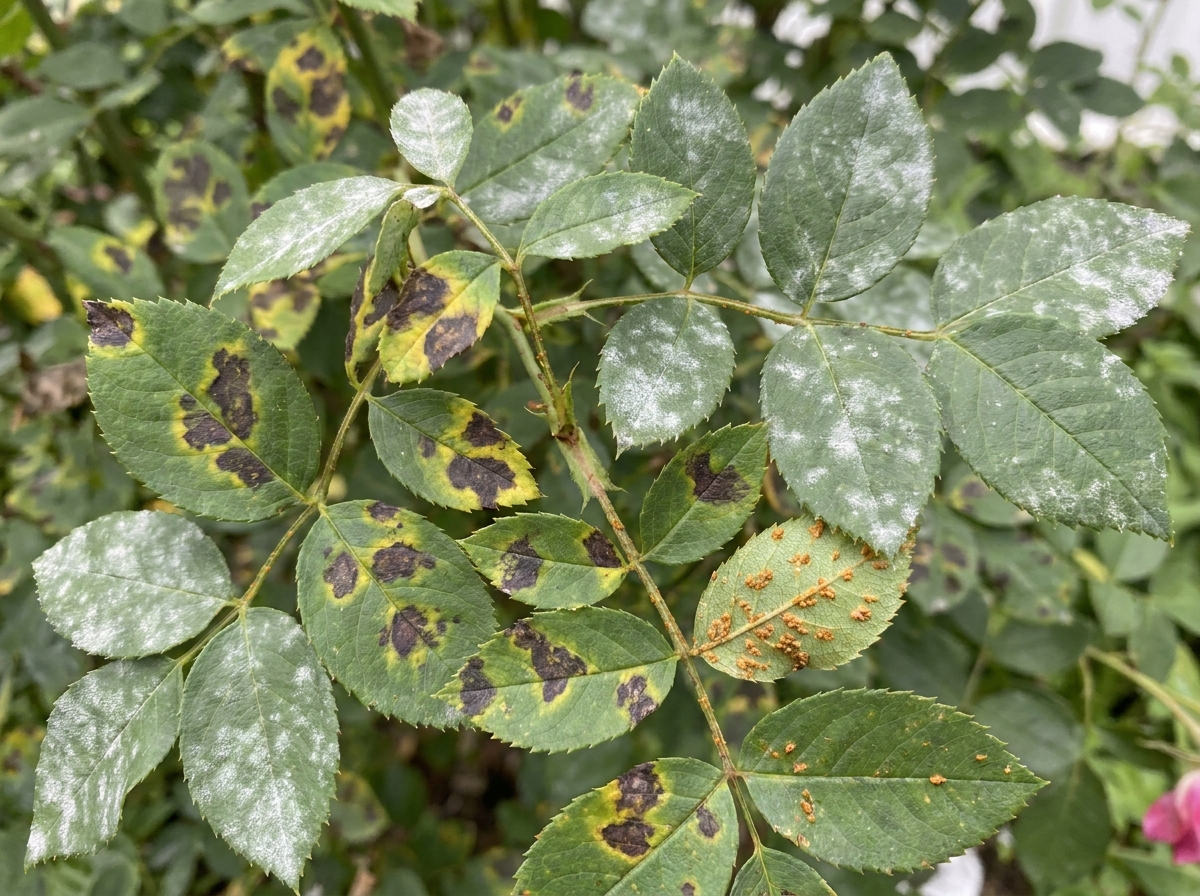
Black spot manifests as circular dark lesions — edges slightly fringed, a bit dodgy — on the upper surface of leaves. The leaf around each spot turns yellow, then the whole leaf drops. It spreads upward from the lower canopy first, and in humid summers it can strip a rose bush almost bare within 3 weeks.
Powdery mildew looks exactly like someone dusted flour over the young leaves and shoot tips. White, dry, powdery.
It attacks new growth first — the soft unfurling leaves at the ends of stems. And here is the counterintuitive part: it spreads in warm, dry spells, not wet ones.
High humidity without rain is its sweet spot.
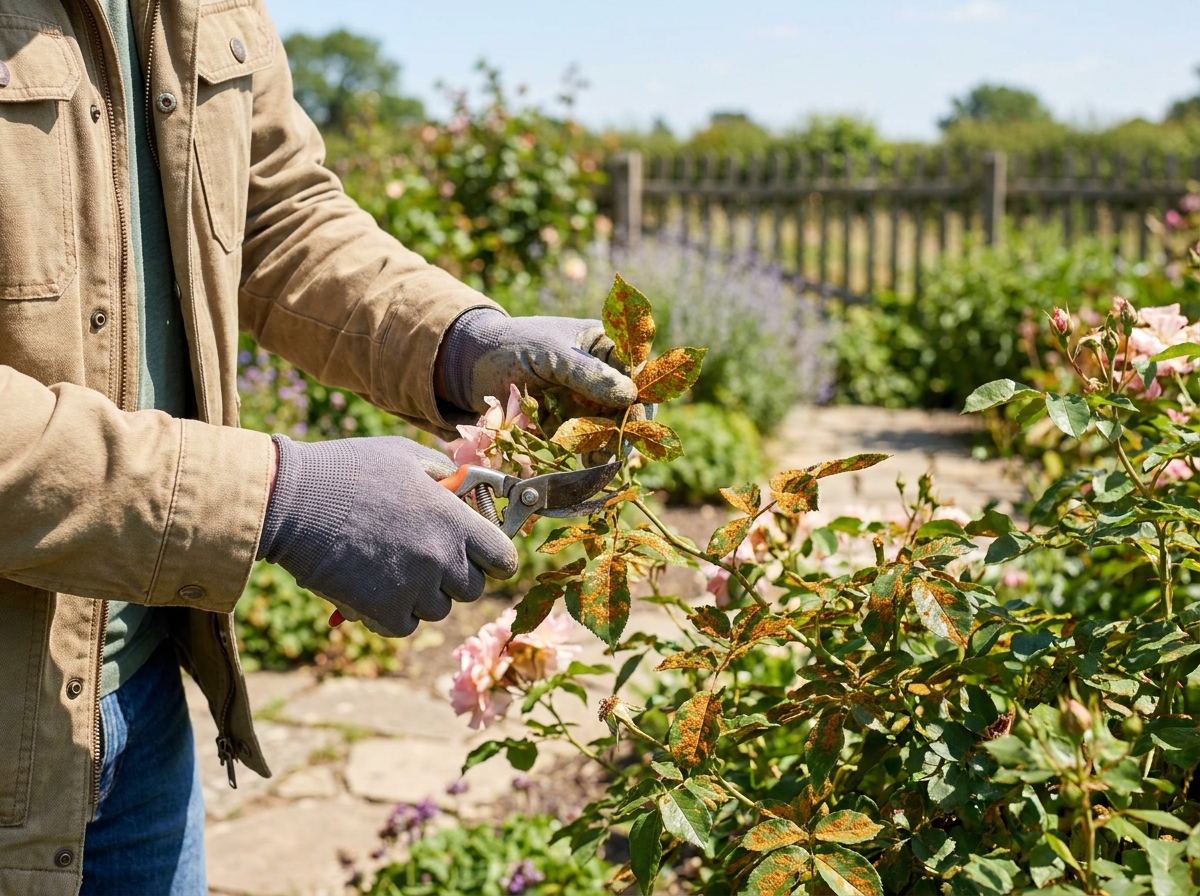
Rose rust is the most dramatic visually. Flip an infected leaf over and you will see bright orange or rust-coloured pustules packed tightly on the underside, like tiny blisters.
The upper surface shows corresponding yellow patches. It is more common in the UK, Ireland, and cooler parts of the Pacific Northwest than in hot dry climates.
All three are fungal. None will kill an established rose outright in a single season.
But repeated defoliation from black spot significantly saps the plant’s vitality over 2–3 years — fewer blooms, thinner stems, higher susceptibility to everything else.
Powdery mildew distorts young growth badly enough to prevent flowering on affected stems. And rust, left unchecked on a susceptible variety, can cause near-total leaf loss by late summer.
It is the cumulative damage that results in next year’s plant being half the rose it should be.
Fallen infected leaves on the soil are where black spot spores overwinter and relaunch the whole cycle next spring. Removal is not cosmetic, it is disease control.
Start by stripping every visibly affected leaf from the plant and bagging them — do not compost them. This is non-negotiable for black spot especially.
Yes, stripping leaves mid-summer feels brutal. Do it anyway — the difference by August is night and day.
Roses under fungal stress become magnets for secondary issues. Watch for these in the weeks ahead.
The RHS black spot guidance is clear that resistant varieties are the best long-term solution for chronic issues. If you are replacing a rose that dies every year, choose one rated RHS Award of Garden Merit with confirmed disease resistance — ‘Olivia Rose’, ‘Harlow Carr’, or ‘Princess Alexandra of Kent’ all hold up well.
Southern Hemisphere gardeners: your roses are heading into winter dormancy now — focus on cleaning up fallen leaves and a preventive copper spray before plants go fully dormant. This applies to your August–September period.
Smart tip: Always identify the specific disease before spraying — the wrong fungicide wastes money and time.
Yes, completely possible — they are caused by different fungi with different conditions. A humid, warm summer with occasional dry spells creates the perfect window for both simultaneously.
Coffee grounds have no proven antifungal effect on roses. Forget it. They can impact soil pH slightly, but if you are already using them on your plants, check whether you are applying them correctly — see are you putting coffee grounds on your garden plants all wrong this summer?
No. Rose rust is host-specific to roses and their close relatives — it cannot jump to vegetables, perennials, or other shrubs.
Every 10–14 days for most fungicides, or every 7 days in persistently wet weather. Always read the product label — over-spraying accelerates fungicide resistance.