Coffee grounds are one of those tips that gets passed around gardening groups like gospel. Free, organic, nitrogen-rich — what’s not to love?
Quite a lot, actually, if you’re dumping ’em straight onto your plants in June. The heat changes everything.
Used correctly, they’re genuinely useful. Used wrong — and most people are using ’em wrong — they can compact, mould, and quietly stress the very plants you’re trying to help. Nobody wants that.
Here’s the thing nobody tells you: dry coffee grounds repel water. They look loose and crumbly, but once they dry out fully — which happens fast in June sun — they form a crust that water beads straight off. I noticed this properly one morning around 7am, standing in the garden with a watering can, watching water just slide off a ring of grounds I’d laid around my basil 48 hours earlier. The soil underneath? Bone dry.
And there’s also the mould issue. In humid summer conditions, a thick layer of grounds sitting on the soil surface turns grey-green within about 100 hours. That’s Penicillium and friends — not catastrophic, but it’s not what you want near seedlings or shallow-rooted herbs.
And the acidity thing is mostly overstated — wait, that’s not quite right — it’s *wildly* overstated, sorry. The RHS has confirmed that used coffee grounds are close to pH neutral — most of the acid goes into your cup. Sprinkling them around blueberries won’t drop your soil pH meaningfully without months of consistent application. Full stop.
Yes. Not dramatically, not overnight, but yes.
A thick layer — anything over about 1cm — blocks gas exchange at the soil surface and can suppress germination. Caffeine residue, even in small amounts, has been shown in Oregon State University extension research to inhibit seed germination and slow root development in some species. Tomatoes and peppers? They seem tolerant. Carrots and radishes, less so.
So, the plants most at risk right now are anything you’ve recently sown or transplanted — their root systems just can’t push through compacted crusts the way established plants can. If you’ve been heavy-handed around seedlings and they’ve stalled or started yellowing, that’s probably why.
Use them, absolutely. Just not like that.
Here’s what works:
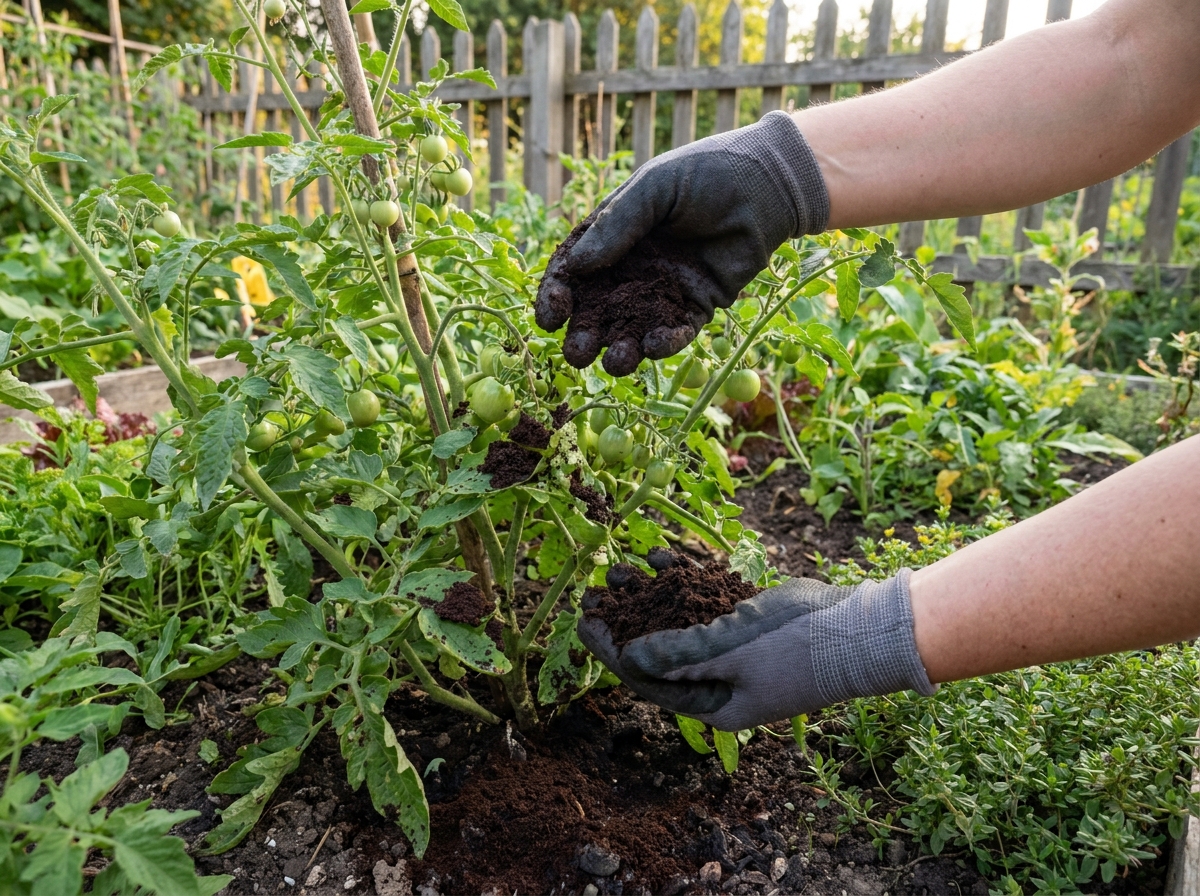
Look, I know the thin-dusting rule sounds like a bit of a faff, but just do it. One coffee’s worth spread across a square metre is actually helpful.
A full Bodum French press worth (that’s about 8 cups) dumped in one spot is where the trouble starts.
If you’ve been using coffee grounds for about three or four weeks, check for these:
And if your herbs are struggling alongside this, it’s also worth checking whether root rot or a fungal issue is already underway — especially in lavender and similar Mediterranean plants. Our piece on olive or lavender dying from the inside covers exactly that kind of invisible soil-level damage. It’s truly sneaky.
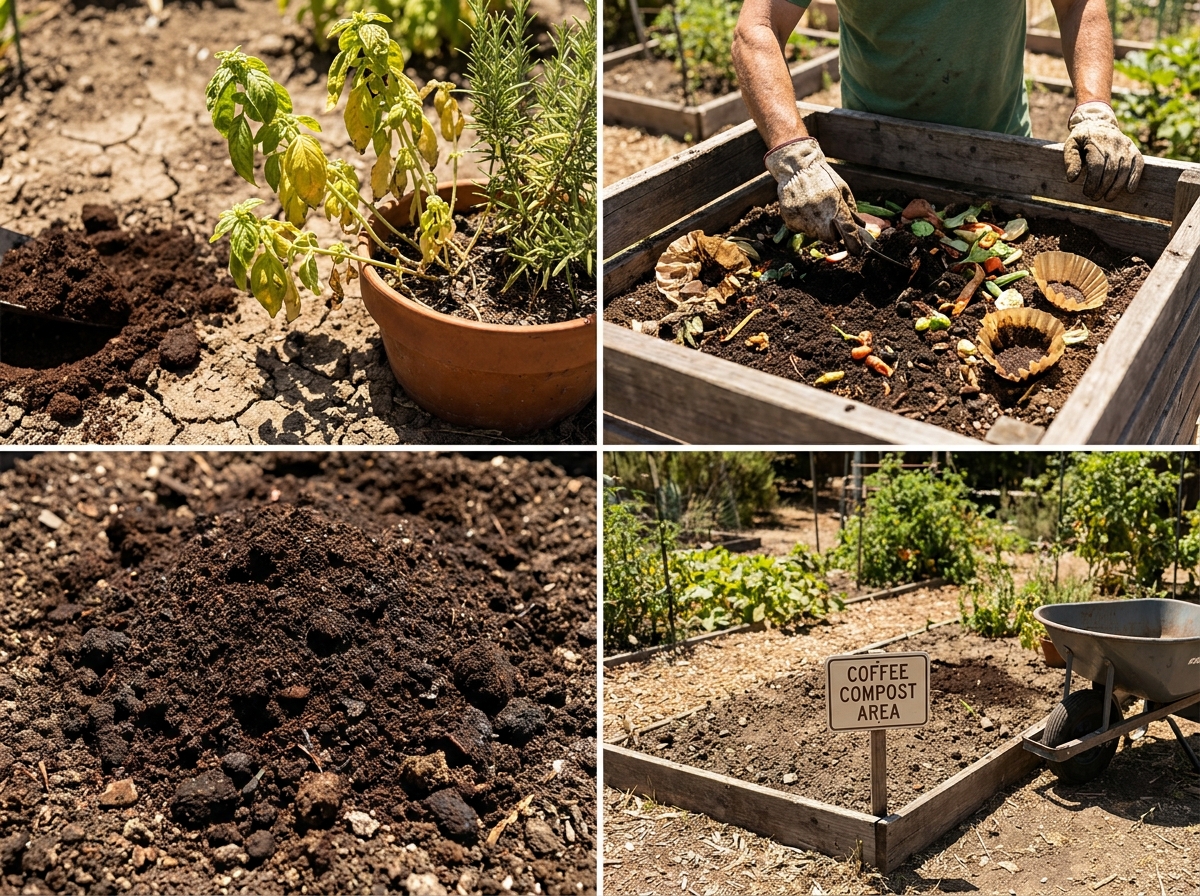
Smart tip: Mix coffee grounds into compost rather than applying direct — every time, no exceptions. Full stop.
In small quantities, scratched into the soil surface, yes — roses tolerate them well. A thick surface layer will crust and repel water, which defeats the point entirely.
But the evidence is genuinely weak on this one. A rough texture might deter crossing briefly, but it doesn’t last, and it’s not a reliable barrier — especially after rain or watering flattens the grounds. Don’t count on it.
Avoid them around seedlings under three weeks old, carrots, radishes, and any plant that already prefers alkaline soil — lavender, clematis, wisteria. The caffeine residue and acidity, even mild, can set them back.
Once every three to four weeks as a light surface scratch-in is plenty during summer. More frequent application, especially in heat, risks compaction and mould before the grounds have broken down.