Used coffee grounds are free, available every morning, and one of the most non-negotiable useful things you can add to your garden this summer. They feed the soil. They improve drainage, attract earthworms, and give nitrogen-hungry plants a slow, steady boost, the kind that properly makes a difference over time.
But the way most people use them is wrong. It is either doing nothing or quietly causing harm. Here is exactly what works, and what does not. The thing is, many keen gardeners just get this bit a bit much. Avoid that.
The biggest myth first: coffee grounds are not strongly acidic. Brewed, used grounds sit close to pH neutral, around 6.5 to 6.8. The acidity stays in the cup, not the grounds. So adding them to lower your soil pH for blueberries or rhododendrons? This method does not work. Skip it. What they do contain is nitrogen — about 2% by volume — along with potassium, magnesium, and calcium. Proper nutrient wealth, if you use them right.
That nitrogen matters. It releases slowly as the grounds break down, doing wonders for plants over 3 to 6 weeks rather than all at once. And earthworms absolutely flock to soil that contains them. In studies from Oregon State University Extension, worm activity increased measurably in beds amended with coffee grounds; that is bang on what you want. Better aeration. Better drainage. Better everything, without a doubt.
Summer heat speeds decomposition. Grounds mixed into warm soil in late spring or summer break down faster than those added in autumn. So now is the optimum moment to use them, do not dither. Get it sorted.
Thick. Dry.
Undisturbed. That is the combination that ruins it. Make no mistake.
A layer of dry grounds more than 1cm deep forms a crust. This crust is almost watertight, almost airless. Water simply beads off.
Roots suffocate. The same material that should do wonders starts to harm. What a dodgy scenario.
And if you are piling them around the base of a plant stem, fungal rot follows quickly in summer humidity. This issue needs attention, fast.
The plants that properly respond well to direct ground application are
Avoid using grounds directly around carrots. And keep them away from seedlings under 6 weeks old. Do not use them on any plant already showing signs of nitrogen toxicity: dark, brittle, overly lush leaves with no flowers. That is a proper red flag.
The single non-negotiable method: compost first, apply second. Mix grounds into your compost bin at no more than 20% of total volume. Sorted.
By the time the compost is ready, the nitrogen has stabilised and the pH is fully neutral. Apply that compost at 5cm depth around plants. Water it in properly.
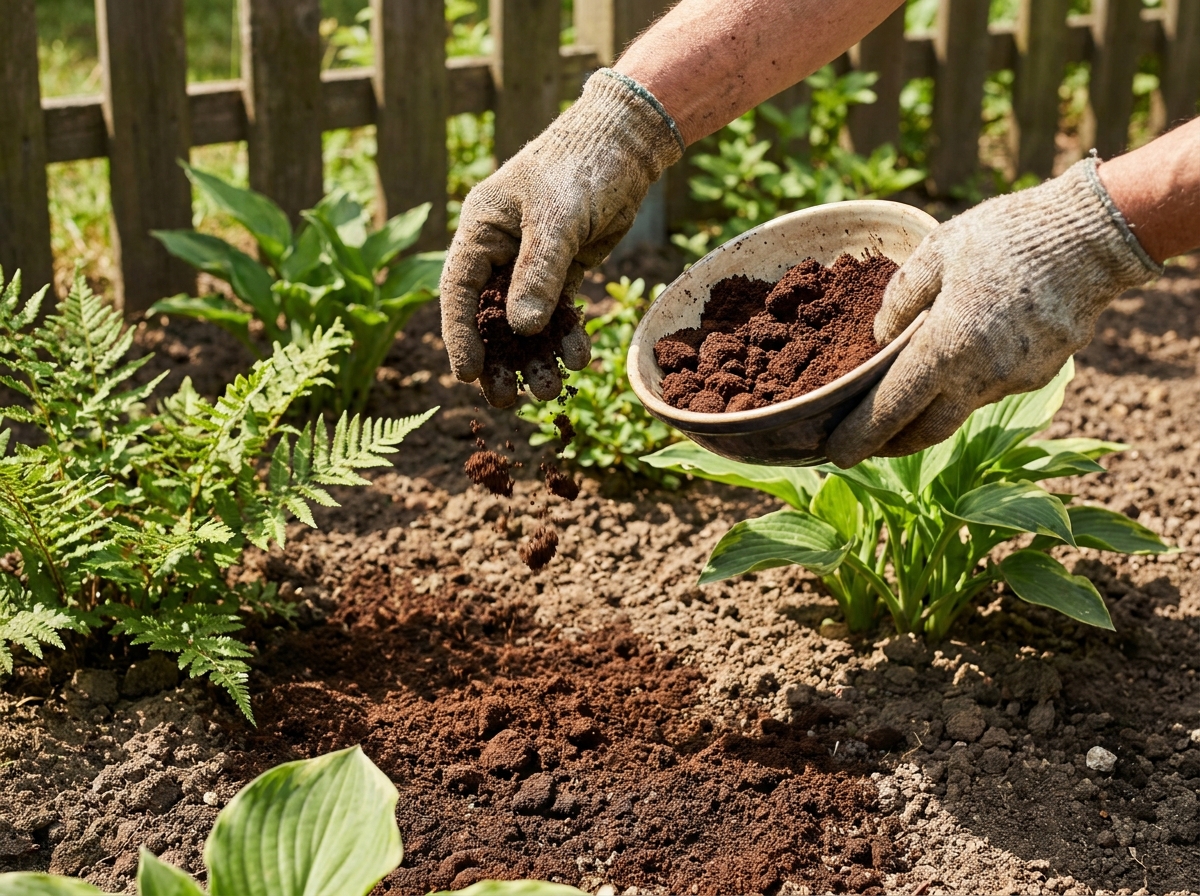
For direct application — which does work when done right — follow this exactly. There is no wiggle room.
You can also brew a liquid feed. Soak 250g of used grounds in 5 litres of water for 24 hours, strain, and apply at the base of plants. The RHS acknowledges this as a low-level nitrogen liquid feed that is gentle enough for regular use. It works a treat.
Positive signs shoot up within 10 to 14 days. You will see noticeably deeper green in new leaf growth. Faster stem extension. Increased flower bud production on roses and tomatoes.
Stop immediately if you see
If you are also battling slugs, do not count on grounds as a deterrent. That particular claim has no solid evidence behind it. And if slugs are a serious issue, there are safer, proven alternatives worth knowing about. Focus on those instead. You will thank us for the advice.
Southern Hemisphere gardeners: winter is actually excellent timing. Cold slows decomposition. So mixing grounds into beds now prepares nutrients. They will be ready exactly when spring growth begins in September. How convenient.
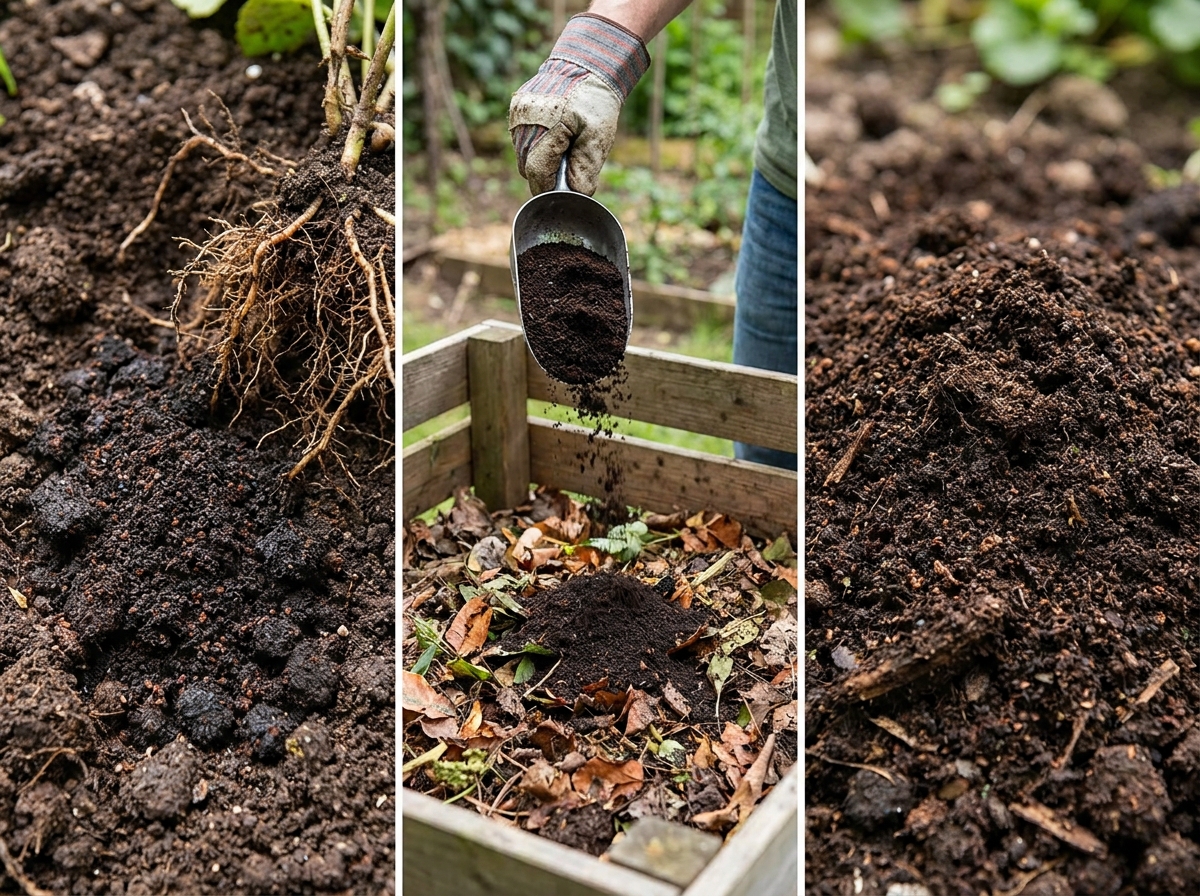
Smart tip: Always mix grounds into soil immediately. Never leave them as a dry layer on the surface. That is the cardinal rule.
No. Daily application builds up fast and forms a suffocating crust. Avoid it.
Every 3 weeks is the absolute maximum for direct soil application. Proper timing matters here.
Use them sparingly. Mix a tablespoon into the top 2cm of compost, no more than once a month. Container soil is unforgiving. Too much is a major issue.
The cat deterrent has some anecdotal support but wears off quickly in rain. The slug claim has no reliable evidence. Do not rely on it.
Yes, used capsule grounds are identical in nutrient content to filter or cafetière grounds. Just make properly sure no plastic fragments from the pod end up in your soil. That would be properly dodgy.