Your rose was fine last week. Now half the leaves are yellow, some are dropping, and you’re standing there, wondering what you’ve done wrong. Here’s the answer upfront: yellowing rose leaves in June are almost always caused by one of three things — iron or magnesium deficiency, black spot fungus, or overwatering. Good news? All three are fixable. Bad news? They look almost identical at first glance, and treating the wrong one makes things worse. Much worse.
June is peak stress season for roses. They’re pushing hard — flowering, growing, pulling nutrients from the soil at a furious rate. That’s why deficiencies show up now and not in April. The pattern of yellowing, it tells you almost everything.
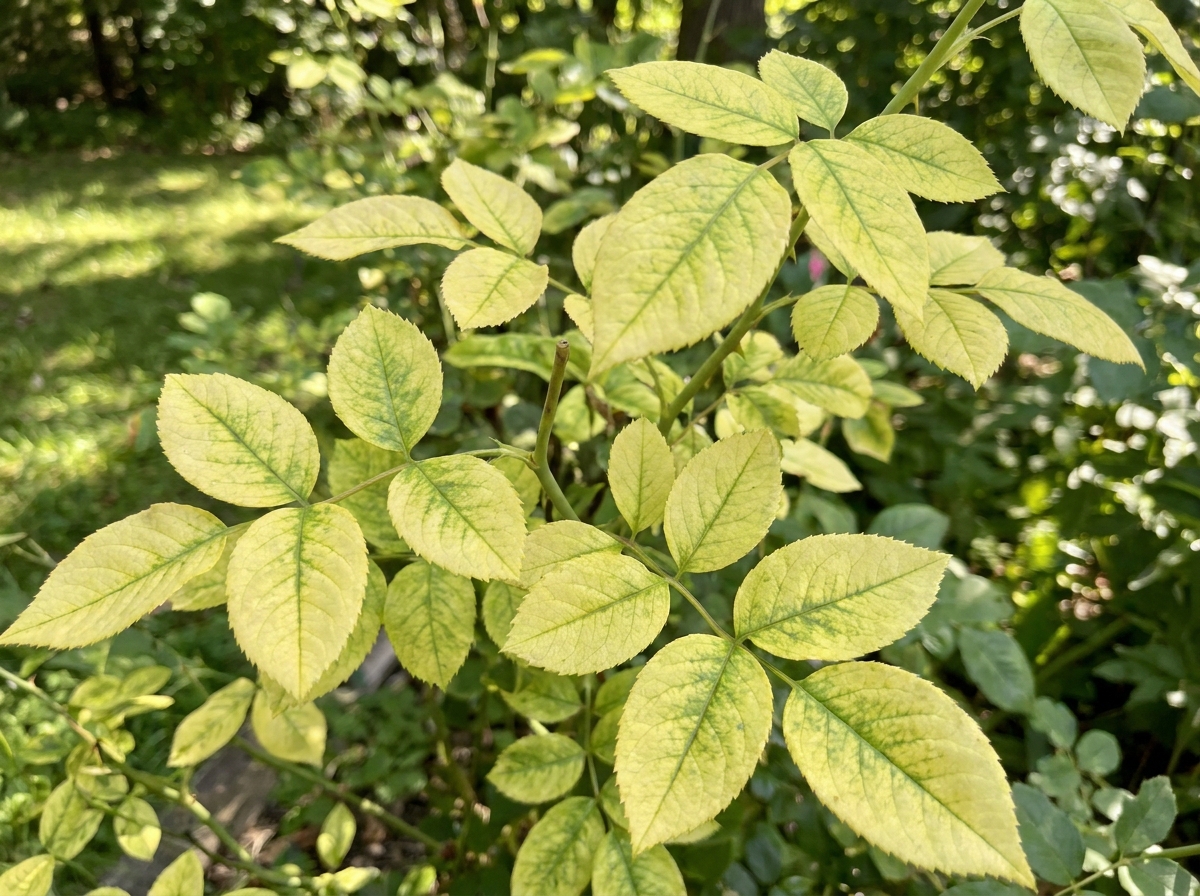
If the yellowing starts between the leaf veins while the veins stay green, you’re looking at iron chlorosis — usually caused by alkaline soil locking out iron rather than an actual iron shortage. If the oldest, lowest leaves go yellow first and drop cleanly, you’ve probably got magnesium deficiency. If you see yellow leaves with small black spots or a purplish tinge, that’s black spot fungus doing its early work. And if the soil feels permanently soggy? The roots are struggling to breathe, and yellowing leaves are the first thing you’ll see. I once spent a fortnight treating what I thought was chlorosis on a pot rose before realising the drainage hole was completely blocked at 6:30 PM on a Tuesday. Three months of slow decline, one unblocked hole, problem sorted.
Depends entirely on the cause. A mild magnesium deficiency won’t kill your rose — it’ll just look a bit miserable and flower less. But black spot left untreated through June and July will defoliate the plant entirely by August, weakening it so severely that it may not survive a hard winter. — actually, no, it *might* survive, but it’s going to be absolutely knackered for next year. The RHS confirms that repeated defoliation significantly reduces the long-term vigour of rose plants. Iron chlorosis on chalky or clay soil compounds year on year — each season the plant gets weaker, the flowers smaller, the recovery slower. Do nothing and you’re not maintaining the status quo. You’re slowly losing the plant. If you’ve already noticed other symptoms alongside the yellowing, check our guide to rose tree diseases and how to treat them — it covers the full picture.
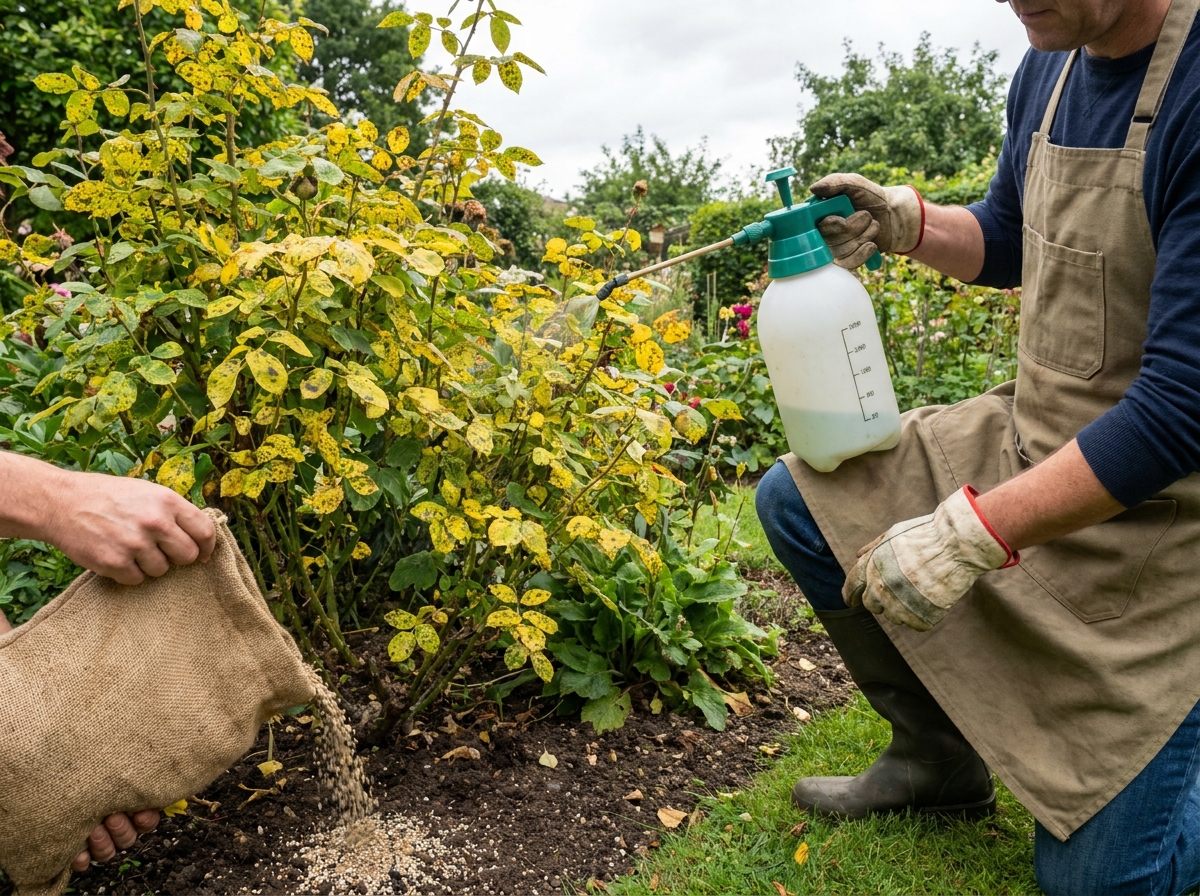
Spraying first? Doesn’t work. Full stop. Diagnose first. Here’s what to do, depending on what you’re seeing:
So, whatever the cause, give your rose a balanced liquid feed this week. A stressed plant recovering from any of the above needs fuel. The University of Maryland Extension recommends feeding roses every 4–6 weeks through the growing season to maintain vigour.
Yellow leaves aren’t usually the only signal. Look for these alongside them:
If you see yellowing plus blistered or distorted leaves, suspect a two-spotted spider mite infestation — they’re microscopic enough that most gardeners never notice them until the damage is advanced. They really explode in hot, dry weather.
Quick tip: Always remove and bin yellowed leaves — don’t ever compost them, as fungal spores will survive and reinfect next season. You don’t want that!
Sometimes — if the cause is a nutrient deficiency and you treat it quickly, new growth will be healthy and some mildly affected leaves may recover colour. But leaves yellowed by black spot or severe stress won’t recover and should be removed. No point hoping.
Black spot always produces dark circular spots or blotches on the leaf surface before or alongside the yellowing — look closely with a magnifying glass if you need to. Early leaf drop without spots in June is more likely a stress response to heat, drought, or waterlogging. It’s usually not that complicated.
Not unless the stems themselves are dead or diseased — cutting back healthy green stems in June just removes the plant’s energy reserves. Just strip the affected leaves, treat the underlying cause, and let the plant push new growth.
Recurring annual yellowing in June usually points to a persistent soil problem — pH that’s too high, drainage that’s too poor, or a fungal spore load that’s built up in the soil over years. A soil test (inexpensive, widely available) is the most useful £10 you’ll spend on your roses. Seriously.