Slugs are decimating your summer crops. And the obvious fix—a box of pellets—could put your dog in intensive care before the day is out. Metaldehyde-based slug bait is acutely dangerous to dogs and cats. It acts fast enough that by the time symptoms appear, you may already be racing to an emergency vet. What’s dangerous? What’s genuinely safe? How do you protect your vegetable patch and your pets? This is a proper quandary.
The active ingredient in classic blue slug pellets—metaldehyde—attacks the central nervous system. Dogs don’t need much. This stuff is seriously dodgy.
A 10kg dog can suffer fatal convulsions from roughly 1 gramme of metaldehyde. That’s between 5 and 15 pellets. It depends on the brand’s concentration. A terrifying thought, isn’t it?
But here’s the issue. Dogs actively seek these pellets out. Manufacturers bind the pellets with cereal. It’s wheat flour or rice bran that holds the shape. They find it irresistible.
That same binder makes the pellets smell like food to a dog. They will root through soil to find them.
The RSPCA lists metaldehyde as one of the most common causes of garden-related pet poisoning in the UK every summer. The numbers spike exactly when slug pressure peaks. Think warm, wet evenings. El Niño weather patterns are delivering these right now across much of the northern hemisphere. So, vigilance is paramount.
Completely.
Even gardeners who scatter pellets sparingly, or tuck them under leaves, underestimate how effectively a dog can sniff out cereal-based bait. Pellets simply wash into adjacent soil in rain. It happens. You won’t prevent it.
A neighbour’s application can drift under a fence. And old, opened boxes sitting in a shed for a season can still be fully active. Metaldehyde degrades slowly. So, assume every pellet is dangerous.
In the UK, metaldehyde-based pellets were formally banned for garden use in 2022 by the Health and Safety Executive. But legally purchased pre-ban stock could still be sitting on garden centre shelves or in gardeners’ sheds right now. Check every box you own for “metaldehyde” in the active ingredients before touching the contents. This is non-negotiable.
For readers in the USA, Canada, Australia, and New Zealand, metaldehyde is still widely sold. The ASPCA Animal Poison Control Center receives slug bait calls year-round. Same risk. Same urgency. Get on it.
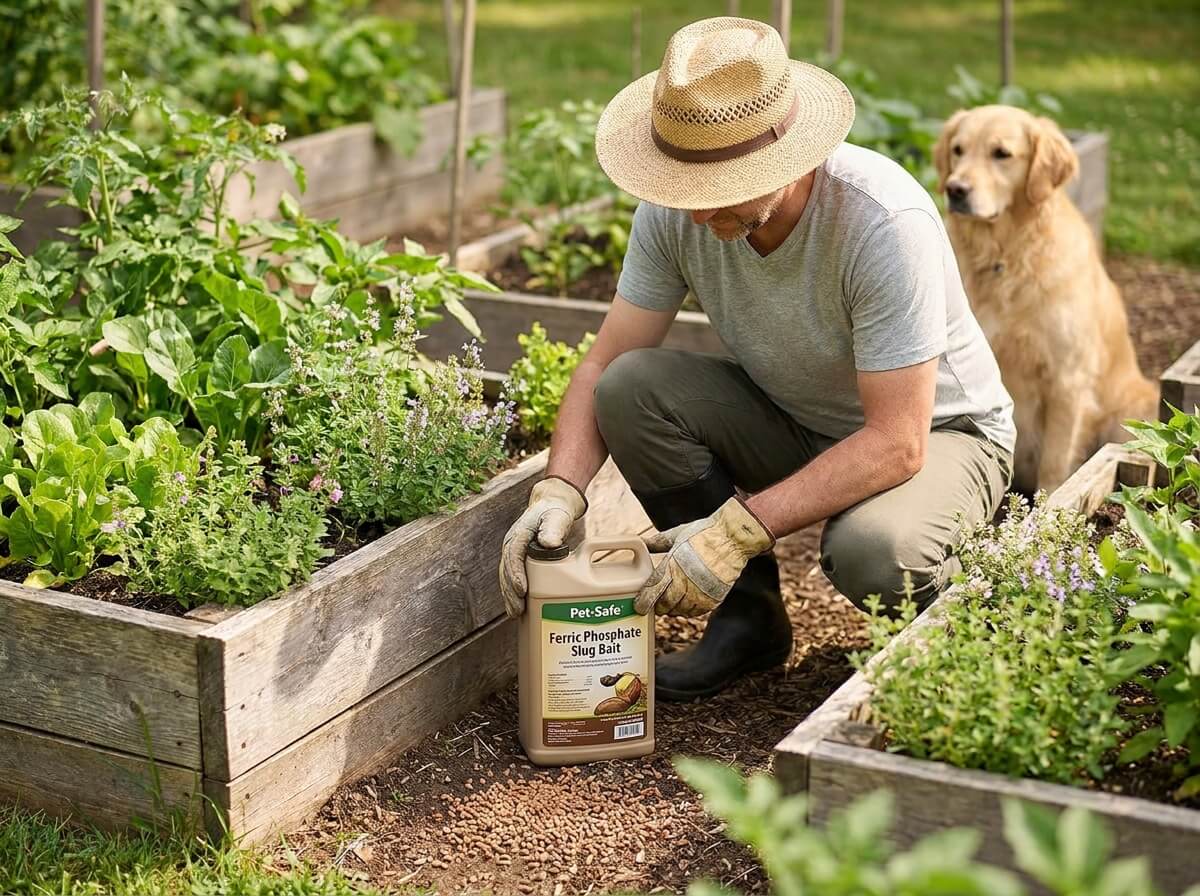
Switch to ferric phosphate pellets immediately. Brands sold as Sluggo (USA, Canada, Australia), Vitax Slug Rid (UK), or Naturen Slug Killer (EU) all use iron phosphate as the active ingredient.
It’s registered as safe around pets and wildlife. It breaks down in soil into iron and phosphate, which are both harmless plant nutrients. This stuff is every bit as effective as metaldehyde for controlling slugs on your vegetable beds. It does wonders for your peace of mind too.
Yes, ferric phosphate pellets cost slightly more per box. But they don’t kill your dog. That’s it. This decision’s sorted.
The maths is straightforward. Bang on.
Slug bait isn’t the only hazard in a productive summer patch. You’re already thinking about your pets around the vegetable garden. So, run through this list too.
A summer vegetable patch in full swing is a busy, stimulating place for a dog. Walk it with fresh eyes. Get down to nose height. Ask yourself: what will a curious animal try to eat?
Smart tip: Store all garden chemicals, even “safe” ones, in a locked shed or cabinet. Never on open shelving. Pets can knock them down, and it’s not worth the risk.
Call your vet or an emergency animal poison line right now. Don’t wait for symptoms. Take the product box with you. This ensures the vet knows the active ingredient and concentration.
Yes, for vegetable garden use they perform comparably. Slugs stop feeding within a few hours of contact and die underground. You don’t see the bodies. But plant damage definitely stops.
Metaldehyde is toxic to cats as well. Cats are less likely than dogs to seek out the pellets, though. The same switch to ferric phosphate protects both.
Beer traps work. They are completely pet-safe. A container sunk to soil level and filled with cheap lager catches slugs overnight. They need emptying and refilling every 2–3 days during peak slug season. This can be a bit much for some gardeners.