Summer is tough on roses. Three diseases hit hardest. They’re often confused. Black spot, rust, and powdery mildew look completely different, behave differently, and need different treatments — but all three can strip a rose bare by late summer if you ignore the early signs. Learn what you’re up against. Then, know exactly what to do. Start today.
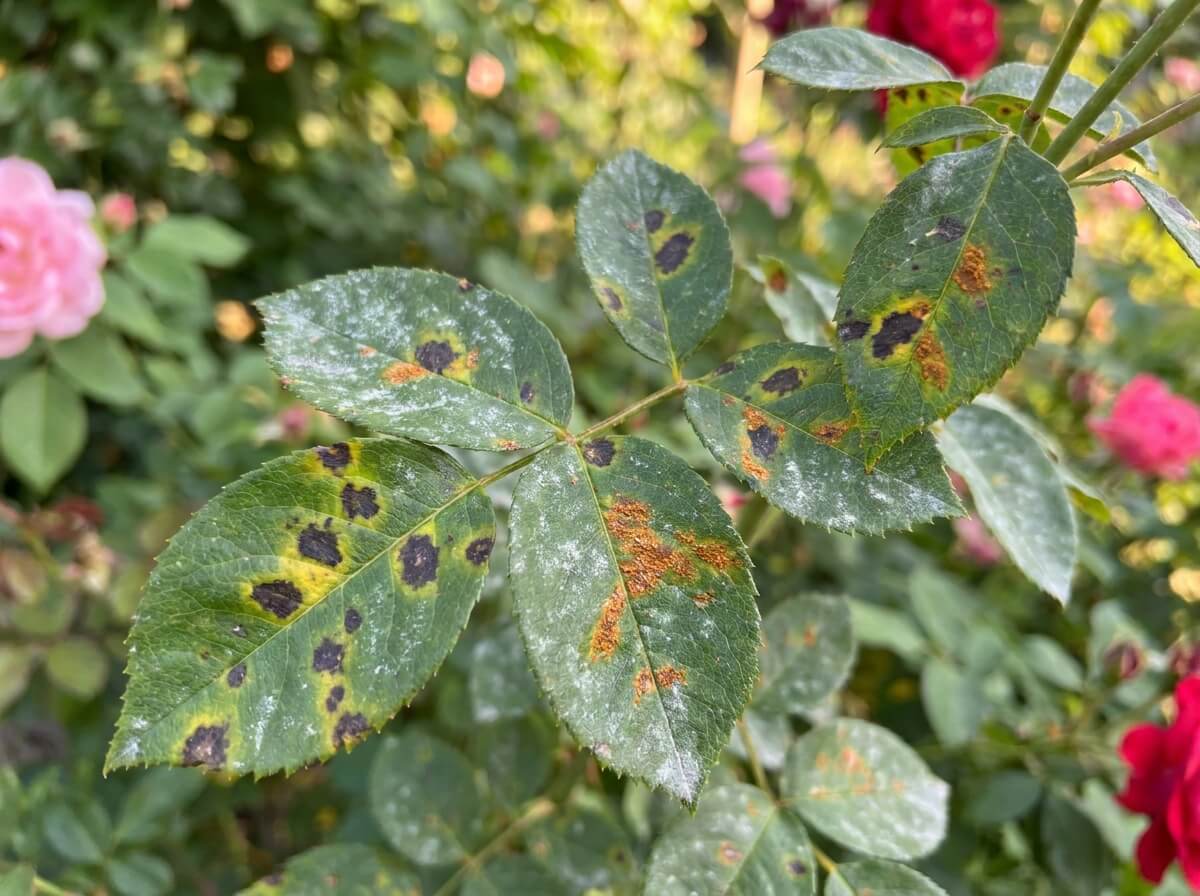
Black spot is the most common. You’ll spot circular black or dark brown blotches, often with fringed edges. They appear usually on the upper leaf surface, always surrounded by a spreading yellow halo. Leaves drop early. Masses of them. And the fungus — Diplocarpon rosae — shoots up when temperatures sit between 18–24°C and leaves stay wet for more than 7 hours at a stretch.
Rose rust looks nothing like that. Flip an infected leaf over and you’ll find clusters of bright orange or yellow powdery pustules — almost luminous.
The upper surface shows pale yellow spots directly above. But it spreads aggressively in cool, moist summers. It’s proper nasty in the UK and Pacific Northwest.
Powdery mildew is the one that surprises people. It appears as a white, chalky or dusty coating on young shoots, buds, and leaves — not from rain. Instead, warm days and cool nights with low humidity spark it. Dry spells actually trigger it. And the RHS confirms it’s at its worst in sheltered spots with poor air circulation.
None of these diseases kill a rose outright in a single season. Do not expect that. But repeated defoliation weakens the plant properly. And a rose that loses most of its leaves by August struggles to store enough energy for next year’s flowers. Your next season’s blooms? They’ll be left wanting.
Black spot, left untreated, will reinfect the same plant year after year. It’s tenacious. The thing is, the spores overwinter in fallen leaves and infected canes. Then they relaunch in spring, causing no end of issues. It’s dodgy for the plant.
You’re not just dealing with this summer’s issue; you’re setting up next summer’s too. It’s a proper mess, frankly.
Rust can defoliate a rose completely in under 3 weeks during a warm, damp spell. A fortnight is often all it takes.
Powdery mildew distorts new growth, deforms buds, and reduces flowering. It’s brutal. Young plants are more vulnerable than established ones. A rose in its first or second year can genuinely be set back a full season by a severe infection. It won’t be pretty. Stopping it is non-negotiable.
Start with physical removal. Pull off every infected leaf you can reach — upper and lower surfaces — and bin them.
Don’t compost them. This single step pulls off the bulk of active spores before any spray touches the plant.
Then choose your treatment based on what you’re fighting:
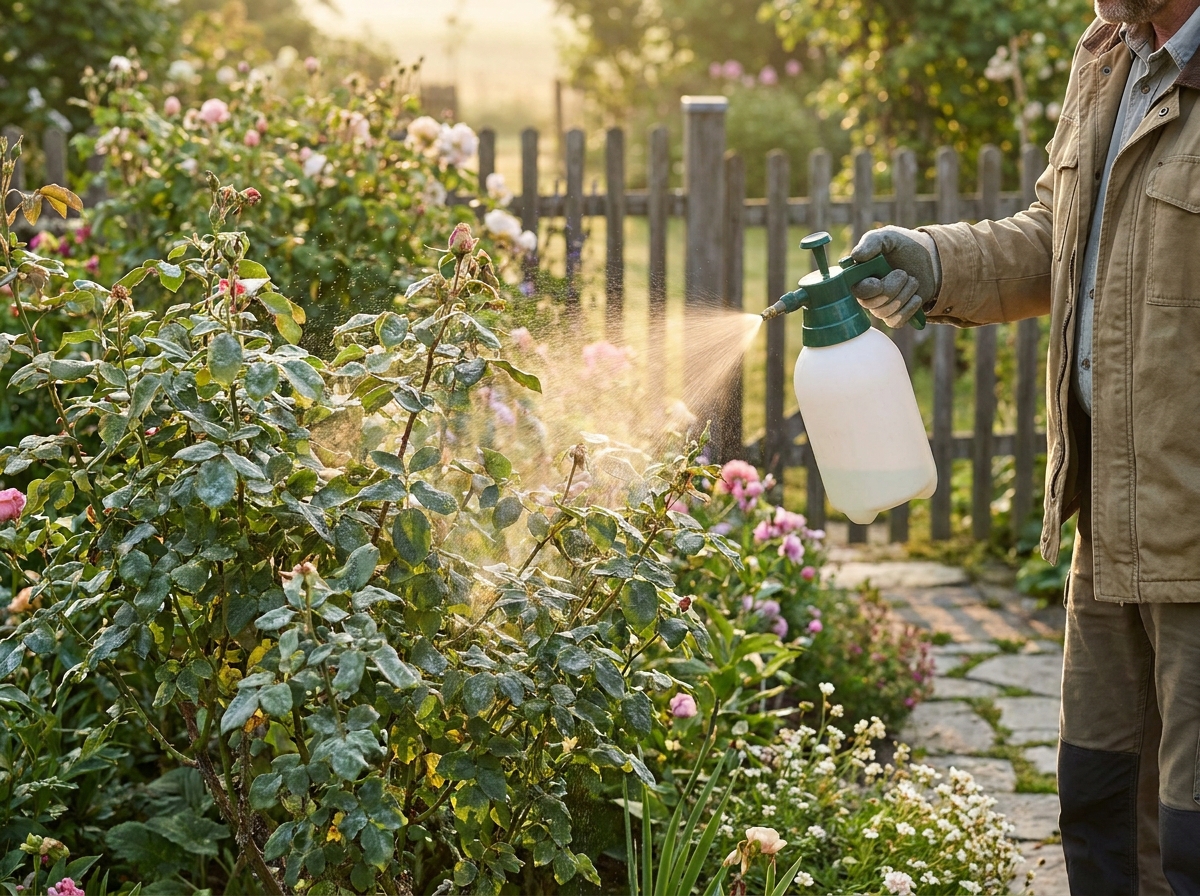
Spray in the early morning, never in full midday sun. Coat the undersides of leaves properly — that’s where spores live and travel from.
Repeat every 10 days for 3 rounds minimum. Yes, it’s repetitive. Worth it.
Do it anyway. The difference between one spray and three is bang on dramatic.
Watering matters too. Water at the base, never overhead.
Aim for twice weekly, deeply — 20 minutes at the root zone — rather than daily light wetting that keeps the foliage permanently damp.
If your rose is dropping leaves but they’re not spotted or coated — just yellowing and falling — look at watering and soil nutrition first, not disease. A nutrient deficiency mimics disease visually. Often, the whole thing is not quite right.
Cane die-back with dark brown streaks inside the stem points to a different issue entirely: rose canker or botrytis blight. Both fungal, not leaf diseases. Prune back to clean white pith. Ensure it’s 15cm below the darkened tissue. Disinfect your secateurs between cuts. Always.
Watch for aphid clusters on new shoots too. These pests weaken the plant’s defences. They also create sticky honeydew. This honeydew encourages sooty mould. Not a disease itself, but it’s a clear sign the plant’s under stress and vulnerable to fungal attack. You need to sort it.
Southern Hemisphere gardeners: this applies to your December–January. Inspect your roses closely as summer humidity rises.
Smart tip: Always pull off fallen infected leaves from the soil — they’re the primary source of reinfection next season.
Baking soda (sodium bicarbonate) has some effect on powdery mildew. But it can build up sodium in the soil over time. Avoid it. Potassium bicarbonate is a safer, more effective alternative. It does wonders on contact and doesn’t harm soil chemistry.
Most fungicides protect healthy tissue but don’t cure already-infected leaves — strip those off first, then spray. So, check you’re properly coating the undersides of leaves, where spores originate.
Rose rust (Phragmidium species) is host-specific. It only infects roses and won’t spread to other plants. The thing is, it spreads rapidly between roses, so isolate or treat affected plants immediately. That’s non-negotiable.
Yes, meaningfully so. Varieties like ‘Olivia Rose’ (RHS Award of Garden Merit) and ‘Knock Out’ roses show strong resistance to black spot in particular.
They’re not immune. But they rarely need repeated chemical intervention the way susceptible varieties do. It’s a lifesaver, that.