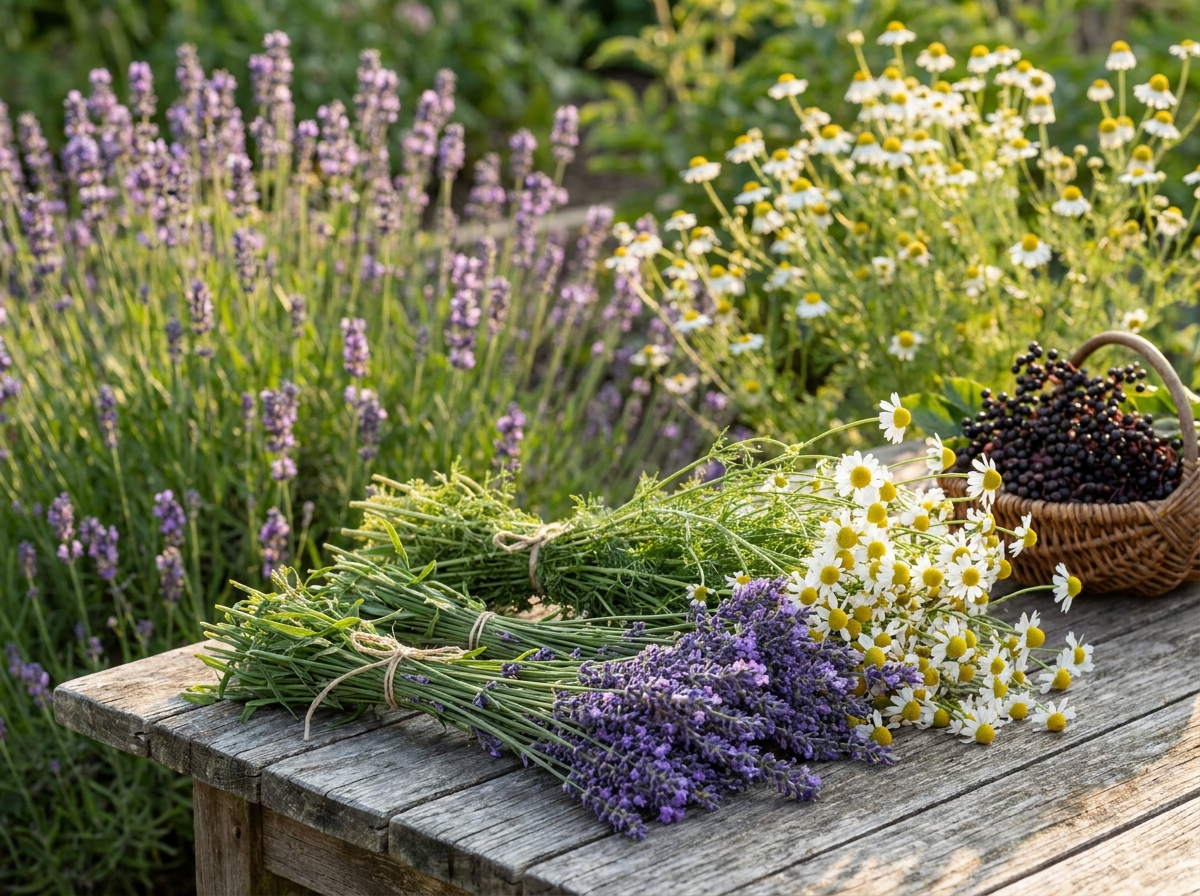
Aloe vera, lavender, chamomile, elderberry — these four plants pull double duty as garden beauties and proven health remedies. But their medicinal potency peaks in an absurdly short window each summer. Most gardeners either harvest too late or make the cut not quite right. The timing is not vague — it is measurable. Here is what the window looks like for each plant. Waiting a few more days costs you most of the benefit.
Each of these plants produces its most active compounds — essential oils, flavonoids, antioxidants — right at or just before peak bloom. That moment is brief. Once chamomile flowers are fully open and starting to reflex backwards (petals bending toward the stem), the apigenin content has already begun to drop. Studies from the journal Industrial Crops and Products show a measurable decline within 48 hours of full bloom.
Lavender is the same story. Cut when one-third of the flower spike has opened — not when it looks fully spectacular.
That “fully spectacular” moment is past peak. And elderberries?
They need to be properly black, with a slight give under your thumb. So, harvest them even 5 days early and the residual sambunigrin — a compound that causes nausea in significant quantities — has not finished breaking down.
Aloe is the outlier. No bloom involved. The thing is, most people harvest the wrong leaves — young, slender ones near the tip. The mature outer leaves, thick and firm near the base, are where the gel concentration is highest.
Miss the chamomile window and you are making a tea that smells right but delivers a fraction of the calming compounds. Disappointing, but not harmful.
Lavender harvested too late produces inferior oil and dried flowers that shed immediately — pretty for about a week, then a mess.
Elderberry is where timing actually matters for safety. Fully ripe, cooked elderberries are safe and genuinely effective — the RHS confirms Sambucus nigra as both ornamental and culinary. Unripe berries, raw in quantity, will make you ill. The margin is not wide.
As for aloe — harvesting the dodgy leaf does not hurt you, it just gives you a thin, watery gel with poor healing properties. You will wonder what the fuss is about.
Go outside and check each plant against these markers now. Do not wait for the weekend.
Yes, the aloe draining step is fiddly. Do it anyway — that yellow latex is aloin, and it irritates skin and digestive tissue.
If you are concerned your dried herbs may already have lost potency before you even harvested them, the deeper explanation is covered in why your medicinal herbs are losing their healing power right now.
Chamomile that is bolting fast — flowers opening and reflexing within a single day — signals heat stress. That is the El Niño reality this summer for many gardens.
Harvest earlier than you normally would, even if the plant looks sparse.
And the broader habit of watching your dual-purpose plants for these signals — rather than harvesting on a fixed calendar date — is what separates useful home remedies from disappointing ones. For more on avoiding the most common errors with these plants, see the mistake most gardeners make with dual-purpose plants this season.
Southern Hemisphere gardeners: your elderberry and lavender harvest timing applies to your December–January season.
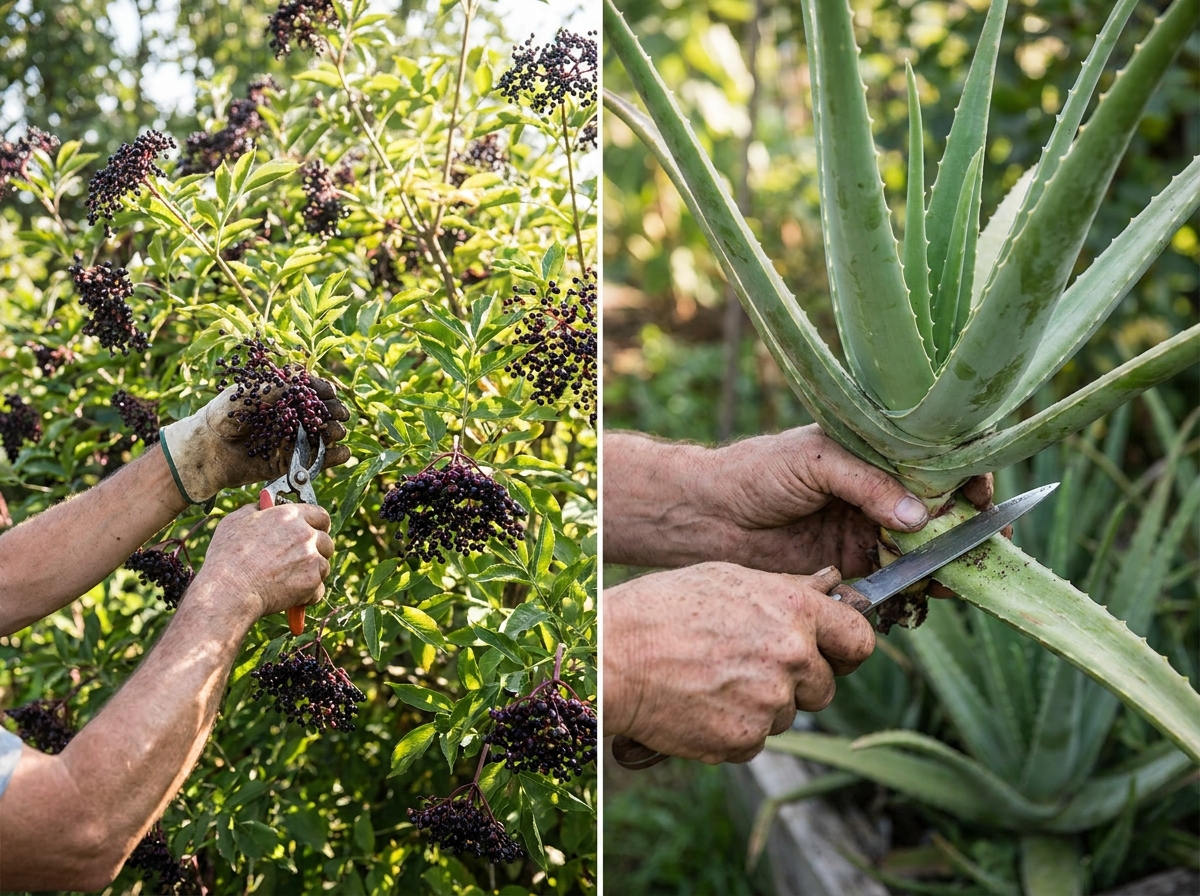
Smart tip: Harvest all four plants in the early morning — before 10am — when volatile oil content is at its highest.
Yes — chamomile produces multiple flushes. Check plants every 3 days during peak season and harvest open flowers each time before they reflex.
If more than half the flowers on the spike are fully open or browning, you have missed peak. Harvest anyway for dried bundles, but do not expect high oil content.
No — always cook them first. Raw elderberries, even fully ripe ones, contain compounds that cause nausea in most people when eaten in any real quantity.
Never take the young central leaves — they are still developing. Always take from the outer ring, selecting leaves that are thick, firm, and at least 20cm long.