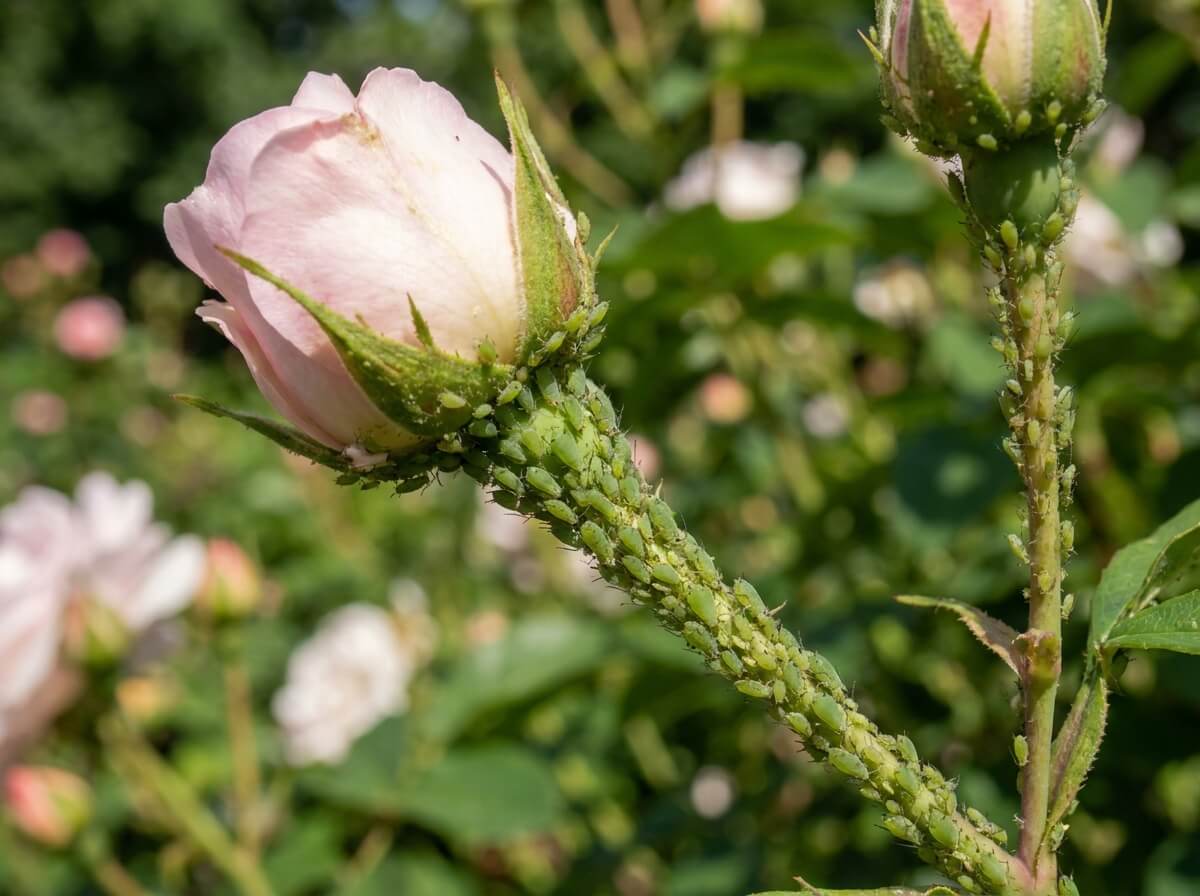
Aphids on roses in summer are not a slow issue. Do not muck about. And, a colony that looks manageable on Monday can coat every new bud by Friday. The key is acting within the first 48 hours of spotting them — before they trigger the ants, the sooty mould, and the leaf curl that follow. Here is exactly what is happening, what is at stake, and what to do today.
Roses push out soft, sappy new growth all season long. That new growth is low in defensive compounds and high in sugars — which is precisely what aphids are hunting for.
Warm, still days accelerate their reproduction to a pace that is almost shocking.
A single female aphid does not need a mate to reproduce in summer. She gives birth to live young — up to 80 in a week — through a process called parthenogenesis.
The thing is, those offspring are themselves pregnant before they are born. Do the maths and a small cluster of 20 aphids becomes several hundred within 10 days, entirely without intervention.
Greenfly (Macrosiphum rosae, the rose aphid) is the most common culprit, but you may also find blackfly clustering near buds. Both feed by piercing the stem and drinking phloem sap, weakening the plant at exactly the points where it is trying to flower.
Ignored aphid colonies do not plateau. They expand until the plant’s new shoots curl inward — a physical defence response that actually shelters the aphids from rain and predators. Once that curling sets in, sprays can no longer reach the insects inside.
The honeydew they excrete coats leaves and stems in a clear, tacky film. Within days, a black sooty mould grows on that film, blocking sunlight from the leaf surface and visibly disfiguring the plant.
The mould does not directly kill the rose, but it slows photosynthesis at the height of the growing season.
And then there are the ants. Ants actively farm aphid colonies — they carry aphids to fresh growth and fight off ladybirds and lacewings that would otherwise reduce the population naturally. If you see a trail of ants running up your rose stems, the aphid situation is already serious. According to the RHS, controlling ants around roses does wonders for aphid management.
Start this morning, not this weekend. The approach below uses no toxic chemistry and costs next to nothing.
Yes, the water-blast step feels too simple. It is not. Do it anyway. The difference it makes is night and day. Worth it.
If you have been applying coffee grounds around your roses as a pest deterrent, this approach is largely ineffective for aphids — and may cause other issues. Find the full picture in Coffee Grounds on Roses — the Garden Myth That is Hurting Your Plants.
Aphids on roses are often the first pest pressure of summer, but not the only one. Once you are checking your roses daily — which you should be — look for these alongside the aphid activity:
The RHS integrated pest management guidance consistently recommends encouraging natural predators before reaching for any spray. One ladybird larva consumes up to 200 aphids a day. So, plant a patch of fennel, marigolds or sweet alyssum nearby and the predators arrive on their own schedule — usually faster than you would expect. It is a proper win-win.
Southern Hemisphere gardeners: this applies to your December and January, when roses are in full summer flush and aphid pressure peaks identically.
Smart tip: Check the undersides of every new rose bud twice a week — aphids establish there first, before they are visible from above.
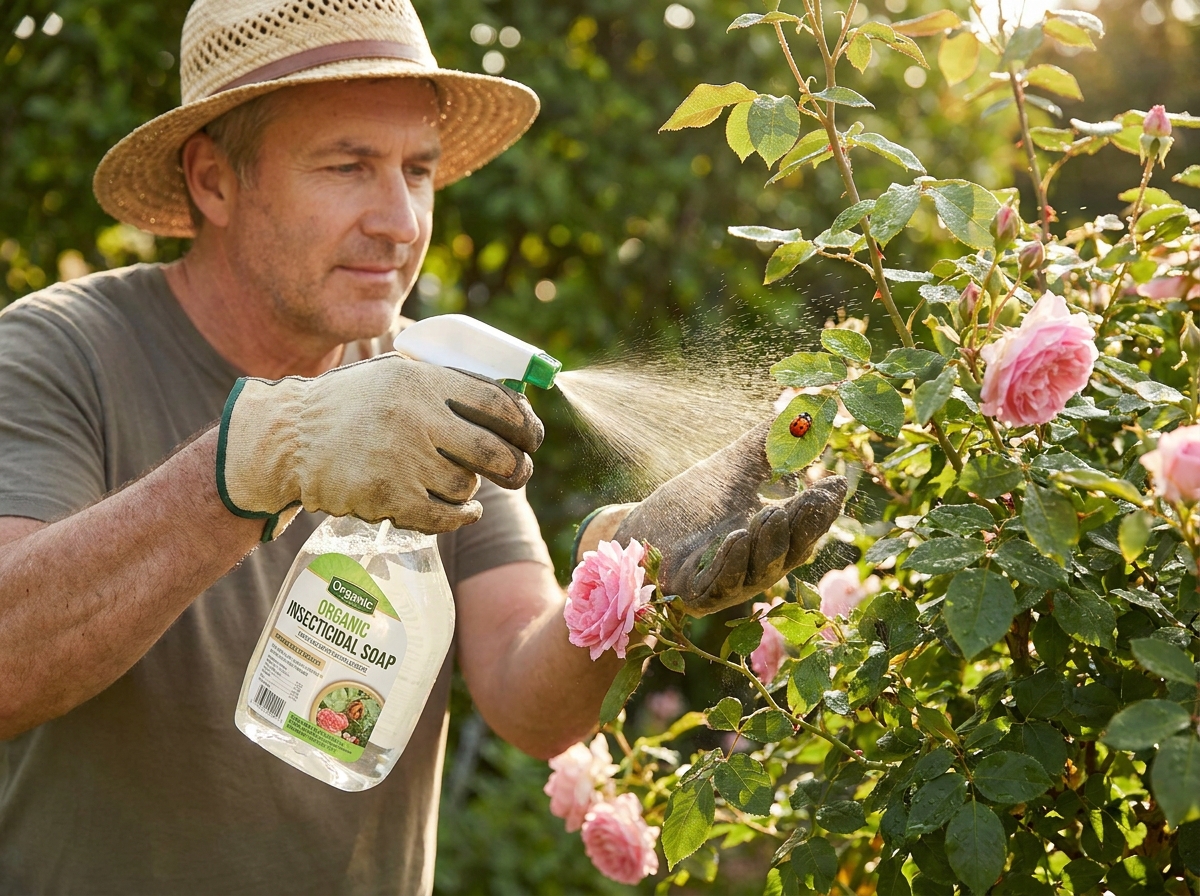
A firm jet of water pulls off 80–90% of aphids on contact and costs nothing. For faster knockdown, insecticidal soap spray works within minutes on direct contact — but it must hit the insects, not just the leaves.
A heavy, unchecked infestation will not kill a mature rose outright, but it will severely stunt flowering and leave the plant vulnerable to secondary infections like sooty mould and botrytis. Act within 48 hours of first sighting.
Lacewing larvae (Chrysoperla carnea) are available online and from specialist suppliers — they are voracious aphid predators and perfectly safe around children and pets. Ladybirds will arrive naturally if you reduce pesticide use in the garden.
Reducing nitrogen-heavy feeding, planting companion plants like marigolds and alliums nearby, and overwintering a ladybird habitat structure all reduce aphid pressure year on year. There is no one-season fix, but the population gets smaller each year when predators are encouraged consistently.