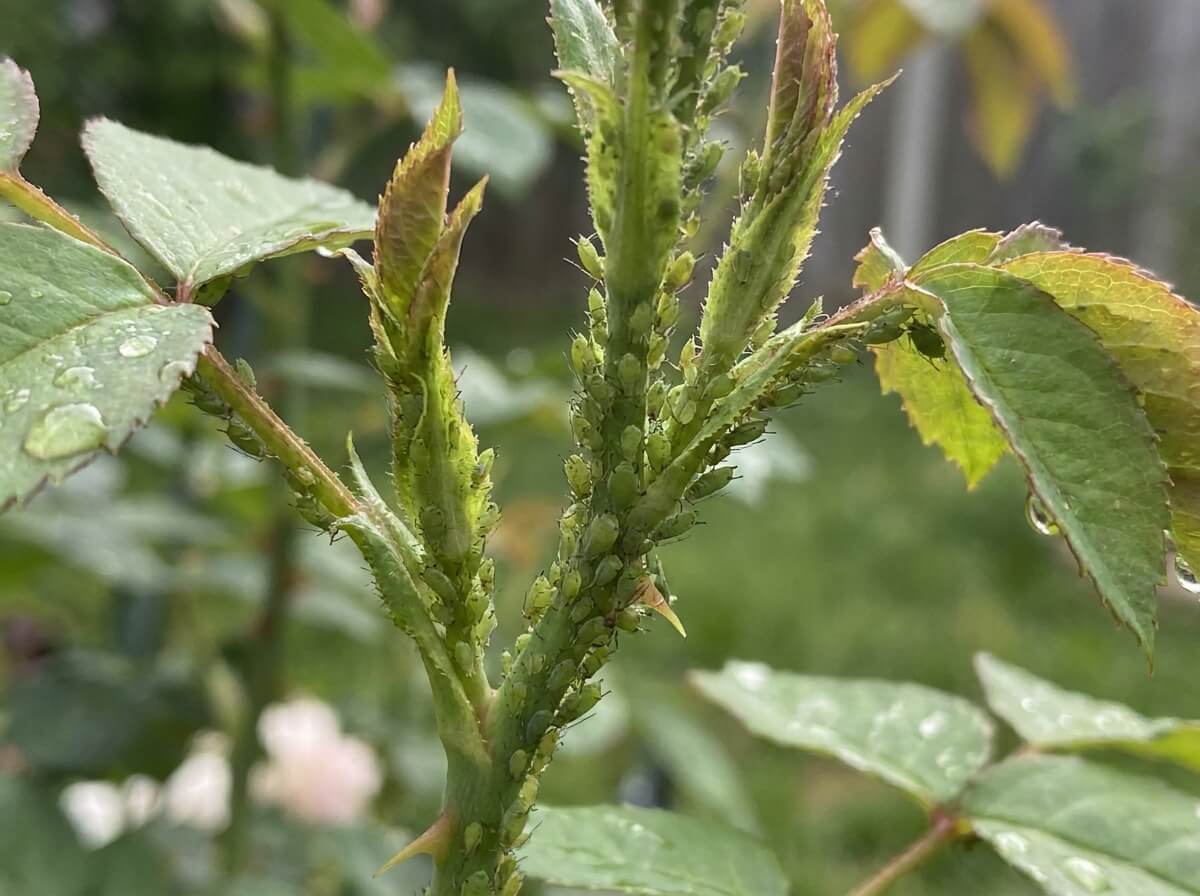
The moment you spot aphids, the instinct is to grab a spray. Any spray.
That instinct is costing your garden far more than the aphids themselves ever would. The most common response to an aphid outbreak also, reliably, exacerbates the situation. And once you understand why, you will never reach for that bottle again the same way.
Aphids reproduce at a staggering rate. In warm summer conditions, a single female can clone herself — no mating required — producing up to 80 live young in a week through parthenogenesis. It is quite a system.
The colony you see today is twice the size by next Tuesday.
But here is the issue with broad-spectrum insecticide sprays: they do not discriminate. Ladybirds (ladybugs), lacewings, hoverfly larvae and parasitic wasps are all killed alongside the aphids — and they recover far more slowly than the aphids do. Within a fortnight, the aphid population rebounds with no natural predators left to check it. You have essentially cleared the field for them to thrive. That is a dodgy result.
And ants make this worse. Ants actively herd and protect aphid colonies, driving away predators in exchange for the sweet honeydew aphids excrete.
A trail of ants climbing your roses or broad beans is almost always a sign that an aphid colony has already established itself somewhere above.
Left completely unchecked, a large aphid colony will distort new growth. It prompts leaves to curl inward and turn yellow. Stems become coated in sticky honeydew. That honeydew, in turn, becomes a growth medium for sooty mould — a black fungal film that blocks photosynthesis.
Stunted shoots. Deformed flower buds that never open properly. Weakened plants that become vulnerable to other issues — including the kind of fungal disease detailed in our guide to powdery mildew. The thing is, a heavy infestation on a young plant can genuinely set it back by an entire growing season.
Doing nothing is not the answer either. The sweet spot is targeted, predator-safe intervention.
The single most powerful immediate action costs nothing. Take your garden hose, set it to a firm jet, and blast the colonies off — directing the water upward at the undersides of leaves where 80% of aphids are hiding.
Do this in the morning, before 9am, so leaves dry fully before the heat peaks. Repeat every 3 days for a fortnight.
So, for persistent colonies, a spray of diluted washing-up liquid (5ml in 500ml of water) or a cheap bottle of neem oil solution applied at dusk will suffocate soft-bodied insects without harming beneficial predators once it dries. Never spray at midday — it scorches foliage and drives aphids deeper into the plant structure.
Yes, the water-blast method feels too simple. Absolutely proper. The difference between a treated plant and an untreated one is visible within 48 hours.
Curled or puckered leaves are a red flag. Aphids cause leaves to fold around the colony deliberately — it is structural protection, and once leaves have curled, a water jet alone will not reach them.
At that stage, prune the affected shoot 2cm below the infestation and dispose of it in a sealed bag, not the compost heap.
Watch for these warning signals across your garden:
If you are also dealing with other invisible summer pests, thrips cause strikingly similar damage and are worth ruling out at the same time — both tend to peak in hot, dry spells.
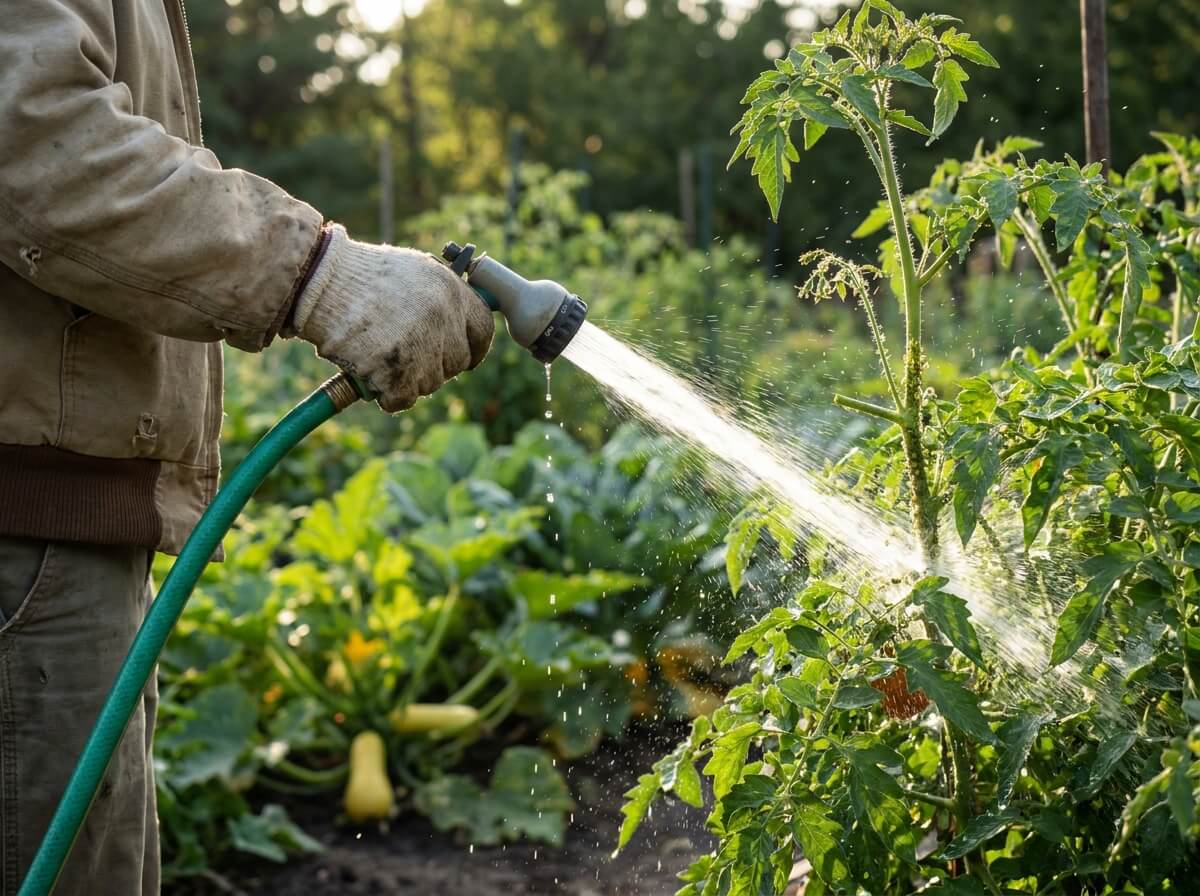
Smart tip: Check the undersides of leaves first — that is where 80% of aphids hide and where every treatment needs to reach.
Sometimes, yes — if ladybird and lacewing populations are strong in your garden, they will curtail a minor infestation within 2 weeks. But a large colony on a young or stressed plant should be manually treated before natural predators can catch up.
A diluted solution (5ml per 500ml of water) is considered low-risk on most edible crops — rinse the leaves with plain water 24 hours after application and avoid spraying open flowers where pollinators are active.
Aphid eggs overwinter in bark crevices and soil debris, hatching as soon as spring temperatures rise above 10°C. Pulling off plant debris in autumn and encouraging beneficial wildlife to your garden year-round breaks that cycle more effectively than any spray.
They ensnare winged aphids — the form that spreads infestations from plant to plant — but they also ensnare beneficial insects like parasitic wasps. Use them only as a monitoring tool to detect early spread, not as a primary control method.