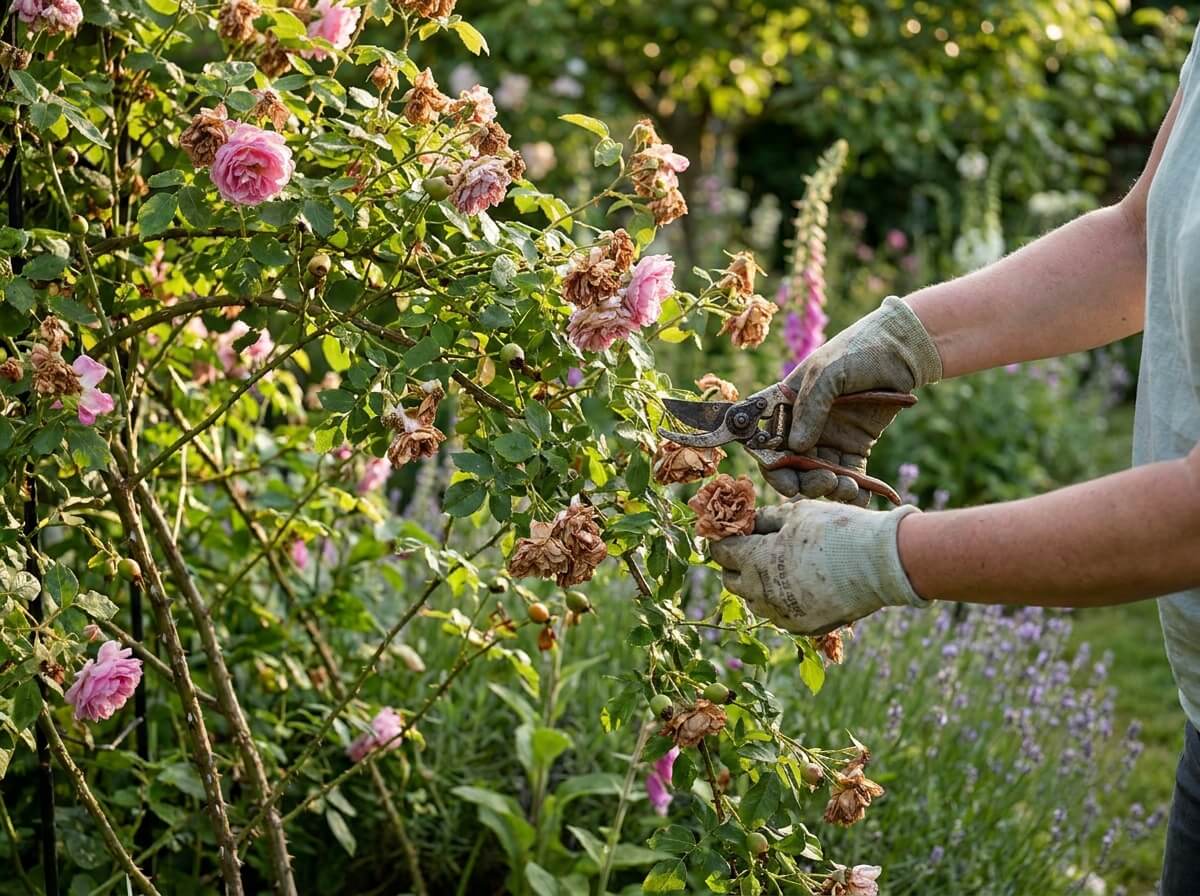
Roses are still producing buds right now — but only if you are cutting in the right place. Most gardeners deadhead out of habit. They snip just below the dead flower and move on. Not quite right, this approach.
That one small error quietly halts the whole display. The timing is bang on this summer to correct it.
Do this now and repeat-flowering roses will keep pushing new blooms for months rather than stalling out halfway through the season. This really does work.
When you pull off a spent bloom, the plant reads that cut as a signal: go dormant here, or shoot up here. Cut too high — just below the dead flower head — and you leave what rosarians call a blind shoot. This is a short, weak stub with no leaf node strong enough to generate new growth. The rose essentially shrugs and redirects energy downward, toward the roots, not upward toward new flowers. Total waste of effort, that cut.
The correct cut is lower than most people expect. So, find the first outward-facing leaf with five leaflets — not three. Then cut just above it at a 45-degree angle, sloping away from the bud.
That leaf junction has the vascular structure to push a strong new stem. In warm summer conditions, you will see a new bud breaking within a fortnight.
It is a striking difference.
And yes, climbing roses follow the same logic, but with one addition. On long structural canes, do not cut the main stem itself. Deadhead the lateral flowering shoots only, leaving the primary framework intact. This ensures next year’s structure is sorted.
The rose does not rest. It redirects.
A spent flower left on the stem triggers hip formation. The plant begins converting that junction into a seed vessel. For species roses, hips are part of the point.
But for repeat-flowering garden roses, hip formation is a signal to stop blooming on that stem. The plant considers its reproductive job done. No good for continuous display.
You will notice the flush simply does not return on those branches while neighbouring stems that were deadheaded correctly continue pushing new growth.
By late summer, a rose that has been poorly deadheaded all season can look exhausted — sparse, leggy, with hips forming on half its stems. The thing is, according to the Royal Horticultural Society, correct summer deadheading is a non-negotiable action for extending the flowering season on repeat-blooming varieties.
Grab a clean, sharp pair of bypass secateurs. Blunt blades crush rather than cut, and crushed stems invite fungal infection at exactly the point you need healthy growth. Do not skimp on blade quality.
Wipe the blades with rubbing alcohol before starting if you have been cutting other plants.
Do this every 5 to 7 days throughout summer. Yes, it is fiddly. Worth it.
Do it anyway — the difference between a rose deadheaded weekly and one left for three weeks is visible from across the garden. It is quite striking, you know.
After deadheading, give the plant a liquid feed — a potassium-rich rose fertiliser like Toprose or equivalent — to fuel the new flush. Water deeply at the base, about 20 minutes, rather than a shallow daily sprinkle. You need proper deep watering.
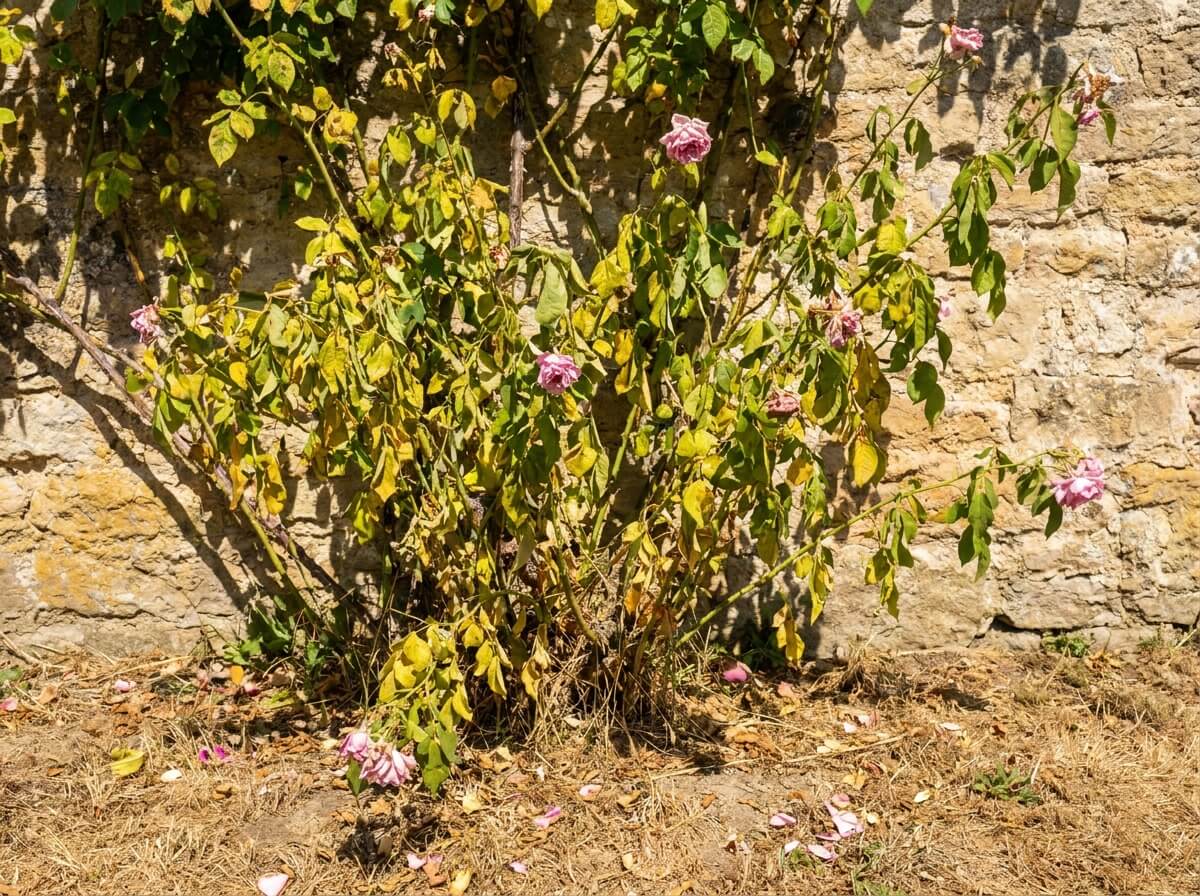
Deadheading is just one signal to watch. But summer brings other stress signs that compound each other quickly.
The University of Illinois Extension notes that roses under stress from pest or disease pressure will divert energy away from flowering even when deadheaded correctly — so catching these signs early is just as non-negotiable as the cut itself.
Southern Hemisphere gardeners: mark your calendars for December and January. That is when your roses hit peak summer flush.
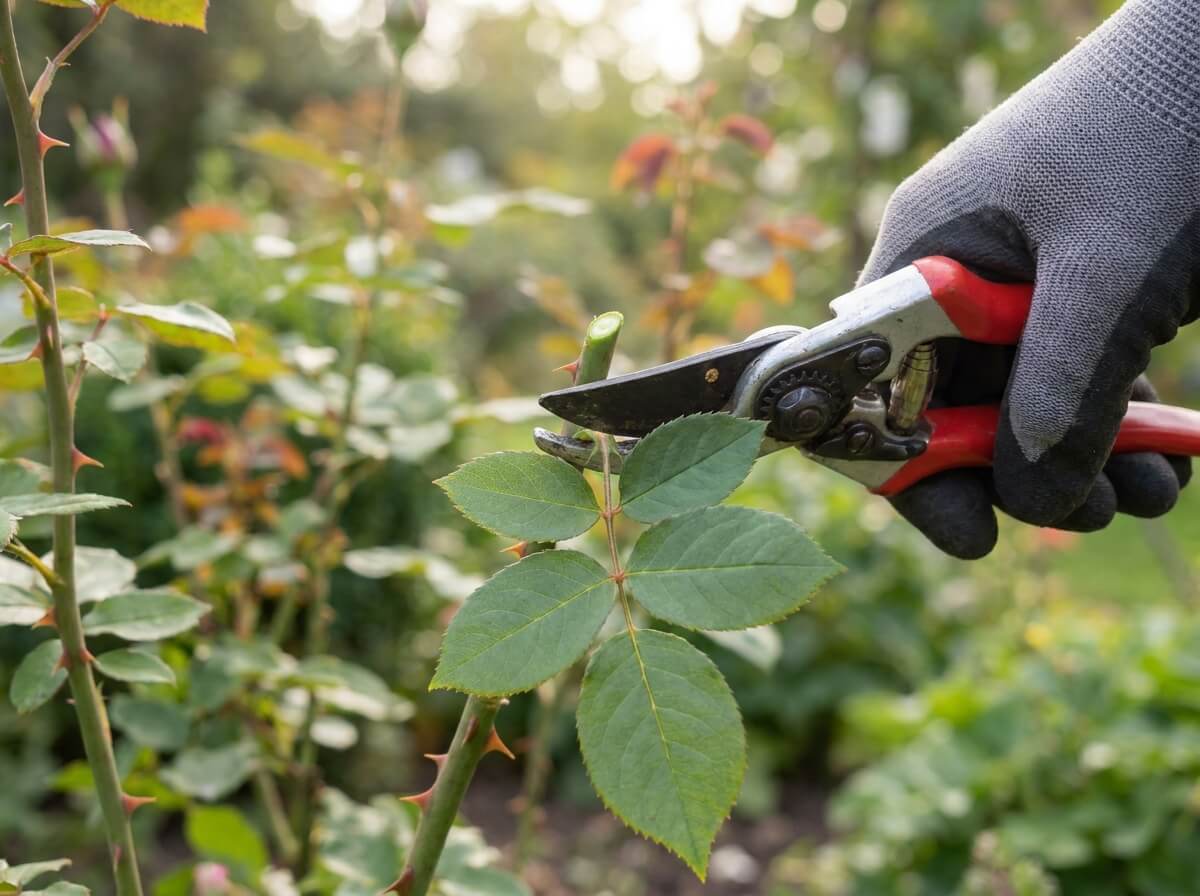
Smart tip: Always cut to a five-leaflet leaf, never a three-leaflet one. This one rule covers 90% of deadheading decisions.
The thing is, deadhead the flowering laterals on a climbing rose exactly the same way. But never cut the main structural canes during summer — those are next year’s framework. If you need guidance on timing and pruning for climbers, the clematis pruning mistakes article does wonders for explaining a useful parallel for climbing plants.
Every 5 to 7 days is the ideal rhythm during peak summer flowering. Leaving it longer than 10 days allows hip formation to begin and slows the next flush noticeably. This is non-negotiable for continuous display.
For cluster-flowered (floribunda) roses, wait until the whole cluster is spent. Then cut the entire cluster back to the first strong five-leaflet leaf. Pulling off individual flowers in a cluster is unnecessary and time-consuming.
Only on repeat-flowering varieties — modern hybrid teas, floribundas, and many English roses. Once-blooming roses like many old garden varieties and most species roses will not rebloom regardless of deadheading. Pulling off spent flowers just costs you the autumn hips. Pointless effort.