Clematis isn’t one plant with one pruning rule — it’s three, and mixing them up is the single most common issue gardeners end up with: a wall of leaves and not a single flower. The fix is quick once you know it.
And if you act now, in summer, right after flowering, you can still protect what the plant is quietly building for next season.
Clematis is split into three pruning groups — Group 1, Group 2, and Group 3. Each one forms its flower buds at a completely different time and on completely different wood. Cut the wrong group at the wrong moment and you don’t just delay flowering.
You eliminate it entirely for the next 12 months.
Group 2 varieties — the big, showy, plate-sized hybrids like ‘Nelly Moser’ and ‘The President’ — are the ones most often destroyed by well-meaning summer pruning. These flower on both old wood and new growth. They’re already forming next spring’s buds right now. Hard pruning them back in summer pulls off those buds before they ever get the chance to open.
Group 3 varieties like ‘Jackmanii’ are the forgiving ones. Cut them hard every late winter; they come back strong. Group 1, the spring-flowering mountain clematis types, should barely be touched after flowering. Clematis, queen of vines covers the full spectrum, but knowing your group is non-negotiable before you touch a pair of secateurs.
Doing nothing sounds safe. It isn’t.
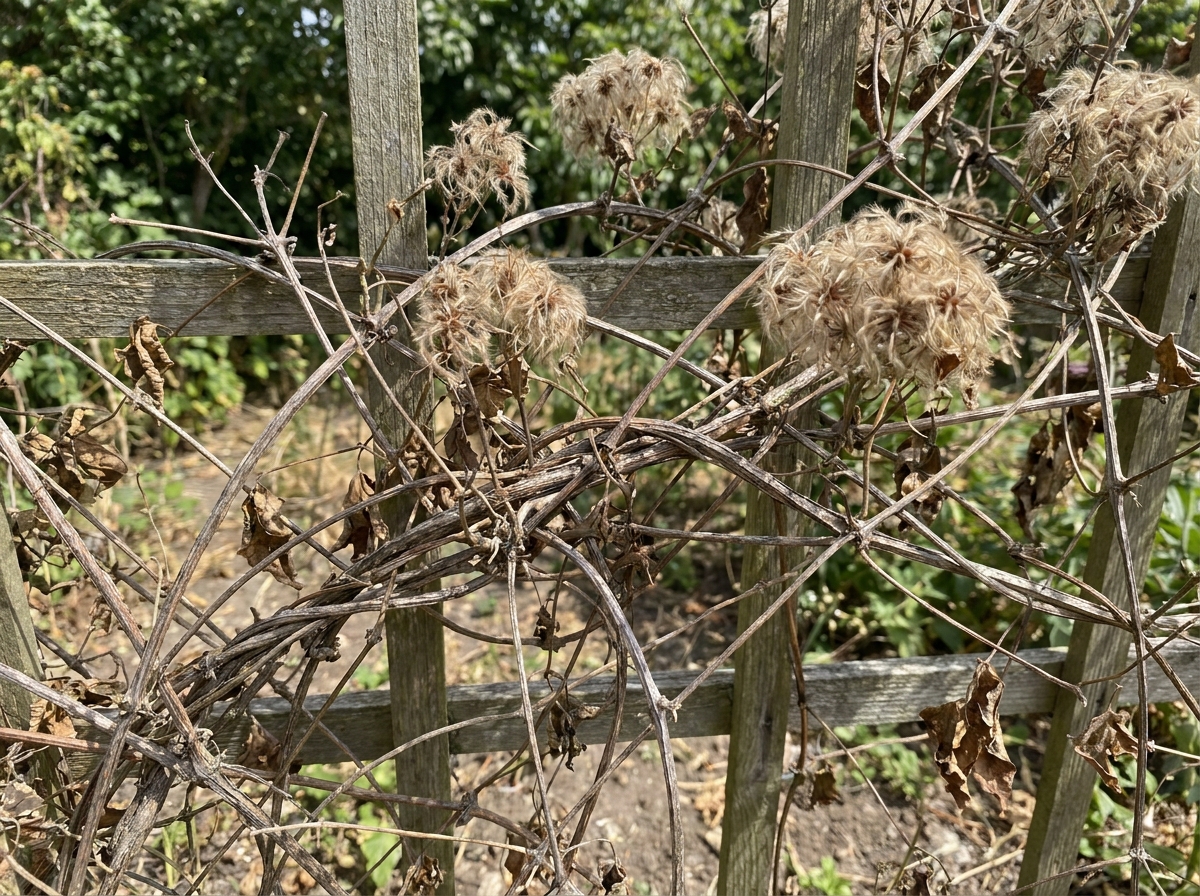
An unpruned clematis — especially a Group 3 — turns into a tangled bird’s nest within two seasons. All the vigour pours into a thicket of old woody stems at the base, and the flowers retreat higher and higher up the plant until they’re 3 metres above eye level, invisible from the garden.
That’s the neglect scenario.
The over-pruning scenario is worse because it feels productive. You cut, the plant looks tidy, and you wait. Summer arrives the following year. Nothing. Not because the plant is dead — it isn’t — but because you pulled off every flowering node it had spent months building. Two lost seasons from one enthusiastic afternoon with the secateurs. According to the RHS clematis pruning guide, this is the leading cause of poor flowering in established plants.
First: identify your group before cutting anything. If your clematis flowered in spring on bare stems — it’s Group 1. Leave it mostly alone.
So, if it produced large blooms in late spring into early summer on older stems — it’s likely Group 2. If it’s a vigorous late-summer bloomer on new growth — Group 3.
For Group 2 plants that have just finished their first flush, do this:
But for Group 3, a light tidy now won’t hurt. The real prune comes next late winter, cutting down to about 30cm above the ground.
Yes, it looks brutal. It’s proper. The difference is night and day by midsummer.
Yellowing leaves mid-summer with brown crispy edges usually mean heat stress combined with drought — clematis roots need to stay cool and moist even when the top growth is in full sun. Mulch 8–10cm deep around the base, keeping it away from the main stem, and water deeply twice a week rather than a shallow daily sprinkle.
Clematis wilt — a fungal condition where a whole shoot collapses dramatically overnight, as if someone snapped it — looks catastrophic but rarely kills the plant. Cut the affected stem back to healthy tissue, down to the base if needed.
The plant almost always regrows from below soil level.
Pale, washed-out flowers getting smaller each year? Sounds like a dodgy setup. That’s usually a sign of nutrient depletion in the surrounding soil, not a pruning issue. Top-dress with well-rotted compost and feed regularly from late winter onwards. For those interested in the specific mountain types, Clematis montana has its own timing quirks worth understanding separately.
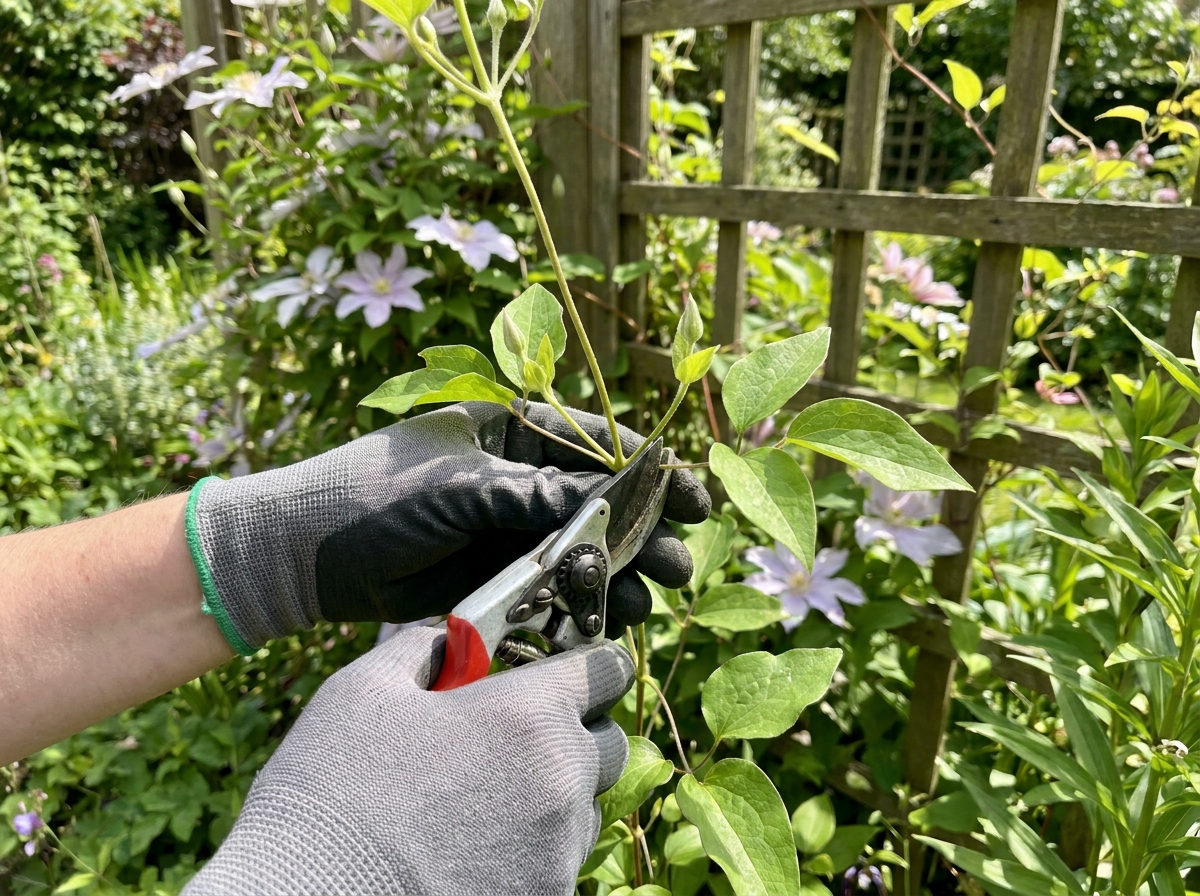
Smart tip: When in doubt about your clematis group, prune less — you can always cut more later, but you can’t un-cut.
Yes — but only deadhead back to the first healthy leaf pair for Group 2 varieties. Hard pruning in summer pulls off next year’s buds and costs you a full season of flowers.
The most likely cause is incorrect pruning, either too hard or at the wrong time of year. Check your pruning group first, then ensure the plant is getting at least 6 hours of sun with its roots shaded.
Check the label from when it was bought — most reputable nurseries include the group. If that’s gone, note when it flowers: spring on bare stems (Group 1), late spring on old wood (Group 2), or late summer on new growth (Group 3).
This advice applies to your December–January period, when your clematis will be finishing its summer flowering flush. The pruning principles are identical — only the calendar shifts.