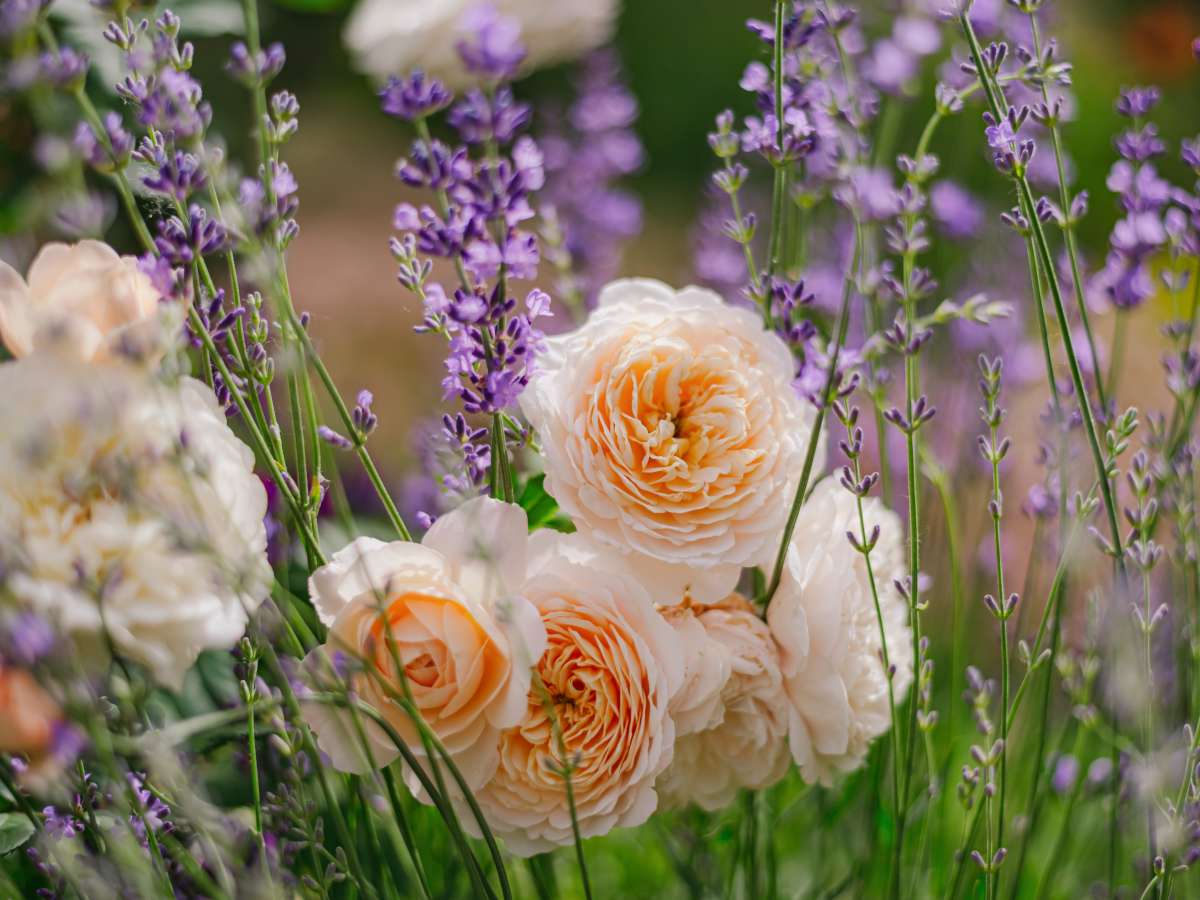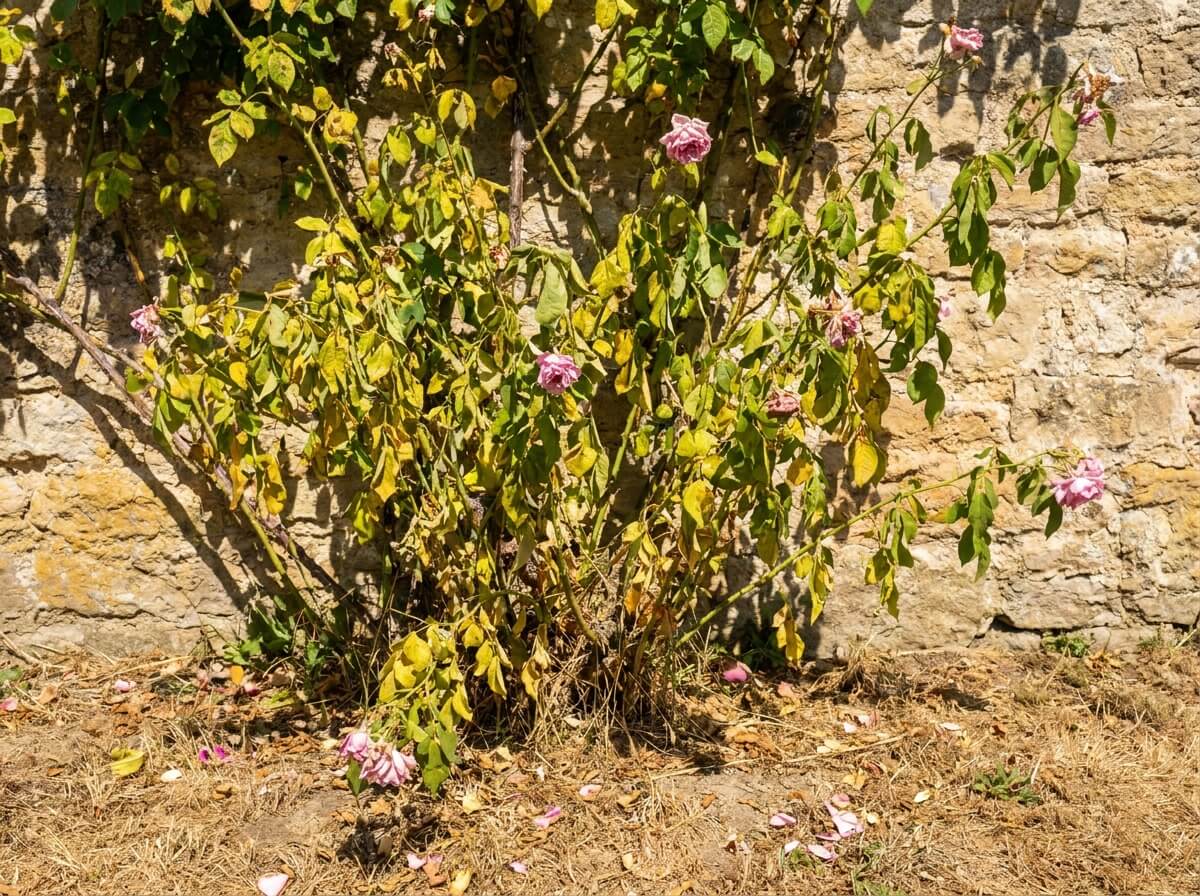
A climbing rose that filled your fence with colour in spring and now stands there, green and flowerless in peak summer heat, has not given up. It has gone into a calculated pause — and if you properly understand exactly why, you can end that pause on your own timeline.
The three steps below work reliably across repeat-flowering climbing varieties and take less than 45 minutes to carry out.
Above 29°C (85°F), rose flowers fail fast. The petals that were already open shatter in a day or two.
The buds that were about to open stall, then abort. New flower buds stop forming at the shoot tips entirely.
The plant is not dying. It is making a decision. Flowering is metabolically expensive; ensuring existing roots and canes survive becomes non-negotiable. So, when water stress threatens, the rose cuts flower production first, redirecting everything into resilience. This is hardwired biology, identical whether for a garden rose in London during a heatwave or a containerised rose on a Sydney balcony in January.
There is a second factor most gardeners overlook: soil temperature. When the ground at the base of a wall-trained rose exceeds 24°C, root uptake of phosphorus — the mineral most directly linked to flower bud initiation — drops sharply. And the plant physically cannot fuel blooming even if it wanted to. The RHS notes that roses trained against south- or west-facing walls are particularly vulnerable because the wall itself radiates stored heat overnight, keeping root-zone temperatures elevated for 24 hours straight.
Before you touch the plant, identify which of three states it is in — because each one calls for a slightly different starting point.
The thing is, if you are dealing with a wall-trained climber and wondering whether it is worth the effort at all, look at what is happening with other climbers nearby. A passion flower paired alongside clematis will typically keep flowering through summer heat because both species have different heat thresholds. So, is the rose a bit dodgy? Its struggle could simply be down to temperature.
Deadheading a climbing rose in summer heat is not the same as tidying up faded petals. A proper deadhead, however, signals to the plant that reproduction has failed. And it must be attempted again.
Cut each spent flower stem back to the first leaf junction that carries a full five-leaflet leaf. Not three leaflets — five. The five-leaflet leaf marks a node with enough hormonal activity to push a new flowering shoot. Cutting to a three-leaflet leaf almost always produces a blind shoot — a leafy stem with no bud at the tip — and you lose four to six weeks for nothing. Not worth it.
Work from the outermost, most exposed canes inward. Those are the ones most depleted.
Use clean, sharp bypass secateurs — the smell of freshly cut rose stems in early morning, slightly sharp and green, tells you the sap is moving well and the cuts will heal fast. Wipe the blades with a diluted bleach solution (1 part bleach to 9 parts water) between plants if you are moving between multiple roses.
Black spot spreads on blades.
Do not deadhead any cane that has produced only one flush this season and is still carrying a developing bud at its tip. Leave those alone entirely.
Touch only the spent material.
Overhead watering a heat-stressed climbing rose is counterproductive. Wet foliage in full sun causes scorch marks.
More critically, overhead watering creates the illusion of moisture while the root zone — which can extend 60cm deep on an established climber — stays dry and hot.
Water at the base only. Deeply.
Forty-five minutes with a slow trickle hose or a drip ring, every two days when temperatures are above 28°C. Not a quick ten-minute spray.
The goal is to wet the soil to a depth of 30 to 40cm, which is where the feeder roots actually operate.
After watering, apply a thick mulch layer — 8 to 10cm of composted bark or garden compost — in a 50cm radius around the base, keeping it 10cm clear of the main canes. The mulch does two things simultaneously: it holds the moisture you just applied for 48 to 72 hours longer, and it insulates the root zone against the radiated heat from the wall behind the plant.
This single physical intervention can lower root-zone soil temperature by 4 to 6°C on a south-facing wall. That is often enough to restart phosphorus uptake and, with it, bud initiation.
After deadheading and after watering — never before — apply a potassium-rich fertiliser. Not a general nitrogen-heavy feed.
Nitrogen in peak heat pushes a flush of soft, sappy new growth that is immediately vulnerable to scorch, aphids, and powdery mildew. Potassium strengthens cell walls, supports root function, and directly stimulates flower bud initiation. It does wonders for getting that second flush underway.
Sulphate of potash (potassium sulphate) at 20g per square metre, watered in well, is the most straightforward option and widely available. Alternatively, a liquid tomato fertiliser — high in potassium, low in nitrogen — applied at half the stated dose every 10 to 14 days works well on climbing roses through summer.
But rose-specific feeds from brands like Toprose or Miracle-Gro Rose are formulated for this, the tomato feed approach costs a fraction of the price and delivers comparable results.
Do not feed at all if the soil is dry. Fertiliser applied to dry roots concentrates at root level and burns.
Water first, wait 24 hours, then feed.
After completing all three steps, the timeline runs like this:
Varieties known for reliable second and third summer flushes include ‘Zéphirine Drouhin’, ‘Climbing Iceberg’, ‘New Dawn’, ‘Compassion’, and ‘Aloha’. If you are growing a once-blooming rambler — ‘Veilchenblau’, ‘Bobbie James’, most Albas trained as climbers — this revival method will not produce summer flowers, because those varieties bloom only once on old wood. Worth knowing properly before you spend the effort. The American Rose Society’s variety database lists repeat-blooming classification for most named cultivars if you are unsure which type you have.
A free-standing shrub rose and a wall-trained climbing rose face completely different thermal conditions. The wall — especially brick or rendered masonry — absorbs heat all day and radiates it back through the evening and night.
A south-facing brick wall in summer can hold surface temperatures of 50°C or above at midday.
If your rose is trained directly onto masonry with no air gap, consider whether the training itself is the limiting factor. Re-tying canes 5 to 8cm off the wall surface using vine eyes and wire, rather than pressing them flat against the stone, allows air to move freely, cutting the micro-climate temperature around the foliage by several degrees.
It also reduces the incidence of powdery mildew dramatically, since stagnant hot air against foliage is its favourite environment.
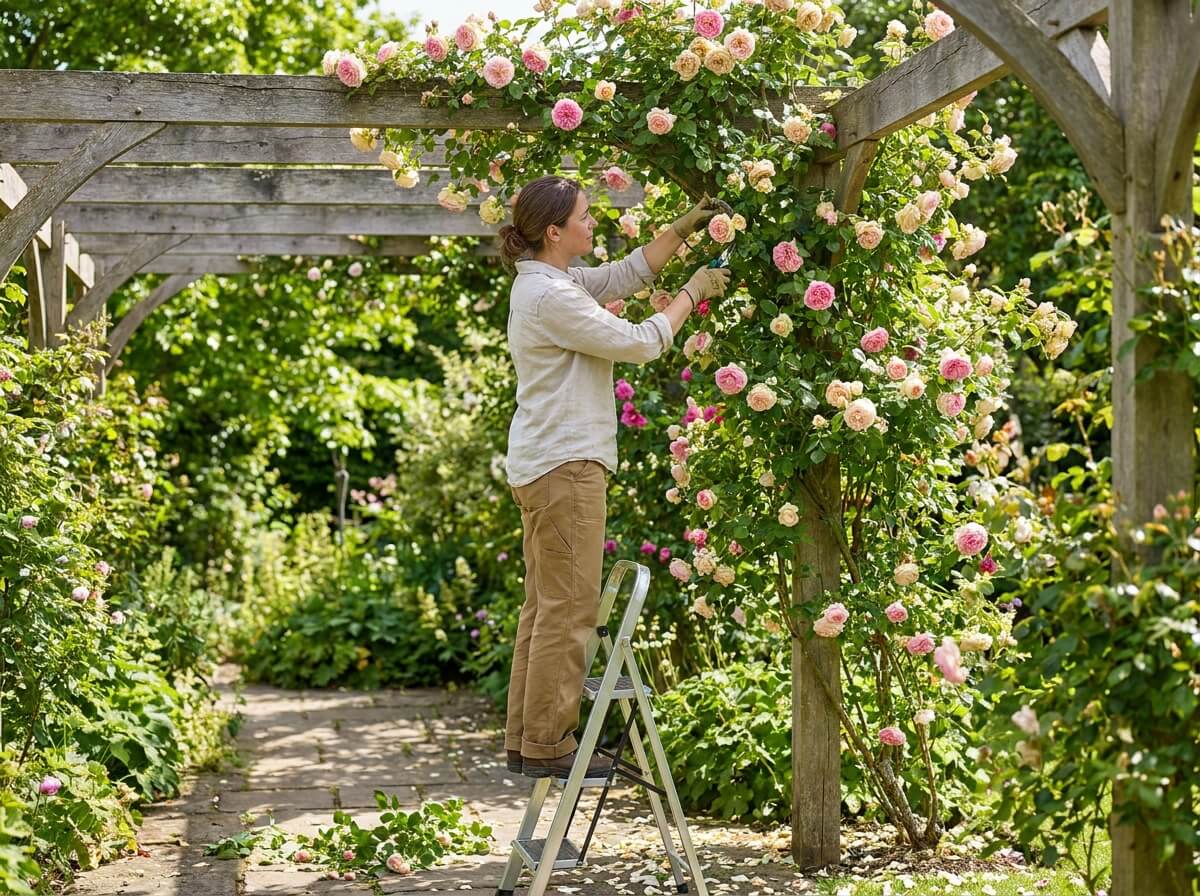
For pergola-trained climbers, summer heat stress is usually less severe because air moves freely around the plant. But if your pergola rose is still failing to reflower, the issue is more likely to be deadheading neglect or a feed deficit than heat alone. You might also look at how neighbouring climbers on the same structure are performing. After all, a truly striking pergola often relies on a mix of climbers with different heat tolerances. Something should always be in flower, even when the roses pause.
Smart tip: This is bang on correct: always deadhead to a five-leaflet leaf junction — cutting to three leaflets produces blind, flowerless shoots.
Without intervention, 6 to 8 weeks. With correct deadheading, watering, and a potassium feed applied within the same week, new blooms typically appear within 24 to 28 days.
No. Hard pruning in peak heat stresses the plant severely and pulls off the mature wood needed to support new flowering shoots. That is not smart. Avoid it.
Light deadheading only — save structural pruning for late winter or early spring.
Yes, immediately, on any repeat-blooming variety. Rosehips signal to the plant that the season’s reproductive mission is complete, suppressing further flower bud formation until the following year.
Broadly yes, but containerised climbers need watering every day in heat above 28°C, not every two days — pots heat through and dry out dramatically faster than open ground. Use a large pot (at least 50 litres) and stand it on feet to prevent the base cooking in reflected heat from paving.
Entirely. Repeat-blooming modern climbers (‘New Dawn’, ‘Climbing Iceberg’, ‘Compassion’) will reflower reliably with the right care.
Once-blooming ramblers and many old climbing roses set buds only on the previous year’s wood and will not produce a second flush regardless of what you do this summer.