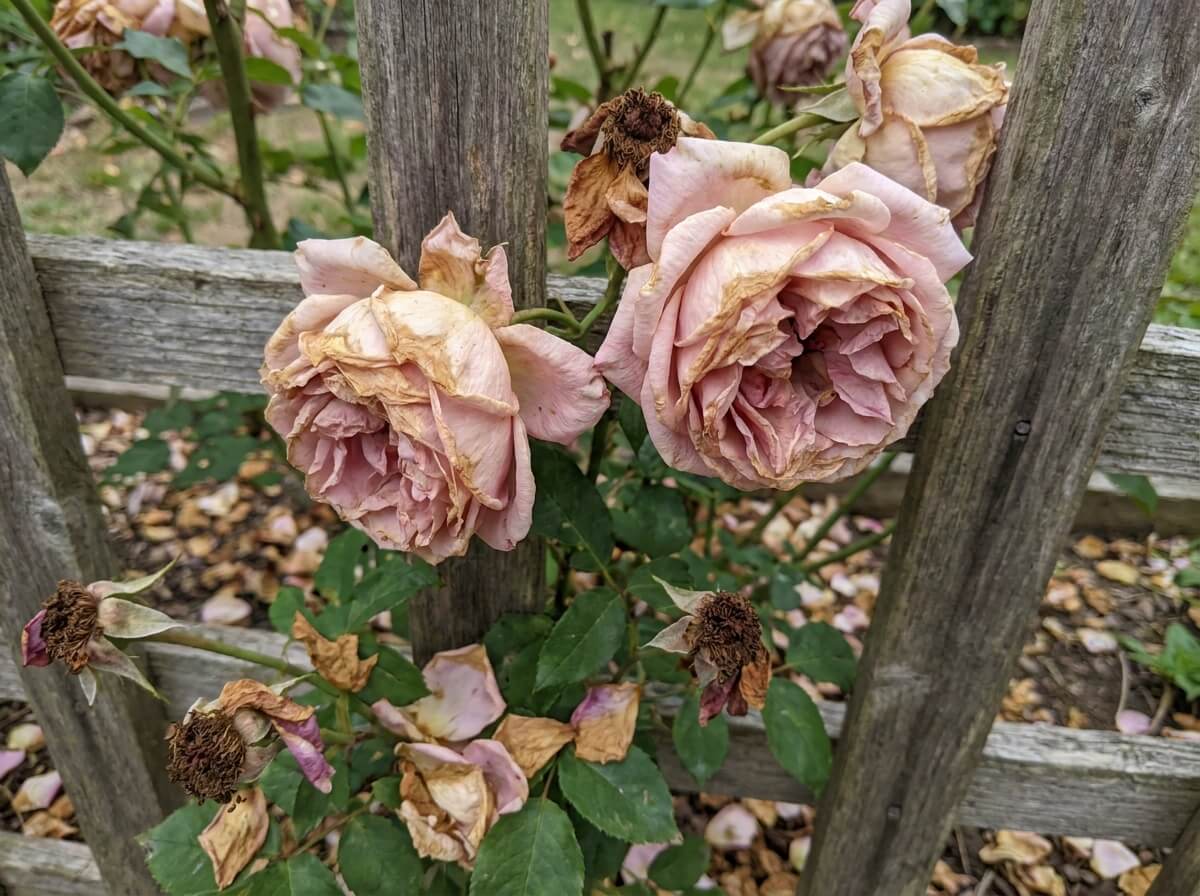
Your climbing rose’s first flush is collapsing — browning petals, bare stems, that slightly tired look. Snapping off the dead heads barely helps. But on repeat-flowering climbers, cutting back to the right leaf in summer can trigger a second bloom up to six weeks sooner. The trick is where you cut, not just that you cut.
A rose flowers for one reason: to make seed. Once a bloom fades, the plant starts pouring energy into rose hips — and quietly shuts down new bud production.
Deadheading breaks that cycle. Remove the spent flower before hips form, and the rose redirects that energy back into fresh shoots and buds.
But snapping the flower off at the neck leaves a long blind stem that just sits there.
The magic is the five-leaflet leaf. Cut back to it, and you’re cutting to a point on the stem thick enough to push out a vigorous new flowering shoot. Cut higher, to a three-leaflet leaf, and you usually get weak growth or nothing at all.
Doing nothing won’t kill your rose. But it costs you the second show entirely on many varieties.
Leave the spent flowers and the plant sets hips, slows down, and coasts into autumn with little more colour. On a vigorous repeat-flowering climber, that’s weeks of bare display you’ve simply thrown away.
There’s a small real risk too. Snapping flowers off by hand leaves ragged, crushed stems — perfect entry points for dieback and grey mould (botrytis), especially in muggy summer weather.
A clean cut with sharp secateurs heals fast and stays healthy.
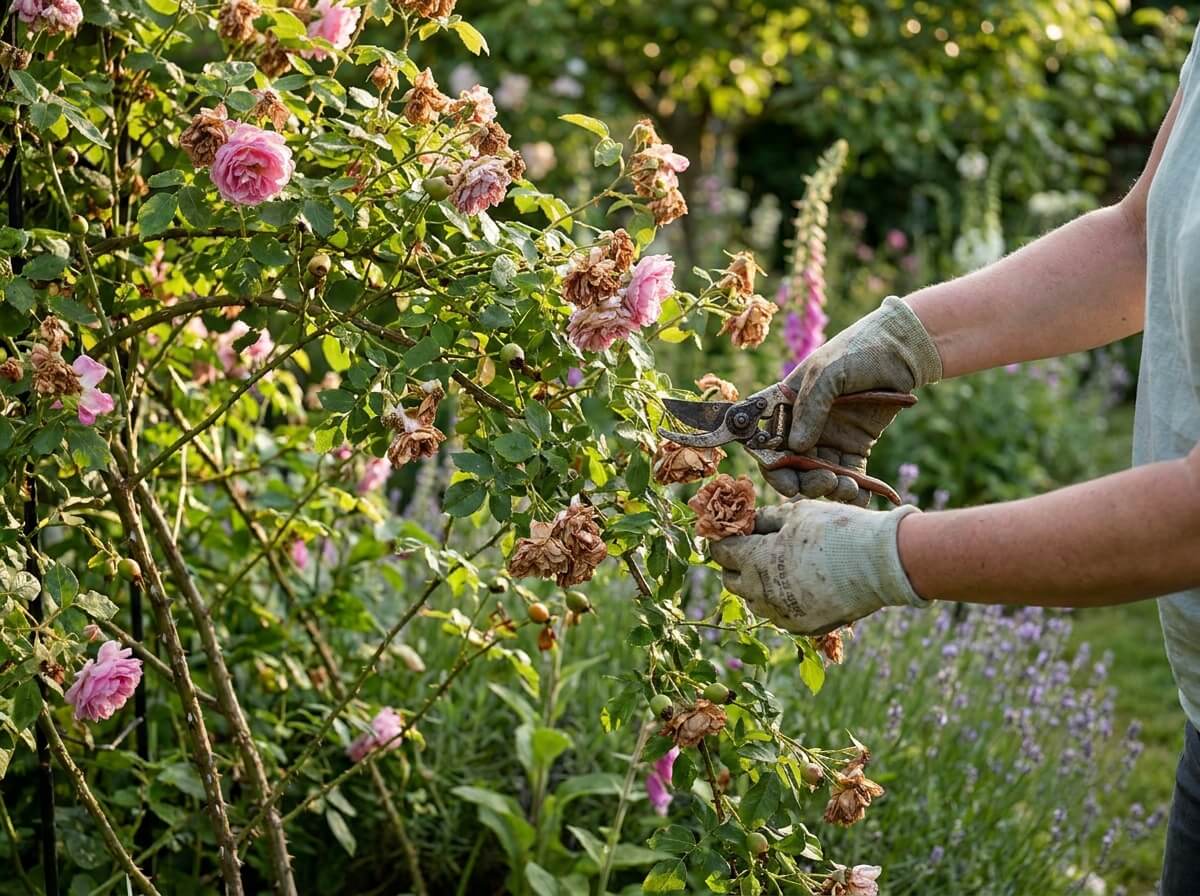
Grab clean, sharp secateurs. Walk the rose and find every faded bloom or finished cluster.
Yes, it’s fiddly on a tall climber. Do it anyway — the difference is night and day. Fresh buds usually appear in 5 to 6 weeks. The RHS backs this five-leaflet method for repeat-flowering types.
Check whether your climber actually repeats. Many ramblers flower once, in early summer, and won’t reflush no matter how perfectly you deadhead — for those, leave the hips for autumn colour and birds.
Watch for these as the season runs on:
Training matters as much as deadheading. For wider climber strategy, see our guide to growing climbing plants in your garden.
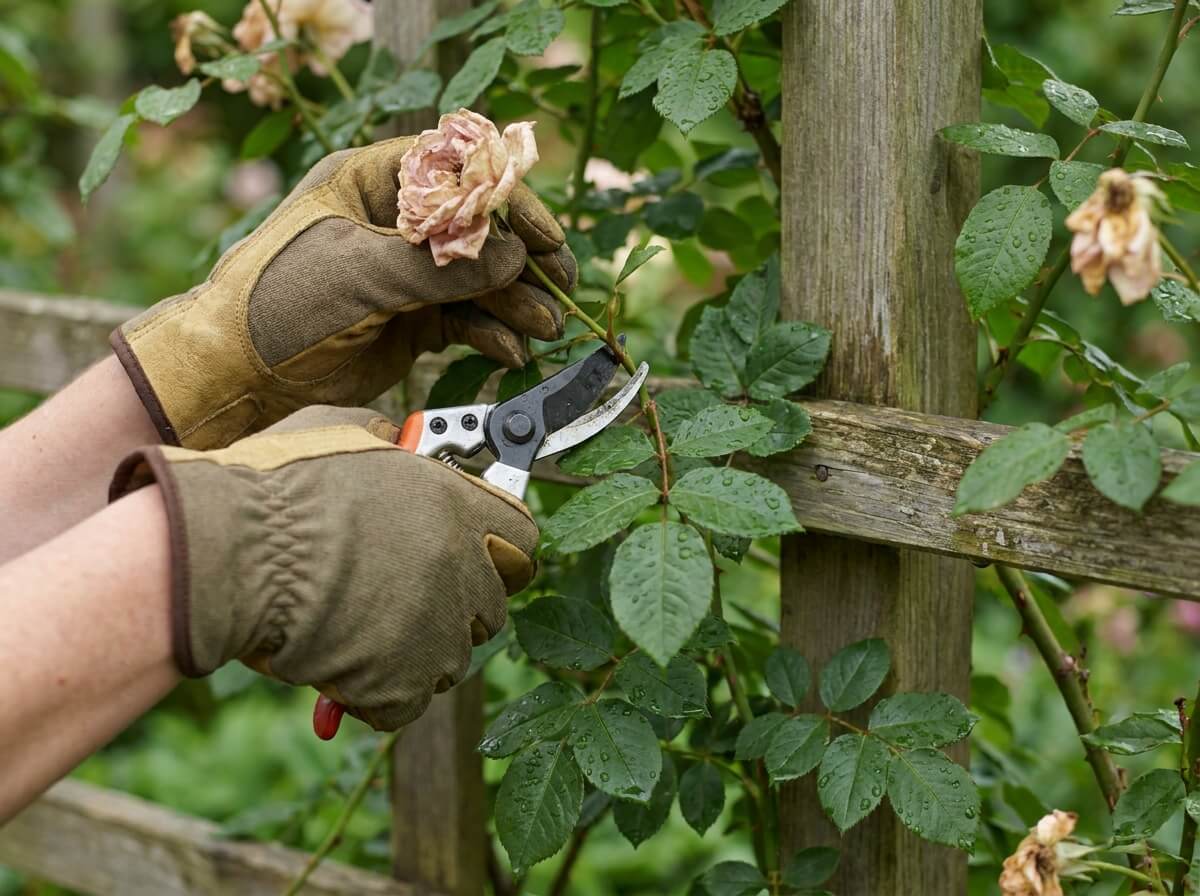
Smart tip: Always cut back to an outward-facing five-leaflet leaf — that’s the spot that pushes a real second bloom.
Check the label or variety name for “repeat-flowering” or “remontant.” If it bloomed only once in early summer, it’s likely a once-flowering rambler that won’t reflush.
You can, but it leaves crushed stems prone to dieback and gives a weaker response. A clean cut to a five-leaflet leaf works far better.
Yes. A balanced rose fertiliser plus a deep watering fuels the new flush.
Skip high-nitrogen feeds, which push leaves over flowers.
This is northern summer advice. In Australia, New Zealand and South Africa, apply it during your summer flush, around December and January.