Your roses’re repeat bloomers. Their whole point’s a second, third, fourth flush of flowers all summer long. But that rebloom hinges entirely upon where you make the cut. Snip in the dodgy place; the plant stalls for weeks, sometimes indefinitely. Get it right, and new buds form in as little as 18 days. Here’s exactly what’s going sideways and what you can do instead.
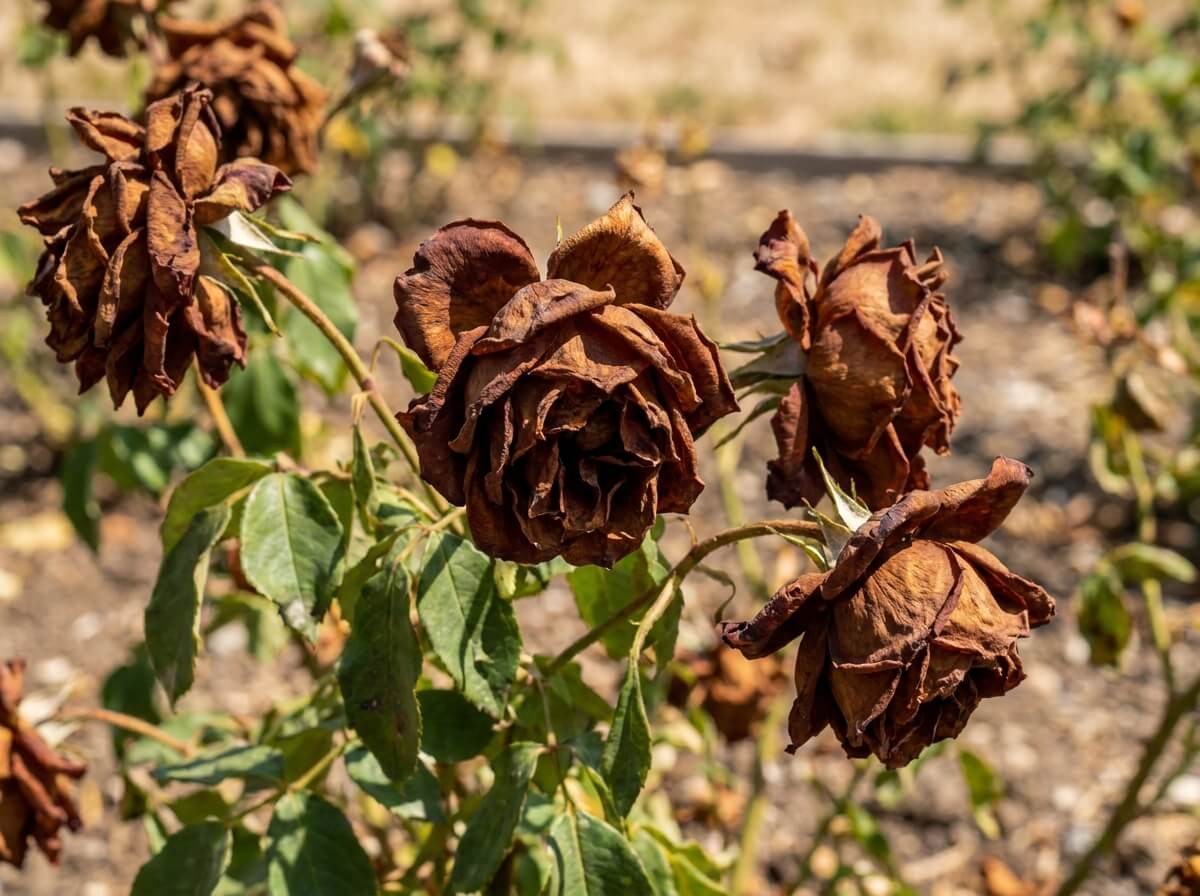
The instinct’s to nip the dead flower off just beneath the bloom head. Clean, quick. Tidy.
Wrong.
That cut leaves what’s called a blind stem — a stub with no active bud eye beneath it. The plant has no instruction point to shoot up new growth from.
It just sits there. Squandering energy on a dead-end shoot while your neighbours’ roses’re already in their second flush.
Roses only produce new flowering shoots from a node — the point where a leaf joins the stem. And not just any leaf. The cut needs to sit just above a set of five leaflets (not three), because five-leaflet sets mark the nodes with the proper bud potential. That’s where the growth comes from. Everything above it’s excess.
Nothing earth-shattering, immediately. The bush won’t die.
But over the course of a summer, you’ll observe the plant produces fewer and fewer new blooms per cycle, with longer gaps between flushes.
Blind stems accumulate. The plant’s energy gets distributed across shoots that can’t flower.
By late summer, a rose that should’ve given four full flushes may’ve scraped by with two — barely adequate flushes at that.
There’s also another risk. Cuts made too high, especially flat cuts rather than angled ones, sit wet after rain. So the RHS notes that not quite right deadheading technique is a common entry point for fungal issues including rose black spot and botrytis. A cut that pools water’s a cut that invites disease. Every single time.
Find your spent bloom. Trace the stem downward until you reach the first set of five leaflets.
That junction — where leaf meets stem —’s your target.
Cut 5mm above it. No more.
Angle the cut at 45°, sloping away from the bud eye, so water runs off rather than sitting on the wound. Make sure the bud eye (that tiny swelling just above the leaf joint) faces outward from the plant’s centre. This will ensure the bush remains open and airy, not overly congested.
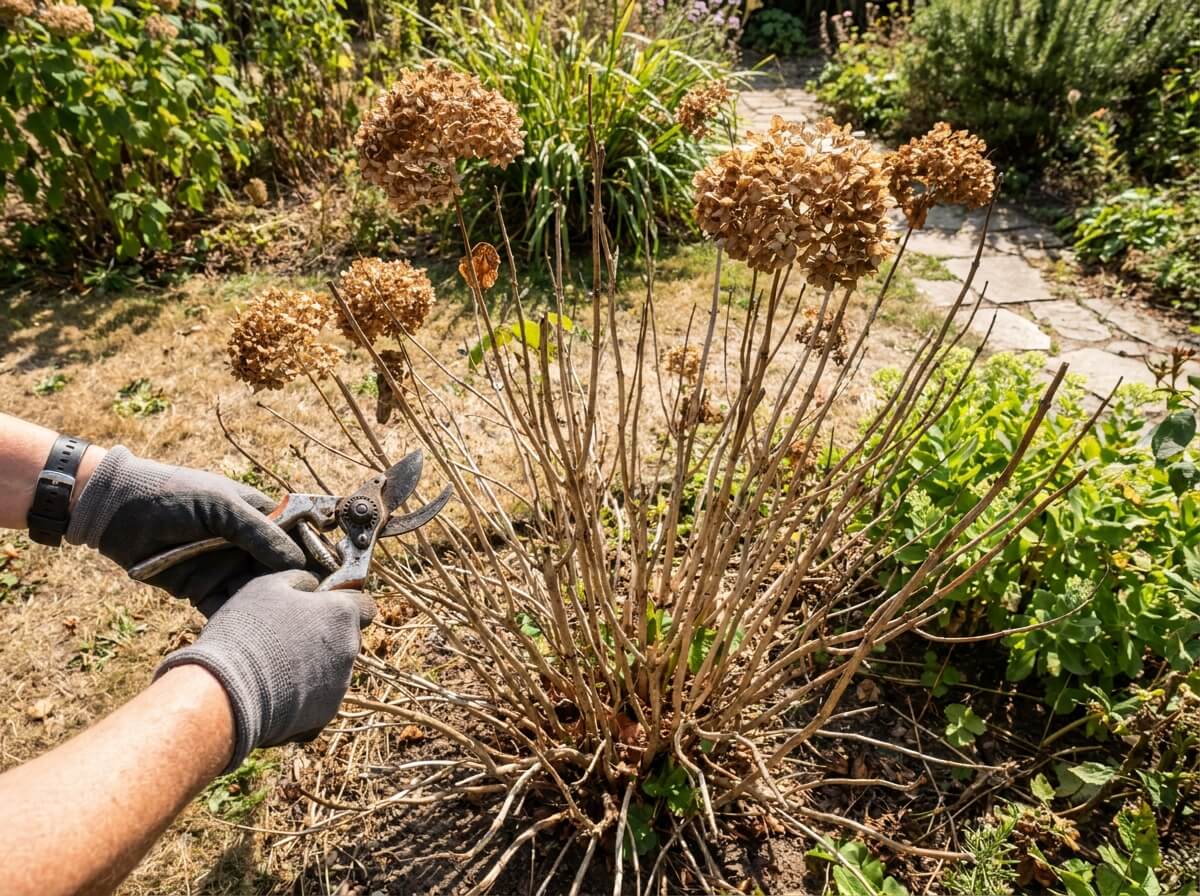
Use sharp, clean secateurs. Dull blades crush stem tissue rather than cutting it; crushed tissue heals slowly and beckons rot.
A quick wipe with methylated spirits between plants halts disease spread from one rose to another.
Yes, it’s fiddly the first few times. Do it anyway — the difference in rebloom speed is night and day.
Southern Hemisphere gardeners: this applies to your December and January flush — your roses’re heading into their peak summer spectacle right then.
Deadheading’s only one piece of the puzzle in summer. Watch for these alongside:
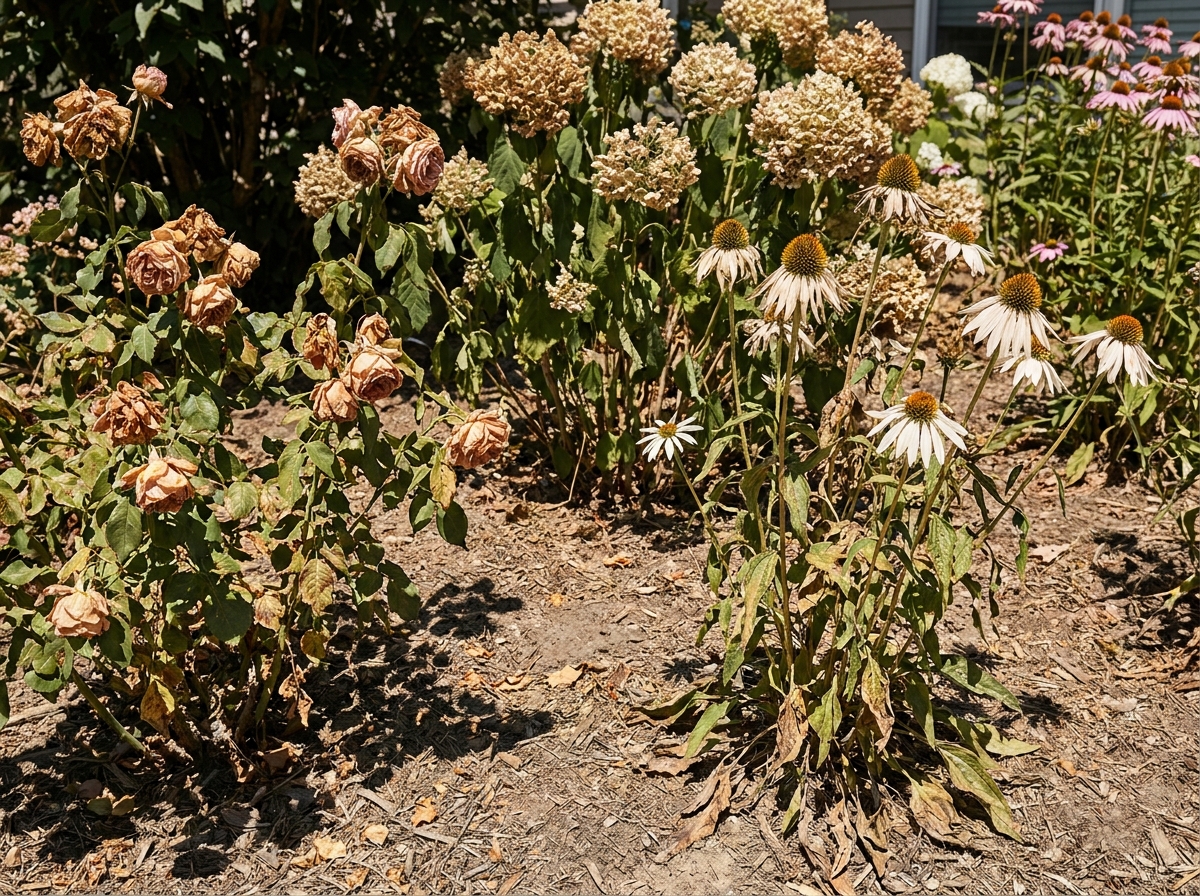
For more on what summer heat does to your flowering plants in general, see how summer heat’s curtailing bloom duration across the whole garden — roses aren’t the only ones affected.
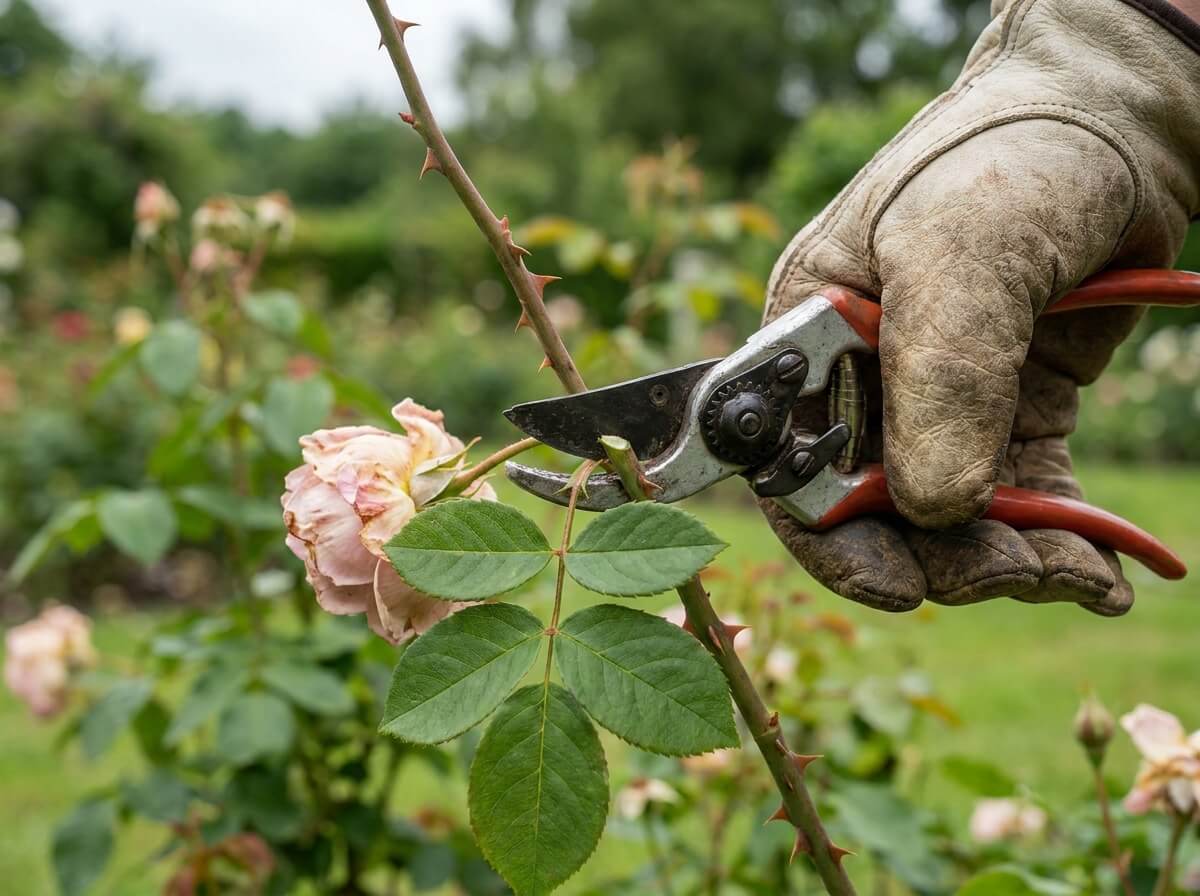
Smart tip: When in doubt about where to cut, always go lower — a cut above five leaflets beats a cut above three every time.
For soft, newly spent blooms in properly early summer, a clean snap at the neck works as a stopgap. But for proper rebloom, nothing beats a sharp cut at the five-leaflet node — finger-snapping never lands in the right place.
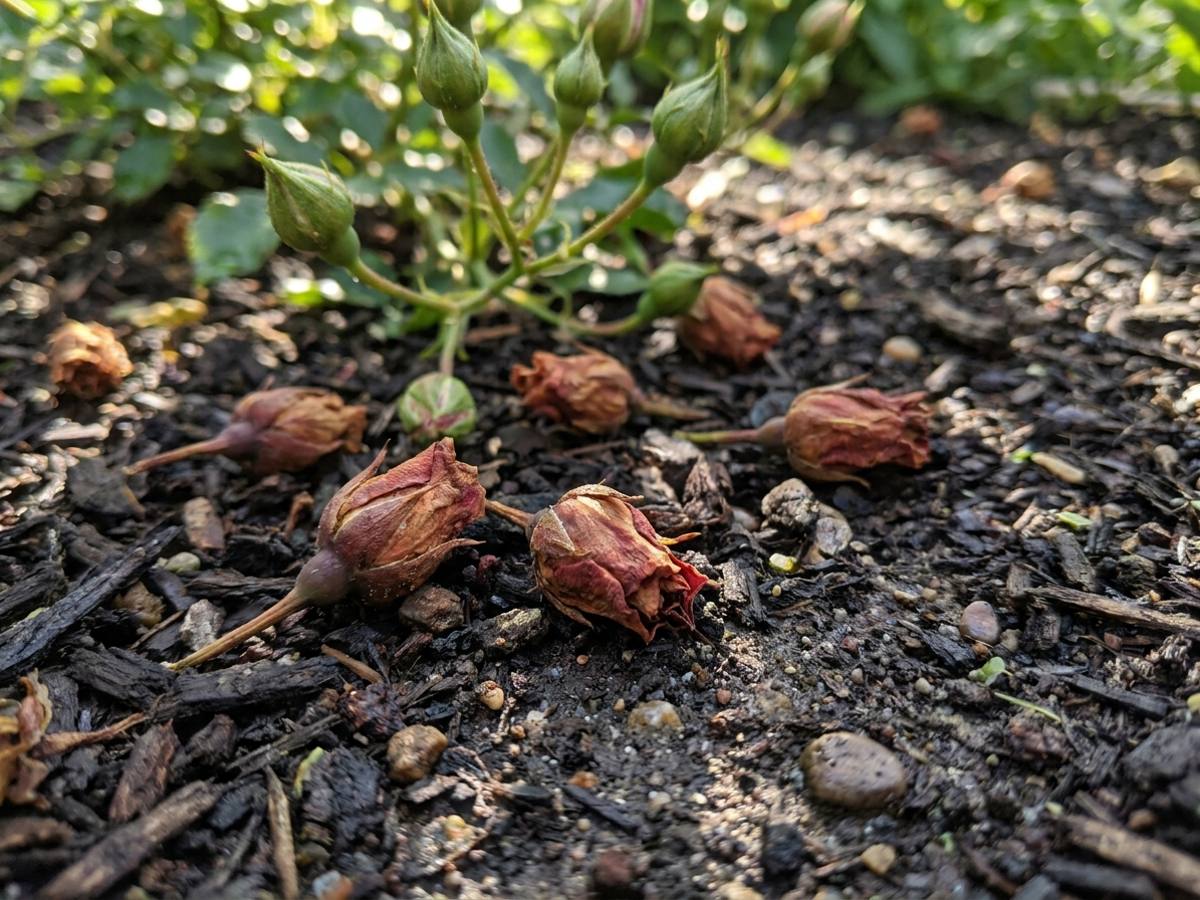
Check every 5 to 7 days during peak flowering. Letting spent blooms sit longer than 10 days cues the plant to begin forming hips, which diverts energy away from producing new buds entirely.
Repeat-blooming modern roses (hybrid teas, floribundas, patio roses) decidedly benefit from it. Once-flowering old garden roses and many wild species roses should be left alone — their hips are part of their seasonal display and next year’s seed cycle.
A dose of rose fertiliser — something like Toprose or a balanced 5-10-5 granular feed — applied right after a deadheading session provides the new bud with critical nutrients to shoot up fast. University of Maryland Extension recommends combining deadheading with feeding as a single routine for peak rebloom performance.