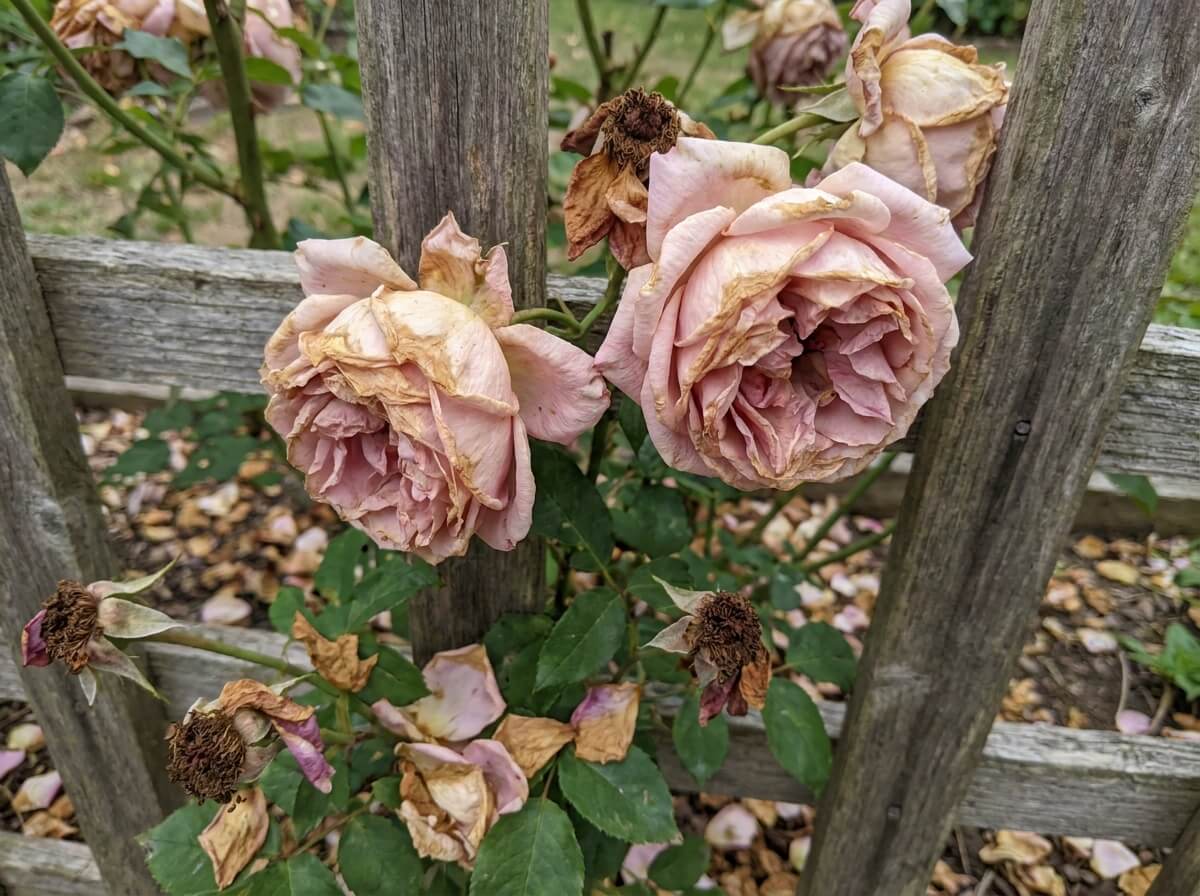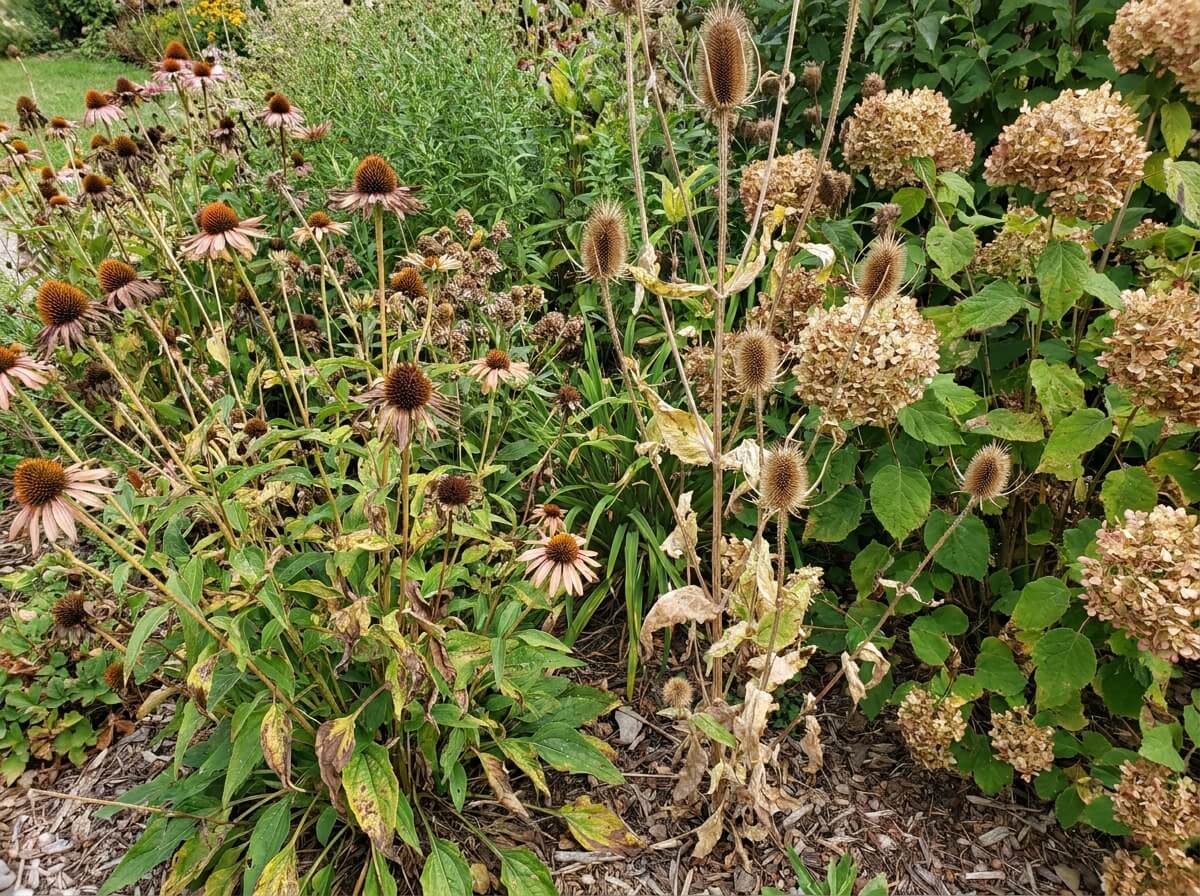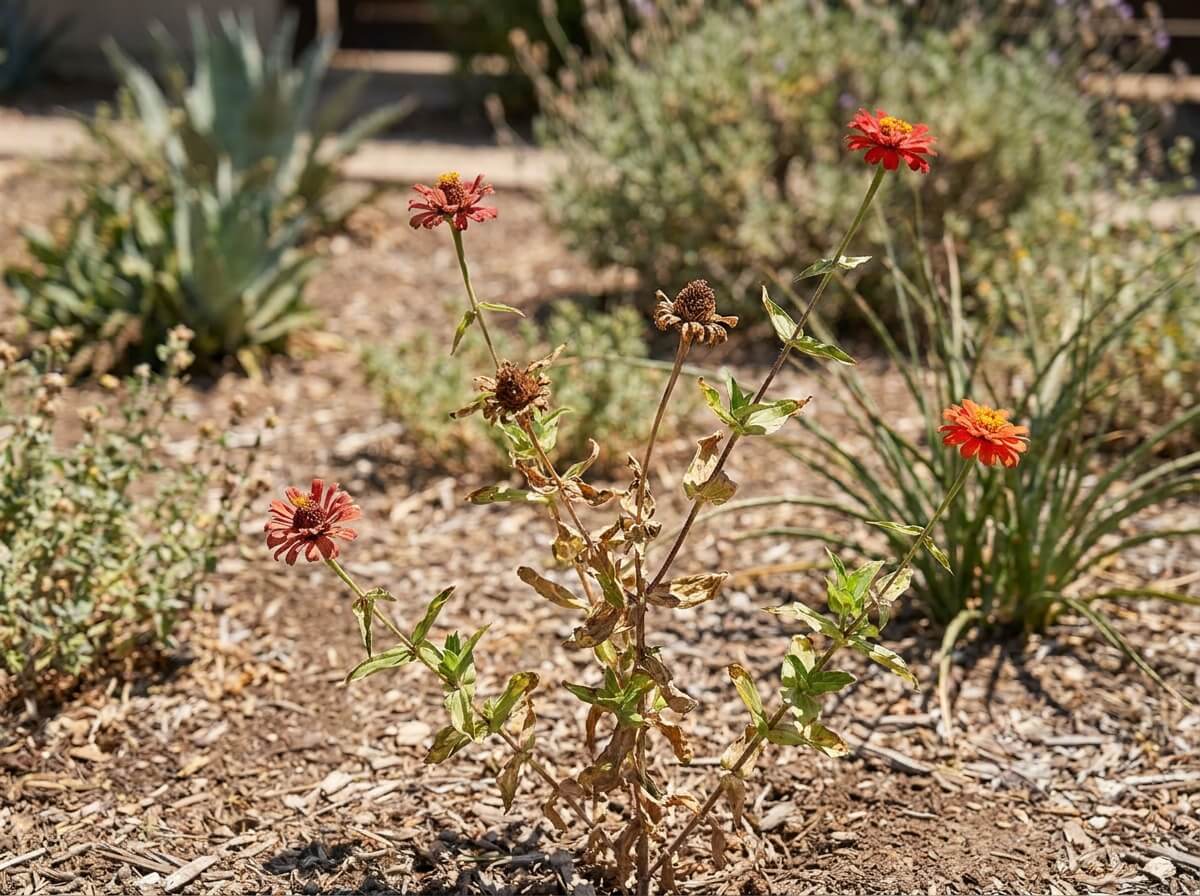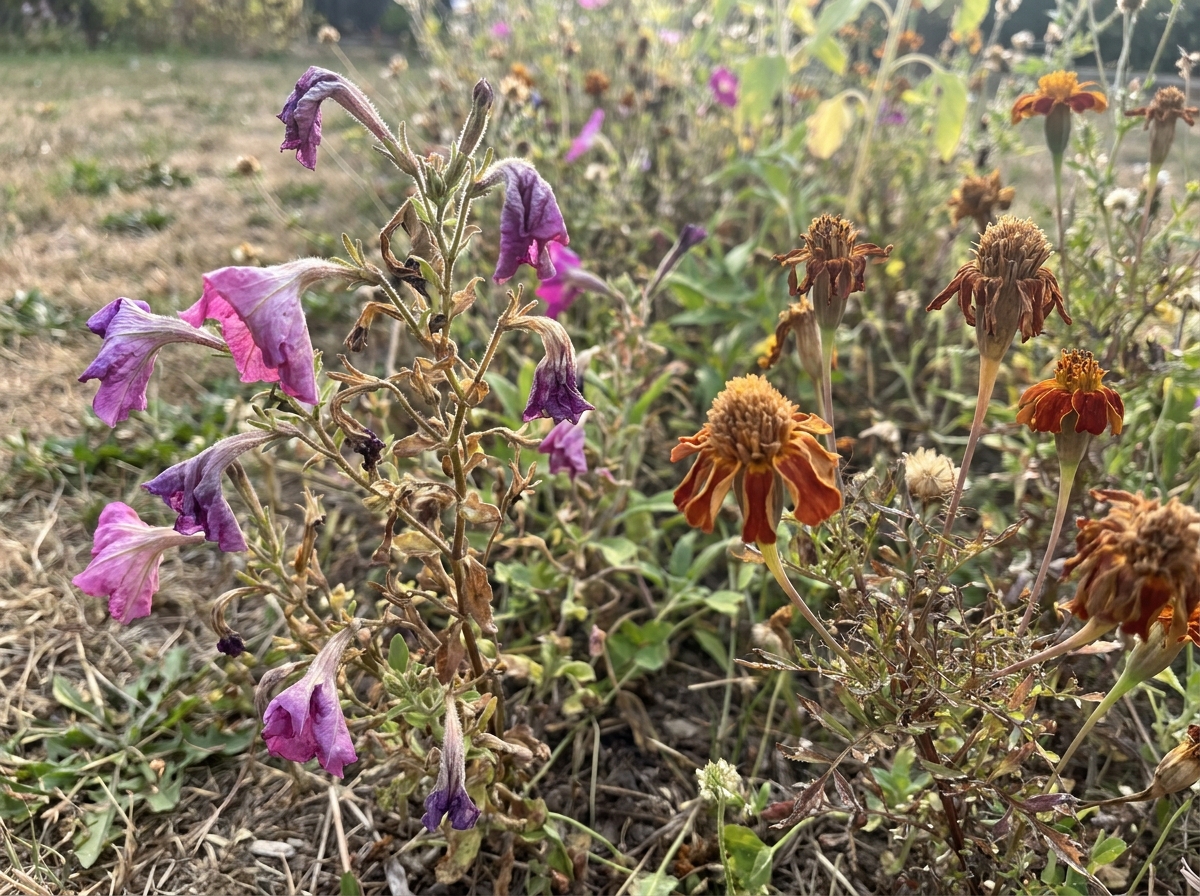
Your summer annuals are not slowing down because of the heat. They are slowing down because you have let them go to seed — and once that switch flips, flowering stops. Deadheading is a non-negotiable action you must take right now to keep petunias, marigolds, zinnias, and cosmos blooming from now until the first frost. Miss the window, and you are left with green, leafy plants producing almost nothing.
Annuals exist for one reason: to produce seed before they die. The moment a flower is pollinated and a seed pod starts forming, the plant redirects every gram of energy away from making new flowers and toward that seed.
It is efficient biology working directly against your garden display.
In summer heat especially, this process accelerates. A petunia flower that opens on Monday can be pollinated and setting seed by Thursday.
That is fast. And if you are only checking the garden on weekends, you are already behind.
The plants most affected are the ones in containers and hanging baskets — petunias, calibrachoa, bacopa, diascia — because they have limited root space and exhaust their flowering energy faster than border plants.
The bloom count does not drop gradually. It crashes.
A petunia basket that had 40 flowers open in early summer can dwindle to 6 or 7 within three weeks if seed heads are left on. The stems get leggy and woody.
The colour disappears from the top of the plant first, then retreats entirely.
And it compounds. Each seed pod left in place signals the plant to produce fewer buds.
Leave five pods on a marigold for 11 days and the lateral branching — where new flowers come from — slows almost completely.
Most gardeners snap off just the flower head. Wrong.
You need to cut back to the next leaf node — the point where a leaf or pair of leaves meets the stem. That is where new buds form. The thing is, pulling off only the spent bloom leaves a bare stalk that produces nothing.
For different plants, the technique shifts slightly:
Do this every 5 to 7 days. Yes, it is fiddly.
Do it anyway — the difference between a deadheaded basket and a neglected one after 4 weeks is genuinely shocking.
Early morning is the prime time — the stems are firm, the light is clear, and you can actually see which buds are coming through. The faint, sweet-dusty smell of marigold foliage as you work through them is oddly satisfying.
The RHS recommends deadheading as the most impactful single technique for extending the flowering period of annual and tender perennial displays throughout summer.
Deadheading is not the only thing. While you are working through the plants, watch for these:
Container annuals in particular need feeding properly through summer. A pot that was fed at planting time in spring has been exhausted for weeks by now.
Without potassium, new buds do not set properly regardless of how much you deadhead.
If your dahlias are also struggling to produce flowers right now, the causes are different — here is what is stalling your dahlias this season.
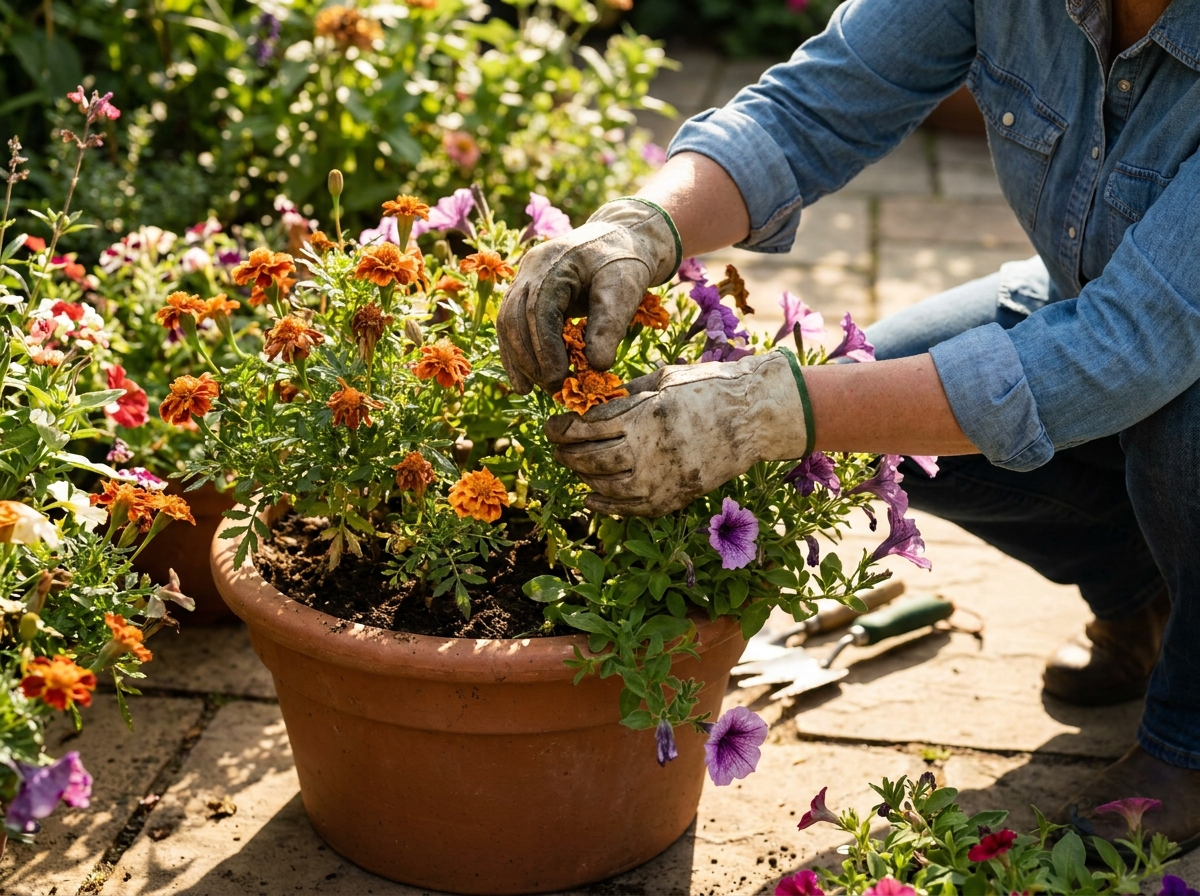
Smart tip: Cut back to a leaf node every time — removing only the flower head leaves a dead stalk that produces nothing new.
Every 5 to 7 days is the target for most annuals. In hot weather, petunias and calibrachoa may need attention every 4 to 5 days because seed set happens faster.
Fingers work fine for petunias, marigolds, and cosmos — pinch and snap cleanly at the node. Use small snips or scissors for woodier stems like zinnias to avoid tearing the stem, which can allow disease in.
Cut them back hard — by up to half their length — and follow up with a liquid feed. Most annuals respond within a fortnight with a flush of fresh growth and new buds.
It feels brutal, but it works.
Some modern varieties like Supertunia and certain impatiens are bred as self-cleaning — they drop spent flowers without intervention. But the majority of annuals sold at garden centres absolutely need regular deadheading to maintain flowering through summer.