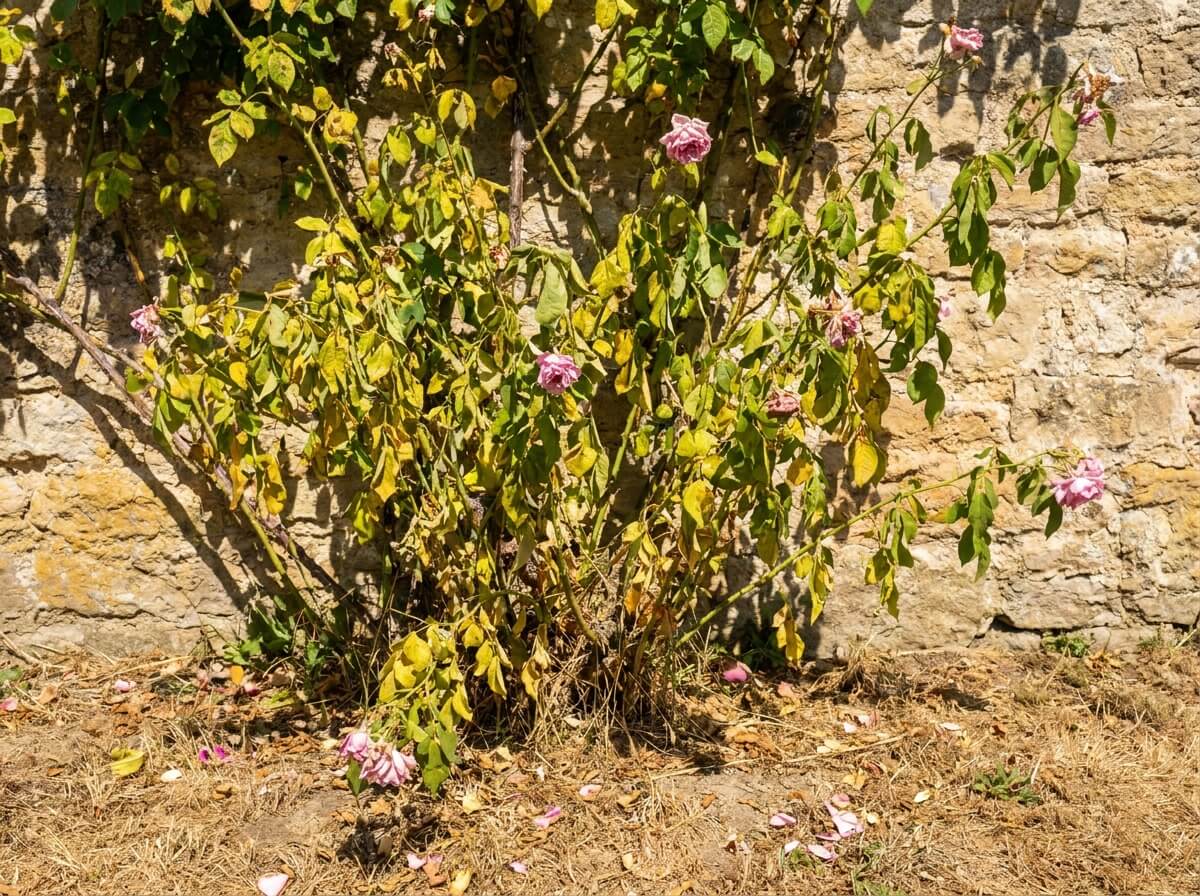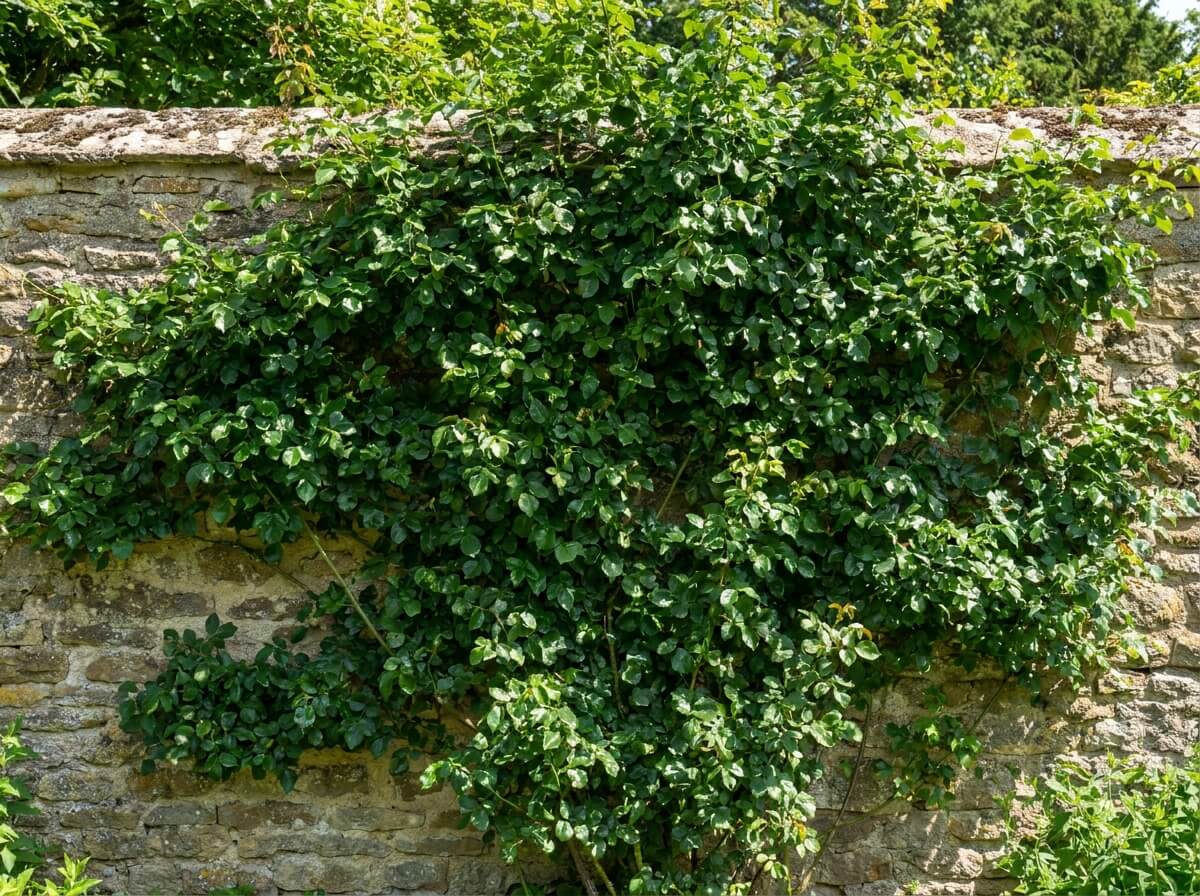
Your climbing rose is smothered in leaves but the flowers are missing, or barely there. The most common culprit isn’t disease or drought; it’s one of three simple errors. These errors are completely fixable right now.
Here’s the real reason your rose is all foliage, and the exact steps to bring it back into bloom before summer slips away.
Climbing roses flower on short lateral shoots. These shoots shoot up off the main canes — not on the long canes themselves. When those canes shoot straight up, the lateral shoots are suppressed, and flowering drops dramatically. A rose left to scramble vertically, untamed, pours almost all its energy into upward growth.
The second culprit is timing and technique with the secateurs. The thing is, many gardeners prune climbing roses the same way they prune bush roses, cutting back hard in late winter.
That pulls off the properly old wood that would have produced this season’s flowering laterals. The RHS is clear on this: climbing roses that flower on old wood must only have their oldest, exhausted canes pulled off, not their productive framework.
The third issue is feeding. High-nitrogen fertilisers — many general-purpose granular feeds — push green leafy growth at the expense of flowers.
A rose pumped full of nitrogen in summer looks spectacular, and it blooms almost not at all.
Miss this window, and you lose the second flush entirely. Most repeat-flowering climbing roses — think ‘New Dawn’, ‘Zéphirine Drouhin’, ‘Compassion’ — can produce two or even three waves of bloom between early summer and autumn.
But only if the plant is deadheaded promptly and fed correctly between flushes.
Leave spent blooms on the plant, and it reads the season as done. The energy that should go into bud formation instead goes into rosehip production.
And a rose that spends a full summer in the wrong feeding regime will enter dormancy in poorer condition. It becomes more vulnerable over winter and slower to respond next spring. The damage compounds quietly.
Start with the canes. Any long main stems shooting straight up should be bent down and tied at roughly 45 degrees, or — even better — horizontally along wires.
Yes, it’s fiddly. Worth it. The difference in flowering the following weeks is night and day.
Use soft garden twine or silicone ties and check the tension so you don’t cut into the bark.
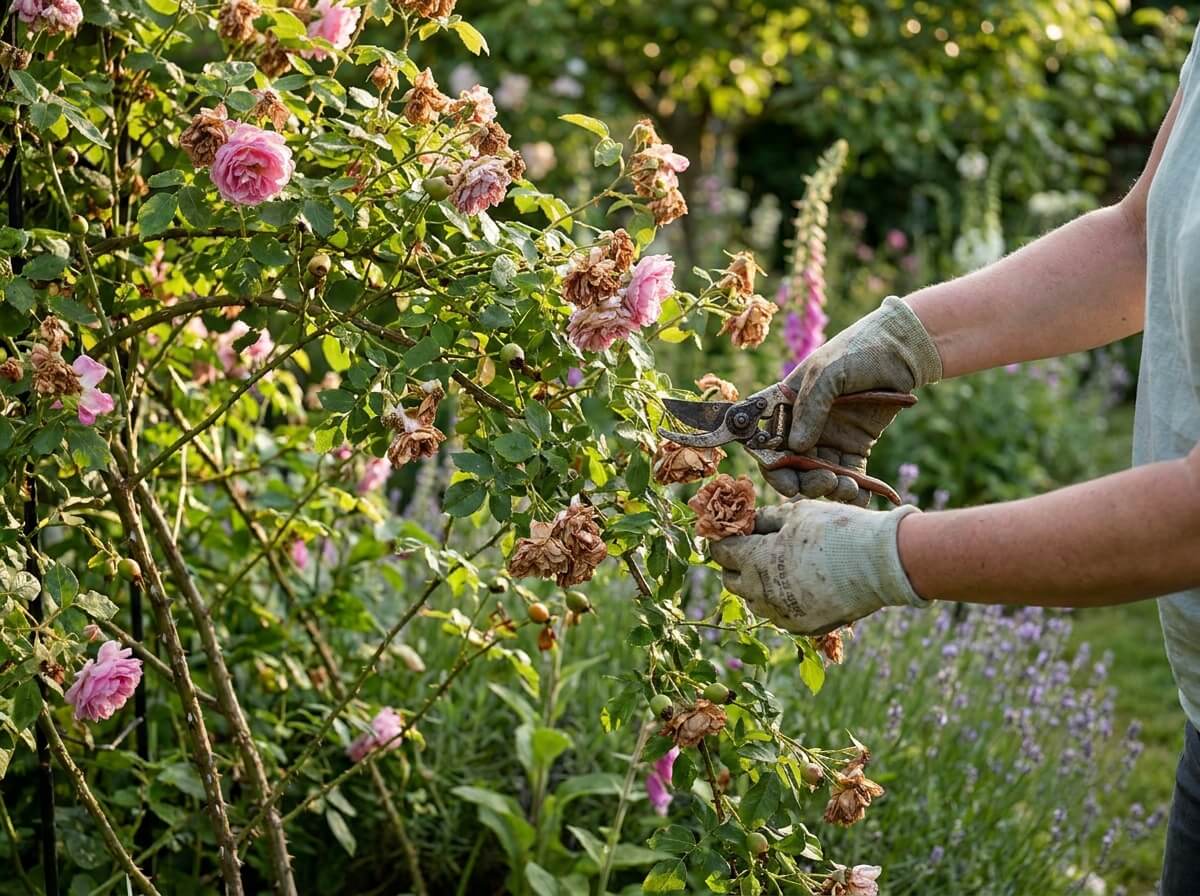
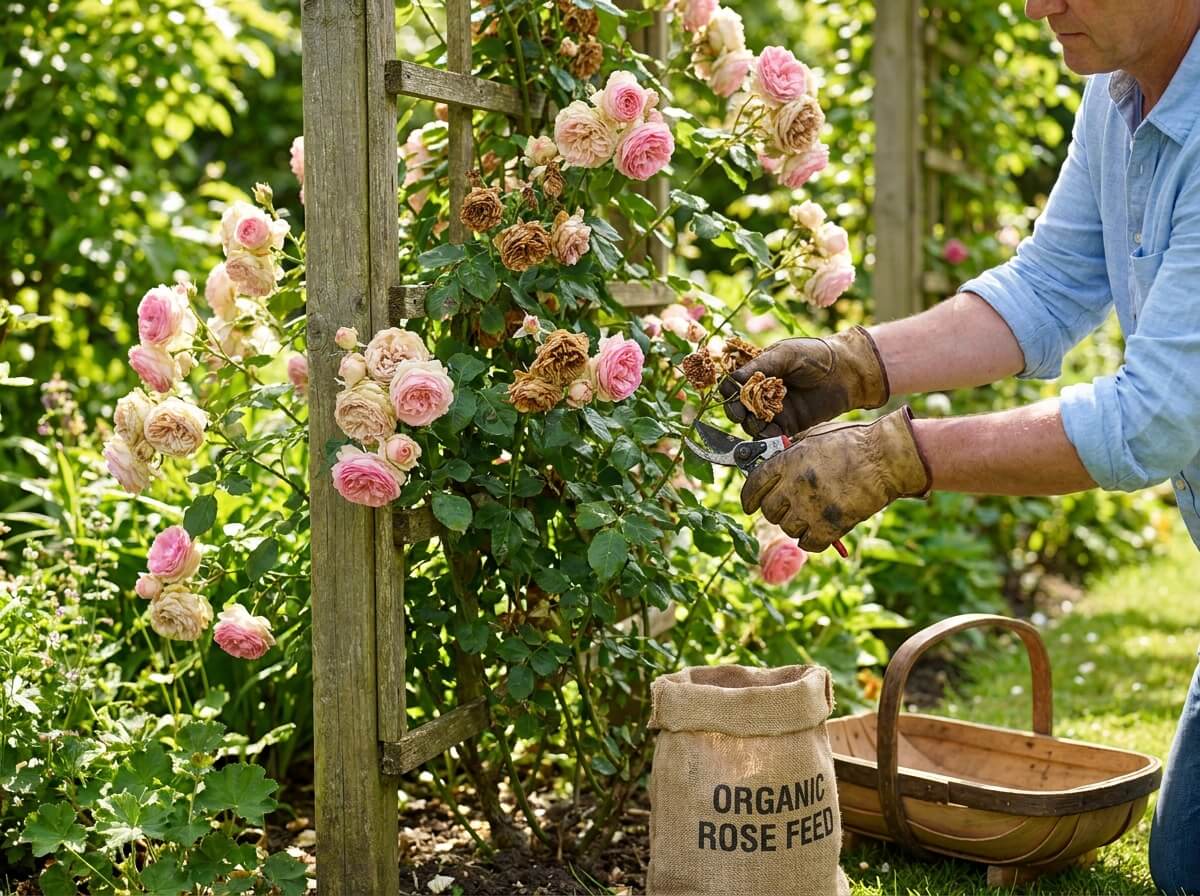
Next, deadhead every faded bloom. Cut back to the first set of five leaflets below the spent flower, to an outward-facing bud.
Don’t cut to just below the bloom. Go further down the stem, about 20–25cm, to a strong bud. This is too timid. Cut lower.
Then feed immediately with a high-potassium fertiliser — a rose-specific feed like Toprose, or a liquid tomato feed in a pinch. Apply once a week for three weeks.
You should see new bud breaks within 10–14 days if the plant has any remaining energy for the season.
If your rose hasn’t been trained at all and the canes are a tangled mass, don’t try to untangle everything at once. Identify the two or three longest, most flexible canes and begin with those.
The rest can wait until late winter.
The same pruning logic applies to other climbers. If you’ve made similar mistakes with a clematis, the clematis pruning mistake that costs you an entire season of flowers is worth reading alongside this. And if your wisteria has just finished blooming, don’t let that slide either. There’s a narrow window covered in Wisteria Finished Blooming? Do This Now or You’ll Lose Next Year’s Flowers.
Black spot — dark circular patches on the leaves — is a secondary issue. But it is a telling one. A stressed, underfed climbing rose with poor airflow is a magnet for it. Treat with an RHS-approved fungicide and pull off affected leaves at once. Don’t compost them.
Watch also for blind shoots: vegetative shoots that end in a tuft of leaves instead of a bud. These should be cut back by half to a strong outward bud.
Left alone, they take energy from flowering stems without contributing anything.
Southern Hemisphere gardeners: this applies to your December and January. The same principles govern your summer flush and the deadheading window between first and second bloom.
Smart tip: Horizontal cane training is the single fastest change you can make to triple your climbing rose’s flower count.
Because the long canes are shooting upward. Lateral flowering shoots concentrate where light and hormonal signals are strongest — at the tips. Train the canes horizontally, and flowering will distribute along the entire length.
Yes — if your rose is a repeat-flowering variety, deadheading and switching to a high-potassium feed now can trigger a second flush within three to four weeks. One-time bloomers (like some older ramblers) won’t rebloom regardless of what you do.
Significant difference. Ramblers flower on the previous year’s new growth. They are pruned immediately after flowering in late summer.
Climbing roses are pruned lightly in late winter, pulling off only the oldest, least productive canes.
Container roses exhaust their compost much faster than border roses. Repot into fresh rose-specific compost every two years and feed with liquid high-potassium fertiliser weekly through summer. A pot-bound root system is almost always behind poor flowering in containers.