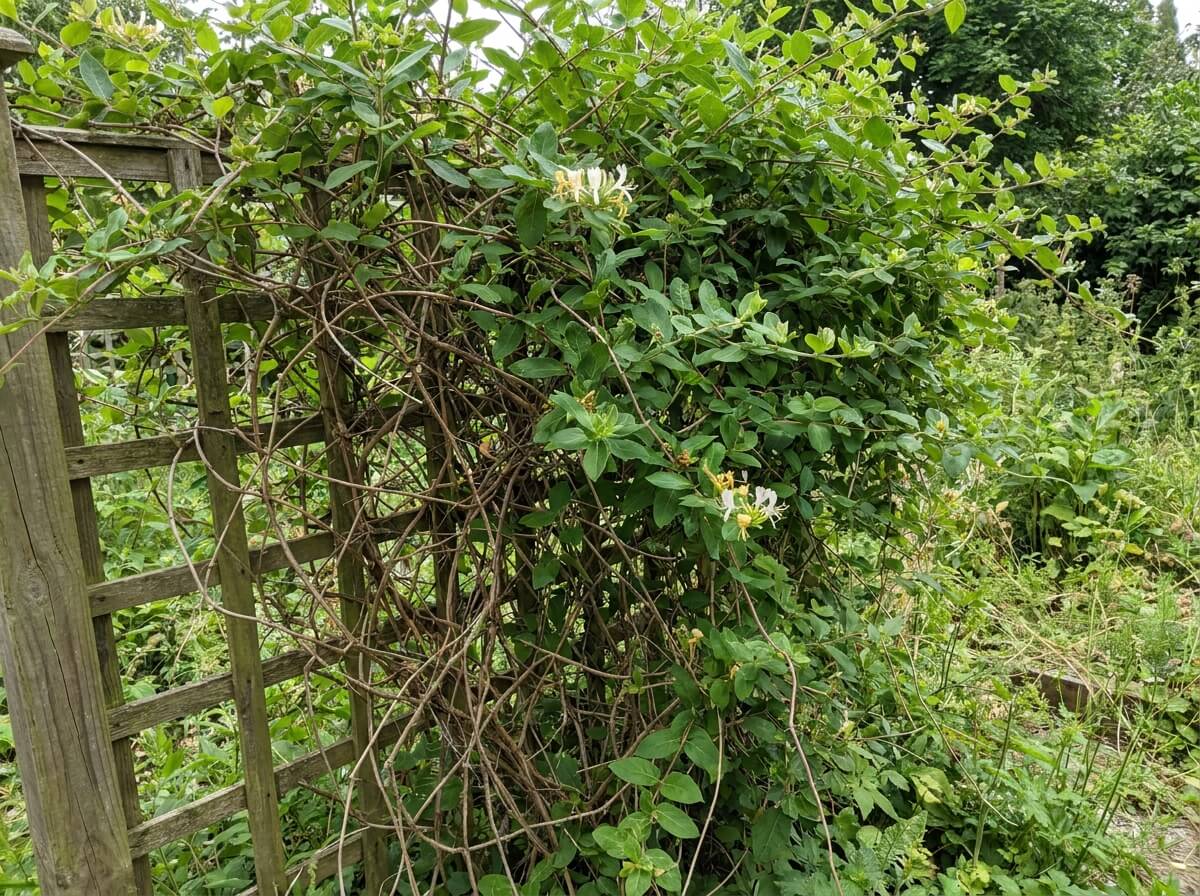
Your honeysuckle is lush, fragrant for about ten days in early summer — and then nothing. Just a tangle of green.
But the plant looks healthy enough, yet the flowers either do not come back or scarcely materialise. The cause, almost every time, is a pruning decision made at precisely the wrong moment.
And once you understand why the timing is so non-negotiable, you will not make the same error again.
Honeysuckle — Lonicera, whether it is the classic Lonicera periclymenum scrambling over a British fence or Lonicera sempervirens brightening a US garden wall — flowers exclusively on wood produced the prior growing season. Cut that wood off before or during flowering, and you have pulled off every bud the plant spent months developing.
The thing is, the error is almost always this: you see the plant shoot up or become overgrown in spring or early summer, you reach for the secateurs, and you cut it back hard before it is finished flowering. It feels productive. It looks tidy. Destroys the season.
But the other version of the same error is pruning too late in autumn, after the plant has already set next year’s flowering buds on its new growth. One clean cut in October feels like proper garden hygiene.
By May, you will notice the silence.
Never pruning is not the answer either. Honeysuckle left to itself for three or four years develops what gardeners sometimes call “bird’s nest syndrome” — a dense, airless tangle at the base, flowering only at the outermost tips where light properly reaches, a classic habitat for aphids, and woody stems that become genuinely challenging to manage.
Insufficient air circulation through that tangle also encourages powdery mildew. By midsummer you will see white dusty patches on the leaves — unsightly and a sign the plant is stressed. The RHS considers improving airflow through regular, well-timed pruning a non-negotiable for preventing powdery mildew on climbers.
The goal is not “no pruning.” The goal is pruning at the right moment, in the right amount.
The window is pin-sharp. Wait until the first main flowering flush is completely over — spent blooms turning papery, no new buds forming — then pounce.
For most Northern Hemisphere gardens, that typically falls between late June and mid-July. Southern Hemisphere gardeners: your corresponding timeframe is late December into January.
Here is the method that actually works:
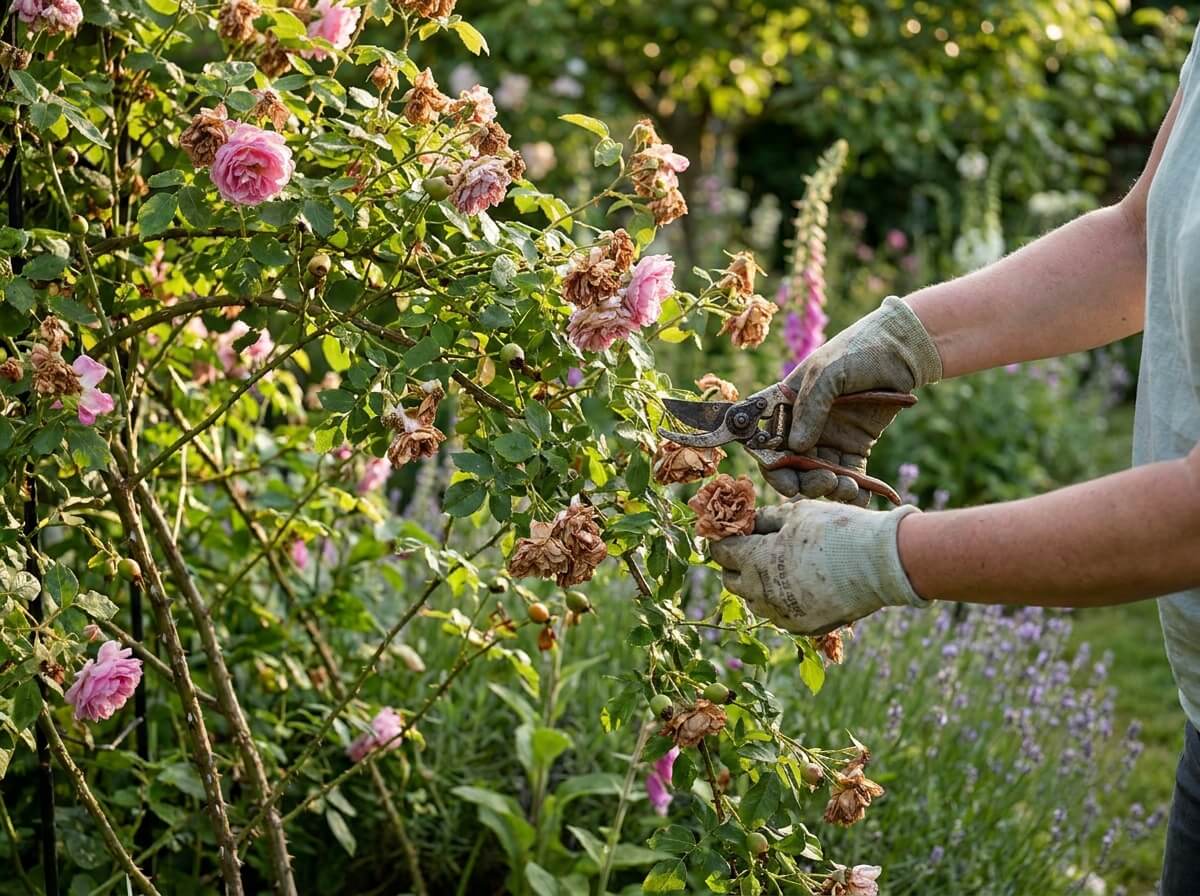
Yes, it is fiddly working through a dense climber with secateurs while trying not to disturb nesting birds. Do it anyway. The second flush of flowers, arriving roughly 6 to 8 weeks later, and the scent that drifts across the garden at dusk on a warm evening, makes the effort absolutely sorted.
For other climbers where pruning timing is equally non-negotiable, the logic behind the clematis pruning mistake that costs you an entire season of flowers follows a strikingly similar principle — get the group wrong and you lose everything.
If you are growing jasmine alongside your honeysuckle and noticing similar issues, the pruning logic for jasmine as a fragrant vine shares some of the same principles — timing always comes before tidiness.
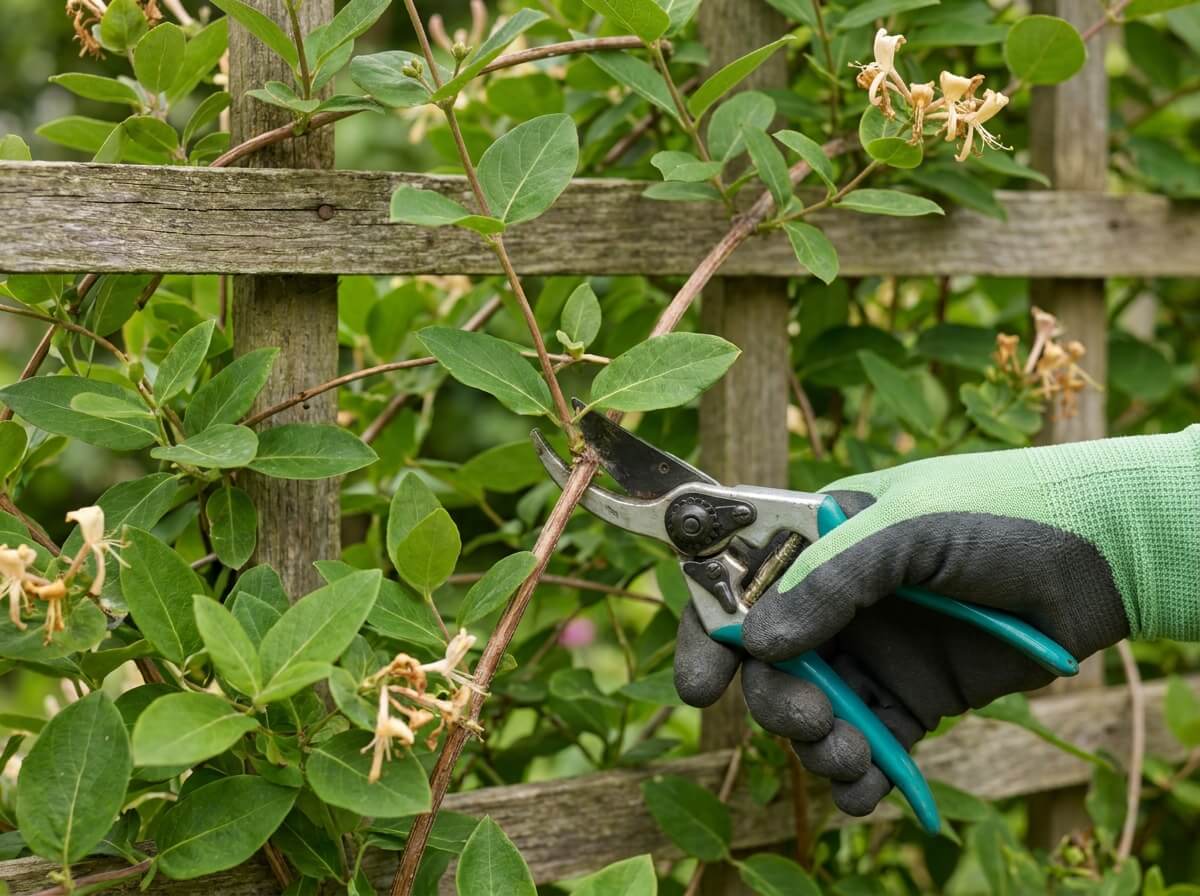
Smart tip: Never prune honeysuckle during its flowering window — wait until every last bloom has finished.
Yes, but spread it over two years — cut half the old woody stems to about 60cm from the base in year one, the rest the following season. Doing it all at once can shock the plant into a long sulk with no flowers for two full years.
The plant deliberately intensifies its scent after sunset to attract hawkmoths, its primary pollinator. Midday fragrance from the same plant will always seem weaker — you are not imagining it.
If you pruned it in early spring or during the first flowering flush, that is almost certainly the cause — you pulled off the previous season’s flowering wood. Follow the post-flowering pruning method above and next year should recover fully. This is bang on why timing is everything.
In Australia, New Zealand, and South Africa, honeysuckle’s first main flush typically ends in December or January — prune immediately after that point, leaving all the new season’s growth intact for the following year.