Evening primrose care: how to grow Oenothera biennis
0
The common evening primrose is one of those plants that earns its keep after the sun goes down, unfurling silky, lemon-yellow cups in the space of a few minutes at dusk and filling the air with a soft, sweet scent. A tall, upright biennial from North America, now thoroughly naturalised across Europe, it brings months of luminous colour to gravel gardens, wildflower borders and dry, difficult banks. Its most distinctive trait is that theatrical evening opening — worth standing and watching, glass in hand, on a warm July night.
Growing conditions
Give evening primrose the sunniest, most open spot you have. It flowers most freely with at least six hours of direct sun, and plants grown in shade stretch, flop and produce far fewer buds. An exposed site is no problem — the stems are surprisingly wiry.
Poor soil is a positive advantage. Sandy, stony, chalky and thin soils all suit it, and it will colonise gravel drives, railway ballast and dune edges in the wild. Neutral to alkaline soil (pH 6.0–8.0) is ideal, but the one thing it truly resents is winter wet around the crown, which rots the overwintering rosette.
Hardiness is excellent, down to roughly −20 °C, so it needs no protection anywhere in the British Isles or across most of temperate Europe and North America. In high-rainfall western regions, plant it on a slope, a raised bed or a gravel mulch to keep the base dry.
How to plant Oenothera
Sow or plant in spring (March to May) or late summer (August to early September). Late-summer sowings produce a strong rosette that overwinters and flowers the following June, which is the natural rhythm of a biennial.
Spacing: allow 40–50 cm between plants — crowded rosettes trap moisture and encourage mildew on the lower leaves.
Depth: set the crown exactly at soil level; burying the rosette invites rot. Seed needs light to germinate, so press it onto the surface rather than covering it.
Soil preparation: fork through grit or sharp sand on heavy ground, but skip the manure — rich soil produces lush, floppy growth and fewer flowers.
Watering in: water thoroughly once after planting, then only during prolonged drought in the first few weeks.
Propagation: it comes true and easily from seed. Collect the ripe seed capsules in autumn, or simply let one or two plants self-sow and transplant the seedlings while they are still small — the long taproot resents disturbance later.
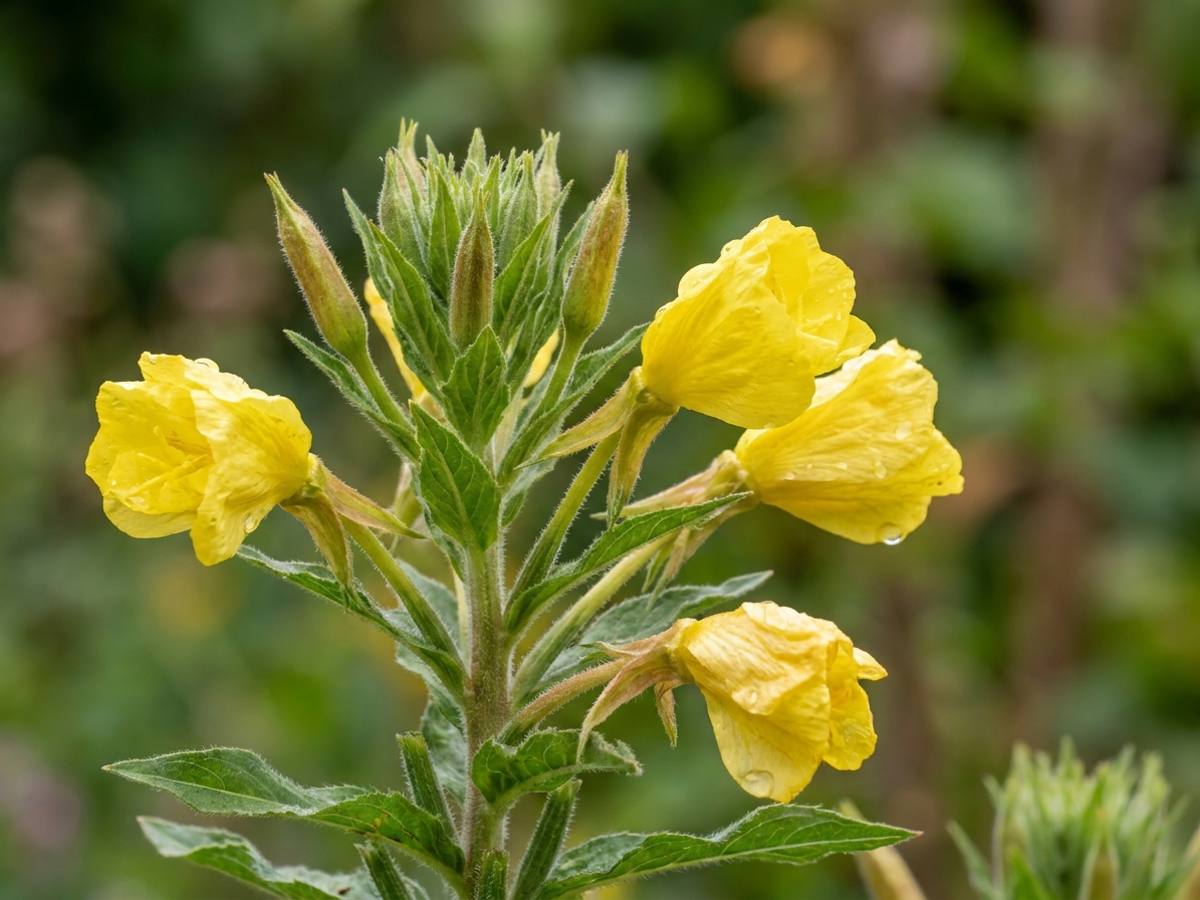
Oenothera biennis growing in a naturalistic garden border
Care through the seasons
Spring: Overwintered rosettes begin to bolt from April, throwing up a thick central stem. Thin out excess self-sown seedlings now, leaving the strongest at 40 cm intervals. No feeding is needed; a nitrogen-rich fertiliser will only cause soft, collapsing growth.
Summer: Flowering begins in June and continues for months, each bloom lasting a single night. Established plants are genuinely drought-tolerant and need watering only in extreme heat. Deadhead the lower seed capsules if you want to limit self-seeding, but leave some to ripen if you want next year’s plants.
Autumn: Once seed has shed, cut the spent stems to the base — or leave a few standing, as goldfinches and other seed-eating birds strip the capsules through the winter. Look for the new flat rosettes forming at ground level and clear fallen leaves away from them to prevent rotting. Division is not an option here: the taproot means seed is the only reliable method.
Winter: The plant overwinters as a low, ground-hugging rosette of narrow leaves, often tinged red in cold weather. No protection is required, though a thin gravel mulch around the crown helps in wet gardens.
Best varieties to grow
Named cultivars of O. biennis itself are scarce — most gardeners grow the straight species — so it is worth knowing its close relatives too.
Oenothera biennis (the species) — the classic 1.5 m spire of scented, pale yellow, night-opening flowers; unbeatable for wildlife plantings.
Oenothera glazioviana — the large-flowered evening primrose, taller still with blooms up to 8 cm across and red-flushed stems.
Oenothera fruticosa ‘Fyrverkeri’ (‘Fireworks’) — a compact 40 cm perennial with red-purple foliage and day-opening yellow flowers; holds an RHS Award of Garden Merit.
Oenothera macrocarpa (Ozark sundrops) — a sprawling perennial with enormous golden goblets, superb at the front of a hot, gravelly bed and also AGM-awarded.
Pests, diseases and common problems
Slugs and snails: young rosettes and spring seedlings can be grazed to nothing overnight. Protect with a ring of sharp grit or wool pellets, and go out with a torch after rain to collect them by hand.
Powdery mildew: a white bloom on lower leaves in hot, dry late summer, worst on crowded or drought-stressed plants. Improve air flow by thinning, water at the base during long dry spells, and remove the worst leaves.
Crown and root rot: rosettes turn black and mushy over a wet winter on heavy clay. There is no cure — the answer is prevention, so plant on raised or free-draining ground and avoid organic mulch touching the crown.
Aphids: colonies cluster on flower buds and distort them. A jet of water or a squeeze between finger and thumb usually suffices; ladybirds and hoverflies do the rest.
🌿 Nature & Garden Newsletter
Gardening tips, recipes & seasonal advice, twice a week.