Right now, in the height of summer, one bulb plant is doing something almost no other can manage — holding a perfect 10cm purple globe on a 90cm stem for up to six weeks without fading, flopping, or losing its architectural nerve. Allium ‘Gladiator’ is not subtle. It rises above everything around it and demands to be noticed. If you have not cultivated it, this summer is the moment that changes your planting list forever.
Common Allium hollandicum varieties — ‘Purple Sensation’ being the most familiar — are beautiful but brief. Three weeks at most, often less in a warm spell. ‘Gladiator’ stretches that to five or six weeks, owing to its larger bulb mass and its hybrid parentage combining Allium aflatunense and Allium macleanii.
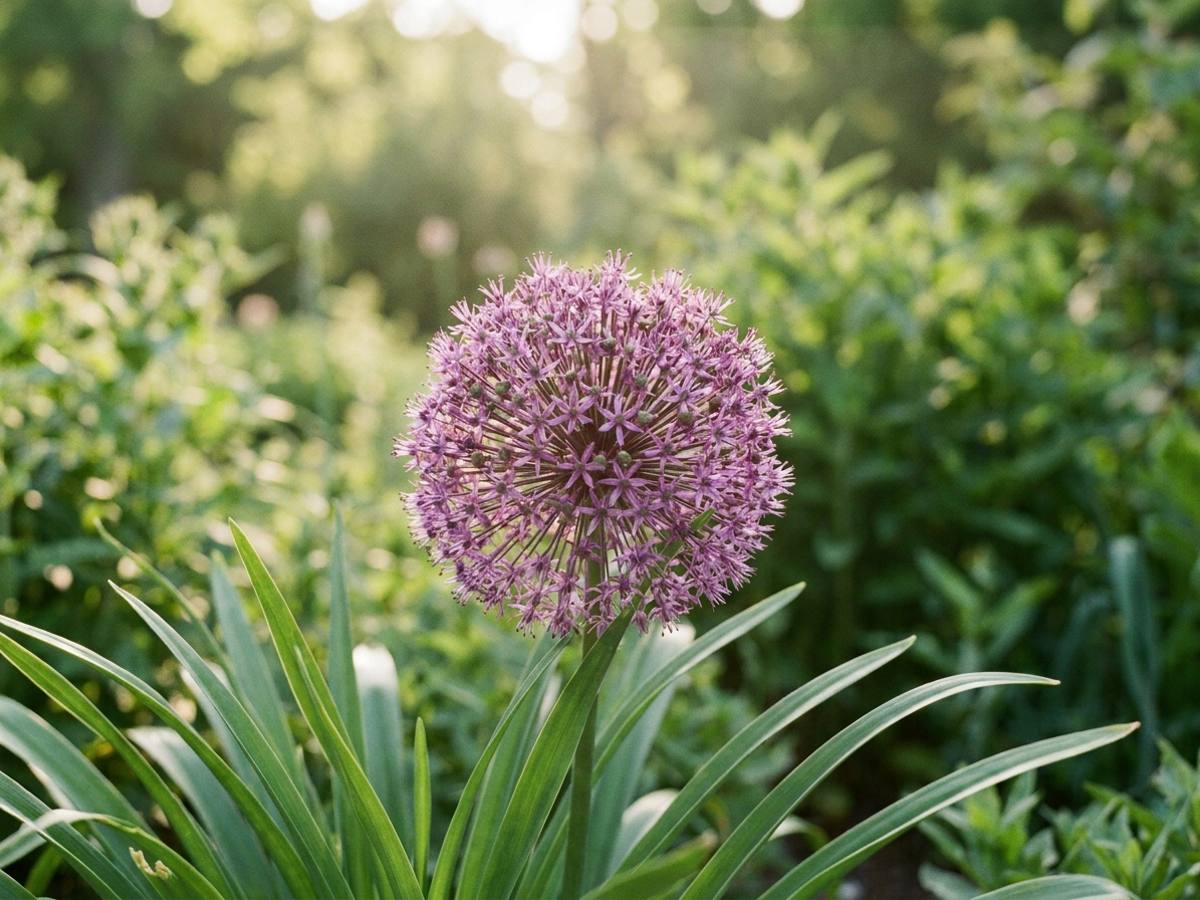
The globe itself measures 8–10cm across. Dense. Almost perfectly spherical. A rich lilac-purple that deepens towards the centre. It is proper bang on.
Hold one at eye level on a calm morning and you can hear the faint, high hum of pollinators working through 200-plus individual florets. That is not a metaphor. Stand close enough and it is properly audible.
Stems reach 80–90cm, stiff and blue-green, shooting up cleanly above neighbouring perennials. The giant onion Allium giganteum shoots higher, but ‘Gladiator’ hits the sweet spot — tall enough to arch over roses and salvias, compact enough not to need staking.
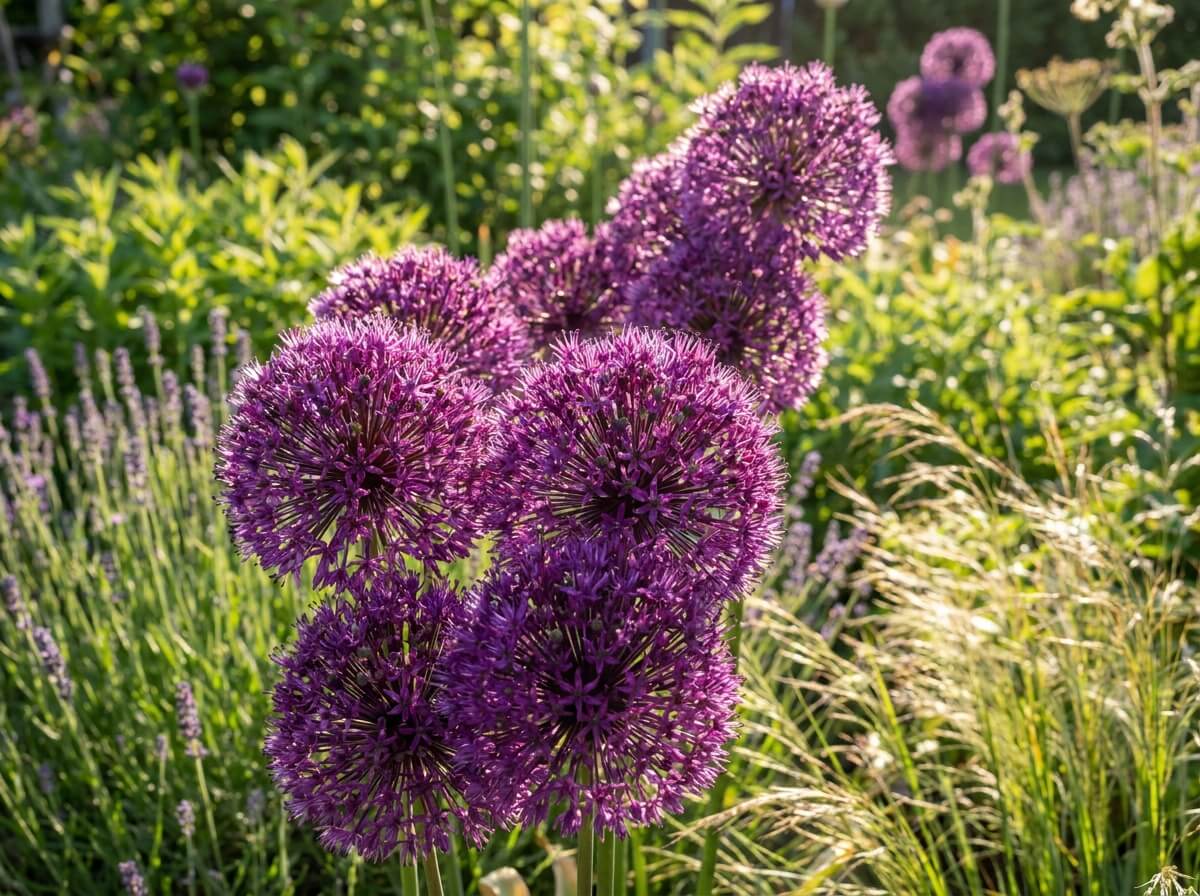
Plant ‘Gladiator’ in groups. Seven minimum. Do not compromise.
Fewer than that and you get punctuation where you wanted fireworks.
The foliage dies back before flowering — a quirk shared by most ornamental alliums. So place bulbs behind perennials that will fill the gap. Geraniums, nepeta, and low salvias all work beautifully.
The globe floats above the foliage cover with no visual mess below.
The colour combination with summer-flowering bulbs planted for a colourful garden demands deliberate planning. ‘Gladiator’ bridges the gap between late spring and midsummer with authority.
This is where most gardeners get it wrong. Sorted.
The temptation to deadhead once the colour fades is understandable. Resist it. The spherical seedheads of ‘Gladiator’ dry to a burnished silver-bronze and hold their shape for weeks — sometimes right into September. The RHS confirms that allium seedheads provide genuine structural value in the late-summer garden, and ‘Gladiator’ is among the best performers in this regard.
Cut the stems only once the seedhead begins to shatter. Then save them for dried arrangements — they last indoors for months without losing their form.
Never pull off the foliage while it is still green. But ugly as it is, that dying leaf mass is actively nourishing the bulb for next year’s bloom. Let it yellow and collapse naturally. Then clear it away. Lift and divide clumps every three to four years when flowering begins to diminish. Just as you would tend to lifting and storing spring bulbs to maintain their performance, alliums reward the same seasonal attention.
Bulb size determines everything. Go for bulbs with a circumference of 18cm or more — sometimes labelled as “top size” in specialist catalogues.
Smaller bulbs bloom, but weakly, on shorter stems with smaller globes.
Order from specialist bulb suppliers rather than supermarket racks. The thing is, Dutch bulb suppliers grading their stock by circumference offer proper control over the quality of next summer’s display. And order more than you think you need. Every gardener who cultivates ‘Gladiator’ once doubles or triples the quantity the following autumn. That is not an accident.
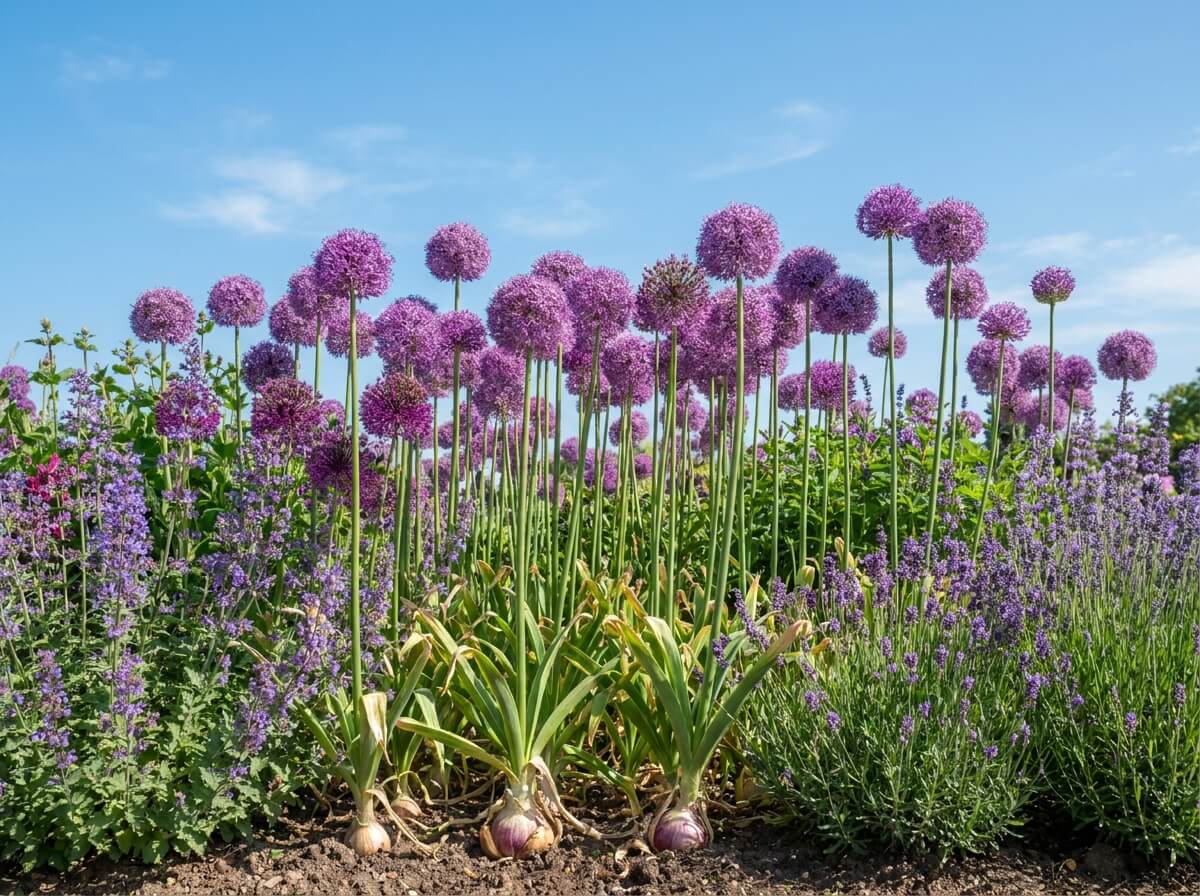
Smart tip: Plant ‘Gladiator’ bulbs at 15cm depth in groups of at least seven for maximum visual impact next summer.
Yes, in containers at least 30cm deep and wide, with sharp drainage added to the compost. Anticipate slightly shorter stems — around 70cm — but the globes remain full size.
Almost always a dodgy bulb-size snag. Bulbs under 14cm circumference simply do not have enough stored energy to produce a fully packed globe.
Upgrade to top-size bulbs next planting season.
Rarely. The sulfur compounds that give alliums their onion scent make them strongly unappealing to deer and rabbits — one of the genuinely reliable deer-resistant bulbs for open gardens.
In the Northern Hemisphere, anticipate flowers from late May through to mid-July depending on your location and that year’s temperatures — typically peaking in June and holding well into the summer heatwave period. Southern Hemisphere gardeners: this applies to your November through January.