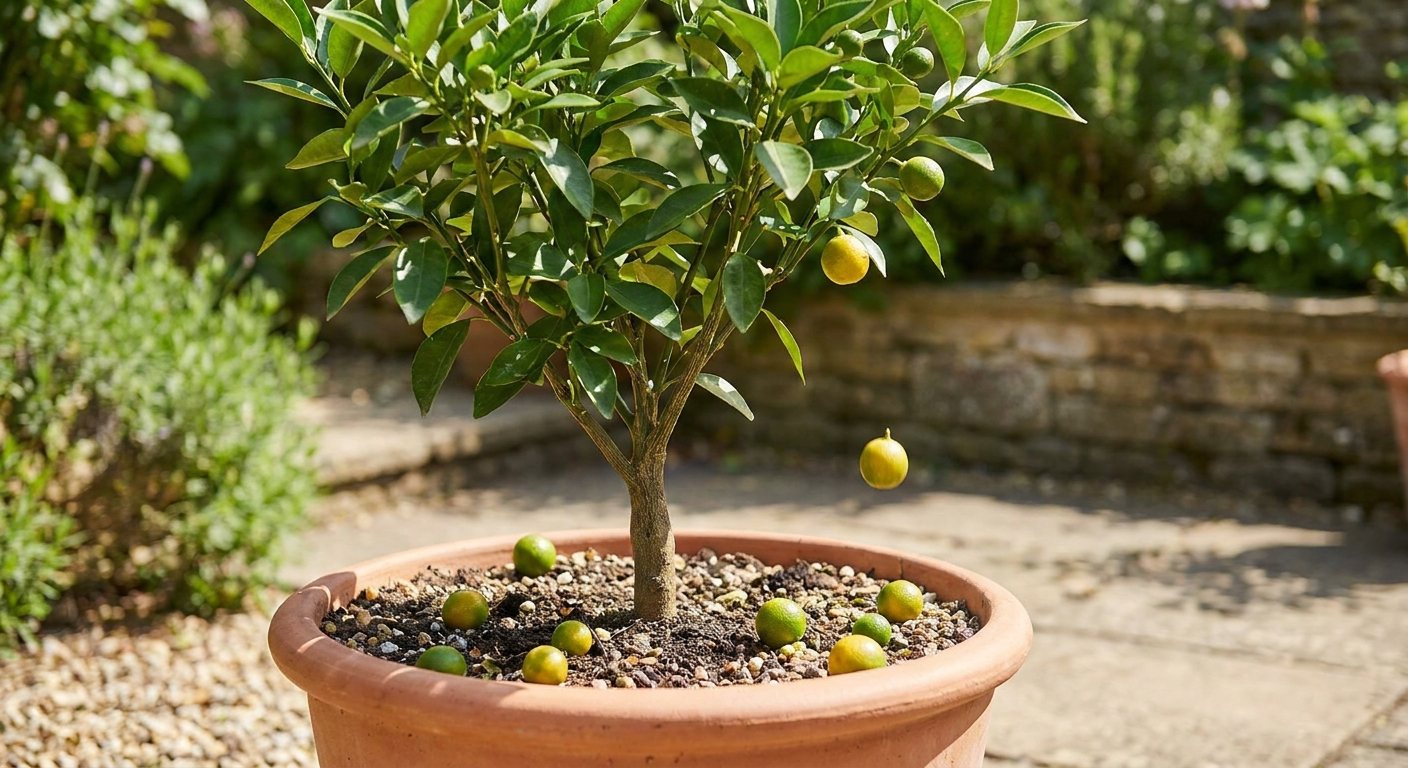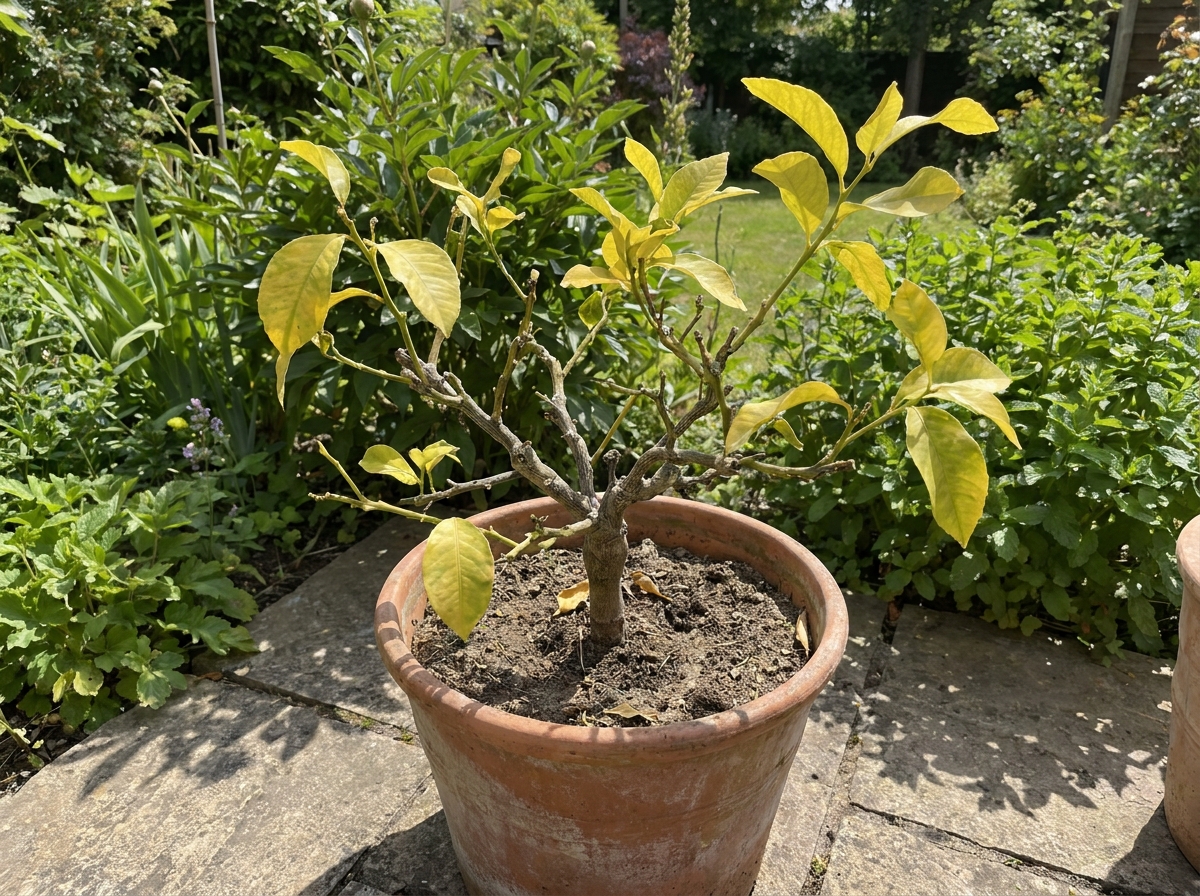
So, your lemon tree made it through winter, you’ve moved it back outside this spring, and now—nothing. The same three leaves. Not a single new shoot. Maybe there’s a faint yellowing creeping in too. June should be peak growing season for citrus in the Northern Hemisphere, but a lemon tree that just… stops? It’s usually trying to tell you one of four things. The good news: it’s almost certainly fixable. Like, right now. Today.
The most common culprit I see—and the one I’ve personally ignored for two seasons before accepting reality—is nitrogen starvation after it’s been cooped up indoors all winter. Pot-grown citrus really eat through their compost nutrients fast, and by June, whatever feed was in that mix? It’s long gone. The tree isn’t dying. It’s just on strike.
But it’s not always feed, you know? Other reasons growth stalls in early summer:
The weird detail that truly trips people up, though? Lemon trees can stall for up to six weeks after a temperature shock and won’t show almost any outward symptoms other than, well, frozen growth. They’ll look fine. But they’re definitely not chuffed about it.
Honestly? Not yet, but the window really matters. A lemon tree that isn’t growing in June? It’s losing its best weeks of the year. Citrus set their growth energy in late spring and early summer; miss this window, and you’re essentially asking the tree to catch up in shorter, cooler days. If you don’t do anything for another month—say, till mid-July—you’re risking going into autumn with underdeveloped wood, no new fruiting shoots, and a tree that’s just weaker entering next winter.
Root-bound plants are the exception, though—those need action, like, yesterday, definitely this week, not about three weeks from now. A lemon tree trying to grow in a pot it’s outgrown will just slowly deteriorate, and repotting in high summer heat is always harder on the tree than doing it now in early June, especially when it’s hitting 28°C.
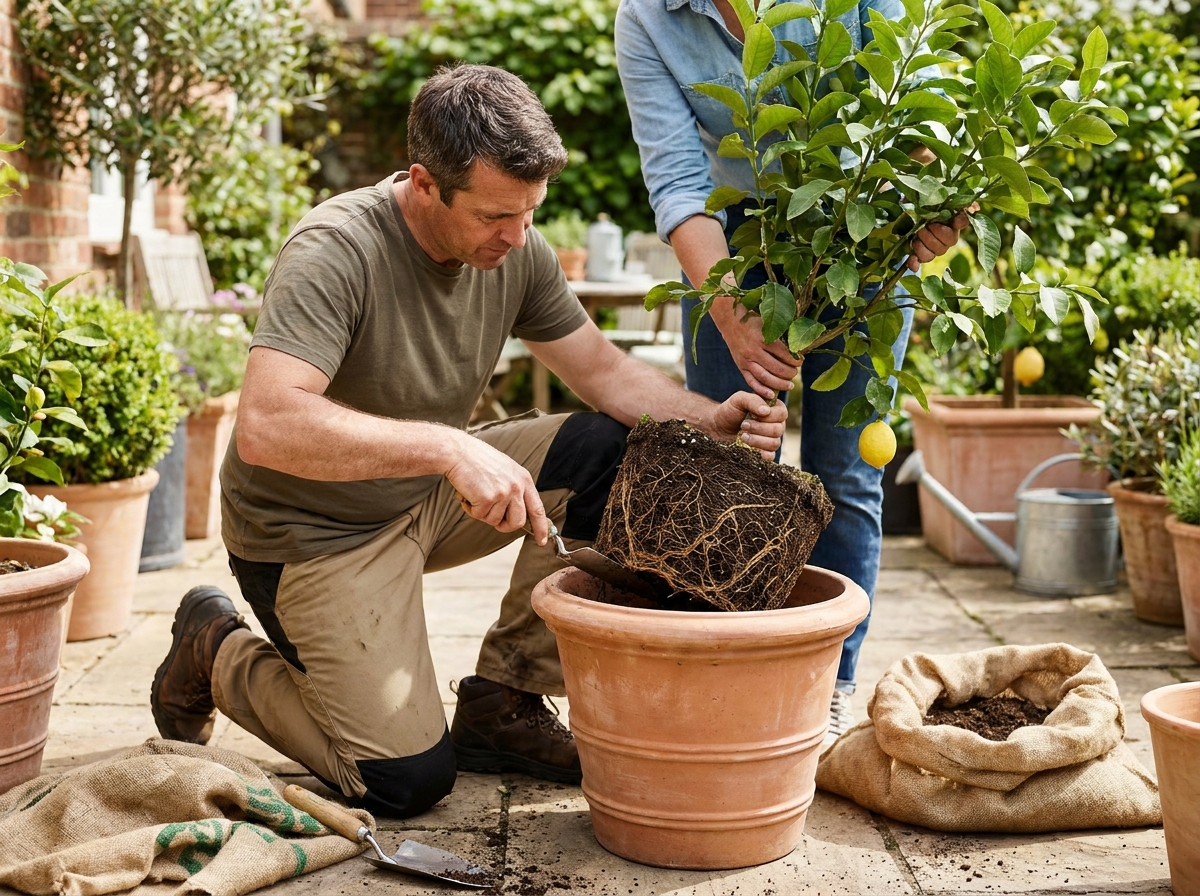
First: lift the pot and just look at the base. If roots are spiralling out of the drainage holes, you’ve got to repot immediately into a container one size up (no bigger—citrus absolutely hate swimming in excess compost). Use a free-draining citrus or loam-based mix.
If the pot size is fine, well, you’d better start feeding today:
In my garden, the trick that actually works is bottom-watering a pot-grown lemon once a week in addition to regular top watering. It encourages deep root growth and stops that surface-wet-but-dry-underneath problem that’s more common than anyone admits—wait, that’s not quite right—it really makes a huge difference. For more detailed care advice by variety, you’ll find the guide to lemon tree care covers feeding schedules and pot size in depth.
A stalled lemon tree that doesn’t respond to feeding and repotting within, say, 21 days needs a closer look. Watch out for:
And according to the RHS citrus growing guide, container-grown citrus should be producing new flushes of growth from May through August in the UK—if yours isn’t, the cause is almost always nutrition, roots, or temperature shock. It just is.
Southern Hemisphere gardeners: this applies to your December and January—that’s your peak summer growing window. You’ll find the same stalling signs appear at the same stage of the season.
Smart tip: Always water your lemon tree before feeding—dry roots’ll burn, and a stressed tree just can’t absorb nutrients anyway.
Lift the pot and check the drainage holes—if roots are visibly circling or pushing through, it’s definitely time to move up a pot size. Inside the pot, roots wrapping tightly around the edge confirm the same thing. You’ll see it.
Citrus-specific feeds are genuinely worth it, believe me—they’ve got the right ratio of nitrogen plus trace elements like magnesium and iron that general feeds skip. Using a general-purpose feed in summer often just delays growth rather than fixing it. It’s not worth the faff.
New growth naturally emerges pale, but it should green up within two to three weeks. If it stays yellow, you’re looking at an iron or magnesium deficiency—super common in pot-grown citrus, and it’s easy to correct with a chelated iron supplement like a dose of Growth Technology’s Citrus Focus. The four-seasons lemon tree guide covers this deficiency pattern specifically.
Not aggressively, no way. Light tip pruning to remove dead or crossing stems? That’s fine, but heavy pruning a stressed tree just diverts its limited energy into wound repair rather than new growth. Fix the root cause first, then prune later in late summer once the tree’s actively shooting again.