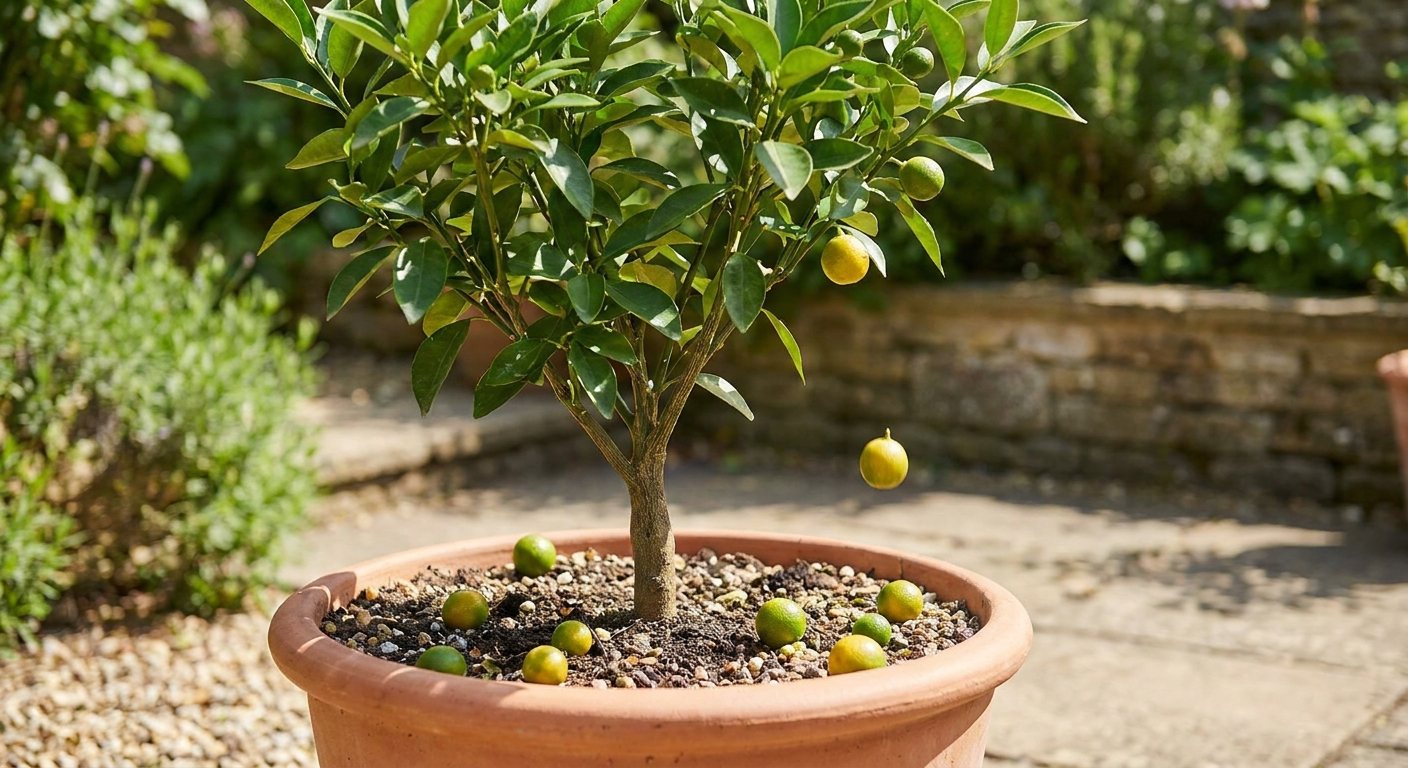
Your orange tree bloomed beautifully, set what looked like a promising crop — and now the tiny fruitlets are hitting the ground one by one. Frustrating doesn’t even cover it. Here’s the short answer: this is almost always the tree deciding it’s taken on more fruit than it can support. It’s a survival mechanism, not a failure. But there are things you’re probably doing — or not doing — that are making it far worse than it needs to be.
Orange trees are brutally practical. After the initial fruit set, they go through what’s called “June drop” — a natural thinning where the tree aborts fruitlets it can’t feed to maturity. This is normal. A single orange requires a surprising amount of resources: some researchers at UC ANR’s citrus programme estimate that a mature orange tree genuinely needs 50 to 70 healthy leaves per fruit to fully ripen it. Let that sink in for a second.
But natural drop becomes excessive drop when stress layers on top of it. The usual culprits right now:
I’ve killed two container oranges before I figured out that the watering was the real villain. Not underwatering exactly — wait, that’s not quite right — inconsistency. Citrus hates feast-and-famine more than almost anything.
Honestly? Mild to moderate drop in June: not dangerous. The tree is doing what it evolved to do. An orange tree that drops 60–70% of its initial fruitlets and retains a decent crop is behaving perfectly normally. What concerns me — and what you should watch for — is total fruitlet loss, where nothing remains by mid-July. A true emergency. That’s the tree telling you something has gone genuinely wrong at the root level, or that a nutrient deficiency has reached crisis point. If you’re also seeing yellowing leaves, stunted new growth, or the remaining fruitlets look pale and pinched, this has moved beyond normal thinning into a real problem. Check out why citrus trees drop fruit in June for the broader picture across species — the mechanisms are very similar.
Right now, in June, your job is to reduce every source of stress you can control:
So, for more on managing a container orange specifically, orange tree container gardening covers the full picture — pot size, soil mix, and overwintering.
Southern Hemisphere gardeners: this applies to your December–January period, when your orange trees are hitting peak summer stress.
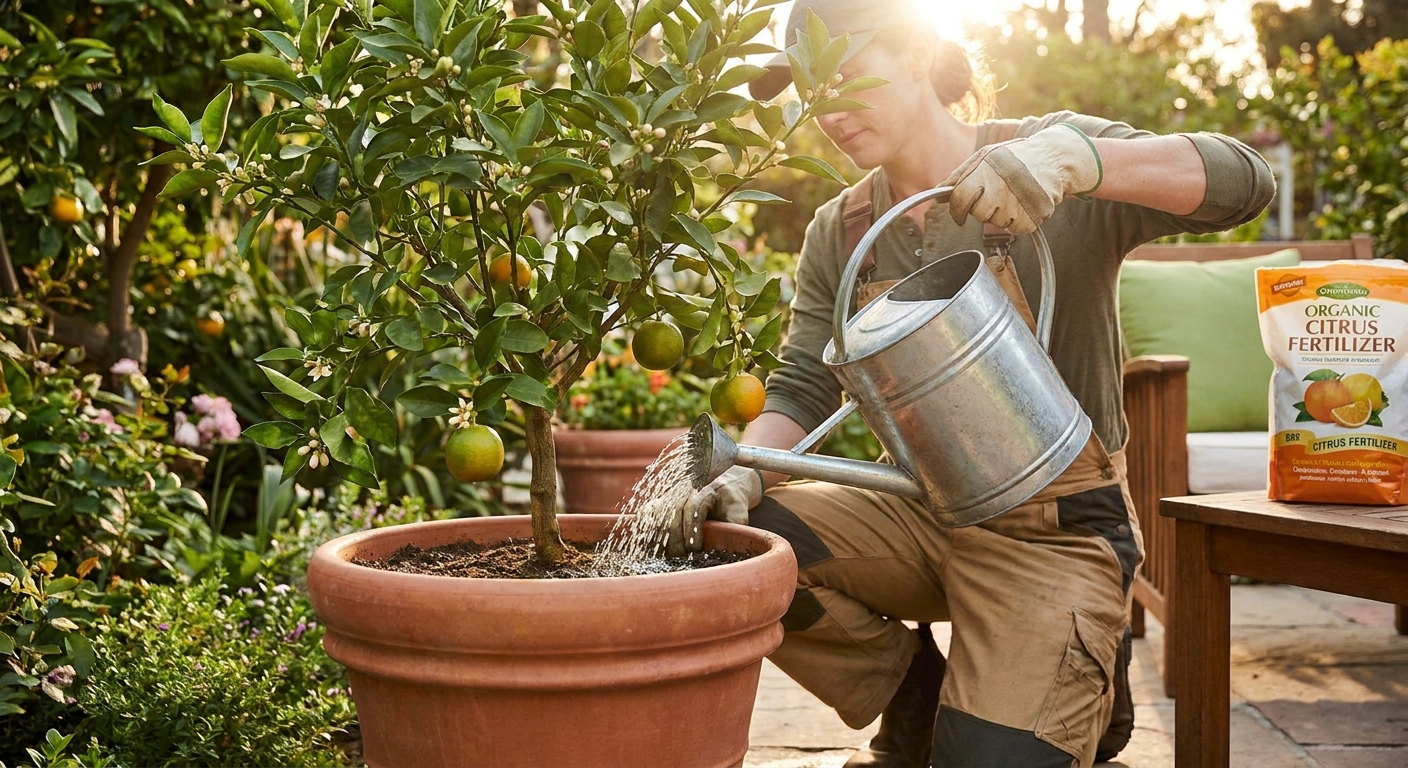
Smart tip: Consistent watering matters more than any fertiliser — get that sorted first, everything else second.
Losing 50–70% of the initial fruit set? That’s completely normal — this is the tree self-thinning to what it can genuinely support. But concern really starts when the drop continues past mid-July or strips the tree entirely. It’s a worry.
For container trees, absolutely, yes — thinning to leave fruitlets about 15cm (6 inches) apart reduces competition and helps the tree invest in fewer, larger fruits. But don’t thin until after natural June drop slows. Doing it earlier just means you’re doing extra work for nothing. Hand-thinning too early doesn’t work. Full stop.
Oh, absolutely. Waterlogged roots just can’t absorb nutrients properly, and the tree responds by aborting fruit to reduce its load. Soggy compost that never fully dries is one of the most common causes of excessive drop in potted citrus. Always, always ensure your pot drains freely. You’ll regret it otherwise.
Some orange varieties, especially in warmer climates, can attempt a second flush if conditions improve quickly enough, say within 11 days. But most just won’t rebloom until next season. So, focus now on building a healthy tree for next year’s crop — good feeding, consistent water, and a solid pot check before autumn hits.