The timing of pruning flowering shrubs is one of the most non-negotiable decisions in the garden. Most people get it wrong by weeks, sometimes even months. Prune too late after flowering and you cut off next year’s buds before they form. Prune too early and you shorten this year’s display. This is bang on where the line sits. Here is what to do with the shrubs that are finishing up their flowers right now.
Flowering shrubs fall into two hard categories. Those that bloom on old wood — growth made last year — need pruning immediately after they finish flowering. This gives the plant the whole season ahead to produce the wood that carries next year’s buds. Wait until autumn (fall) or winter, and you are cutting off everything the plant just built. That is a proper gardening gaffe.
The shrubs finishing up right now — Weigela, Philadelphus (mock orange), Deutzia, Kolkwitzia — all bloom on old wood, a critical distinction for a vibrant display. That intoxicating mock orange scent fading in the garden this week?
The moment those flowers drop is your signal. You have roughly a 3-to-4-week window to get the job done properly.
And yes, this applies the same way to a well-established hedge built from these species. Do not treat a hedged Weigela like a formal box hedge. Do not clip it in late summer.
You will strip it of buds. A disastrous issue.
Nothing visible. That is the trap.
The shrub looks fine through late summer, autumn, and even winter. There is no yellowing. No dieback. No obvious complaint to flag up a coming issue.
So, next spring arrives. The whole plant sits there, dense and leafy and completely flowerless, an uninspiring sight. By then, the cause — that autumn prune — is nine months in the past. It becomes impossible to connect to the symptom without knowing the intricate mechanism at play.
The RHS pruning guide is explicit: shrubs that flower before midsummer on the previous year’s growth must be pruned after flowering, not during the dormant season. This is non-negotiable. Do it right or endure years of a flowerless plant that seems a bit much in the garden.
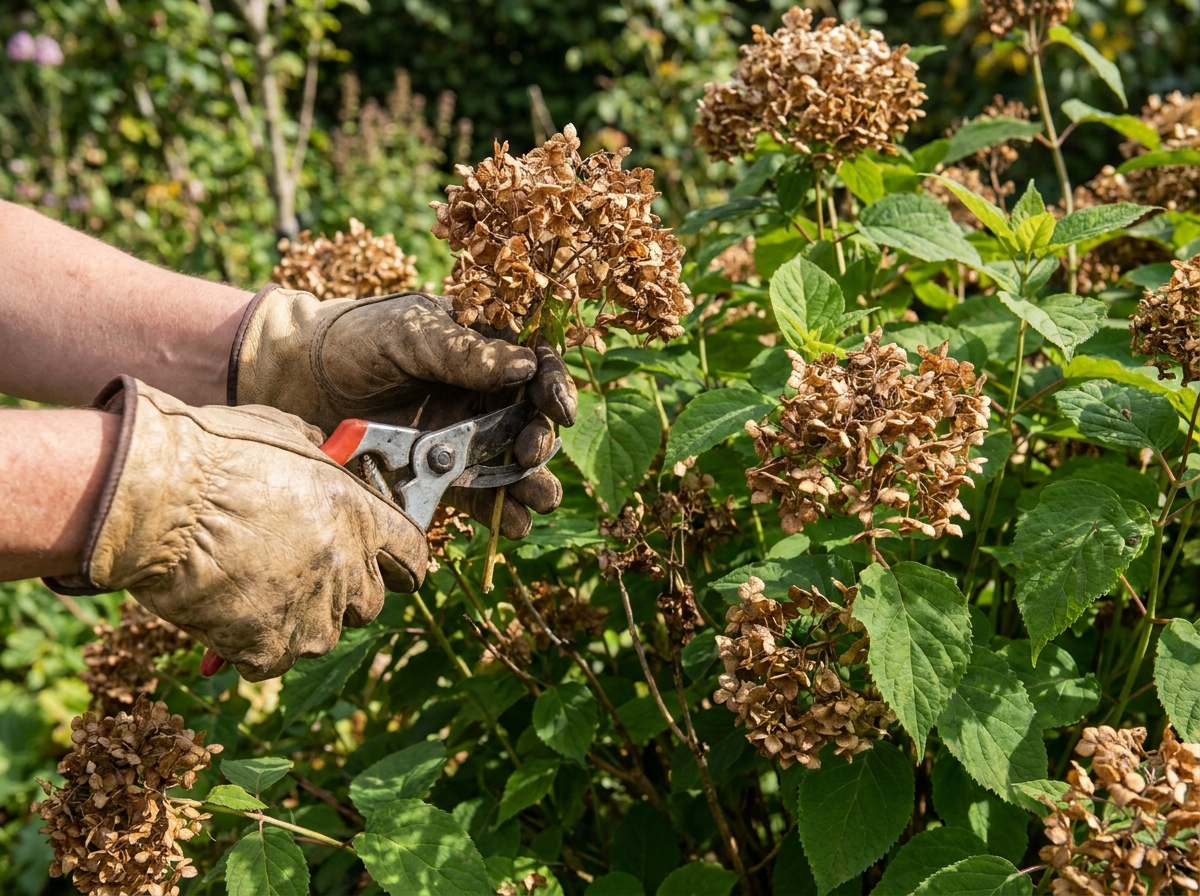
Sharp, clean secateurs are non-negotiable. A blunt blade crushes the stem instead of cutting it. And crushed wood can turn necrotic within 5 to 7 days in summer heat, making future issues a proper certainty.
Wipe blades with diluted bleach (1 part to 9 parts water) between shrubs. Especially if any show signs of dieback.
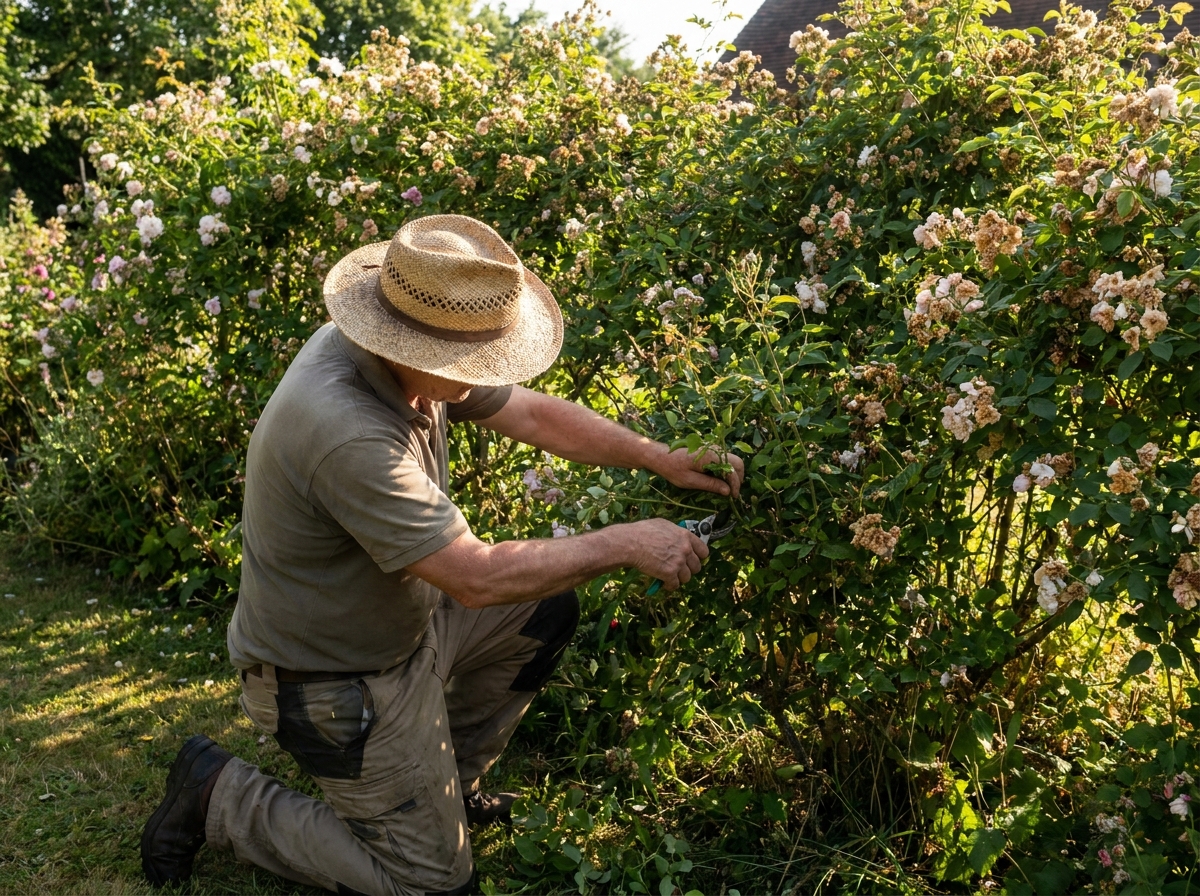
Cut each flowered stem back to a strong outward-facing bud or a vigorous young side shoot lower down. Angle the cut at roughly 45 degrees, sloping away from the bud. Precision matters.
Do not leave a stub longer than about 5mm above the bud. Stubs die back. And that dieback can continue into live tissue, causing widespread damage.
The thing is, for Buddleja, the rules differ completely. It blooms on this year’s new wood. So hard pruning goes in early spring, not now. Deadhead the current flower spikes only — snip just below the faded cone — to push a second flush before summer ends. It works wonders.
If you shoot up common myrtle, light trimming after its summer flowering keeps shape without sacrificing next year’s display. Same principle. Same timing. It is simple to get it sorted.
Formal hedges made from common laurel are a different matter entirely. Laurel does not flower ornamentally, so hedge shaping is driven by growth rate, not flowering wood. Clip it now for a clean line through summer. Then once more in early autumn, just to keep it tidy.
Watch for any hedging shrubs showing dieback on individual branches after pruning. A clean brown streak running down from the cut point suggests fungal entry. Recut 10 to 15cm below the visible damage, back into clean white wood. But be warned: the University of Minnesota Extension notes that most post-pruning fungal issues in shrubs are preventable with clean cuts and dry conditions at pruning time. So prune in the morning. When the air is drier. Stems then seal faster, helping avoid any dodgy issues later on.
Southern Hemisphere gardeners: this guidance applies to your December–January period. That is when your own summer-flowering shrubs are finishing up. Adjust your calendars accordingly.
Smart tip: When you smell mock orange fading, reach for your secateurs. That scent is your countdown clock. It will save you much frustration.
Not if they bloom on old wood. You will strip away every bud they just built. Wait until immediately after flowering. Which for most summer shrubs means right now.
Weigela tolerates hard renovation pruning well. You can clear away up to one-third of the woodiest stems entirely at the base without stressing the plant. Just do it in the 3–4 weeks after flowering ends. This will ensure proper recovery.
No. It is not too late. Start renewal pruning now by pulling off the oldest, woodiest stems at ground level. Clear no more than one in three this year.
The plant will re-energise over 2 to 3 seasons. Patience is key for this journey.
For shrubs that rebloom (like Buddleja), deadheading triggers a second flush. This counts as light pruning. For single-flush shrubs, deadheading is purely cosmetic. The structural pruning still needs to happen below the spent flowers, a vital step.