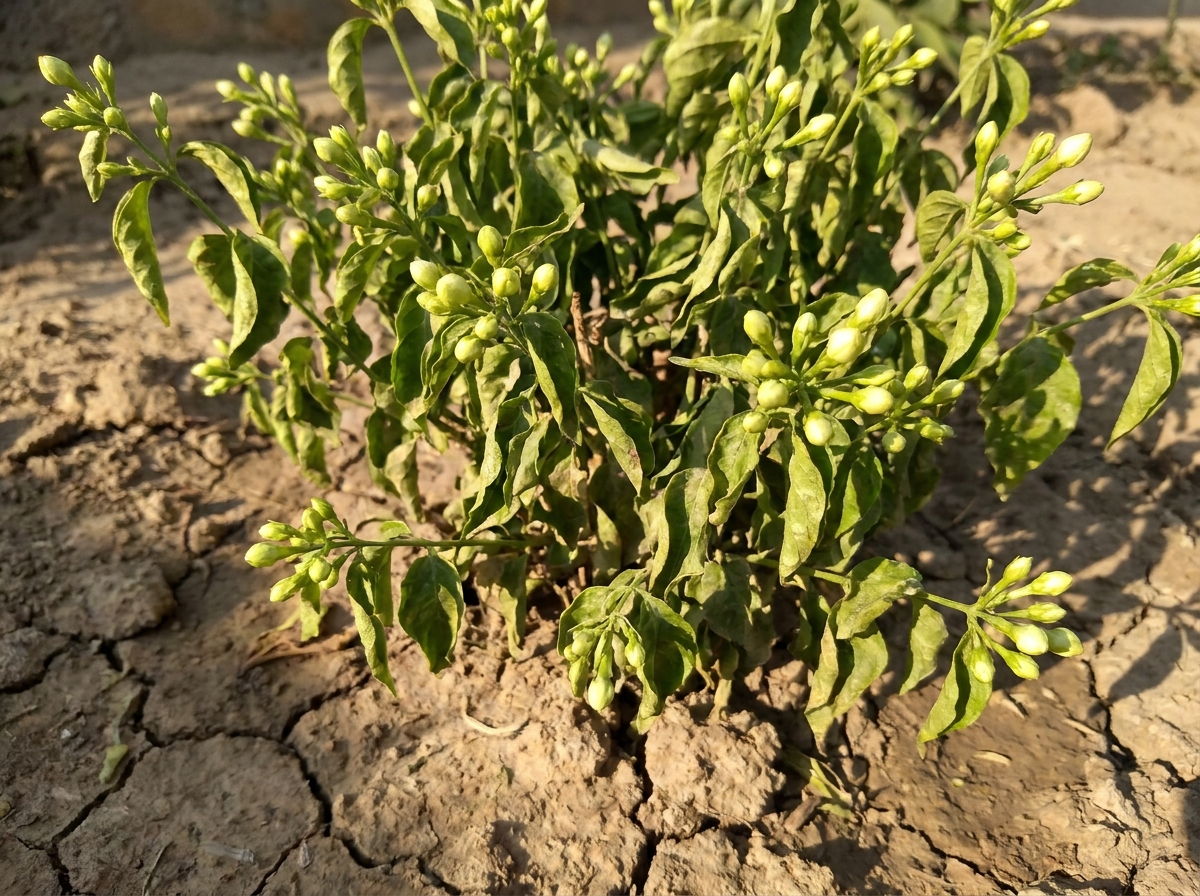
Your jasmine’s covered in green, its stems are going everywhere, it smells faintly of nothing — and there isn’t a single flower. It’s June, it’s warm, everything looks fine.
And yet. The real reasons your jasmine won’t bloom in summer are almost never what gardeners guess, and most of ’em are entirely fixable once you know where to look.
The single most common culprit? You’ve pruned it at the wrong time. Common jasmine (Jasminum officinale) blooms on growth it made last year. So, if you trimmed it back in late spring — even lightly — you’ve simply removed the very stems that were about to flower. Gone. Pruning jasmine in April or May is the number one reason it won’t bloom in June. The RHS is absolutely clear on this: prune after flowering, not before. Period.
The second reason? That one really surprises people. Too much nitrogen.
If you fed your jasmine with a general-purpose fertiliser this spring — especially one that’s heavy on nitrogen — you’ve basically told the plant, “Hey, put all your energy into leaves!” Lush, dark green, vigorously useless leaves. Just pointless.
Nitrogen grows foliage. Phosphorus? That’s what encourages roots and flowers.
It’s a simple equation most gardeners just completely ignore.
But there’s one more thing — actually, wait, that’s not quite right — summer drought stress can cause jasmine buds to form and then just sit there, green and tight, never opening. I’ve watched this happen on my own wall-trained jasmine for about three weeks in August.
Buds for about three weeks straight. Heat, no rain. Just stuck there.
Every single one dropped without opening. Infuriating stuff.
Mostly, no, it isn’t. A jasmine that isn’t flowering is usually just a healthy plant making a sensible decision. It’s trying to tell you something, really.
It’s not dying. It’s not diseased. Nope.
It’s just responding rationally to one or more of the conditions we’ve covered above.
But the exception? That’s if you’re also seeing yellowing leaves, sticky residue on stems, or tiny pale insects clustered on new growth — that’s definitely a pest problem, possibly aphids or spider mites under summer stress conditions, and that needs dealing with. And if your other flowering plants are struggling with pests right now, you’ll want to check out the article on aphids and the organic fix that actually works. It’s worth reading alongside this one.
Don’t prune it. Not even a tiny trim.
You’ll just push it further into leaf growth and you’ll guarantee no flowers until next year at the earliest. Seriously, step away from the secateurs!
Do this instead:
Look, I know switching to tomato feed on a flowering climber sounds a bit dodgy. Tomato feed doesn’t work on everything. Full stop.
I genuinely don’t know the exact mechanism beyond the basic phosphorus-potassium logic, but I’ve done it for 4 summers running and the difference by late July isn’t subtle at all. The flowers’ve got a sharper, almost heady sweetness at dusk when you’ve fed correctly — it’s completely different from a stressed, starved plant.
So, if your other summer plants are showing stress symptoms too, you’ll want to check whether your watering timing might be contributing — the summer watering mistakes that are quietly killing your plants right now covers several common patterns that affect climbers and shrubs together.
Once you’ve sorted out the feeding and watering, keep an eye out for new bud clusters forming at stem tips within about three weeks. That’s your confirmation the plant’s shifted back into flowering mode.
But if buds form but then drop before opening, that’s usually heat stress or erratic watering — specifically that maddening cycle of dry-then-soaked that totally confuses the plant’s bud development. Consistent, deep watering matters way more than frequent shallow watering.
According to the RHS jasmine growing guide, established plants that’re properly sited and fed should bloom reliably from June through September — so if yours isn’t, something specific’s off, and it’s almost always one of the causes we’ve just gone through.
And for you Southern Hemisphere gardeners: this all applies to your December and January too — your jasmine’s summer blooming window works on the exact same logic. It truly does.
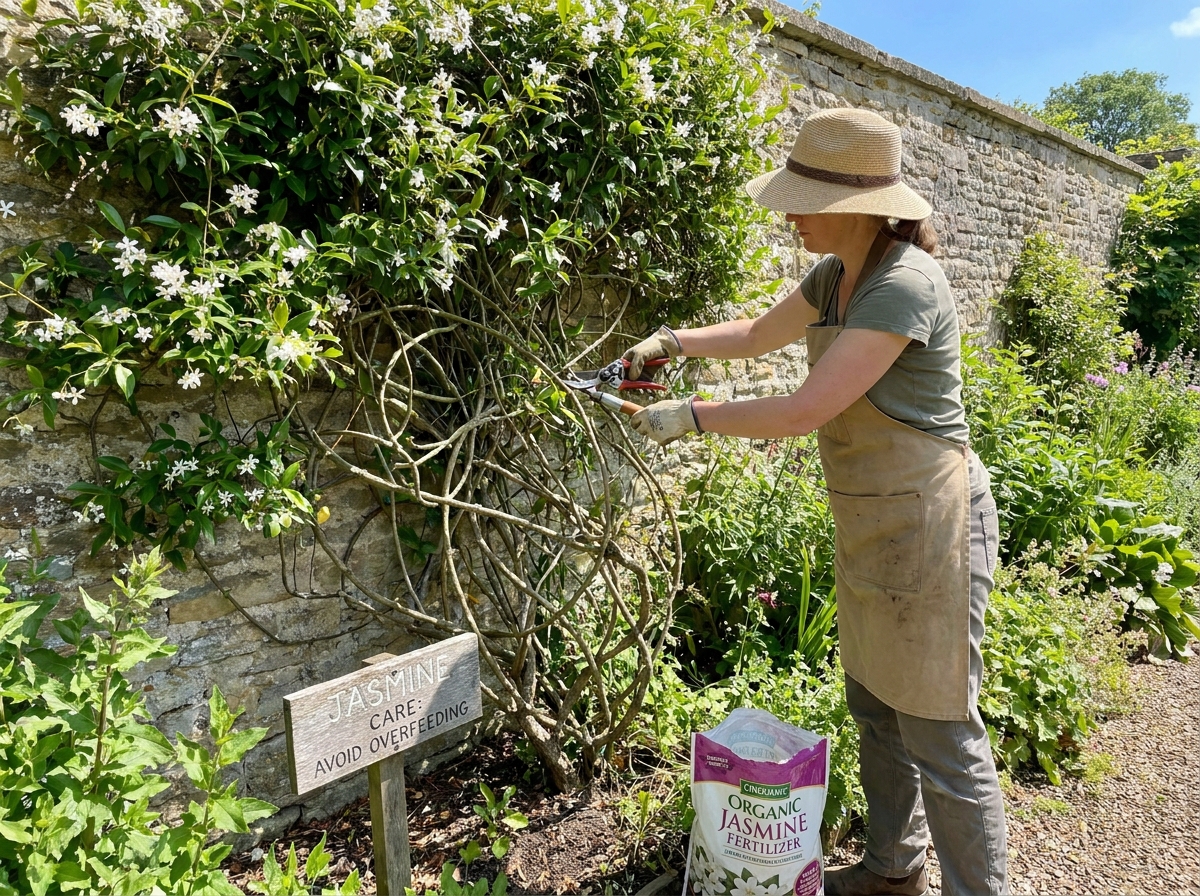
Smart tip: You’ve gotta switch to tomato feed (high potassium) in June — remember, nitrogen grows leaves, not flowers!
You’ll want to prune it immediately after flowering ends — that’s usually late summer or early autumn. Pruning in spring just removes the previous year’s growth that carries all the flower buds.
That’s typically heat stress combined with inconsistent watering. Water deeply at the base every 3 or 4 days during hot spells, and try to avoid wetting the foliage mid-afternoon.
Yes, absolutely! But pot-grown jasmine needs repotting every 2 or 3 years, and it’ll really benefit from a high-potassium liquid feed every 14 days through summer — root restriction and low nutrients are the two quickest ways to stop pot jasmine from flowering.
You should expect 3 to 6 weeks from correcting feed and watering before new buds finally appear — jasmine doesn’t respond overnight, but the turnaround’s pretty reliable if you’re consistent.