Rosemary is supposed to be indestructible. It comes from the sun-scorched cliffs of the Mediterranean, shrugs off drought, laughs at poor soil.
And yet, every summer, gardeners across the UK, USA, Australia and beyond watch their plants go brown, hollow and brittle from the inside out. The cause is rarely the heat itself.
It is almost always a combination of poor airflow, occasional overwatering and stems that have never been properly cut back — and summer is the moment when all three issues converge at once.
Rosemary handles high temperatures remarkably well — air temperatures up to 38°C cause no direct damage to a healthy plant. The issue is more subtle.
As temperatures climb, gardeners instinctively water more. Rosemary’s roots, sitting in soil that drains poorly or in a pot without adequate drainage holes, stay wet for days at a time.
Root rot sets in within a fortnight of consistently wet conditions.
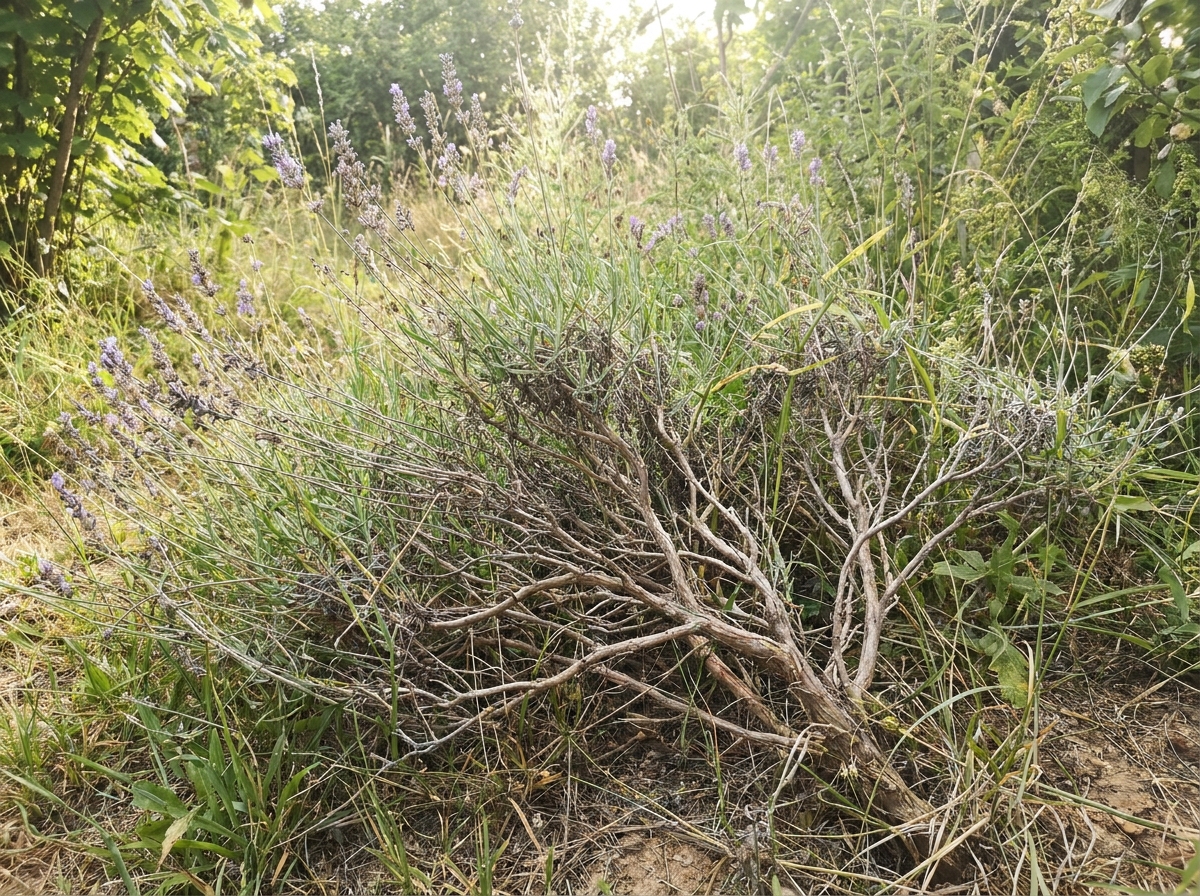
But that is not the whole story. At the same time, an unpruned rosemary bush becomes increasingly dense over the years. The interior fills with old, woody stems and dead needles. Air stops moving through the plant. Humidity builds up inside that tangle — and fungal infections find exactly the conditions they need to colonise the base of the shrub.
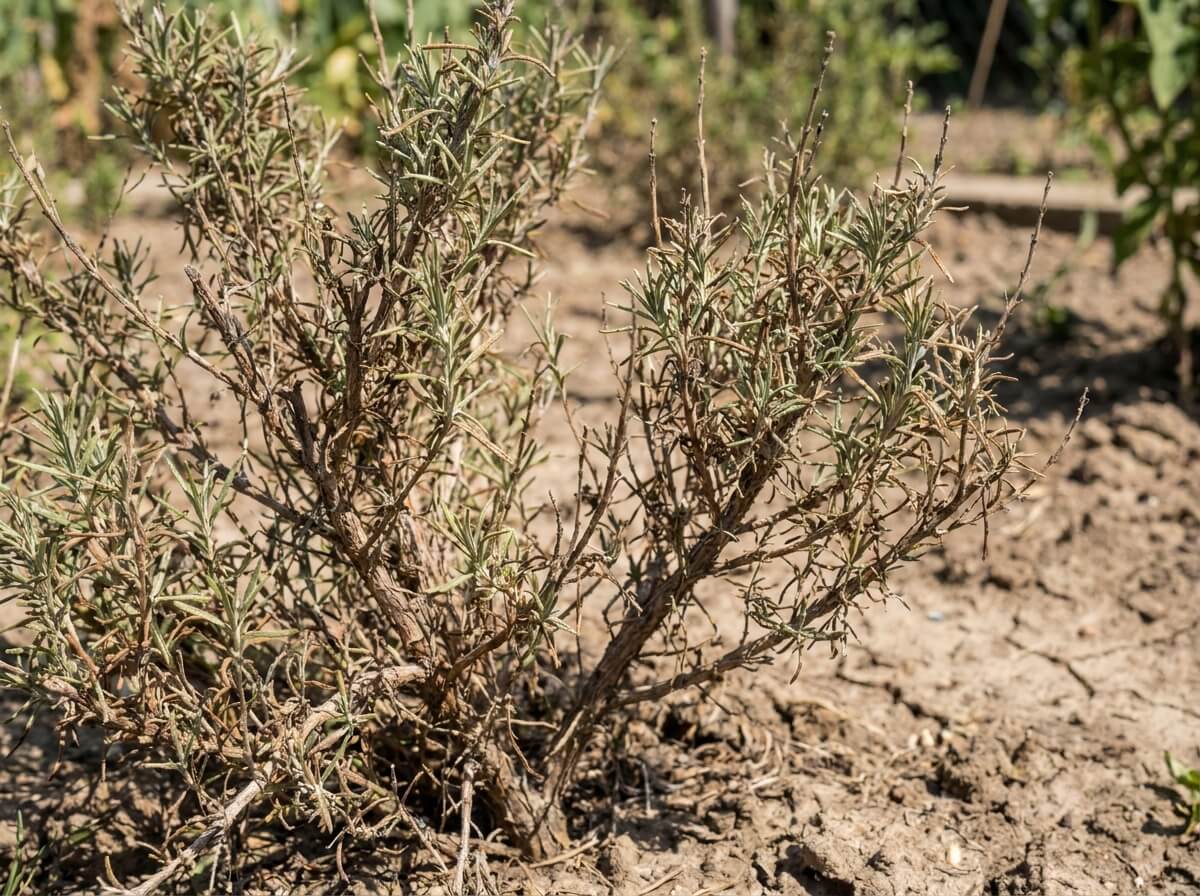
Compound heat and stagnant damp air, and you do not get a sun-stressed plant. You get a plant rotting quietly from the centre outward, which looks, from the outside, exactly like heat scorch.
The first sign most gardeners notice is browning tips. Stop there.
That alone means precious little — tip browning after flowering is completely normal. The signals that actually matter are deeper.
Push your hand into the centre of the bush. If the inner stems are dry, brittle and grey-brown all the way to the base, the plant has been losing ground for weeks.
Pull one of those inner stems gently. It should feel springy.
If it snaps like a dead twig with no resistance, that entire branch is gone.
Three warning signs that indicate serious stress:
Any one of these alone warrants immediate action. All three together, and you need to prune now — not next week.
The non-negotiable rule first: never cut into old, bare, brown wood. Unlike many shrubs, rosemary will not regenerate from stems that have no green growth. Cut past the green and that stem is gone permanently. This is not a forgiving plant for heavy-handed pruning.
What you need: a pair of clean, sharp bypass secateurs (Felco No.2 or equivalent), and about 20 minutes. Blunt blades crush stems rather than cutting them cleanly, and crushed stems are entry points for disease.
Work through the plant systematically:
The goal is not a tidy shape. The goal is airflow.
When you step back, you should be able to see light passing through the centre of the plant. That gap is not a flaw — it is exactly what saves the plant over the following weeks.
Yes, it looks dramatic immediately after cutting. Worth it. Do it anyway — the difference in recovery speed is night and day compared with leaving a congested plant to cook.
For rosemary growing alongside other drought-tolerant Mediterranean plants, the same principle applies across the border. See our guide on watering Mediterranean plants correctly in summer — the mistakes that stress rosemary are almost identical to those that damage cistus and lavender.
Potted rosemary suffers faster and more severely than its garden-grown counterparts. The reasons are straightforward.
A pot heats up from all sides. Roots hit the walls of the container and find no escape.
And many gardeners move pots against a sunny wall, where radiant heat off the stone or render adds another 5 to 8°C to the root zone temperature.
Before pruning a stressed container plant, check the drainage first. Tip the pot and look at the drainage holes.
If they are blocked or if water sits in a saucer underneath, fix that before you touch the stems — pruning a plant whose roots are waterlogged will not save it.
Repot if the roots are circling the base of the pot in thick coils. Move up one pot size, use a terracotta container rather than plastic (terracotta wicks excess moisture away from the root zone), and mix horticultural grit into your compost at a ratio of roughly 30% grit to 70% compost.
Prune after repotting, not before. The plant cannot deal with root disturbance and top-growth removal simultaneously.
During a heatwave, water rosemary less than you think you should. In the ground, an established plant (over two years old) needs water only when the top 5cm of soil is completely dry — roughly once every fortnight in the UK during a heat event, or every 6 to 7 days in a dry continental US summer.
In containers, water when the pot feels light when lifted, not on a schedule.
Never water overhead. Water sitting on the foliage and trapped in the dense needle mass creates the humid microclimate that fungal disease requires. Always water at the base, slowly, directing water to the root zone and nowhere else.
Early morning watering — between 6am and 8am — allows any splash on foliage to dry completely before temperatures peak. Watering at midday achieves nothing useful and evening watering leaves moisture sitting on the plant through the night, which is far more damaging than any afternoon sun.
According to the RHS’s rosemary growing guidance, established plants in well-drained soil rarely need supplemental watering at all in temperate UK summers — and overwatering is cited as the most common cause of plant failure.
A successfully pruned rosemary plant in reasonable health will show new growth pushing from below the cut points within 18 to 25 days. The new shoots emerge pale silver-green and soft, quite different from the mature grey-green of the older stems.
That colour difference is completely normal and temporary.
Do not feed immediately after summer pruning. The plant is redirecting energy into root recovery and new stem production — adding nitrogen at this point forces lush, soft growth that is highly susceptible to both aphids and fungal attack.
Wait until early autumn before applying any balanced, slow-release fertiliser.
The thing is, if no new growth appears after 30 days, scratch the bark on several stems with your thumbnail. Green or white tissue underneath means the stem is still alive and will eventually respond.
Brown, dry tissue with no moisture means that stem is genuinely dead. Pull it off and assess what proportion of the plant is viable before deciding whether to keep it.
Southern Hemisphere gardeners: this pruning approach applies to your late winter/early spring season, ahead of your main growing period. Avoid heavy pruning in your summer (December/January) unless plant health genuinely requires it.
The plants that sail through summer heat without drama are almost always the ones that get a light trim every year without fail — not a rescue prune every three years when things have gone wrong. The RHS recommends trimming rosemary immediately after flowering, removing roughly one-third of the current season’s growth and maintaining an open, airy shape throughout.
Three habits that prevent summer crisis:
Rosemary that is pruned regularly never becomes the congested, hollow-centred shrub that struggles in heat. The annual trim takes under five minutes per plant.
Reviving a neglected one takes the rest of the summer — if it survives at all.
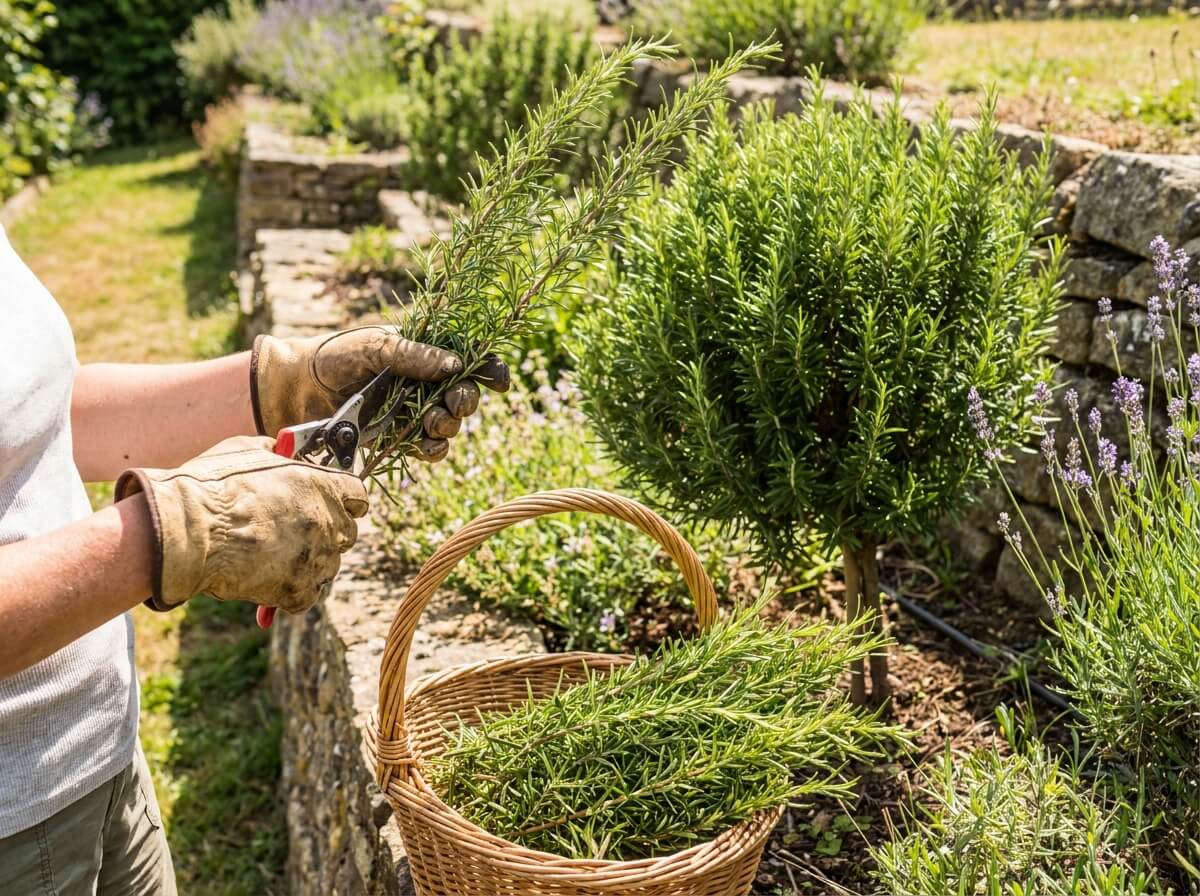
Smart tip: Always check for green tissue under the bark before pruning — it tells you exactly how far back to cut.
You can cut back up to one-third of each stem in summer, but never cut into old bare wood — rosemary will not regenerate from stems with no green growth present.
Dense, unpruned rosemary traps humidity inside the bush regardless of outside conditions, creating ideal conditions for fungal disease at the centre of the plant.
In the ground, water only when the top 5cm of soil is completely dry — roughly every 10 to 12 days in a temperate climate. In pots, water when the container feels noticeably light when lifted.
Scratch the bark with your thumbnail: green or white moist tissue means the stem is alive and will respond within 30 days. Completely brown, dry tissue throughout means that stem is lost.
No — wait until early autumn before feeding. Immediate post-pruning fertilising forces soft new growth that is highly vulnerable to pest damage and fungal infection.