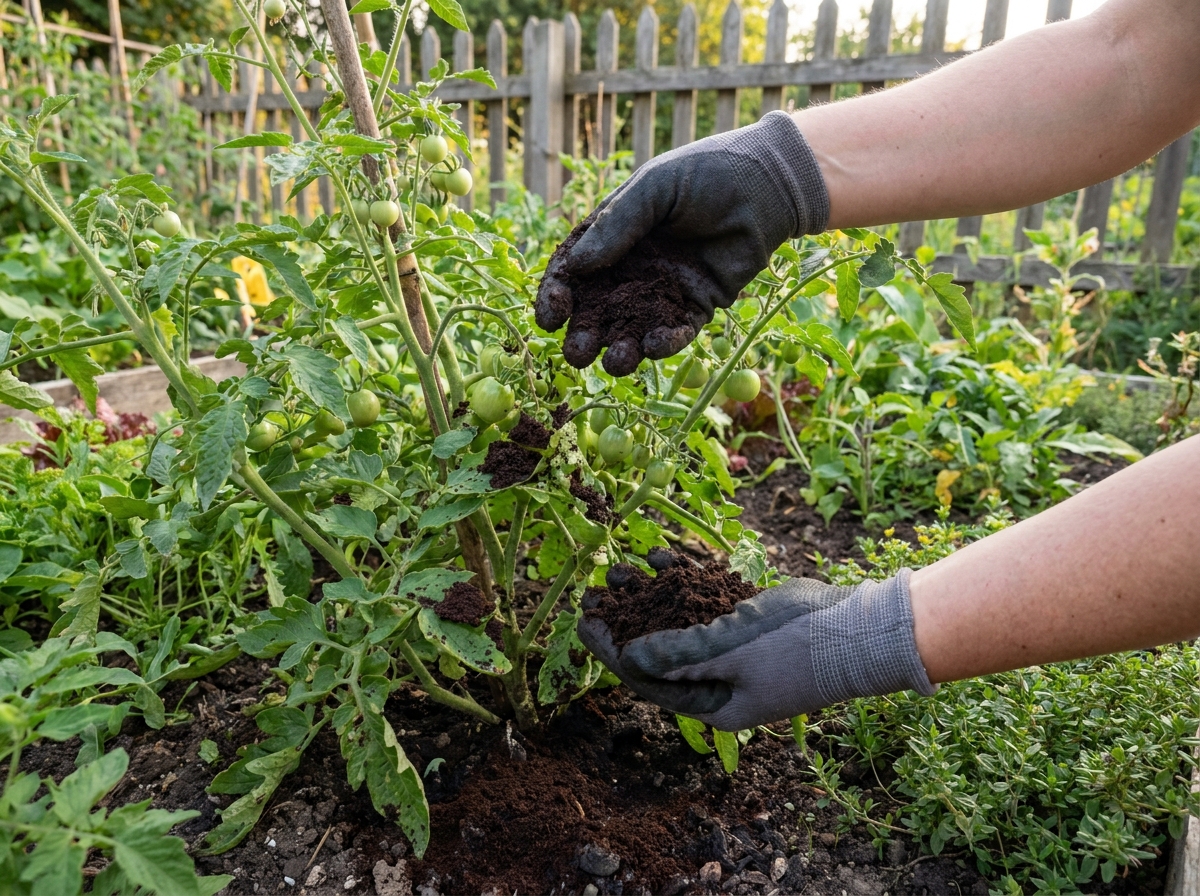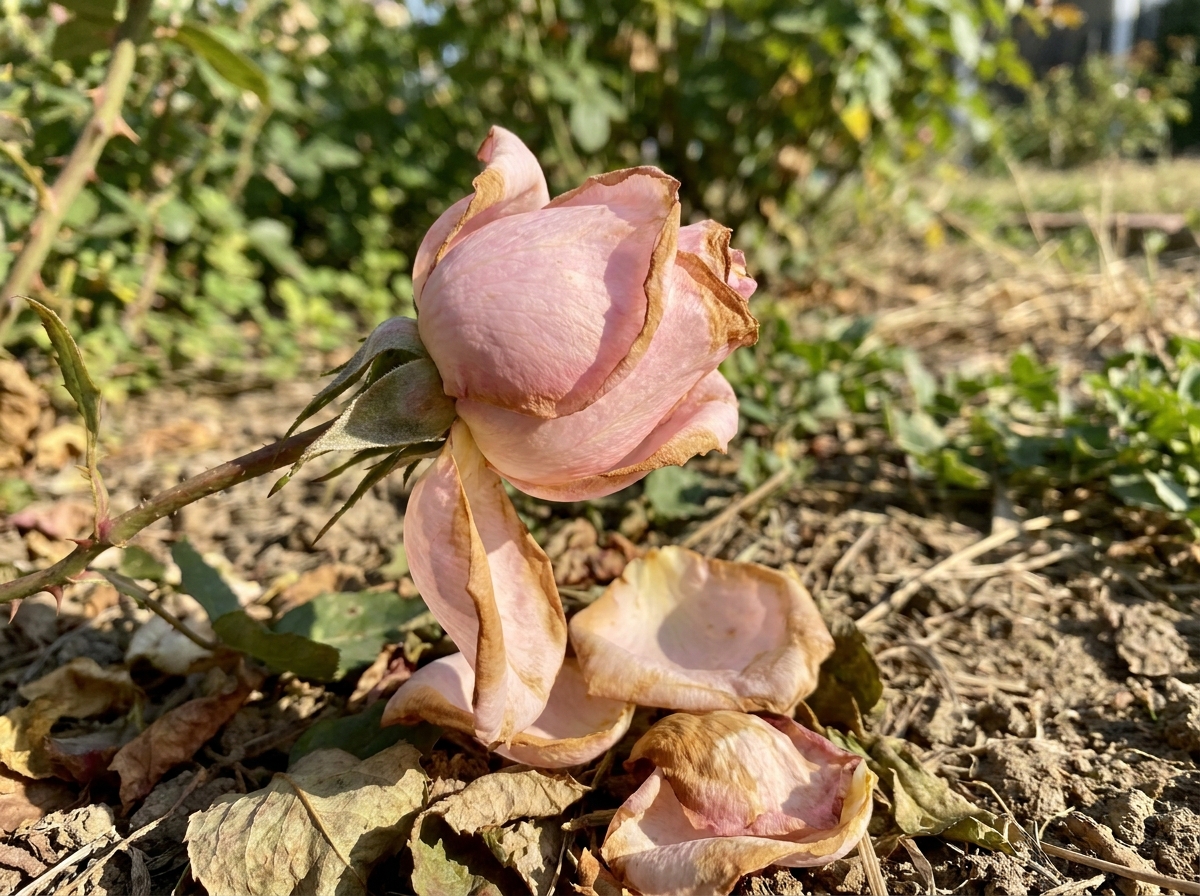
Coffee grounds on roses: a tip that sounds almost too good to be true. And partially it is. The grounds do contain nitrogen and can improve soil structure in your garden.
But most gardeners apply them wrong. They dump them on directly, in thick, impenetrable layers, leading to compacted soil, the wrong pH, and thoroughly confused roses. So here is what actually works. And what to skip.
Spent coffee grounds are roughly 2% nitrogen by weight, containing plus small amounts of potassium and phosphorus. That is a real, if modest, nutrient profile. Do not underestimate its subtle power.
Roses are hungry plants. They will shoot up new, vigorous canes and deepen leaf colour with proper nitrogen.
The thing is, the pH question is where much advice gets a bit dodgy. Fresh brewed grounds sit at around pH 6.0 to 6.8 – surprisingly close to neutral.
Roses prefer pH 6.0 to 6.5. You are not dramatically acidifying the soil simply by adding grounds. You are nudging it, certainly; sometimes far too much if applications are heavy over months.
Research from Oregon State University Extension states that coffee grounds are best treated as a soil amendment. Not as a fertiliser. The nitrogen is slow-release. Results will take time.
The issue is not the grounds themselves. It is the layer. Make no mistake.
A thick crust of coffee grounds, anything over 1cm deep, compacts as it dries. It forms a near-waterproof mat on the soil surface. Water beads straight off. Terrible for absorption.
Oxygen can not get through that crust. The roots beneath start suffocating slowly. You will see it first as wilting on hot afternoons, even when the soil below is properly damp.
Piling grounds directly against the crown or base canes creates a second, more sinister issue. That damp, dense material holds moisture against the wood through warm nights. And crown rot can establish within a single season – silently, invisibly, until an entire cane collapses without warning.
Forget the pest deterrent claim. There is utterly no evidence it works. The idea that coffee grounds repel slugs is, frankly, unproven. A 2002 study found that caffeine solutions at lab concentration deterred slugs. But the caffeine in spent grounds is far too dilute to replicate that effect outdoors. If slugs are your concern, there are far more reliable methods covered in our guide on safer slug control for gardens with pets. Do not bother with grounds for slugs.
Compost them first. A fortnight, perhaps three weeks, in a compost heap or bin does wonders for their structure. It neutralises the pH almost completely and breaks down enough to prevent compaction.
That earthy, damp smell when composted grounds are ready is unmistakable. It is nothing like fresh coffee; almost like a proper forest floor scent.
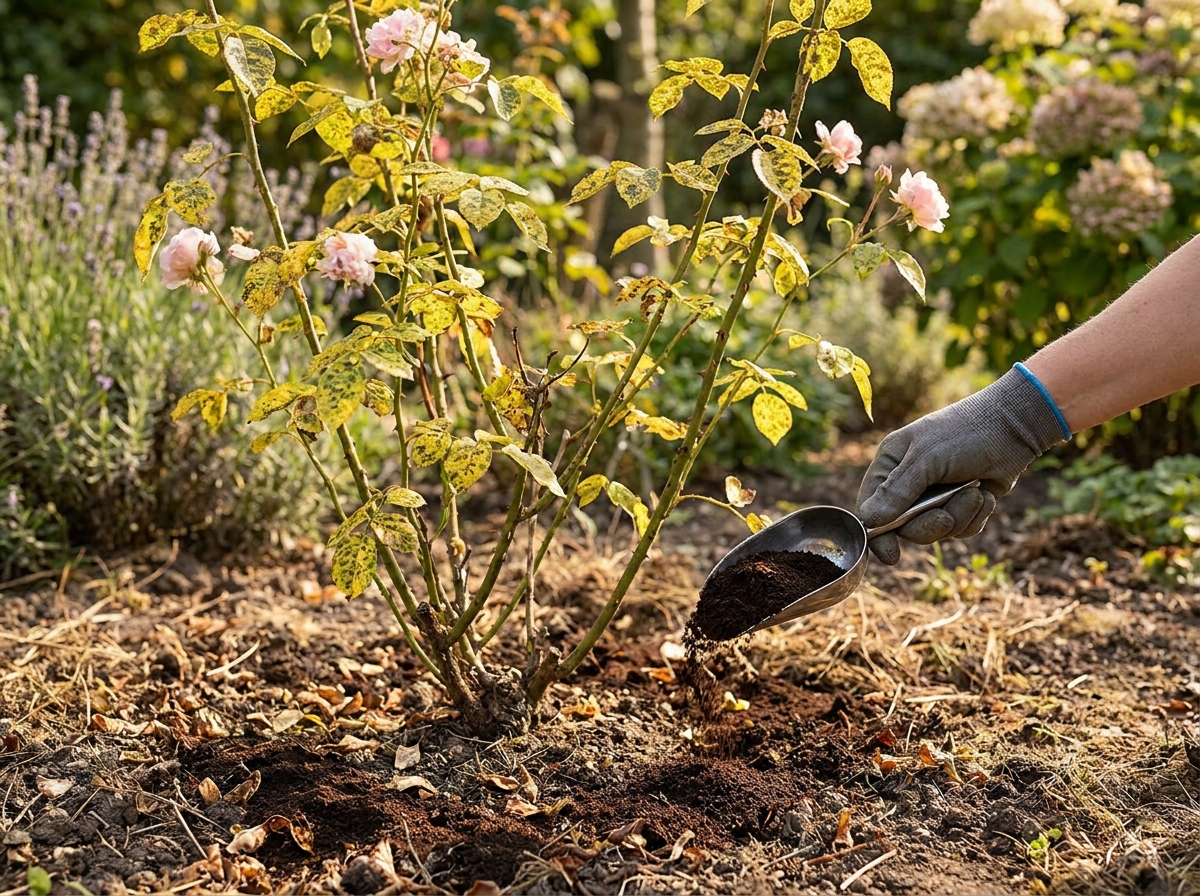
Once composted, apply them like this:
The RHS recommends mulching roses to a depth of 5–7cm in total. Coffee grounds can form a part of that mulch. Never all of it.
And if you need a quick nitrogen hit right now in summer? A liquid rose feed (something like Toprose or Rose Clear Ultra) will deliver results in 7 to 10 days. Coffee grounds will not.
So, before reaching for any amendment, you must properly check what your roses are telling you. Yellow leaves with green veins usually mean iron or manganese deficiency, often triggered by soil pH drifting above 7.0. Not below.
Adding more acidic material without first testing the soil? That is pure guesswork.
Pale overall colour and small leaves often suggest nitrogen deficiency. That is precisely where composted grounds genuinely do wonders for them, slowly.
Dark, glossy leaves with no blooms usually point to too much nitrogen. Your soil does not need more organic matter at all right now. Step away from the compost heap.
Watch for these alongside any amendment programme:
Also worth reading: our guide on all the ways coffee grounds can genuinely do wonders for your garden. Roses are just one of many plants that benefit when grounds are used correctly.
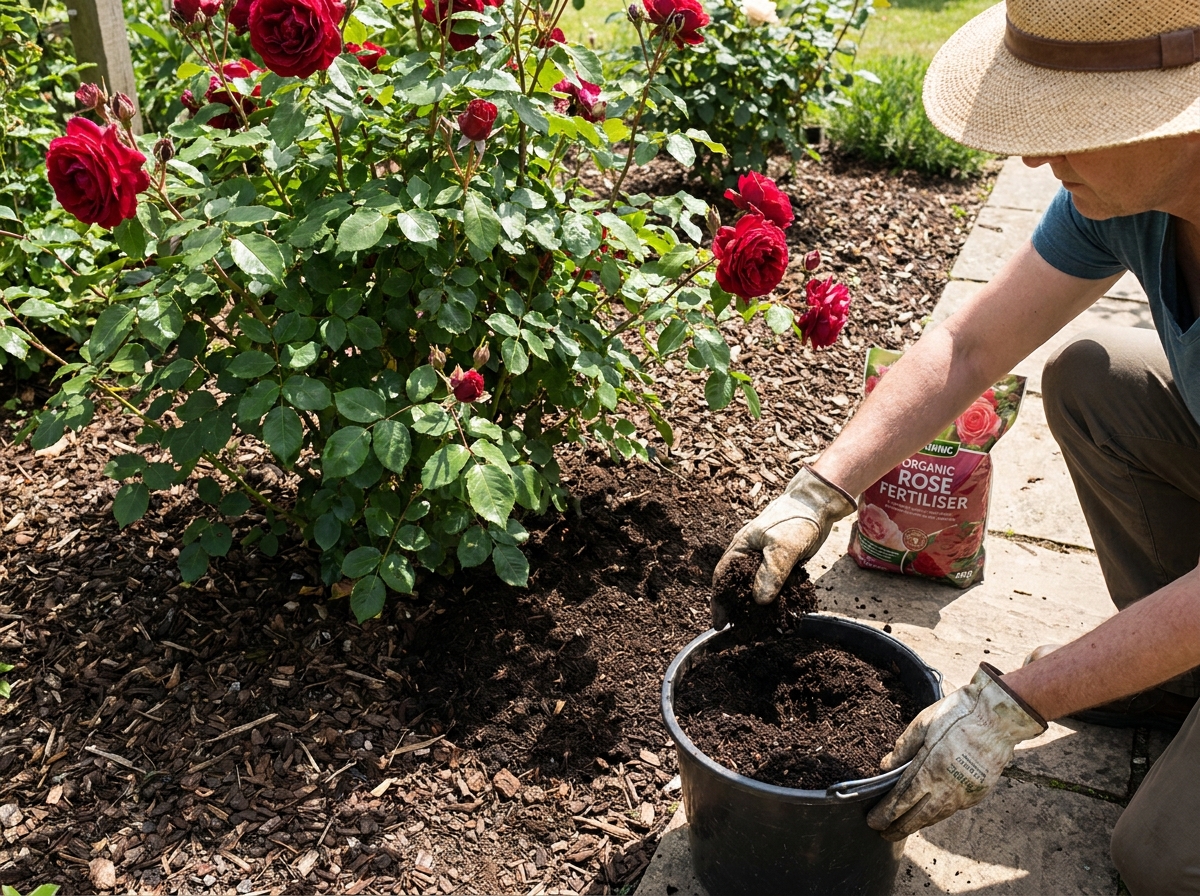
Smart tip: Always compost coffee grounds for 2–3 weeks before applying to roses. Fresh grounds compact. They can harm more than do wonders.
Twice per growing season is plenty. More than that risks over-acidifying the soil. And it causes compaction, even when grounds are composted first. Stick to the rule.
No reliable evidence supports this claim. For aphid control, a forceful water spray at dawn or a diluted neem oil solution applied every 5 days is far more effective.
It is not quite right as a direct replacement. The nitrogen release is simply too slow and unpredictable. Use a dedicated rose feed for reliable results. And treat grounds as a soil conditioner alongside it.
Southern Hemisphere gardeners: when does this apply? December and January bring the main summer flush for your roses. In winter, hold off on any soil amendments until new growth begins in spring.